Cheap, Renter-Friendly Ways to Insulate Your Home Using Smart Tech.Two winters ago, I lived on the second floor of a drafty 1920s three-flat in Chicago. Outside, the wind was coming off Lake Michigan at sub-zero temperatures. Inside, my electric baseboard heaters ran non-stop, racking up an eye-watering $320 electric bill for a 750-square-foot unit.
- 1. 1. Diagnostic Tech: Detecting Air Leaks on a Budget
- 2. The Gadgets That Expose the Leaks
- 3. 2. Temporary Window Insulation: Film, Bubbles, and Smart Blinds
- 4. The Layering Strategy
- 5. Expert Insight: The Painter’s Tape Hack for Security Deposits
- 6. 3. Sealing Gaps: Non-Permanent Weatherstripping & Draft Tech
- 7. Door & Threshold Solutions
- 8. Don’t Forget the Hidden Wall Leaks
- 9. 4. Smart Climate Management: Micro-Zone Heating
- 10. The Budget Micro-Zoning Setup
- 11. 5. Floor and Wall Thermal Barriers
- 12. Layering the Floor
- 13. Temporary Wall Insulation for Cold Apartments
- 14. The Low-Cost Winterization Checklist
- 15. Frequently Asked Questions
- 16. Will double-sided window film tape ruin my rental’s window trim?
- 17. Can I install a smart thermostat if I live in an apartment where I can’t touch the wiring?
- 18. How much money does temporary rental insulation actually save on utility bills?
- 19. What is the safest way to heat a single room without tripping rental breakers?
- 20. Does bubble wrap on windows actually work, and will it leave residue?
The worst part? My living room still felt like an industrial meat locker.
When you rent, you can’t blow cellulose insulation into the exterior walls or replace rattling single-pane aluminum window sashes with double-pane vinyl units. Your landlord isn’t going to do it either—especially if you’re the one footing the utility bill. Every modification you make has to tread a fine line between keeping you warm and ensuring you get your security deposit back when your lease expires.
Over the past few seasons, I decided to treat rental weatherproofing like a home automation lab. By pairing inexpensive physical thermal barriers with budget smart gadgets, I slashed my winter power consumption by roughly 22% (about 410 kWh over three billing cycles) without putting a single screw into the drywall.


Here is how you can systematically seal and heat a rental space on a shoestring budget using real hardware, smart automations, and non-destructive materials.
1. Diagnostic Tech: Detecting Air Leaks on a Budget
Before spending ten dollars at the hardware store, you need to know where the cold is actually entering. Most renters waste cash insulating random windows while completely missing massive air leaks coming from floor molding, unsealed baseboards, or exterior wall outlets.


Guesswork is an expensive habit. Instead of holding a lit candle near your window frames (which leaves soot marks your landlord will definitely notice), use targeted diagnostics.
💰 More Cheap Living Tips You'll Love
- Debt Snowball vs Avalanche: Which Repayment Strategy Wins?
- Pay Off Debt Faster Without Earning More: Tech Guide
- How Long to Pay Off Debt? Tech Tools to Find Out Fast
- Save Money or Pay Off Debt First? Tech-Driven Guide
- Debt Avalanche Method Step by Step: Fast Debt Payoff
- First Steps to Take When You Decide to Get Out of Debt
The Gadgets That Expose the Leaks
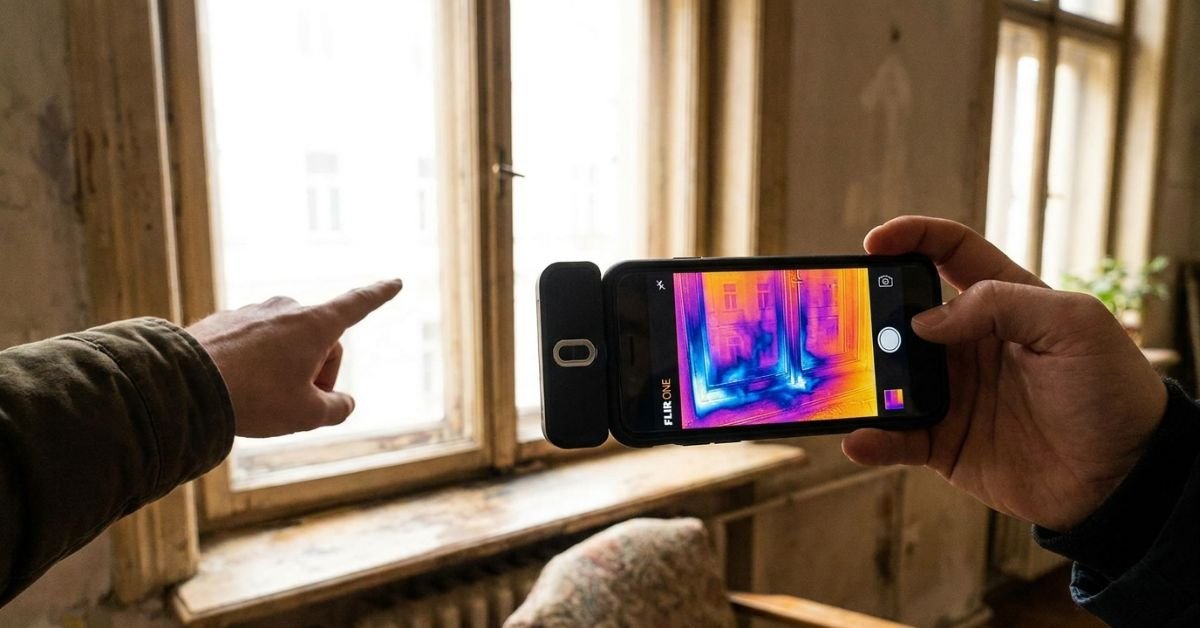
- Smartphone Thermal Imaging Camera: You don’t need an industrial $800 rig. Compact dongles like the Topdon TC001 or an entry-level FLIR ONE plug directly into your phone’s USB-C or Lightning port. They map surface temperature deltas in real time. Point it at a corner, and you’ll instantly see deep-purple plumes of freezing air spilling across your baseboards.
- Infrared Thermal Leak Detector: If a $200 thermal dongle is outside your budget, grab a handheld thermal leak detector (like the Black & Decker TLD100 or an Etekcity infrared thermometer). These cost between $25 and $40. You calibrate the device to the ambient room temperature, and it projects an LED light ring across surfaces: red for warm spots, green for stable zones, and bright blue where freezing air is seeping in.
When I ran an infrared sweep along my rental’s outer hallway wall, I expected the single-pane glass to be the sole culprit. It was bad—registering at 44°F when the room was set to 68°F. But the bigger shock was the baseboard trim beneath the window: a sustained 38°F draft was pouring straight through an uncaulked gap where the floor met the exterior masonry.


Knowing the exact entry points changes your entire strategy for diy apartment insulation to save electricity bills. You stop insulating blindly and target only the high-loss zones.
2. Temporary Window Insulation: Film, Bubbles, and Smart Blinds
Single-pane aluminum windows are notorious throughout rental units in the Northeast and Midwest. Metal frames act as direct thermal bridges, sucking heat out of your living space and dropping the surface temperature down to freezing levels within minutes.
When looking for cheap ways to insulate apartment windows, shrink film remains the undisputed king of thermal performance per dollar.
The Layering Strategy
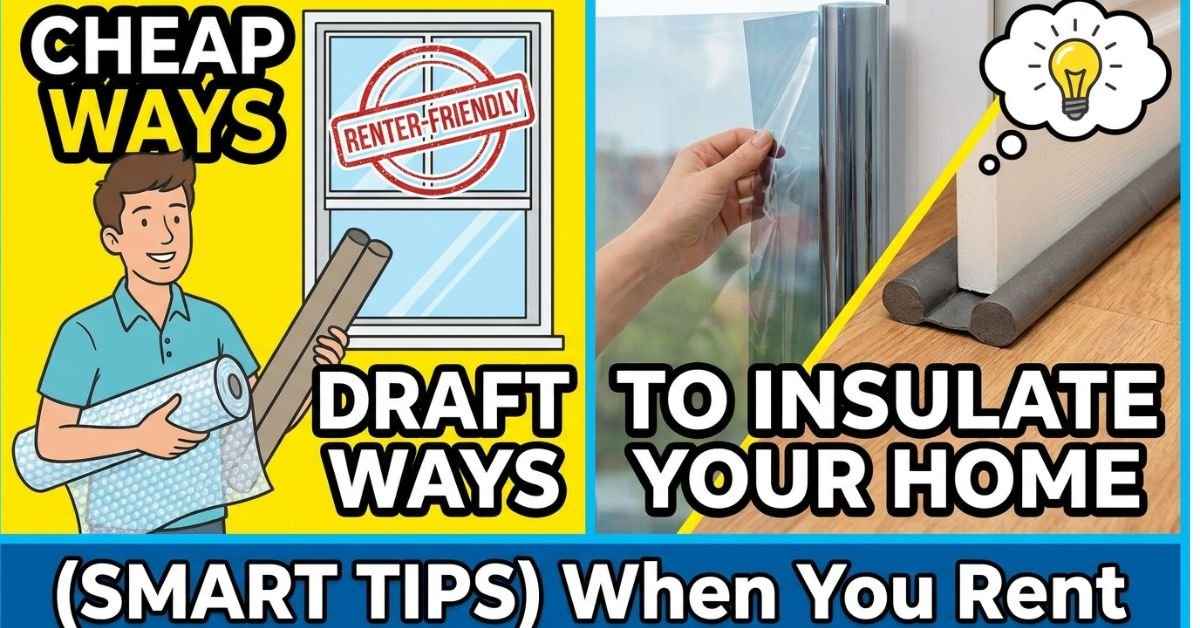
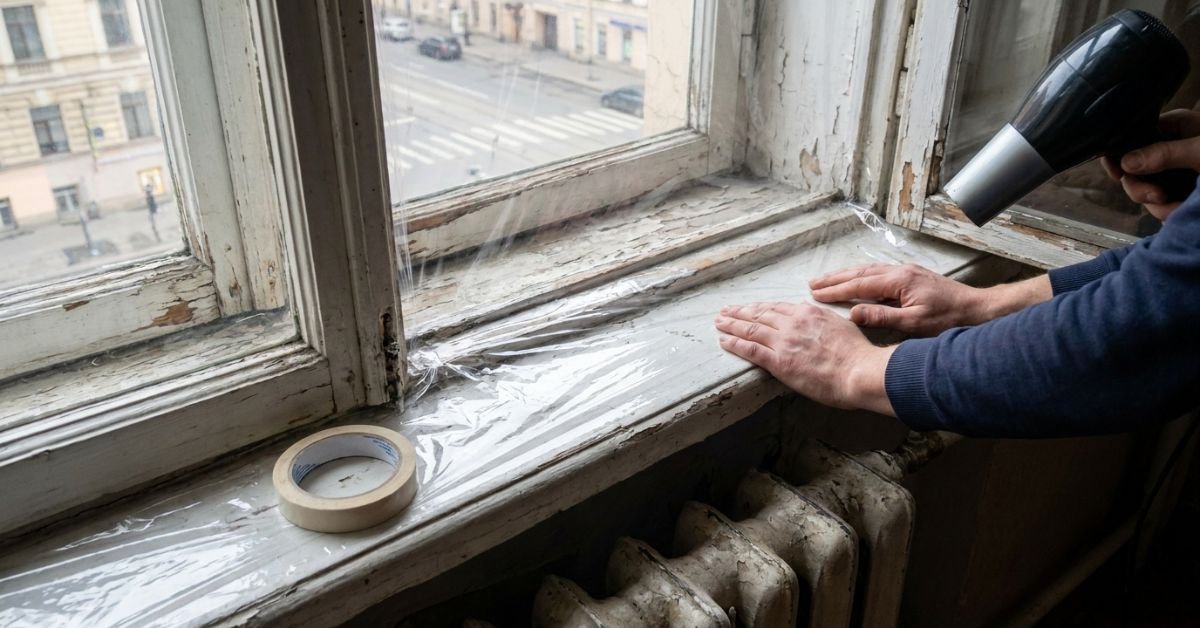
- The Air Pocket (Window Insulation Film): Pick up a standard 3M or Duck brand shrink film kit. When applied correctly with double-sided tape and shrunk tight with a hair dryer, it creates an airtight, dead-air barrier that mimics a double-pane window. In my testing, adding a clean layer of shrink film raised the interior glass-surface temperature readout from 46°F to a stable 58°F.
- Radiant Heat Film or Bubble Wrap: If you don’t care about a crystal-clear street view (for instance, on a frosted bathroom pane or an obscure bedroom window), spray the glass with a fine mist of tap water and press standard packing bubble wrap directly against it. The surface tension holds it in place all winter with zero glue. For south-facing units that lose radiant energy at night, clear radiant heat film provides a reflective micro-barrier.
- Cellular Shades on Tension Rods: Regular vertical blinds do next to nothing for insulation. High-density cellular shades (honeycomb blinds) trap air inside distinct hexagonal cells. If your landlord won’t allow screw-in brackets, buy honeycomb shades sized to your window width and mount them inside the frame using heavy-duty spring-tension rods.
Expert Insight: The Painter’s Tape Hack for Security Deposits
Standard double-sided tape included with window insulation film kits is notoriously aggressive. Come spring, pulling that tape off dry, builder-grade rental paint will rip off chunks of drywall paper, virtually guaranteeing a security deposit deduction.
My fix: Apply low-tack blue painter’s tape (like Scotch 2090) to the window casing first. Rub it down firmly, then apply the window kit’s aggressive double-sided tape directly onto the blue painter’s tape. When March rolls around, the painter’s tape peels off cleanly with zero paint loss.
3. Sealing Gaps: Non-Permanent Weatherstripping & Draft Tech
If air can move freely beneath your doors and around your window sashes, radiant and convective heating efforts are wasted. But you can’t go around running permanent beads of polyurethane caulk or drilling commercial aluminum sweeps into doors without violating your lease.
Here is how to seal drafty rental doors without damage while keeping your landlord completely in the dark.
Door & Threshold Solutions
- Under-Door Twin Draft Stoppers: Skip the single-sided adhesive sweeps that tear away paint or leave gummy residue on the bottom edge of doors. Instead, install a double-sided foam draft stopper. These slip under the bottom of the door, placing a foam cylinder on both the interior and exterior sides. As the door opens and closes, the tubes slide effortlessly over hardwood, tile, or low-pile rugs while completely blocking drafts from cold common hallways.
- Removable Silicone Squeeze Tubes (Peelable Caulk): If you have deep gaps along drafty window frames, use temporary peel-away caulk (such as DAP Seal ‘N Peel). It dispenses like standard silicone to fill drafts, cures into an airtight seal, and then peels away cleanly in a single, continuous rubber ribbon in the spring.
Don’t Forget the Hidden Wall Leaks
Take off a switch cover on an exterior-facing wall during a blizzard, and you will literally feel cold wind hitting your knuckles.
Buy a pack of pre-cut foam outlet and switch gaskets (roughly $4 for a 10-pack at any home improvement center). Unscrew the decorative faceplate, pop the foam gasket over the switch receptacle, and screw the plate back on. It compresses flush against the drywall, stopping air from venting into your apartment from uninsulated wall cavities.
4. Smart Climate Management: Micro-Zone Heating
One of the most maddening parts of renting is dealing with primitive, unresponsive heat controls. You’re often stuck with a 40-year-old bi-metal wall dial, clanking steam radiators you can’t regulate, or inefficient electric baseboards that overheat your hallway while leaving your living room frigid.
The solution isn’t cranking up the central heat. It’s micro-zoning: heating only the immediate room you occupy while letting the rest of the unit rest at a cooler, baseline temperature.
The Budget Micro-Zoning Setup
Instead of paying hundreds for an electrician to rewire an apartment thermostat, deploy this modular system:
[ Zigbee / Bluetooth Temperature Sensor ]
               │
               ▼ (Triggers automated threshold)
[ Smart Plug (Rated for 15 Amps / 1800W) ]
               │
               ▼ (Controls power delivery)
[ Analog Ceramic Space Heater with Manual Toggle ]
- The Sensor: Place a battery-powered environmental monitor (like a SwitchBot Meter or Aqara Temperature and Humidity Sensor) on your desk or nightstand—right where you actually sit or sleep.
- The Smart Plug: Plug an appliance-grade smart plug (must be rated for a continuous 15-amp load, such as the Kasa KP125M) into an outlet.
- The Heater: Connect a mechanical, simple-dial ceramic space heater with thermostat to the smart plug. Leave the heater’s manual rocker switch set to “ON” and the dial set to high.
- The Automation: In the smart plug’s companion app, create an automated routine:
- If the remote temperature sensor drops below 67°F, turn the smart plug ON.
- If the sensor reaches 70°F, turn the smart plug OFF.
By keeping the temperature reading at your body’s actual location rather than relying on the heater’s poorly placed onboard sensor (which reads the air two inches from its own hot element), the unit runs far less frequently.
For forced-air apartments with poorly balanced ducts, slap an adjustable magnetic HVAC vent deflector over ceiling or floor registers. This redirects airflow away from cold exterior windows and pushes it directly into your living zone.
Crucial Electrical Safety Warning: Never run two 1,500-watt space heaters on the same electrical circuit. Older rental units in the US typically use 15-amp breakers shared across multiple rooms. A single 1,500-watt heater pulls roughly 12.5 amps at 120 volts. Adding even a television or a laptop charger to the same circuit can trip the breaker—or worse, overheat older in-wall wiring.
5. Floor and Wall Thermal Barriers
If your apartment sits above an unheated garage, an unfinished basement, or an open carport, cold will seep straight through the flooring. Hardwood, laminate, and luxury vinyl tile (LVT) have virtually zero insulation value. You can heat the air to 72°F, but radiant heat loss to the floor will keep your feet perpetually freezing.
Layering the Floor
The most effective diy apartment insulation to save electricity bills on ground or second floors is a high-density floor pad system:
- Don’t just toss down a cheap, thin decorative rug. The magic happens underneath.
- Lay down a 1/2-inch-thick, 100% recycled felt rug pad directly onto the flooring. Dense felt has a noticeable thermal resistance rating compared to standard mesh grips.
- Roll a thick, high-pile wool or polypropylene area rug directly over the felt.
When tested with my infrared thermometer, an uninsulated vinyl floor measured 53°F during an overnight cold snap. Stepping onto the layered felt-and-wool rug in the same room gave an immediate readout of 65°F—a 12-degree delta that fundamentally changes how warm the room feels on your feet.
Temporary Wall Insulation for Cold Apartments
Living in an end-unit apartment with uninsulated brick or cinder-block exterior walls feels like sitting next to an open refrigerator. To mitigate this without modifying the structure:
- Thermal Hanging Textiles: Heavy decorative tapestries, thick moving blankets, or floor-to-ceiling thermal blackout curtains hung flat against exterior walls using heavy-duty adhesive Command picture-hanging strips create an extra layer of dead air.
- Furniture Placement: Rearrange your layout. Push large, solid-wood bookshelves loaded with books against your coldest north-facing walls. Books and dense wood act as thermal mass, slowing down heat transfer and shielding your living area from cold wall surfaces.
The Low-Cost Winterization Checklist
Before the deep freeze settles in, run through this quick, low-cost checklist to prep your rental space:
| Area | Budget-Friendly Solution | Typical Cost (USD) | Damage Risk to Walls/Trim | | :— | :— | :— | :— | | Windows | Shrink film over blue painter’s tape | $15 – $25 | None | | Windows (Shades) | Honeycomb shades on spring tension rods | $30 – $55 | None | | Exterior Doors | Double-sided sliding foam draft stopper | $10 – $15 | None | | Outlets & Switches | Flame-retardant foam insulating gaskets | $4 – $6 | None | | Floors | 1/2″ dense felt rug pad beneath area rug | $35 – $70 | None | | Zoned Heating | Smart plug + remote temp sensor automation | $25 – $40 | None |
Investing roughly $100 to $150 across these high-yield zones typically pays for itself within two to three winter billing cycles—especially if you’re stuck on high-cost electric resistance heat. More importantly, when moving day rolls around, everything unpeels, unplugs, and packs into a moving box, leaving your walls pristine and your security deposit intact.
Frequently Asked Questions
Will double-sided window film tape ruin my rental’s window trim?
If you apply the standard tape from the kit directly onto dry, unprimed, or builder-grade latex paint, yes, it will likely tear off the paint when removed. To prevent this, apply low-tack blue painter’s tape (such as Scotch 2090) to the window trim first, press it down firmly, and stick the aggressive kit tape directly onto the painter’s tape. In spring, the painter’s tape lifts off without damaging the surface.
Can I install a smart thermostat if I live in an apartment where I can’t touch the wiring?
Usually, no—messing with building thermostat wiring without authorization can violate your lease agreement. Instead of touching the central thermostat, keep it at a modest baseline (like 62°F to 64°F) and build a renter-friendly micro-zone. Use a standalone appliance-grade smart plug paired with an external temperature sensor to automatically regulate a low-wattage ceramic space heater in the room you are actively using.
How much money does temporary rental insulation actually save on utility bills?
Depending on how drafty your building is and your region’s local energy rates (measured in cost per kilowatt-hour, or kWh), sealing window drafts, blocking doors, and installing thermal floor barriers typically reduces heating consumption by 15% to 25%. In cold climates like the Midwest or Northeast, this easily translates to $40 to $80 in monthly savings on electric or natural gas bills during peak winter months.
What is the safest way to heat a single room without tripping rental breakers?
Always look for a space heater with an adjustable wattage toggle (e.g., a 750W low setting and a 1,500W high setting). Running a heater continuously on its 750W setting draws roughly 6.25 amps at 120V, leaving plenty of capacity on a standard 15-amp breaker for laptops, lamps, and monitors without overloading the circuit. Look for models equipped with both tip-over switches and overheat auto-shutoff sensors.
Does bubble wrap on windows actually work, and will it leave residue?
Bubble wrap works surprisingly well because the sealed air pockets create an effective thermal buffer. To install it, clean the window pane and spray it with a light mist of water, then press the flat side of the bubble wrap against the wet glass. The surface tension keeps it stuck in place all winter long without any adhesives, tapes, or sticky residue to clean off later.