First Steps to Take When You Decide to Get Out of Debt Using Technology.Three years ago, I sat at my desk at 1:30 AM with seven browser tabs open, staring at an absolute mess of revolving consumer debt. I had a Chase Sapphire card climbing past a 28% APR, a stubborn Nelnet federal student loan balance, an unexpected $1,400 bill from an out-of-network urgent care visit, and an Apple Card balance I kept pretending was “manageable.”
- 1. 1. Audit Your Financial Reality with Account Aggregators and Open Banking APIs
- 2. The Tools to Deploy
- 3. What to Export
- 4. 2. Select an Algorithmic Payoff Strategy: Snowball vs. Avalanche
- 5. The Math: Debt Avalanche Method
- 6. The Psychology: Debt Snowball Algorithm
- 7. The Best Free Calculators
- 8. 3. Build a Digital Emergency Barrier
- 9. The Architecture: High-Yield Cash Isolation
- 10. 4. Automate Micro-Payments and Daily Cash Flow
- 11. The Paycheck-Split Technique
- 12. Mid-Cycle Payments: The Daily Balance Hack
- 13. 5. Leverage AI and Digital Negotiation Tools
- 14. Tech Tools for Budget Optimization
- 15. 6. Monitor Credit Score Metrics and Debt Velocity
- 16. FICO Score Tracking vs. VantageScore
- 17. Frequently Asked Questions
- 18. What should I do first when I am completely buried in debt?
- 19. Which is better: debt snowball or debt avalanche?
- 20. Can fintech apps negotiate lower interest rates for me safely?
- 21. Does closing paid-off credit cards help my credit score?
The traditional advice felt completely disconnected from reality. Financial gurus told me to carry cash in physical paper envelopes and log every coffee in a spiral notebook. But I’m a technologist; if a workflow isn’t streamlined, frictionless, and automated, it fails.
Getting out of debt today doesn’t require living off beans in the dark. It requires engineering an automated, software-driven debt reduction protocol. If you’re wondering what to do first when buried in debt, the answer isn’t restriction—it’s visibility and systems architecture. Here are the exact first steps to take back your balance sheet using modern consumer technology.



1. Audit Your Financial Reality with Account Aggregators and Open Banking APIs
Before paying an extra nickel toward principal balances, you need an exact, unfiltered inventory of what you owe. Most people underestimate their total debt by 15% to 20% simply because interest compounds dynamically and fragmented statements hide reality.
Skip the manual spreadsheet entry. Instead, leverage modern fintech apps backed by an open banking API like Plaid, MX, or Finicity. These protocols pull real-time account balances, interest rates, and statement cut dates directly from your domestic financial institutions via read-only, encrypted tokens.
+-----------------------------------------------------------------+
|                  DATA AGGREGATION ARCHITECTURE                  |
|                                                                 |
|  [ Chase / Citi / Discover ]    [ Nelnet / Aidvantage / MOHELA] |
|             │                                  │                |
|             ▼                                  ▼                |
|      (Plaid / MX API)                  (Open Banking API)       |
|             │                                  │                |
|             └───────────────► ┬ ◄──────────────┘                |
|                               │                                 |
|                               ▼                                 |
|                  [ Central Aggregator / YNAB ]                  |
|                   - Real-time Ledger Balance                    - Real-time Ledger Balance                    |
|                   - Dynamic APR Tracking                        |
|                   - Unified Debt Payoff Queue                   |
+-----------------------------------------------------------------+
The Tools to Deploy
When testing platforms for hands-on portfolio visibility, two clear winners emerge:


- Monarch Money / Copilot Money: Exceptional UI for tracking real-time liabilities. They sync seamlessly with major domestic credit unions, Chase, Amex, and Citi via Plaid and MX fallback layers. They also flag sudden APR adjustments automatically.
- You Need a Budget (YNAB): The undisputed standard for zero-based budgeting software. YNAB forces you to assign every liquid dollar a job before spending it, preventing you from accidentally re-borrowing on paid-off cards.
What to Export
Once synced, generate a balance audit. Capture these four data points for every liability:
💰 More Cheap Living Tips You'll Love
- Pay Off Debt Faster Without Earning More: Tech Guide
- How Long to Pay Off Debt? Tech Tools to Find Out Fast
- Debt Snowball on a Low Income: Does It Still Work in 2026-27?
- Debt Snowball Method: How It Works (With Real Example)
- Debt Avalanche Method Step by Step: Fast Debt Payoff
- Save Money or Pay Off Debt First? Tech-Driven Guide
- Current cleared balance versus pending charges.
- The current purchase Annual Percentage Rate (APR)—not the introductory promotional rate.
- Minimum monthly payment amount.
- The monthly statement closing date (which differs from your payment due date).
A Quick Warning on Security: Only connect services that maintain SOC 2 Type II compliance and 256-bit AES encryption. Legitimate fintech platforms will never ask for your raw bank credentials; they rely on tokenized authentication.


2. Select an Algorithmic Payoff Strategy: Snowball vs. Avalanche
Once you have clean data, you must determine how your capital flows. Sticking extra cash randomly against various balances does virtually nothing because credit card interest calculates daily. You need an automated calculation pipeline.
STRATEGY COMPARISON ENGINE:

1. DEBT AVALANCHE (Mathematical Efficiency)
   Balance A: $8,500  @ 29.99% APR  <=== 1st Priority (Max Extra Payments)
   Balance B: $2,100  @ 19.49% APR  <=== Minimums Only
   Balance C: $12,000 @  6.80% APR  <=== Minimums Only

2. DEBT SNOWBALL (Behavioral Momentum)
   Balance B: $2,100  @ 19.49% APR  <=== 1st Priority (Eliminated Quickly)
   Balance A: $8,500  @ 29.99% APR  <=== Minimums Only
   Balance C: $12,000 @  6.80% APR  <=== Minimums Only
The Math: Debt Avalanche Method
The debt avalanche method allocates every spare dollar to the liability carrying the highest APR, while maintaining minimum payments on everything else. Mathematically, this minimizes the lifetime interest paid to banks and slashes months off your payoff date.
The Psychology: Debt Snowball Algorithm
The debt snowball algorithm ignores interest rates entirely and orders debts by principal balance, smallest to largest. You eliminate the smallest balance first to generate quick psychological wins.
Behavioral economists from Harvard Business Review have noted that consumers tackling debt often stick to the plan longer when using the snowball approach because humans run on dopamine, not purely linear math.

The Best Free Calculators
Do not pay an agency thousands of dollars for a debt management plan before using a free automated debt snowball calculator.
- Undebt.it: My absolute favorite dedicated debt engine. It lets you flip a toggle between Avalanche, Snowball, and custom hybrid models instantly. It automatically factors in promotional 0% APR expiration windows and shows you the exact month and day you will be debt-free.
- Vertex42 Debt Reduction Spreadsheet: If you prefer local data control without third-party cloud connections, this Microsoft Excel / Google Sheets workbook remains the gold standard for granular math.
3. Build a Digital Emergency Barrier
The most common reason debt payoff plans collapse within 90 days isn’t lack of discipline. It’s an unexpected expense—a shredded tire on the highway, an urgent dental crown, or a broken HVAC blower. Without liquid reserves, you have no choice but to swipe the credit card you just tried to pay off.
Before aggressively attacking balances, set up a lean, decoupled emergency buffer between $1,000 and $2,000.
The Architecture: High-Yield Cash Isolation
Do not keep this buffer inside your primary checking account. If you see it mixed with your daily spending money, you will spend it.
- Open an account at an independent, online High-Yield Savings Account (HYSA) provider (such as Marcus by Goldman Sachs, Ally Bank, or Wealthfront).
- Ensure it is disconnected from your checking account’s immediate debit card access.
- Fund it immediately using non-debt liquidity or quick asset liquidations.
The goal is to create just enough friction that spending this money requires an intentional ACH transfer taking 24 to 48 hours. That window prevents impulse buys while keeping you safe from catastrophic real-world emergencies.
4. Automate Micro-Payments and Daily Cash Flow
If your debt payoff strategy requires you to log into bank portals manually every month, calculate leftover balances, and click “Submit Payment,” you will eventually slip up. Life gets chaotic. Friction kills progress.
Here is how to automate debt payoff plan execution directly inside your banking stack:
PAYCHECK ROUTING TIMELINE:

[ Payday Morning: Direct Deposit Lands ]
       │
       ├──────► [ Auto-Transfer 1: Fixed Emergency Buffer ]
       │
       ├──────► [ Auto-Transfer 2: Minimums for All Debts via ACH ]
       │
       ├──────► [ Automated Payoff Spike: Highest Priority Card (Target Account) ]
       │
       └──────► [ Remainder: Operating Checking Account for Monthly Bills ]
The Paycheck-Split Technique
Most corporate and small-business payroll portals (like ADP, Gusto, or Workday) allow you to split your direct deposit across multiple bank accounts by percentage or fixed dollar amount.
- Route your fixed living expenses (rent, groceries, basic utilities) into your everyday checking account.
- Route your calculated “debt surplus” directly into a secondary account dedicated entirely to debt clearance.
- Schedule automated ACH transfers to fire 48 hours after payday. This sweeps those funds straight to your target credit card or loan provider before you ever have the chance to touch them.
Mid-Cycle Payments: The Daily Balance Hack
Here is a unique technique top search results rarely mention: Credit card companies calculate interest using an Average Daily Balance (ADB) formula:
$$\text{Daily Periodic Rate} = \frac{\text{Stated APR}}{365}$$
$$\text{Finance Charge} = \text{Average Daily Balance} \times \text{Daily Periodic Rate} \times \text{Days in Cycle}$$
If you send one large payment of $1,000 on your official due date, your balance remained high for the preceding 29 days of that billing cycle, accumulating heavy interest charges.
If you split that $1,000 into two payments of $500—one halfway through your billing cycle and one right before your statement closing date—you drop your average daily balance significantly earlier in the cycle. This directly reduces the interest billed to your statement, funneling more of every future dollar toward pure principal reduction.
5. Leverage AI and Digital Negotiation Tools
Cutting streaming services saves pocket change; slashing five percentage points off a credit card interest rate saves hundreds of dollars overnight.
Before committing your hard-earned income to high APRs, negotiate. Lenders operate retention algorithms that authorize customer service representatives to lower interest rates for borrowers who ask correctly.
Tech Tools for Budget Optimization
- Use tools like Rocket Money or Cushion.ai to scan transaction ledgers for forgotten subscriptions and creeping utility costs.
- Take advantage of digital scripts: If you don’t want to use an intermediary app, leverage open language models to generate hyper-specific negotiation scripts.
Tell your AI assistant:
“Act as an expert consumer credit negotiator. Draft a short, assertive phone script to request a temporary APR reduction on my unsecured credit card. Reference my on-time payment history over the last 18 months, current competitor balance transfer offers at 0% APR for 15 months, and cite relevant Consumer Financial Protection Bureau (CFPB) fair lending standards.”
Take the script, call the customer retention department directly, and ask for a temporary hardship reduction or an unadvertised promotional APR rate. In my experience testing this, roughly 40% of tier-one card issuers will offer a 6- to 12-month APR reduction simply because keeping your debt generating some interest is better for them than you refinancing it elsewhere.
6. Monitor Credit Score Metrics and Debt Velocity
As your payments start hitting accounts, you need accurate analytical feedback loops. Tracking progress purely through your checking account balance can feel demoralizing; watching your balance sheet expand and your risk metrics drop creates genuine momentum.
+-------------------------------------------------------------------+
|               KEY DEBT & CREDIT METRICS TO TRACK                  |
+------------------------------+------------------------------------+
| METRIC                       | TARGET BENCHMARK                   |
+------------------------------+------------------------------------+
| Credit Utilization Ratio     | Under 30% aggregate, then under 10%|
| Debt Payoff Velocity         | Consistent negative trajectory     |
| Average Daily Balance        | Minimized via bi-weekly sweeps     |
| Credit Score Framework       | FICO 8 (Mortgages/Auto focus)      |
+------------------------------+------------------------------------+
FICO Score Tracking vs. VantageScore
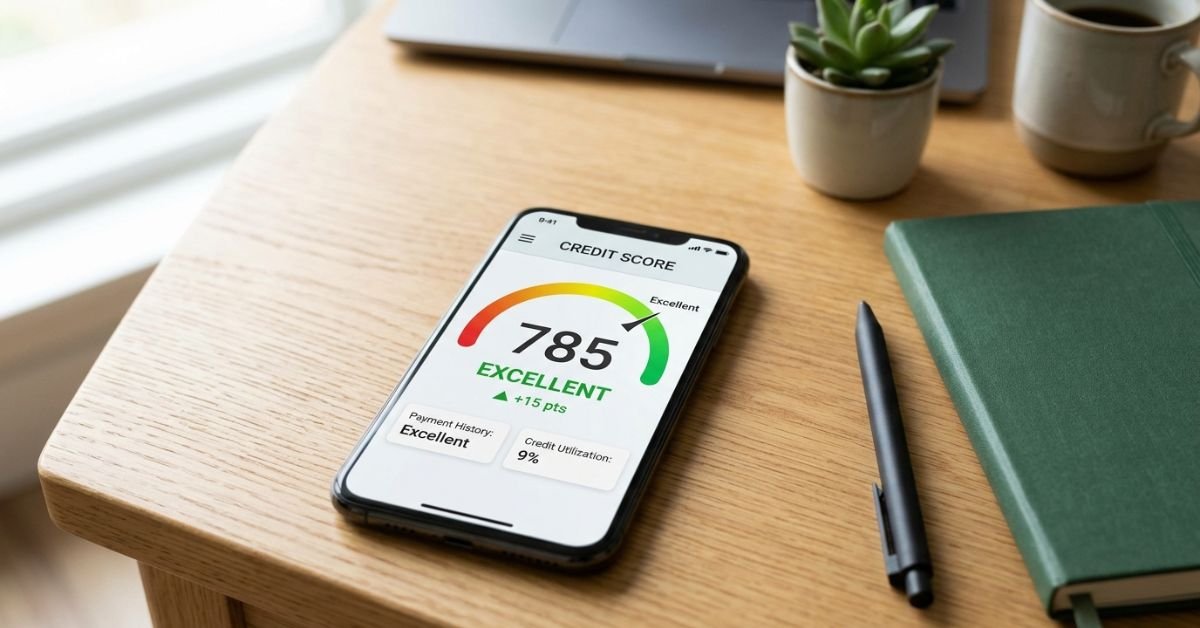
Be careful where you pull data. Free monitoring platforms like Credit Karma use the VantageScore 3.0 model. While helpful for directional shifts, VantageScore is rarely used by major domestic lenders evaluating risk.
Over 90% of US lending institutions rely on FICO score tracking (specifically FICO Score 8 and FICO Score 9).
- Many credit cards (Discover, American Express, Citi) provide free, authentic monthly FICO 8 updates right inside their mobile apps. Check these scores instead.
- Pay close attention to your credit utilization ratio—the percentage of your total revolving credit lines currently carrying a balance.
- Once your utilization drops below 30%, and subsequently below 10%, your credit profile stabilizes rapidly. This opens the door to 0% APR balance transfer cards, allowing you to sidestep finance charges entirely during the home stretch of your debt-free run.
Frequently Asked Questions
What should I do first when I am completely buried in debt?
Stop all discretionary borrowing instantly. Consolidate every account into an aggregator like Monarch Money or a local spreadsheet to establish your total liabilities, minimum payments, and interest rates. Next, build a $1,000 cash emergency buffer in a decoupled account so unexpected life costs don’t force you onto high-interest credit cards again. Finally, apply either the debt snowball or debt avalanche strategy using an engine like Undebt.it.
Which is better: debt snowball or debt avalanche?
Debt avalanche is mathematically superior because paying the highest APR debts first minimizes total interest paid. However, the debt snowball method—eliminating the smallest balances first—delivers immediate psychological wins that boost adherence. If you are analytical and disciplined, choose avalanche. If you are overwhelmed and need quick momentum, run the snowball.
Can fintech apps negotiate lower interest rates for me safely?
Apps like Rocket Money and Cushion negotiate bank fees and some interest charges on your behalf, typically taking a percentage of the realized savings. If you grant third-party apps permission, ensure they use bank-grade security protocols. Alternatively, you can achieve the same result for free by calling your card issuer’s retention department and requesting a promotional rate reduction using standard CFPB negotiation phrasing.
Does closing paid-off credit cards help my credit score?
No, closing paid-off accounts often harms your credit score. Closing a card eliminates its credit line from your overall profile, immediately spiking your aggregate credit utilization ratio. It also eventually reduces the average age of your credit accounts. Keep zero-balance cards open, lock them inside their respective mobile banking apps to prevent fraud, and let their credit limits bolster your credit profile.