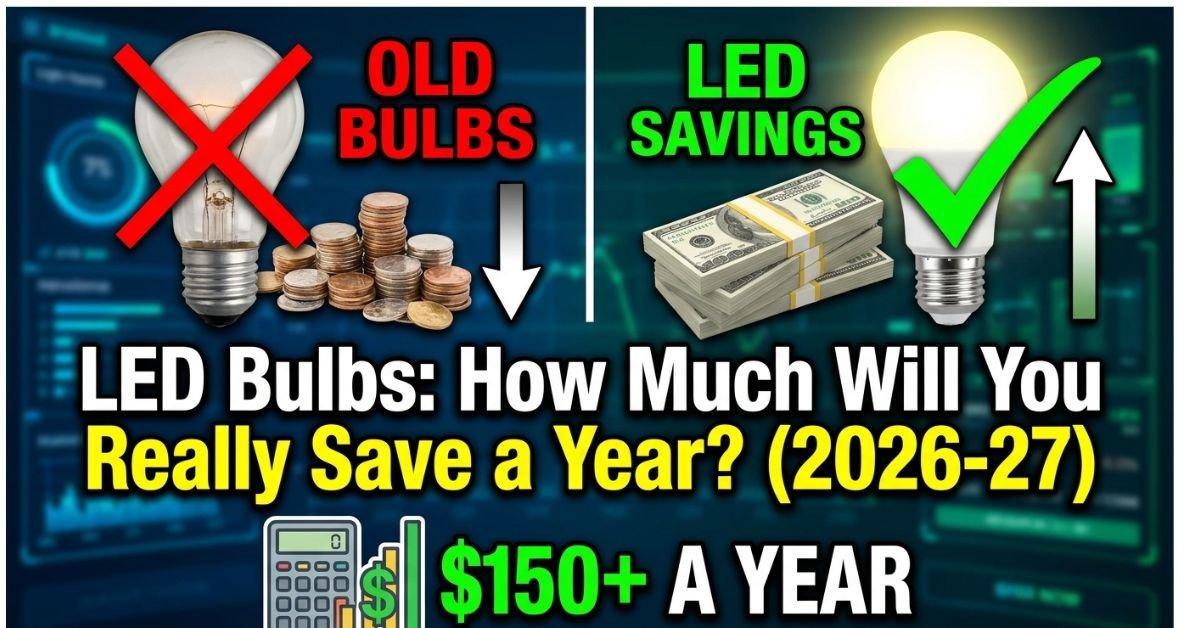
LED Bulbs: How Much Money Will You Actually Save a Year?.A couple of years ago, I bought an older three-bedroom home outside Philadelphia. During our first walk-through, I noticed nearly every overhead recessed can held a yellowed 65-watt incandescent floodlight. There were 42 fixtures scattered across the house—not counting the closets or the two exterior halogen floodlights guarding the driveway.
- 1. The Real Math: Incandescent vs. LED Energy Consumption
- 2. Single Bulb Running Cost Comparison (3 Hours/Day for 365 Days)
- 3. High-Rate States: The Savings Explode
- 4. How Much Does It Cost to Run an LED Bulb for 24 Hours?
- 5. Hands-on Upfront Costs vs. Payback Period
- 6. The Break-Even Point
- 7. The Bargain-Bin Trap to Avoid
- 8. Secondary Financial Benefits You Probably Overlooked
- 9. 1. Less Strain on Your Air Conditioner
- 10. 2. Slashed Replacement Lifecycles
- 11. Common Pitfalls When Transitioning to LEDs
- 12. Dimmer Buzzing and Strobing
- 13. The Color Rendering Disaster
- 14. Expert Insight: Beware of “Smart” Phantom Loads
- 15. Step-by-Step Priority Upgrade Plan for Maximum Savings
- 16. Frequently Asked Questions
- 17. Do LED bulbs actually lower electric bills if I already have CFLs?
- 18. How much does changing to LED bulbs save per year in an apartment?
- 19. What is the average LED bulb payback period in high-rate states like California or New York?
- 20. Why do some LED bulbs burn out in less than a year despite long lifespan ratings?
- 21. Are LED lights worth it for home fixtures that are rarely used?
When my first electric bill arrived that January, my jaw hit the floor. The line-item delivery and supply charges totaled nearly $280. I pulled out my Kill A Watt P4400 meter, grabbed a ladder, and started measuring. What I found launched a month-long overhaul of every socket in the house.

If you are standing in the lighting aisle wondering whether it is worth dropping cash to ditch your old lamps, here is the unvarnished, real-world math on what you will actually save.


The Real Math: Incandescent vs. LED Energy Consumption
To understand how much do led lights save on electric bill totals, you have to look at the massive gap in luminous efficacy. An incandescent bulb is fundamentally an electric space heater that happens to emit a little glow as a side effect. About 90% of the energy it consumes escapes as thermal waste rather than visible lumens.
A standard 60-watt incandescent bulb throws roughly 800 lumens of light. A modern Energy Star certified LED bulb delivers those same 800 lumens while sipping a measly 9 to 9.5 watts.
Let’s plug those numbers into a basic led vs incandescent cost calculator model using the latest U.S. Energy Information Administration (EIA) national average electricity rate, which hovers right around 16.5 cents per kilowatt-hour (kWh).


Single Bulb Running Cost Comparison (3 Hours/Day for 365 Days)
- 60W Incandescent:
- Annual consumption: (60 watts × 3 hours × 365 days) / 1,000 = 65.7 kWh
- Annual running cost: 65.7 kWh × $0.165 = $10.84 per year
- 9W LED Bulb:
- Annual consumption: (9 watts × 3 hours × 365 days) / 1,000 = 9.85 kWh
- Annual running cost: 9.85 kWh × $0.165 = $1.63 per year
- Net savings per bulb: $9.21 per year
That is a single lamp. Now take my house, where we consistently run about 30 high-use fixtures throughout the evening.
💰 More Cheap Living Tips You'll Love
- Debt Snowball on a Low Income: Does It Still Work in 2026-27?
- Debt Snowball Worksheet: How to Fill It Out Correctly
- Lower Your Electric Bill as a Renter: 12 Cheap Tech Ways
- Debt Snowball vs Avalanche: Which Repayment Strategy Wins?
- How Long to Pay Off Debt? Tech Tools to Find Out Fast
- Save Money or Pay Off Debt First? Tech-Driven Guide
30 bulbs × $9.21 annual savings = $276.30 saved every single year.
High-Rate States: The Savings Explode
National averages are nice, but utility bills are deeply regional. If you live in an area with punishing tier rates, the economics shift dramatically:


- California (PG&E / SCE): Electricity rates routinely hit 32 to 38 cents/kWh. That single 60W bulb costs around $23.00/year to run, while the LED sits at $3.45/year. Your savings double to nearly $20 per bulb annually.
- Massachusetts (Eversource): Rates hover around 28 cents/kWh. Upgrading 30 fixtures pockets you roughly $470 a year.
- Hawaii (HECO): At 42+ cents/kWh, running old incandescents is practically lighting dollar bills on fire.
How Much Does It Cost to Run an LED Bulb for 24 Hours?
People often ask me this when they accidentally leave a basement fixture running over a long weekend: how much does it cost to run an led bulb for 24 hours?
At 9 watts, 24 hours burns 0.216 kWh. At the 16.5¢ national rate, running that LED continuously for a full 24-hour day costs you 3.5 cents. The old 60W incandescent bulb running for that same 24-hour stretch eats 1.44 kWh, setting you back 23.7 cents. Leave that old bulb on continuously for a month, and you just wasted $7.11 on one socket.
Hands-on Upfront Costs vs. Payback Period
Are you worried about the upfront hardware cost? You shouldn’t be. Gone are the days when a single Cree LED bulb set you back $15 at Home Depot.
| Retailer & Brand | Pack Size | Approximate Cost | Cost Per Bulb | | :— | :— | :— | :— | | Home Depot (EcoSmart A19 60W Equiv) | 8-pack | $12.97 | ~$1.62 | | Lowe’s (GE Relax 60W Equiv) | 4-pack | $11.98 | ~$3.00 | | Walmart (Great Value LED 4-pack) | 4-pack | $5.88 | ~$1.47 |
If you buy bulk contractor packs of basic non-dimmable A19 bulbs, you are paying roughly $1.50 to $2.00 per unit.
The Break-Even Point
Let’s calculate the real led bulb payback period:
- Bulb cost: $1.75
- Annual energy savings (at 3 hours/day): $9.21
- Monthly savings: $0.76
- Payback timeline: 2.3 months
After roughly 70 days of evening use, the bulb has completely paid for itself. Every single month after that is pure profit staying inside your bank account.
The Bargain-Bin Trap to Avoid
There is one big caveat here: don’t buy the no-name 10-packs from questionable overseas storefronts online.
I bought a cheap pack of generic unbranded bulbs for my garage back in 2021. Within four months, three of them started strobing uncontrollably, and two simply went dark. When I cracked open the plastic housing, the internal smoothing capacitors were fried to a crisp.
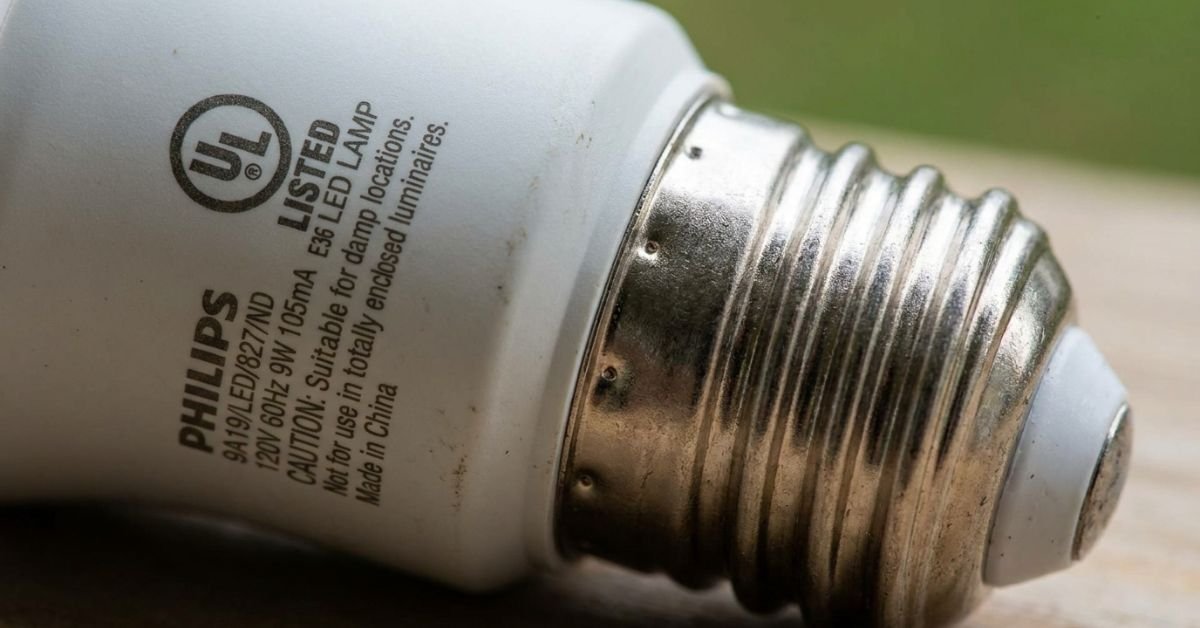
Stick to established brands carrying Energy Star certification and a recognized UL (Underwriters Laboratories) or ETL safety listing. If a bulb does not have that UL badge, keep walking.
Secondary Financial Benefits You Probably Overlooked
Whenever people crunch the numbers on how much money does changing to led bulbs save per year, they almost always fixate strictly on the lighting circuit. They miss the hidden auxiliary savings.
1. Less Strain on Your Air Conditioner
Incandescent bulbs dump considerable thermal energy into your living spaces. During summer testing in my living room, I aimed a FLIR thermal camera at a 65W BR30 floodlight running in a recessed can. The exterior lens read a scorching 248°F (120°C). When I switched that fixture to an 8.5W LED retrofit, the surface temp dropped to 104°F (40°C).
That heat dissipation differential matters. If you have 20 recessed ceiling cans blazing in a home during a humid July evening, those bulbs are dumping roughly 3,500 BTUs of unwanted heat per hour directly under your ceiling drywall.
Your central air conditioner has to burn extra electricity to pump that heat back outdoors. According to guidelines from the U.S. Department of Energy, switching to high-efficiency lighting yields measurable reductions in household cooling loads, trimming an extra 5% to 10% off lighting-related thermal costs in warmer climates.
2. Slashed Replacement Lifecycles
An incandescent filament has a rated lifespan of around 1,000 hours. If you run it three hours daily, it burns out every 11 to 12 months.
Quality LEDs are rated for 15,000 to 25,000 hours. That translates to 13 to 22 years of normal residential use.
Think about the fixtures you hate dealing with—the high-ceiling pendant hanging over the stairs, or the floodlights tucked under the roof soffit. Not having to balance on an extension ladder every fall to replace dead filaments saves time, avoids replacement costs, and prevents legitimate household safety risks.
Common Pitfalls When Transitioning to LEDs
The transition is not always as simple as unscrewing one bulb and threading in another. Over the years, I have hit a few snags that drove me nuts until I diagnosed the root cause.
Dimmer Buzzing and Strobing
If you plug an LED bulb into a circuit controlled by an older incandescent dimmer switch (typically a leading-edge triac dimmer), you will likely experience:
- A high-pitched, maddening buzzing sound coming from the bulb base.
- Wild strobing or flickering when dimmed below 30%.
- Premature driver failure.
Modern LEDs require C•L rated dimmers (like the Lutron Diva or Leviton Decora Smart lines) designed specifically to handle low-wattage, solid-state electronics without chopping the alternating current unevenly.
The Color Rendering Disaster
My wife nearly threw me out of the house after I swapped our bathroom vanity lights for cheap 5000K “Daylight” bulbs. The room looked like an industrial meat locker, and skin tones appeared completely lifeless.
Pay attention to these two packaging specs:
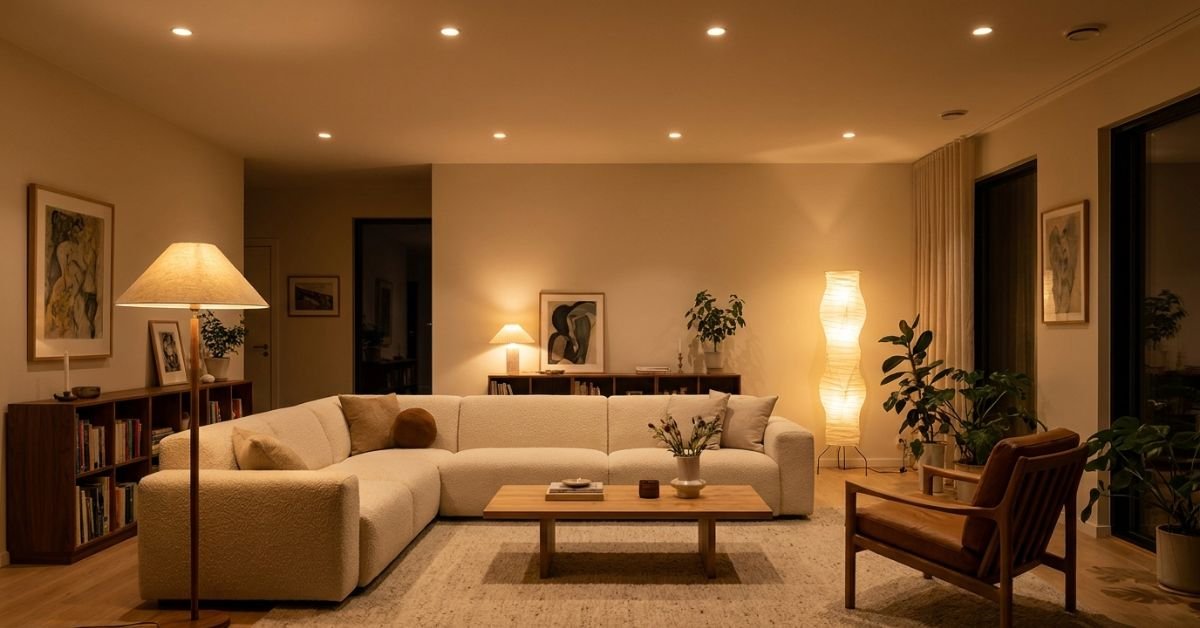
- Color Temperature (Kelvin): Look for 2700K (Soft White) for living rooms and bedrooms to mimic the cozy warm glow of incandescents. Use 3000K (Warm White) in kitchens and bathrooms for clean, crisp lighting without cold blue undertones.
- Color Rendering Index (CRI): Always aim for bulbs with a 90+ CRI. Cheap LEDs sit at 80 CRI, which mutes reds and deep wood tones, making your home look flat and dreary.
Expert Insight: Beware of “Smart” Phantom Loads
If you are diving into smart lighting (bulbs with integrated Zigbee, Z-Wave, or Wi-Fi radios like Philips Hue), remember that these bulbs pull a continuous standby load of 0.2 to 0.6 watts even when “turned off.” If you install 50 smart bulbs, that phantom draw adds up to around 200 kWh per year simply keeping the radios awake. If your primary goal is maximizing utility savings, use standard “dumb” Energy Star LEDs paired with smart in-wall switches instead of smart bulbs in every socket.
Step-by-Step Priority Upgrade Plan for Maximum Savings
You don’t need to drop $150 at Lowe’s this afternoon to replace all 50 bulbs in your house at once. If you are budgeting your switch, prioritize fixtures by their daily burn hours and base wattage.
- Zone 1: Exterior Halogen Floodlights (Day 1 Swap)
- Why: Exterior motion or security lights often run 90W to 150W halogen PAR38 bulbs. Dropping to a 13W LED floodlight yields immediate double-digit watt drops per socket.
- Zone 2: Kitchen & Living Room Main Fixtures
- Why: These are your highest burn-hour locations (4 to 6 hours daily). This is where you recoup your purchase cost in under two months.
- Zone 3: Bathroom Vanity & Home Office
- Why: High daily use, though bathroom run times are typically shorter in overall duration.
- Zone 4: Closets, Attics, and Basements (Wait until they burn out)
- Why: A 60W bulb in a closet that runs for four minutes a day costs roughly 24 cents per year to operate. Swapping that bulb to LED only saves you pennies annually. Let the existing bulb live out its life first.
So, do led bulbs actually lower electric bill expenses in a way you will notice? Yes. In my suburban home, swapping 38 interior bulbs and four exterior floods shaved an average of $24 off our monthly electric bill. Across a full year, that puts nearly $300 right back into our pockets—more than enough to pay for the bulbs four times over.
Frequently Asked Questions
Do LED bulbs actually lower electric bills if I already have CFLs?
They will lower your bill, but the margin is much smaller than jumping from incandescents. A compact fluorescent lamp (CFL) typically pulls 13 to 15 watts compared to an LED’s 9 watts for the same light output. While the direct energy savings are modest (about $1.50 to $2.00 per bulb annually), LEDs reach full brightness instantly, contain zero toxic mercury, handle cold weather far better, and last twice as long without degrading output.
How much does changing to LED bulbs save per year in an apartment?
In a typical one- or two-bedroom apartment with 15 to 20 fixtures, replacing incandescent lighting saves between $75 and $120 per year at national average electricity rates. Because rental spaces often use builder-grade, inefficient bulbs, keeping a box of LEDs on hand and swapping them in (saving the landlord’s bulbs in a bin to put back before moving out) is one of the easiest ways for renters to lower monthly utility bills.
What is the average LED bulb payback period in high-rate states like California or New York?
In states where rates reach 30 to 40 cents per kWh, the payback period drops to under six weeks for regularly used fixtures. If a bulb runs four hours a day at 35 cents/kWh, an LED upgrade saves roughly $1.50 per month, completely covering the initial purchase cost of a standard A19 bulb in roughly 35 to 45 days.
Why do some LED bulbs burn out in less than a year despite long lifespan ratings?
LED failure is almost never caused by the light-emitting diode itself; it is caused by heat destroying the electronic driver circuit in the base. Common culprits include installing non-enclosed-rated bulbs inside tight, fully sealed ceiling fixtures, pairing bulbs with incompatible older dimmer switches that deliver uneven voltage, or purchasing ultra-cheap generic bulbs with poor internal heat sinks.
Are LED lights worth it for home fixtures that are rarely used?
For low-use spaces like guest room closets, crawl spaces, or utility sheds where fixtures run less than 15 minutes a week, an LED upgrade is not financially pressing. The existing incandescent bulb in that scenario costs less than 50 cents a year to operate, meaning an LED replacement could take several years to recoup its purchase price. Focus your budget on high-traffic living areas first.