How to Heat Your Home Cheaply When Money Is Tight.Last January, a bitter polar vortex swept down across the Midwest and slammed into my 1970s split-level home. Two days later, my gas utility bill hit my inbox, tracking towards an eye-watering $390. To make matters worse, our local electric co-op raised baseline kWh rates by nearly 14%.
- 1. 1. Inexpensive Tech to Pinpoint Heat Loss Instantly
- 2. 2. Micro-Zoning: Heat People, Not Empty Rooms
- 3. 3. Low-Cost Tech Hacks for Thermal Retention
- 4. Pro Tip: The Reverse Ceiling Fan Maneuver
- 5. 4. Budget Automation: Squeezing Value from Cheap Smart Thermostats
- 6. Mining Utility Rebates for Heavy Discounts
- 7. 5. Electrical Traps and Fire Safety on a Budget
- 8. Frequently Asked Questions
- 9. Is it cheaper to leave electric heat running all day at a low temp or turn it off when gone?
- 10. What is the most energy-efficient space heater type for a single room?
- 11. How do utility marketplace rebates actually work for smart thermostats?
- 12. What assistance programs exist if I genuinely cannot afford my heating bill this winter?
- 13. Can wrapping windows with plastic film really make a noticeable difference?
Sitting at my desk with numb toes and wearing two hoodies, I knew something had to give.
I decided to stop treating my home’s heating like a mystery box and approached it like a sysadmin troubleshooting system inefficiencies. Armed with a standard Kill-A-Watt meter, a budget infrared thermal leak detector, and a collection of sub-$50 gear, I logged power draw and temperature deltas over 30 freezing days.
What I discovered is that you don’t need a $10,000 heat pump overhaul to survive winter on a shoestring budget. You just need to know how thermal physics, micro-zoning, and inexpensive technology actually interact inside your walls.


1. Inexpensive Tech to Pinpoint Heat Loss Instantly
If you want to master the cheapest way to heat a house on a budget, rule number one is brutally simple: stop heating the outdoors. Most people think their furnace is failing when, in reality, exterior air infiltration is siphoning away every dollar they spend on fuel.
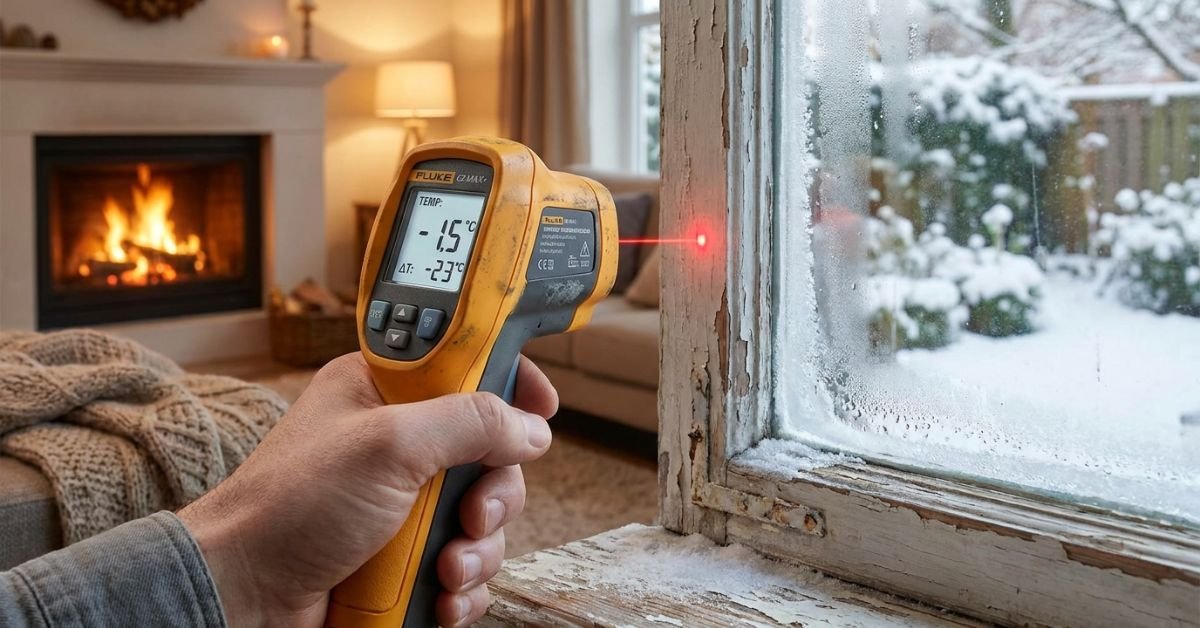
Professional home energy audits can set you back $400 or more. That is money you don’t have when cash flow is tight. Instead, I grabbed an inexpensive $22 non-contact infrared temperature gun (an entry-level thermal leak detector).


I spent twenty minutes walking along exterior baseboards, window trim, and exterior outlets. The results were startling. While my central hallway sat at 67°F, the drywall directly under my living room window trim registered a frigid 49°F. Cold air was actively cascading over the sill like an invisible waterfall.
💰 More Cheap Living Tips You'll Love
- Pay Off Debt Faster Without Earning More: Tech Guide
- Debt Snowball vs Avalanche: Which Repayment Strategy Wins?
- How Long to Pay Off Debt? Tech Tools to Find Out Fast
- Debt Snowball on a Low Income: Does It Still Work in 2026-27?
- Save Money or Pay Off Debt First? Tech-Driven Guide
- Debt Snowball Worksheet: How to Fill It Out Correctly
- Hands-on Tip: You don’t need a bulky $300 commercial FLIR sensor. A basic infrared temperature gun or a sub-$80 smartphone thermal camera dongle tells you everything you need to know. Sweep it around window sills, electrical outlets on exterior walls, attic hatches, and exterior door perimeters. Watch for sudden 10°F to 15°F drops.
- Common Pitfall: Don’t waste money buying high-end thermal auditing gear. A simple laser thermometer or even the old-school “incense stick test” (watching where the smoke wafts near a closed window) yields the exact same diagnostic target for air sealing without touching your emergency fund.
If you are figuring out how to heat an apartment cheaply in winter, finding these exact draft locations is half the battle. Landlords rarely insulate older rentals adequately, but pinpointing the draft gives you surgical accuracy for cheap, non-destructive DIY fixes.


2. Micro-Zoning: Heat People, Not Empty Rooms
Central heating systems are notoriously inefficient if you live alone, work from a single room, or have a family that gathers in one main living space during the evening. Why burn therms of natural gas or pump massive wattage into heating an empty dining room, spare bedroom, and storage hallway to 70°F?
The answer is micro-zoning.
During my 30-day experiment, I dialed our central thermostat down to a steady 62°F—just high enough to protect interior plumbing from any freeze risk. Then, I set up a dedicated micro-zone in my home office using an inexpensive space heater plugged into a Kill-A-Watt meter to watch power consumption in real time.
+-------------------------------------------------------------+
|   REAL-WORLD 120V HEATER RUNTIME COST ESTIMATE (AT $0.17/kWh) |
+-------------------------------------------------------------+
| Appliance / Setting           | Real Wattage | Cost / Hour  |
+-------------------------------------------------------------+
| Standard Ceramic (High)       |   1500W      |   $0.255     |
| Standard Ceramic (Low)        |    750W      |   $0.128     |
| Oil-Filled Radiator (Eco)     |    600W      |   $0.102     |
| Micathermic / Radiant Panel   |    400W      |   $0.068     |
| Electric Heated Blanket (Med) |     60W      |   $0.010     |
+-------------------------------------------------------------+
When looking for the most energy efficient cheap space heater, remember that all resistive electric space heaters are technically 100% efficient at turning electricity into heat. The secret lies in how they deliver that heat.
A forced-air ceramic heater blasts hot air directly toward the ceiling where it pools uselessly. An infrared heater or radiant heat panel, however, warms objects and human skin directly, skipping the air altogether.
By placing a 400W radiant panel under my desk, I felt perfectly comfortable at my keyboard while the ambient room air hovered around 63°F. That 400W draw cost me roughly 6 cents an hour, compared to firing up an 80,000 BTU central gas furnace every twenty minutes.
- Hands-on Tip: Combine a low-wattage heater with an inexpensive smart plug or programmable timer. I automated mine to run for 25 minutes, shut down for 15 minutes to let the radiant residual heat sustain the immediate space, and then fire back up.
- The Nighttime Trick: If you are trying to figure out how to heat one room cheaply at night, abandon the space heater entirely. Drop the room to 60°F and turn on a 60-watt heated mattress pad or electric blanket 15 minutes before climbing into bed. Heating your immediate sleeping envelope costs pennies a week, not dollars a night.
- Common Pitfall: Leaving multiple 1500W space heaters chugging in three different rooms at once. On a standard US 120V circuit, running two full-blast space heaters simultaneously on the same electrical breaker will immediately trip your 15-amp or 20-amp panel. More critically, running 4500W of resistance heat around the clock will skyrocket your electric bill beyond what the central furnace ever cost.
3. Low-Cost Tech Hacks for Thermal Retention
Once you generate heat, you have to trap it. Glass is an abysmal insulator. A standard single-pane window has an R-value of roughly R-1. Even modern double-pane units usually hover between R-3 and R-4.
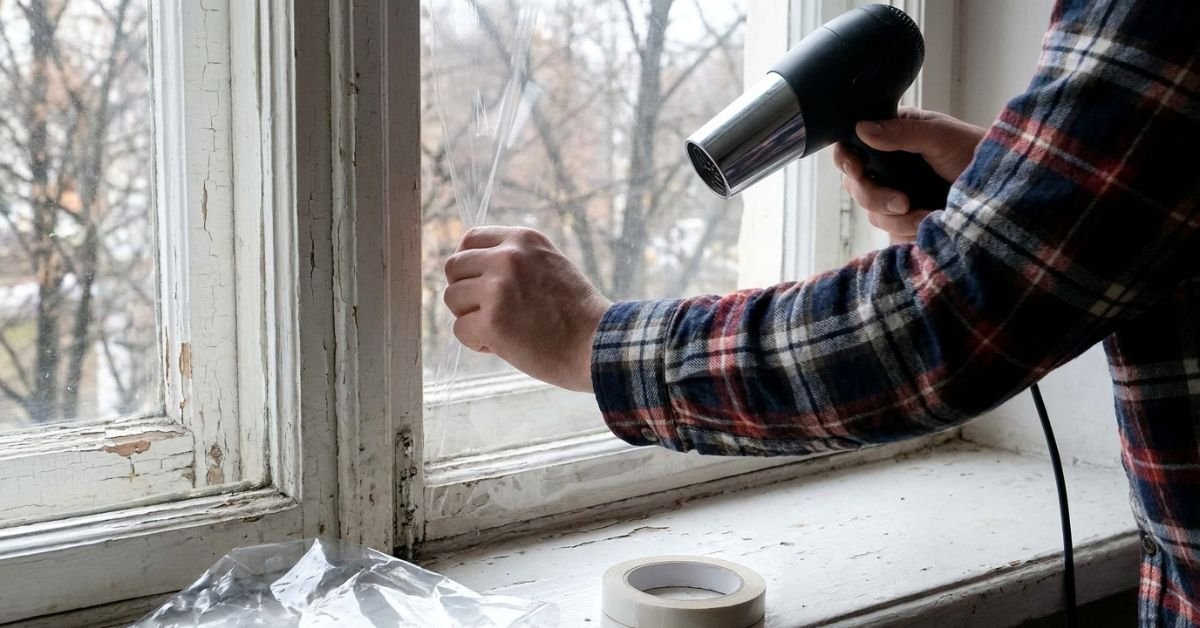
The single most effective DIY thermal hack I tested was window insulation film. A 5-window kit costs around $15 at any big-box hardware store.
Using basic double-sided tape around the window casing, you stick the clear plastic sheet tightly across the frame, then shrink it drum-tight using a standard household hair dryer. The film creates an airtight dead-air pocket between the room and the cold glass pane, acting like a makeshift double-glazed air barrier.
When I aimed my infrared sensor at an untreated bedroom window, the indoor surface temperature read 51°F. After applying the heat-shrink film, the surface barrier read 62°F under identical 22°F outside conditions. That simple $3 piece of plastic eliminated the heavy convection draft entirely.
- Hands-on Tip: Pair window insulation film with thick cellular shades or heavy thermal-backed curtains. Open south-facing blinds wide during clear winter mornings to harness free passive solar heat gain, then drop them shut the moment the sun dips behind the treeline at 4:30 PM.
- Door Seals: Run self-adhesive silicone weather seals along your exterior door jambs. If you can see light peeking beneath your front or back door, you are basically throwing five-dollar bills straight into the snow. Slide an adjustable foam door draft stopper along the base of the slab.
- Common Pitfall: Covering active HVAC return grilles or electric baseboard heaters with makeshift insulation or furniture. Blocking a furnace return creates negative pressure, pulls frigid attic air down through wall cavities, and strains the furnace blower motor until it burns out.
Pro Tip: The Reverse Ceiling Fan Maneuver
Look at the switch on the side of your ceiling fan motor housing. Flip it so the blades rotate clockwise (when looking up), and turn the fan to its absolute lowest speed. Because hot air naturally rises and pools near the ceiling, a clockwise rotation creates a gentle updraft. This updraft pushes the trapped reservoir of warm ceiling air out toward the walls and down into the living space without creating a chilling direct breeze on your skin. It can lift floor-level temps by 2°F to 3°F without consuming more than 15 watts of power.
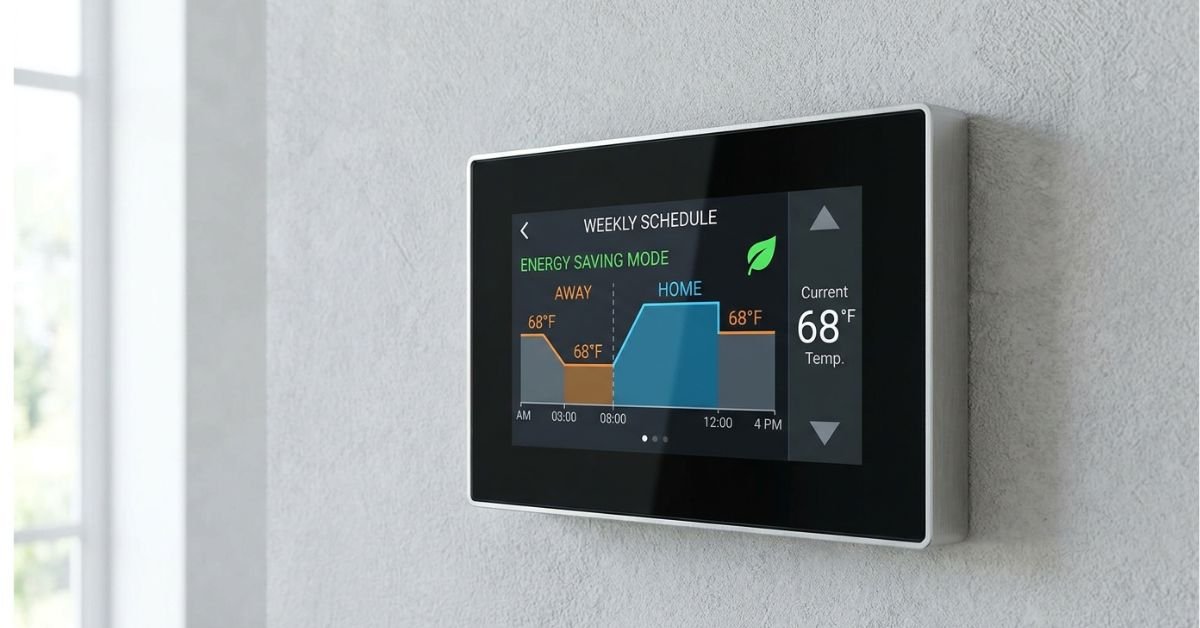
4. Budget Automation: Squeezing Value from Cheap Smart Thermostats
Manual thermostats rely on human memory, and humans are notoriously bad at temperature discipline. We forget to dial down when leaving for grocery runs, or we wake up hot at 2:00 AM because we left the heat set to daytime comfort levels.
Automating setbacks is arguably the cleanest path to how to keep house warm with low electricity bill figures. The US Department of Energy calculates that dialing your thermostat back 7°F to 10°F for eight hours a day can save up to 10% a year on heating costs.
You do not need to drop $250 on a flagship thermostat to achieve this.
Mining Utility Rebates for Heavy Discounts
Before buying anything out of pocket, open a browser and search your local utility provider’s online marketplace. Companies like ConEd, Duke Energy, PG&E, ComEd, and National Grid offer massive instant rebates on Energy Star certified hardware.
In many zip codes, you can buy a brand-new programmable smart thermostat (such as an Emerson Sensi, Wyze Thermostat, or Google Nest Thermostat) for $10 to $30—or sometimes completely free after instant bill credits.
+-------------------------------------------------------+
|  TYPICAL WINTER SETBACK AUTOMATION SCHEDULE          |
+-------------------------------------------------------+
|  Time Block       | Target Temp | Goal                |
+-------------------------------------------------------+
|  06:30 AM - 08:30 AM |    68°F     | Morning wake-up     |
|  08:30 AM - 04:30 PM |    62°F     | Work/away setback   |
|  04:30 PM - 10:00 PM |    67°F     | Evening comfort     |
|  10:00 PM - 06:30 AM |    60°F     | Sleep deep-setback  |
+-------------------------------------------------------+
- Hands-on Tip: If your rental uses ancient manual sliders or line-voltage baseboard dials that your landlord forbids you from rewiring, buy a mechanical outlet timer or smart plug rated for full appliance amperage to control portable auxiliary units. Set strict schedules so heaters never run while you are asleep or out of the house.
- Common Pitfall: The “furnace accelerator” myth. Cranking your thermostat up to 80°F will not warm your house any faster than setting it to 68°F. Furnaces and heat pumps deliver heat at a steady, fixed rate; setting it to 80°F merely guarantees the unit overshoots your comfort target, burning unnecessary fuel and running your meters wild.
If utility bills are still unmanageable despite these changes, look into cheap heating options for low income families through state and federal safety nets. The federal Low Income Home Energy Assistance Program (LIHEAP) helps income-qualified households pay overdue energy balances, while the Weatherization Assistance Program (WAP) covers professional air sealing, attic insulation, and furnace tune-ups entirely free of charge.
5. Electrical Traps and Fire Safety on a Budget
When you are desperately trying to stay warm while watching every dollar, it is tempting to cut corners. Do not cut corners with high-draw heating elements.
Every winter, local news stations across the country cover house fires sparked by improper space heater use. In older construction with 15-amp branch circuits, pushing the electrical infrastructure to its physical limit invites catastrophe.
A standard portable electric space heater pulls roughly 1500 watts on its high setting. Divided by standard US household 120V current, that single appliance demands 12.5 amps.
Formula: Amps = Watts / Volts
1500W / 120V = 12.5 Amps
The National Electrical Code (NEC) specifies that a continuous load should not exceed 80% of a circuit’s maximum rating. On a standard 15-amp household circuit, that safety threshold is 12 amps.
Running a 1500W heater continuously on a shared 15-amp breaker operates right on the razor’s edge of that safety buffer. If your refrigerator kicks on, or someone fires up a television on the same circuit, you will pop the breaker—or warm up aging wire nuts inside the wall cavity.
- Hands-on Tip: Always plug your heater directly into a dedicated wall outlet. Make sure the plug fits snug; a loose wall receptacle creates electrical resistance, which generates severe localized heat at the outlet faceplate. Check your heater’s built-in safety mechanics: pick it up while running to verify the automated tip-over safety switch cuts power instantly.
- Common Pitfall: Never use a cheap, light-duty extension cord or generic office power strip to run a heater. Most thin extension cords (like standard 16 AWG lamp wire) are only rated for 10 or 13 amps. Drawing 12.5 amps through them will cause the cord to soften, melt its vinyl sheath, and ignite carpet fibers. If an extension cord is genuinely unavoidable, use a heavy-duty 12 AWG or 14 AWG contractor-grade cord rated for 15 amps, kept fully uncoiled so heat can dissipate.
Frequently Asked Questions
Is it cheaper to leave electric heat running all day at a low temp or turn it off when gone?
It is almost always cheaper to dial the heat down or turn auxiliary electric heaters completely off when leaving a room or the house. The myth that “the system has to work twice as hard to catch back up” violates thermal dynamics. The rate at which your home loses heat is directly proportional to the difference between indoor and outdoor temperatures (the thermal gradient). By allowing your home to sit cooler while you are away, heat loss slows down significantly, resulting in less total energy consumed over a 24-hour cycle.
What is the most energy-efficient space heater type for a single room?
For sustained heating in a medium-sized room, an oil-filled radiator is generally the most effective budget option. While it takes longer to warm up, the thermal mass of the diathermic oil retains and radiates heat long after the internal heating coils cycle off. If you are sitting stationary at a desk or on a sofa, a direct infrared heater or mica panel is even better, as it warms your body directly using minimal wattage without needing to heat the surrounding room air first.
How do utility marketplace rebates actually work for smart thermostats?
Electric and natural gas utilities are mandated by state public utility commissions to hit specific energy conservation metrics. To meet these targets, providers partner with energy marketplaces to subsidize Energy Star devices. When you enter your home zip code and utility account number at checkout on your provider’s storefront, instant discounts of $50 to $100+ are applied directly to the cart, often dropping the final cost of an entry-level smart thermostat down to under $25.
What assistance programs exist if I genuinely cannot afford my heating bill this winter?
Your first call should be to your utility provider to ask about budget billing, deferred payment arrangements, and shutoff protections. Federally, the Low Income Home Energy Assistance Program (LIHEAP) provides direct grants paid to your utility to keep service connected. Additionally, the Weatherization Assistance Program (WAP) offers free energy audits and structural weatherization upgrades for low-income households. You can locate your regional office via the national 2-1-1 directory.
Can wrapping windows with plastic film really make a noticeable difference?
Yes, dramatically so. Adding heat-shrink window film creates an airtight barrier that stops drafts and produces an insulating cushion of stagnant air between the film and the glass. In testing, plastic film over leaky single-pane or aged double-pane windows can raise interior glass-adjacent surface temperatures by 8°F to 12°F, virtually eliminating the convective loop that pulls warm air across the room toward cold window surfaces.