How to Lower Your Electric Bill as a Renter: 12 Budget-Friendly Tech Hacks.Two summers ago, I opened a utility bill from Con Edison that made my stomach drop: $318 for a 650-square-foot one-bedroom apartment in Queens.
- 1. The Renter Dilemma: Cutting Power Costs Without Lease Violations
- 2. 1. Deploy Auto-Sensing Smart Power Strips for Entertainment Centers
- 3. 2. Isolate Wall-Warts with Sub-$10 Smart Plugs
- 4. 3. Build a “Leaving Home” Hardware Automation Kill Switch
- 5. Optimizing Rental Heating and Window ACs with Smart Temperature Plugs and Routine Schedules
- 6. 4. Upgrade Dumb Window ACs with Thermostatic Smart Relays
- 7. 5. Control Mini-Splits or Digital Units via Smart IR Blasters
- 8. 6. The Dual-Fan Push-Pull Micro-Climate Trick
- 9. Lighting Upgrades: Budget Smart Bulbs, Mesh Controls, and Storing Original Landlord Hardware
- 10. 7. Match the Proper LED Wattage Equivalent (And Box the Landlord’s Stuff)
- 11. 8. Use Bluetooth or Zigbee Mesh Bulbs for Automated Dimming
- 12. 9. Stick-on Battery/Solar Motion Pucks for Closets and Cabinets
- 13. Auditing Rogue Landlord Appliances: Finding Energy Vampires with Cheap In-Line Meters
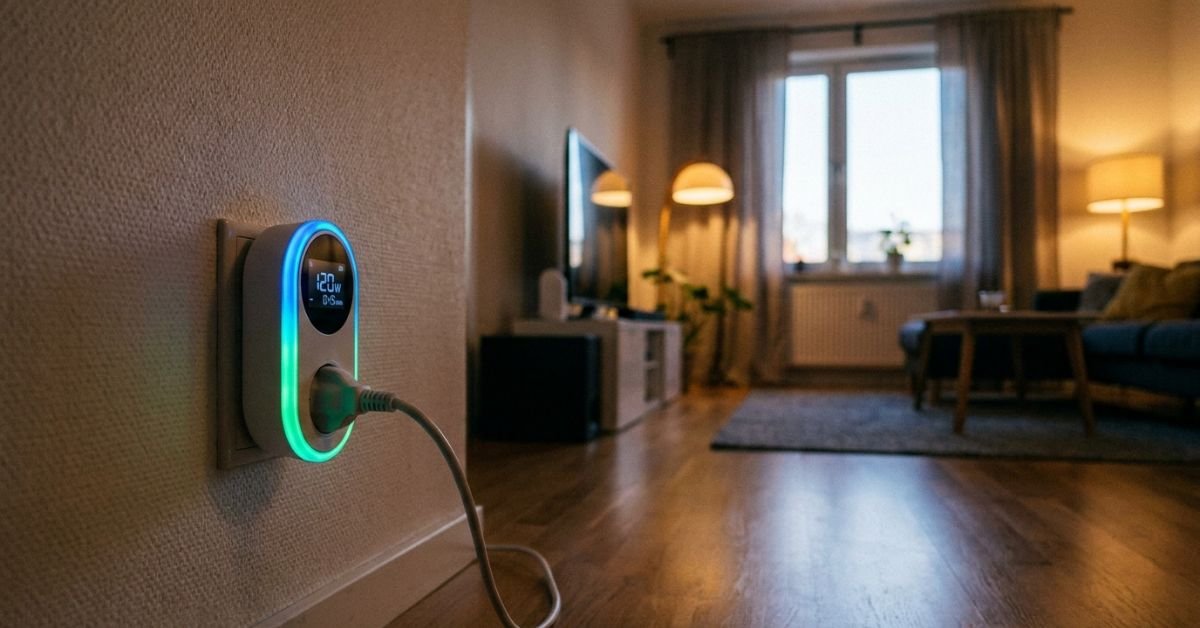
- 14. 10. Audit Appliances with a $20 Kill A Watt Meter
- 15. Pro Tip: Clean the Refrigerator Coils
- 16. Low-Tech Tech Combos: Thermal Management and Off-Peak Device Charging Strategies
- 17. 11. Exploit Time-of-Use Rates with Scheduled Smart Chargers
- 18. 12. Combine Smart Window Sensors with Thermal Blackout Blinds
- 19. Frequently Asked Questions
- 20. Can my landlord evict me or keep my deposit for installing smart plugs and LED bulbs?
- 21. Is the energy saved by smart plugs negated by the power they consume themselves?
- 22. How do I know if my rental utility account is on Time-of-Use (TOU) rates?
- 23. Do smart thermostats like Nest or Ecobee work in rentals?
I wasn’t mining Bitcoin. I didn’t leave the stove on. I was simply dealing with the classic renter’s trap: paper-thin single-pane windows, a rattling 15-year-old landlord-grade refrigerator, and a window air conditioning unit that drank juice like a freight train.
When you own a home, the advice is simple. Blow insulation into the attic! Install double-pane argon windows! Slap a Nest learning thermostat on the wall!
Try doing any of that in a rental and your landlord will keep your security deposit before you can finish saying “tenant rights.”


We have to be smarter. Over the last few years, I’ve turned my rented spaces into ultra-efficient mini-labs using cheap, completely reversible technology. You don’t need to knock down drywall or touch high-voltage wiring to stop hemorrhaging cash.
Here are 12 budget-friendly, non-invasive tech hacks that brought my electric bill down by roughly 35% without breaking my lease.


The Renter Dilemma: Cutting Power Costs Without Lease Violations
Landlords love buying the cheapest appliances allowed by local housing codes. That means you are stuck footing the operational bill for unrated relics while your landlord pockets the savings from buying used. Worse yet, standard rental wiring often ties multiple outlets to ancient circuits, making power loss and inefficiency invisible.
💰 More Cheap Living Tips You'll Love
- Pay Off Debt Faster Without Earning More: Tech Guide
- How Long to Pay Off Debt? Tech Tools to Find Out Fast
- Save Money or Pay Off Debt First? Tech-Driven Guide
- Debt Avalanche Method Step by Step: Fast Debt Payoff
- Debt Snowball on a Low Income: Does It Still Work in 2026-27?
- Debt Snowball vs Avalanche: Which Repayment Strategy Wins?
To win here, we focus on modular, portable interventions. Everything you buy needs to fit into a moving box when your lease ends.


1. Deploy Auto-Sensing Smart Power Strips for Entertainment Centers
Your TV, soundbar, Apple TV, and game consoles are sneaky. Even when switched “off,” they sit in high-draw standby states waiting for remote signals or background downloads. This is known as phantom load (or vampire draw), and it typically accounts for 10% to 20% of a rental’s monthly electricity usage.
Instead of unplugging cords every night like a pioneer, buy an auto-sensing smart power strip (like the Tripp Lite or APC models designed for AV setups).
- Plug your television into the “Master” socket.
- Plug your consoles, sound system, and streaming sticks into the “Controlled” sockets.
- When your TV turns off and stops drawing power, the strip physically cuts all current to the peripheral devices. Zero standby leak.
2. Isolate Wall-Warts with Sub-$10 Smart Plugs
Those chunky power bricks powering your electric toothbrush, laptop docks, desk lamps, and massage guns draw continuous wattage even when nothing is charging.
I picked up a four-pack of basic Kasa Matter-compatible smart plug units on sale for $25. I set hardware schedules inside the app:
- Office desk strip cuts off completely at 8:00 PM and wakes up at 7:45 AM.
- Bathroom charging station only runs for two hours every morning.
By killing the baseline current when you are asleep or at work, you shave easy kilowatt-hours without thinking about it.
3. Build a “Leaving Home” Hardware Automation Kill Switch
If you run an ecosystem like Apple Home, Google Home, or Alexa, set up a geofenced routine. The moment my phone leaves a 300-foot perimeter around my apartment building, a smart automation routine triggers.
It shuts down:
- Every decorative LED strip
- My computer monitors
- The secondary living room fan
- All non-essential smart plugs
You stop paying for electricity in an empty apartment. When you return home, your phone re-enters the geofence and toggles the essentials back on.
Optimizing Rental Heating and Window ACs with Smart Temperature Plugs and Routine Schedules
Heating and cooling represent over 50% of the average home’s energy consumption. In an apartment, you are usually at the mercy of crude dials: a window unit with settings numbered “1 through 7” or a wall AC that just blasts until your teeth chatter.
4. Upgrade Dumb Window ACs with Thermostatic Smart Relays
If your rental came with a dumb window AC unit that uses a mechanical knob (the ones that immediately kick back on when you pull and reinsert the plug), don’t suffer through erratic temperatures.
Plug that AC into an Inkbird temperature-controlled outlet or a high-amperage smart plug paired with an external smart sensor.
- Place the sensor across the room near your bed or couch (where you actually sit), not next to the unit’s cold exhaust.
- Set the switch to kill power when the room hits 73°F (23°C) and restore it at 76°F (24°C).
Built-in window AC thermostats read the air directly around the unit, which cools down faster than the rest of the room. This causes rapid cycling, destroying your window AC efficiency and running up your bill. Externalizing the temperature sensor stabilizes the cycle and saves serious cash.
5. Control Mini-Splits or Digital Units via Smart IR Blasters
What if your rental has a ductless mini-split or a window unit with an infrared remote? You can’t just cut the power via a smart plug, or you risk damaging the compressor.
Grab a $15 BroadLink RM4 Mini or a SwitchBot Hub. These devices replicate your AC remote’s infrared signals. Connect the blaster to your home Wi-Fi, and suddenly your dumb AC has a mobile app, geofencing, and precision scheduling.
Program it to dial back cooling 30 minutes before you leave for work and drop the temp back down right as your commute starts. No more cooling an empty living room just to avoid walking into a sauna.
6. The Dual-Fan Push-Pull Micro-Climate Trick
Air conditioners consume anywhere from 500 to 1,400 watts per hour. A decent DC-motor circulating fan consumes roughly 15 to 30 watts.
Instead of running an AC in your bedroom and another in the living room, run one unit and deploy a quiet circulation fan (like a Woozoo or Vornado) on a timed smart plug to pull cold air down the hallway. Moving air feels 3 to 4 degrees cooler on human skin due to the evaporative effect, allowing you to raise your AC’s setpoint by a few degrees without losing comfort.
Lighting Upgrades: Budget Smart Bulbs, Mesh Controls, and Storing Original Landlord Hardware
Most rentals come equipped with the absolute cheapest incandescent or early-generation compact fluorescent (CFL) bulbs your landlord could buy at a liquidation sale.
Incandescent (60W) vs LED Equivalent (9W) Running 6 Hours/Day:
- Incandescent: 60W × 6h × 365 = 131.4 kWh/year (~$26.28 at $0.20/kWh)
- Modern LED:    9W × 6h × 365 =  19.7 kWh/year (~$3.94 at $0.20/kWh)
*Savings per bulb per year: ~$22.34 across 10 fixtures = $223.40 in your pocket.*
7. Match the Proper LED Wattage Equivalent (And Box the Landlord’s Stuff)
First weekend in a new rental: get a plastic storage bin and unscrew every single lightbulb in the ceiling fixtures, vanity, and closets. Label the box “Landlord Bulbs” and tuck it in a closet.
Replace them with modern LEDs matching the correct LED wattage equivalent. If you are pulling out hot 60-watt or 75-watt incandescents, swap in 8-watt to 11-watt LEDs. You instantly slash lighting draw by over 80%. When your lease is up, screw the old glass fire hazards back in and take your LEDs to your next home.
8. Use Bluetooth or Zigbee Mesh Bulbs for Automated Dimming
Smart bulbs aren’t just for changing your living room to magenta for movie night.
Dimming a smart LED directly reduces its power consumption. An LED dimmed to 50% uses roughly 40-50% less power than at full brightness.
- Set auto-dim schedules: drop bulbs to 70% brightness after sunset, and down to 30% after 10:00 PM.
- You barely notice the difference because your eyes adjust to the ambient light, but your meter certainly registers the drop.
9. Stick-on Battery/Solar Motion Pucks for Closets and Cabinets
Apartment closets are notorious for having terrible pull-chain lights that people accidentally leave on for days behind closed doors.
Unscrew the bulb in the closet fixture. Stick a cheap USB-rechargeable motion-sensing LED puck light to the ceiling or shelf. They only kick on when the door opens and turn off after 20 seconds of stillness. You eliminate accidental 24/7 draws completely.
Auditing Rogue Landlord Appliances: Finding Energy Vampires with Cheap In-Line Meters
You can’t optimize what you don’t measure. If your utility bill stays abnormally high despite your best efforts, one of your landlord’s supplied appliances is likely failing silently.
10. Audit Appliances with a $20 Kill A Watt Meter
Buy or borrow a Kill A Watt meter (many local public libraries actually lend them out for free now).
Plug it into the wall, plug your landlord’s refrigerator into the meter, and leave it alone for 48 hours.
Check the cumulative kilowatt-hour (kWh) reading. A standard modern Energy Star refrigerator uses roughly 1 to 1.5 kWh per day (350–550 kWh/year).
- When I tested my rental’s 2008 top-freezer unit, it consumed an absurd 4.8 kWh per day! The compressor was dying and running constantly.
- armed with actual data from the meter, I sent a polite email to my property manager: “The refrigerator compressor is running continuously, consuming 140+ kWh monthly above average operational standards, signaling internal motor failure.”
- They replaced it with a modern Energy Star unit the following week. My bill plummeted.
Pro Tip: Clean the Refrigerator Coils
If your landlord won’t replace a power-hungry fridge, pull it out and check the bottom or back coils. Rental fridge coils are almost always caked in years of pet hair and dust bunnies. When coils can’t shed heat, the compressor runs twice as long to stay cold. Unplug the fridge, spend 10 minutes with a vacuum brush attachment, and clean them. This simple zero-dollar fix can restore 15-25% of the unit’s cooling efficiency.
Low-Tech Tech Combos: Thermal Management and Off-Peak Device Charging Strategies
A lot of energy management comes down to timing and physics. Utilities across the country—from California’s PG&E to Georgia Power—are transitioning millions of customers to dynamic pricing plans.
11. Exploit Time-of-Use Rates with Scheduled Smart Chargers
Check your utility bill to see if you are on time-of-use rates. Under these plans, electricity consumed during “peak hours” (typically 4:00 PM to 9:00 PM on weekdays) can cost three times more than power used during “off-peak” windows (late night and early morning).
| Time Window | Example Cost per kWh | Strategy | | :— | :— | :— | | Off-Peak (11 PM – 6 AM) | ~$0.12 | Charge power banks, run dishwasher, charge vacuum | | Mid-Peak (6 AM – 4 PM) | ~$0.24 | Normal basic consumption | | On-Peak (4 PM – 9 PM) | ~$0.48 | Battery backup use, pre-cooled spaces, minimal cooking |
If you work from home or charge multiple devices (laptops, portable vacuums, e-bikes, tool batteries), put those heavy chargers on a smart plug set to run strictly between midnight and 6:00 AM.
If you own a portable power station (like an EcoFlow, Bluetti, or Jackery), charge it off-peak overnight, then run your home office desk setup off the battery during the expensive 4 PM to 9 PM surge. You’re essentially arbitraging the power grid.
12. Combine Smart Window Sensors with Thermal Blackout Blinds
Smart home tech works best when paired with basic thermal management. Windows are the biggest source of unwanted radiant heat in summer and cold drafts in winter.
- Install cheap magnetic smart sensor units on your primary windows.
- Hang heavy thermal blackout curtains (installed via non-damaging tension rods or command hooks).
- Build an alert: If an outdoor weather integration shows local temps exceeding 80°F (27°C) and your window is open, get a notification on your phone: “Close window and drop curtains.”
Trapping cool air inside before the midday sun hits drops your afternoon cooling workload substantially.
Frequently Asked Questions
Can my landlord evict me or keep my deposit for installing smart plugs and LED bulbs?
No. Smart plugs simply plug into existing wall receptacles, and light bulbs screw into standard sockets. As long as you do not alter the physical high-voltage wiring inside the wall junction boxes, replace breaker switches, or drill holes into fixtures, you are well within standard tenant alteration rights. Just be sure to reinstall the landlord’s original bulbs before move-out inspections.
Is the energy saved by smart plugs negated by the power they consume themselves?
No, but it is a fair question. A modern Wi-Fi smart plug uses between 0.5 to 1.5 watts of power continuously to maintain its wireless connection. Over a full month, that comes out to roughly 0.7 to 1 kWh of electricity (about 15 to 25 cents). If that smart plug cuts off an entertainment setup drawing 15 to 30 watts of continuous vampire draw, your net savings are substantially higher than the plug’s standby cost.
How do I know if my rental utility account is on Time-of-Use (TOU) rates?
Look at the itemized breakdown on your monthly electric bill. If you see terms like “On-Peak,” “Off-Peak,” “Super Off-Peak,” or different rate tiers based on hours of the day, you are on a TOU plan. If your bill shows a single flat rate per kilowatt-hour (kWh) regardless of when you used it, you are on standard tiered or flat-rate billing.
Do smart thermostats like Nest or Ecobee work in rentals?
They can, but they often require landlord approval because they involve removing the faceplate and messing with low-voltage HVAC control wires (C-wire, R-wire, etc.). If you miswire it, you could blow a fuse on the furnace control board. For renters, smart IR blasters or thermostatic plug-in relays are far safer, 100% lease-friendly alternatives that don’t involve rewiring.