How to Lower Your Electric Bill With Old Appliances (Without Replacing Them).Last summer, my electric bill hit $385. Living under the brutal afternoon heat where my local utility charges punishing Time-of-Use (TOU) rates between 4:00 PM and 9:00 PM, I panicked. Appliance salesmen will gladly tell you that your only way out is spending $4,500 on a shiny suite of smart, Energy Star-certified appliances.
- 1. The Hidden Culprits: Diagnosing Real Energy Drain on Aging Hardware
- 2. Hands-On Tune-Ups for Refrigerators and Freezers
- 3. 1. Does Cleaning Refrigerator Coils Save Electricity?
- 4. 2. The Dollar Bill Gasket Seal Test
- 5. 3. Thermostat Calibration and Defrost Routines
- 6. Laundry Room Optimization: Washing Machines and Dryers
- 7. Stop Heating Wash Water
- 8. Clear the Dryer Duct Lint and Sensor Strips
- 9. Smart Tech Upgrades for Analog Appliances
- 10. Navigating Time-of-Use (TOU) Rates
- 11. Common Pitfalls and Costly Mistakes to Avoid
- 12. Real-World Case Study: 30-Day Energy Bill Reduction Experiment
- 13. Frequently Asked Questions
- 14. What are the best ways to lower power bill in an older house?
- 15. How do I know if an old appliance is broken or just inefficient?
- 16. Is it cheaper to repair an old appliance or buy a new Energy Star model?
- 17. Can old appliances damage my home’s electrical wiring?
- 18. How much money does turning off phantom load appliances actually save?
They are wrong.
You do not need to haul your trusty, avocado-green or 15-year-old white Whirlpool appliances to the landfill to stop the bleeding. In fact, rushing to replace an appliance before calculating your payback window is one of the easiest ways to waste money. With a few basic tools, routine mechanical maintenance, and clever automation, you can wring serious efficiency out of analog hardware.
Here is how to make old appliances more energy efficient without spending a small fortune on replacements.


The Hidden Culprits: Diagnosing Real Energy Drain on Aging Hardware
Before you start unplugging everything in your house, you need baseline numbers. Guessing where your power goes is a recipe for wasted effort.
In US households, standard appliances run on 120-volt circuits, while heavy hitters like clothes dryers, water heaters, and electric ranges pull from dual-phase 240-volt outlets. Older components do not necessarily draw more power just because they have birthdays; they draw more power because mechanical resistance increases, insulation degrades, or heating elements run longer to reach the same temperature.


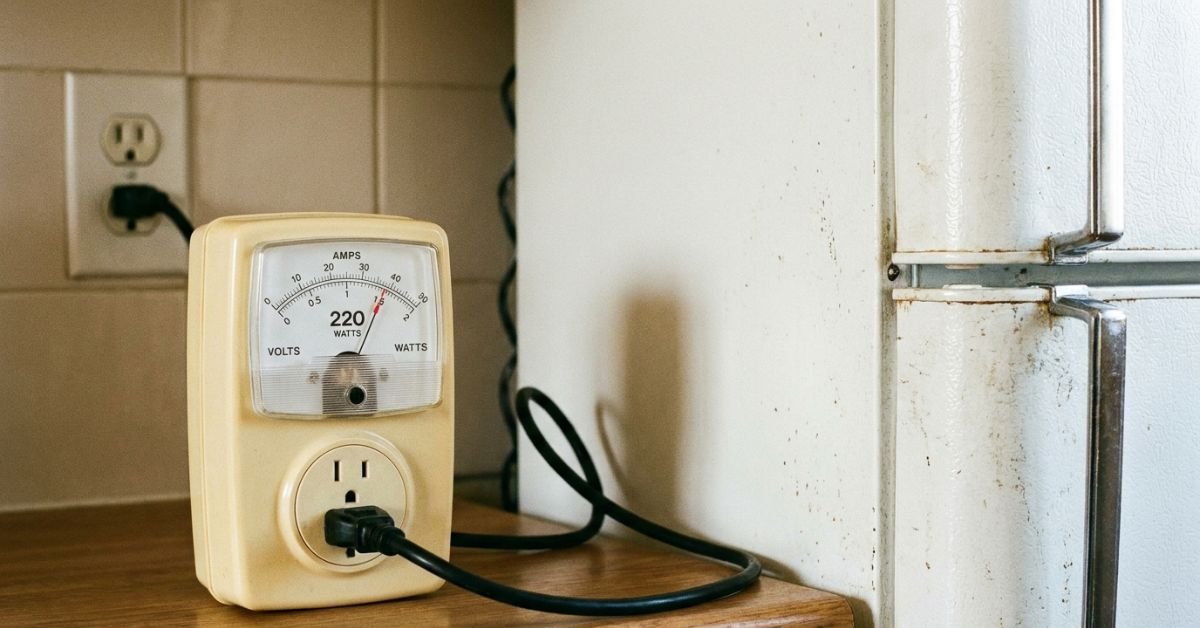
To find out how to test if an old appliance is using too much electricity, buy or borrow an inexpensive plug-in monitor like a Kill A Watt meter (around $25 online or often free to borrow from local public libraries).
💰 More Cheap Living Tips You'll Love
- Debt Snowball Method: How It Works (With Real Example)
- Pay Off Debt Faster Without Earning More: Tech Guide
- Save Money or Pay Off Debt First? Tech-Driven Guide
- First Steps to Take When You Decide to Get Out of Debt
- Debt Snowball Worksheet: How to Fill It Out Correctly
- Debt Snowball on a Low Income: Does It Still Work in 2026-27?
Daily Cost Formula:
(Wattage × Hours Used Per Day ÷ 1,000) × Your Electric Rate ($/kWh) = Daily Operating Cost
Plug your 120V appliances into the meter for a 24-hour test cycle. You are tracking two distinct problems:


- Active Mechanical Waste: The compressor or motor struggling under load, staying active twice as long as intended.
- Phantom Load: Modern electronics embedded in older gear (like standby displays, transformers, and continuous circuit boards) pulling continuous trickle power even when turned “off.”
Once you log your kilowatt-hour (kWh) readings against your utility bill’s marginal rate—which can easily hit $0.30 to $0.45 per kWh in parts of California, New York, or during summer peak surcharges in Texas—you will know immediately which machines need physical maintenance and which ones just need their schedules adjusted.
Hands-On Tune-Ups for Refrigerators and Freezers
Your refrigerator runs 24/7/365, making it the top kitchen power hog. A common question among budget-conscious renters and homeowners is: how much electricity does a 20 year old refrigerator use?
A typical late-1990s or early-2000s top-freezer unit drinks roughly 800 to 1,400 kWh every year. A modern equivalent consumes closer to 350 to 450 kWh. That gap can cost you $150 to $250 annually. Still, you do not need to replace it today to shrink that margin.
1. Does Cleaning Refrigerator Coils Save Electricity?
Yes, dramatically. When dust, pet hair, and dander coat the condenser coils—usually located behind the bottom kickplate or across the rear panel—the system cannot vent heat into the room efficiently.
The compressor must work twice as hard and cycle far longer to cool the cabin.
- The Fix: Unplug the fridge, pull it outward, and use a narrow coil brush paired with your vacuum’s crevice attachment. Vacuum the coils and the fan shroud thoroughly.
- The Payoff: In my own testing, cleaning five years of accumulated golden retriever fur dropped the daily compressor runtime by roughly 22%.
2. The Dollar Bill Gasket Seal Test
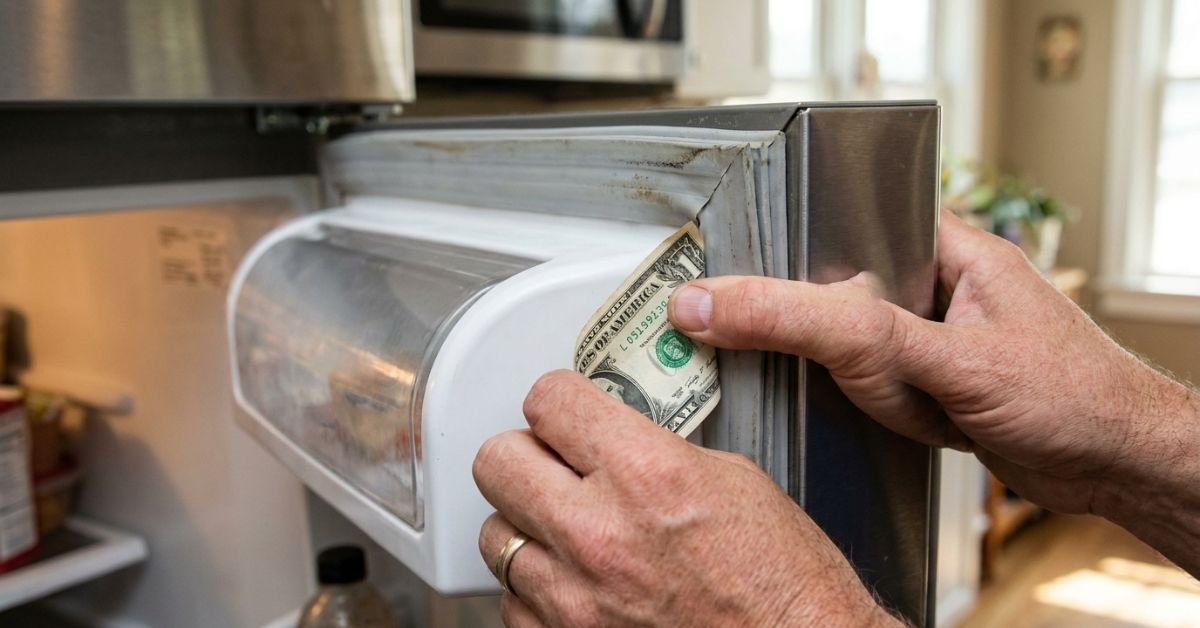
Over time, the flexible rubber gasket along the refrigerator door cracks, hardens, and loses magnetic grip. Warm kitchen air continuously leaks inside, triggering relentless cooling cycles.
- The Test: Close the door on a crisp dollar bill so half sits inside and half sticks out. Pull it gently. If it slides out with zero resistance, your seal is shot.
- The Fix: Clean the gasket thoroughly with warm water and mild soap to remove sticky residue that prevents a flat seal. If the rubber is brittle or warped, run a hair dryer on medium heat along the surface to soften the vinyl and restore its shape. If that fails, replacement gaskets run $30 to $50 and take 20 minutes to press into the retaining track.
3. Thermostat Calibration and Defrost Routines
People habitually crank refrigerator dials to maximum cold, assuming colder is better. It is not; it just runs up your utility bill.
- Target Range: Keep the fresh food compartment between 37°F and 40°F (3°C to 4°C) and the freezer at 0°F (-18°C). Use an analog refrigerator thermometer to verify the actual temperature instead of relying on the ambiguous “1 through 7” dial.
- Defrost Cycle Management: If you run an old secondary chest freezer in the garage, manual defrosting is critical. Once frost buildup passes a quarter-inch, that ice acts as an insulator against the cooling coils, forcing the unit to run constantly. Defrost it before summer hits.
Laundry Room Optimization: Washing Machines and Dryers
Older top-load washers and vented dryers are mechanical tanks. They rarely break down, but they will happily eat power if operated haphazardly. Here is how to reduce electric bill with older washer and dryer setups without giving up clean clothes.
Stop Heating Wash Water
Roughly 75% to 90% of the energy consumed by an older washing machine goes directly to heating the water via your home’s water heater. Modern laundry detergents use specialized enzymes formulated specifically for cold water.
Switch your regular cycle dial to cold/cold. Your clothes will come out just as clean, your colors won’t fade as fast, and you eliminate the massive thermal demand on your gas or electric water heater.
Clear the Dryer Duct Lint and Sensor Strips
A standard 240V electric clothes dryer pulls between 2,500 and 5,000 watts. If your dryer takes two full 60-minute cycles to dry a load of jeans, you are hemorrhaging money on every load.
- Exhaust Flow: Disconnect the foil duct behind the machine. Vacuum out the built-up dryer duct lint all the way through to the exterior wall vent hood. Restricted airflow traps moisture, doubling the mechanical run time.
- Scrub the Moisture Sensors: Inside the drum, look for two narrow curved metal bars near the lint screen. Over years of use, dryer sheets leave an invisible wax coating over these bars. The sensors then fail to detect dry clothes, keeping auto-dry cycles running needlessly. Wipe them down with rubbing alcohol on a cotton pad once every few months.
Smart Tech Upgrades for Analog Appliances
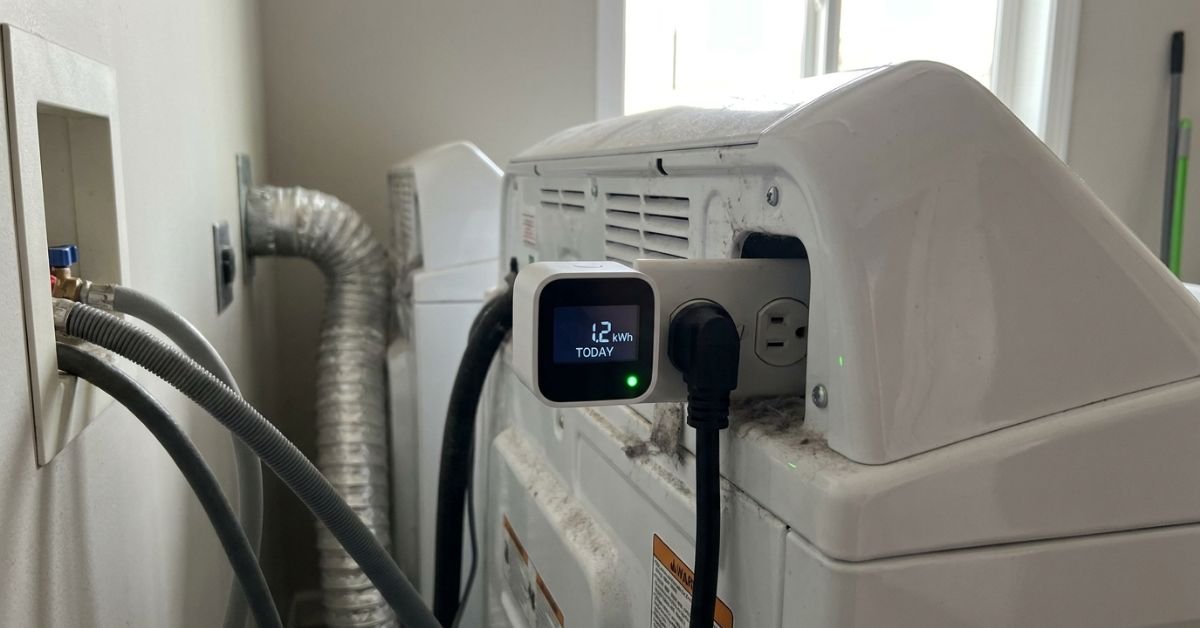
One of my favorite diy energy efficiency hacks for old appliances involves slapping modern, low-cost microelectronics onto older equipment. You can effectively digitize dumb hardware for under twenty bucks.
Using smart plugs to save energy on old appliances is a massive win when dealing with entertainment centers, older microwave clocks, window air conditioners, and secondary beverage coolers.
+-------------------------------------------------------------------------+
|                        SMART TECH COMPATIBILITY                         |
+--------------------------+-----------------------+----------------------+
| Appliance Type           | Recommended Tech      | Primary Benefit      |
+--------------------------+-----------------------+----------------------+
| Garage Beverage Fridge   | 15A Smart Plug        | Kills power overnight|
| Window A/C (120V)        | Smart Thermostat Plug | Schedules eco-modes  |
| TV / Audio Systems       | Smart Power Strip     | Eliminates vampires  |
| Electric Water Heater    | 240V Mechanical Timer | Dodges peak TOU rates|
+--------------------------+-----------------------+----------------------+
Navigating Time-of-Use (TOU) Rates
In high-cost states like California (SCE, PG&E, SDG&E), New York (ConEd), and across Texas retail energy plans, rates change dramatically based on the clock. Running an old, unoptimized dishwasher or laundry cycle at 5:30 PM can cost three times more than running it at 10:00 PM.
Expert Insight: Check your smart plug’s hardware ratings before plugging in appliances. Most standard smart plugs are rated for 10A or 15A resistive loads (120V max, roughly 1,800 watts). Never plug a 240V appliance, heavy commercial freezer, or high-draw space heater directly into a cheap smart plug. You will melt the plastic housing or trip your circuit breaker.
Set up an automated routine in the Alexa, Google Home, or Apple Home app to cut power to non-essential secondary appliances (like that garage beer fridge) during the hottest peak rate window, allowing thermal mass to maintain temperature until baseline off-peak rates return.
Common Pitfalls and Costly Mistakes to Avoid
When trying to squeeze lower utility bills out of older equipment, it is easy to make well-intentioned blunders that end up costing you more.
- Under-filling or Over-filling Wash Drums: Cramming an older washer so full that clothes cannot tumble forces the motor to draw higher amps to turn the agitator, while under-filling wastes dozens of gallons of treated water.
- Ignoring the HVAC Filter: Your central air handler works alongside every other thermal appliance in your house. A clogged HVAC filter chokes airflow, drives ambient room temperatures up, and forces your refrigerator and freezer to work harder to maintain internal setpoints. Swap cheap pleated filters every 60 to 90 days.
- Setting Refrigerator Dials to “Max Cold”: Setting your fridge to 32°F instead of 38°F will not keep your milk noticeably fresher, but it will increase compressor energy consumption by upwards of 25%.
- Relying on Outdated Defrost Timers: If your freezer’s internal mechanical defrost timer sticks, the defrost heating element can stay on continuously while the compressor fights it. If the freezer walls feel hot to the touch, test or replace the $15 defrost bimetal thermostat immediately.
Real-World Case Study: 30-Day Energy Bill Reduction Experiment
To see how much these adjustments actually move the needle, I tracked my own single-family home (built in 1984, equipped with a 2006 Whirlpool refrigerator, a 2004 top-load washer, and an early-2000s Kenmore electric dryer).
- Month 1 (Baseline): I left everything untouched. Normal wash cycles on warm, dusty refrigerator coils, and laundry run whenever clothes were dirty.
- Month 2 (Optimized): I cleaned the condenser coils, vacuumed out the 14-foot dryer vent pipe, dialed back the fridge from setting 6 to setting 4 (hitting a steady 38°F), shifted all laundry to cold water after 9:00 PM, and put our garage mini-fridge on a smart plug schedule.
30-Day Experiment Results:
------------------------------------------
Baseline Month Total:   1,142 kWh ($285.50 at $0.25/kWh average)
Optimized Month Total:    934 kWh ($233.50 at $0.25/kWh average)
------------------------------------------
Total Energy Saved:       208 kWh
Direct Financial Savings: $52.00 / month
Out-of-Pocket Expense:    $0 (Used existing tools & vacuum)
Saving $52 a month comes out to $624 a year. That is real cash back in your pocket, accomplished without spending thousands on new equipment.
Frequently Asked Questions
What are the best ways to lower power bill in an older house?
Start by sealing air leaks around exterior doors and windows using fresh weatherstripping, because drafty rooms force cooling and heating systems to work overtime. Wrap your older water heater tank in an insulated fiberglass thermal blanket, clean out all appliance ducts, and install a programmable or smart thermostat to automatically dial back HVAC usage when you are sleeping or away at work.
How do I know if an old appliance is broken or just inefficient?
Use a plug-in energy monitor to track consumption over 48 hours. If the appliance draws continuous peak wattage without cycling off—such as a refrigerator compressor running non-stop without pausing—it usually indicates a failing thermostat, failing seal, or lost refrigerant. If it cycles on and off normally but uses slightly more power than modern units, it is simply older and can be optimized with maintenance.
Is it cheaper to repair an old appliance or buy a new Energy Star model?
Apply the “50% Rule”: if the cost of repairing the old unit exceeds 50% of the price of a new one, and the machine is well past its expected lifespan (typically 10 to 15 years for major appliances), replacement makes sense. Check your local utility company’s website first; many states offer appliance recycling rebates ($50 to $100 just to haul away old working fridges) alongside federal Energy Star tax credits that offset upgrade costs.
Can old appliances damage my home’s electrical wiring?
As long as your home’s breaker panel and branch wiring meet local electrical codes and appliances operate on dedicated circuits without tripping breakers, aging appliances will not damage your wiring. However, worn internal wiring, frayed power cords, or failing motor capacitors can create dangerous heat spots or fire hazards. Inspect cords regularly for hardening or discoloration.
How much money does turning off phantom load appliances actually save?
Phantom loads (standby power) account for roughly 5% to 10% of residential electricity use in average American households, according to the US Department of Energy. Eliminating these vampire draws with smart power strips or mechanical timers saves between $100 and $200 per year, depending entirely on your local electric utility rates.