Best Thermostat Setting to Save the Most Money.Two summers ago, my electric bill hit $412. I stared at the bill in utter disbelief, standing in a living room that felt like a meat locker while my outdoor condenser groaned outside like a jet engine on a tarmac.
- 1. The Baseline Numbers: What the Data Actually Proves
- 2. Summer Setpoints: Balancing Comfort, Humidity, and Airflow
- 3. The Ceiling Fan Rule
- 4. Winter Setpoints: Defeating the Chill Without Freezing Your Wallet
- 5. The Heat Pump Exception: Why Setbacks Can Backfire
- 6. Leveraging Modern Hardware: Smart vs. Programmable
- 7. 1. Geofencing
- 8. 2. Time-of-Use (TOU) Rates & Pre-Cooling
- 9. 3. Room Sensors
- 10. Three Costly Mistakes I Learned the Hard Way
- 11. Frequently Asked Questions
- 12. Does turning the AC completely off when I leave save more money than setting it back?
- 13. What is the absolute best thermostat setting for sleeping without running up the bill?
- 14. Can a programmable or smart thermostat actually damage an older HVAC system?
- 15. Why is my heat pump blowing lukewarm air in winter even though the thermostat is set to 70°F?
- 16. How much money do smart thermostat room sensors actually save?
I thought I was being clever. I had cranked the air conditioner down to 69°F (20.5°C) around 3 PM to “beat the afternoon heatwave,” convinced that keeping the house super cold meant the system wouldn’t have to work as hard later. It was a complete disaster.
That painful bill pushed me down an obsessive rabbit hole. I wired current transformer clamps from an Emporia Vue monitor into my breaker panel, mounted digital temp-and-humidity loggers in four rooms, and started logging how temperature deltas, compressor runtimes, and setpoints actually drained cash out of my bank account.
Finding the sweet spot isn’t just about picking a single magic number off a random chart. It comes down to thermal physics, understanding your specific heating or cooling setup, and timing your system around your utility company’s pricing tricks.


The Baseline Numbers: What the Data Actually Proves
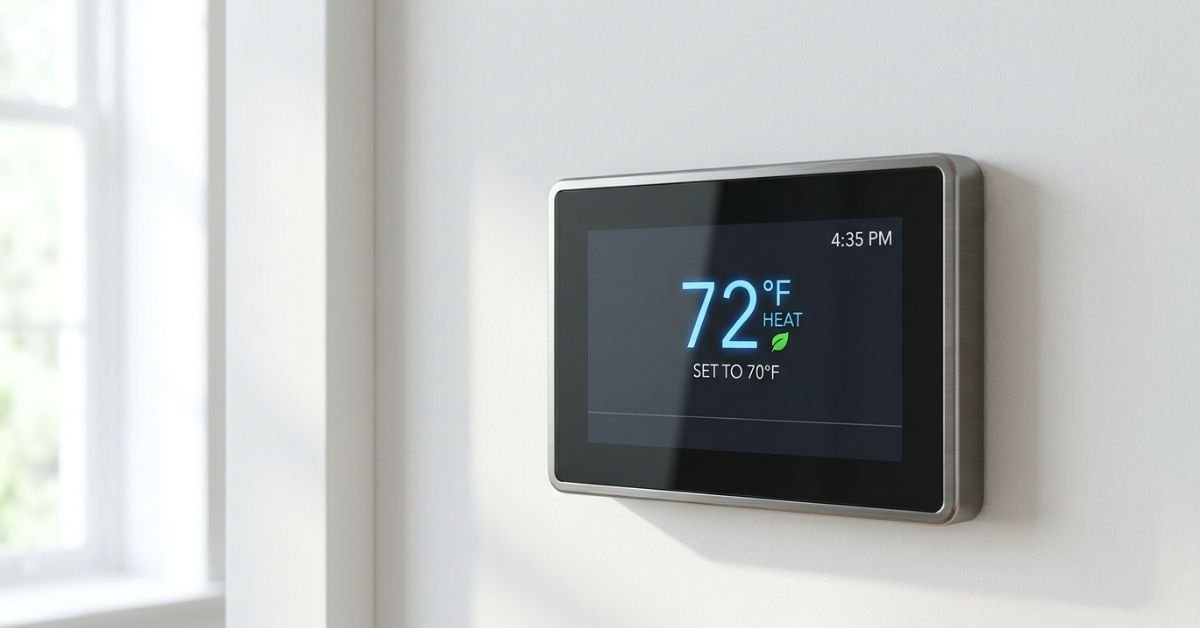
If you want the straightforward, no-nonsense baseline, the U.S. Department of Energy (DOE) points to two specific target numbers:
- Summer: 78°F (25.5°C) when you are home and awake.
- Winter: 68°F (20°C) when you are awake, dialing down 7° to 10°F (about 4° to 5°C) while asleep or away.
Now, I know what you might be thinking: 78 degrees in July? Are you out of your mind?


Hear me out. The DOE’s research shows that dialing your thermostat back by 7° to 10°F from its normal setting for eight hours a day can shave up to 10% a year off your total heating and cooling costs. That is not marketing hype; it is basic thermodynamics.
💰 More Cheap Living Tips You'll Love
- How Long to Pay Off Debt? Tech Tools to Find Out Fast
- Debt Snowball Method: How It Works (With Real Example)
- Pay Off Debt Faster Without Earning More: Tech Guide
- Save Money or Pay Off Debt First? Tech-Driven Guide
- Debt Snowball vs Avalanche: Which Repayment Strategy Wins?
- Debt Snowball on a Low Income: Does It Still Work in 2026-27?
Every home constantly fights toward thermal equilibrium—the natural law where indoor air tries to equalize with the outdoor temperature. The wider the gap between the outdoors and your living room, the faster heat transfers through your walls, ceilings, and windows.


When it is 95°F (35°C) outside and you force your house down to 70°F (21°C), the massive 25-degree temperature gradient creates a severe HVAC load. Your compressor runs almost continuously to pull heat out.
If you nudge that setpoint up to 76°F or 78°F, the heat transfer rate slows down dramatically. Your compressor cycles off, your system draws less amperage, and your utility meter stops spinning like a circular saw.
Summer Setpoints: Balancing Comfort, Humidity, and Airflow
Living comfortably at 76°F to 78°F in summer requires addressing humidity. Air temperature is only half the battle.
If your indoor relative humidity sits at 65%, 76°F feels sticky, stagnant, and downright miserable. Drop that humidity down to 45%, and that exact same 76°F suddenly feels crisp and airy.
Here is the daily schedule that consistently slashes cooling expenses across standard single-stage and dual-stage air conditioning setups:
| Time of Day | Recommended Setting | Action / Strategy | | :— | :— | :— | | Morning (6:00 AM – 9:00 AM) | 75°F – 76°F (24°C) | Comfortable wake-up temp before solar radiant heat peaks. | | Daytime Away (9:00 AM – 5:00 PM) | 82°F – 85°F (28°C) | Minimizes envelope heat gain while the home is vacant. | | Evening Peak (5:00 PM – 9:00 PM) | 77°F – 78°F (25°C) | Paired with ceiling fans to create an evaporative cooling breeze. | | Nighttime Sleep (9:00 PM – 6:00 AM) | 74°F – 76°F (23°C – 24°C) | Balances human sleep architecture with reasonable thermal load. |
The Ceiling Fan Rule
Ceiling fans cool people, not rooms. Running a ceiling fan creates a wind-chill effect across your skin, making the room feel roughly 4°F (about 2°C) cooler than the ambient air actually is.
Set your fan to rotate counterclockwise in the summer to push air down. But remember: turn the fan off when you leave the room. Leaving an AC motor humming in an empty room generates waste heat and wastes electricity without cooling anything.
Winter Setpoints: Defeating the Chill Without Freezing Your Wallet
In the winter, heat moves in the opposite direction: inside your house, trying to escape into the cold outdoors.
The baseline sweet spot is 68°F (20°C) while you are home, dropping to 60°F to 62°F (15°C to 16.5°C) at night or while you are at work.
Sleeping in a colder bedroom (around 65°F or lower) actually mirrors our circadian rhythm and triggers natural melatonin release. Swapping thin sheets for a heavy down duvet lets you drop the nighttime thermostat down to 60°F without shivering.
Every degree you back off your heating setpoint over an eight-hour stretch directly trims roughly 1% off your heating fuel consumption, whether you burn natural gas, oil, or electricity.
The Heat Pump Exception: Why Setbacks Can Backfire
Here is a massive caveat that trips up thousands of homeowners: the rules change completely if you rely on a heat pump.
Traditional gas, propane, or oil furnaces blow air at roughly 120°F to 140°F (49°C to 60°C). They are scorched-earth heating machines that can recover a house from 58°F to 68°F in under an hour without burning extra energy per unit of heat delivered.
Modern heat pumps do not work that way. They are low-temperature, ultra-efficient energy movers that slowly sip power.
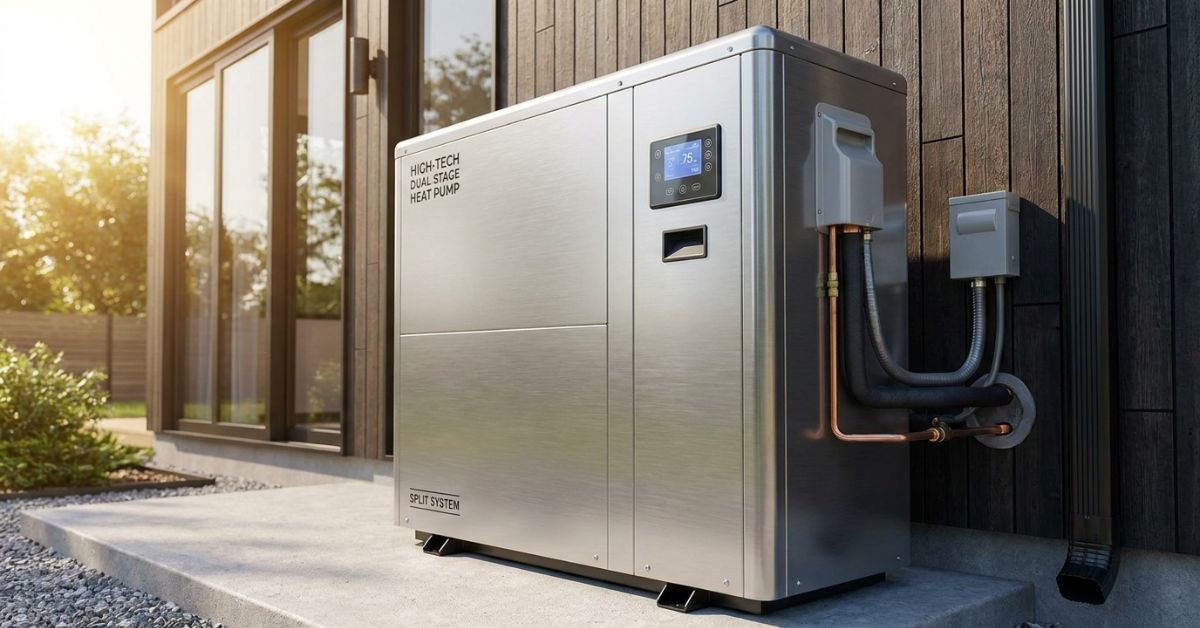
If your home has a split heat pump system and you drop the thermostat from 68°F down to 58°F during the day, your system has to work hard to recover when you bump it back up. Most thermostats see that massive 10-degree jump and assume your primary compressor is broken.
To save you from freezing, the system fires up its auxiliary or emergency heat strips. These are giant electric resistance heating coils—essentially a massive 10,000-watt toaster inside your air handler.
The second those strips kick on, your system’s efficiency falls off a cliff. Any money you saved during the day gets vaporized in 45 minutes of auxiliary heating.
The Heat Pump Strategy: If you own a standard heat pump without smart inverter ramp controls, practice “set it and forget it.” Keep it pinned near 68°F (20°C) in winter, or limit setbacks to no more than 2°F (1°C) to prevent auxiliary heat strips from firing up.
Leveraging Modern Hardware: Smart vs. Programmable
A basic programmable thermostat is better than an ancient mechanical mercury dial, but manually setting schedules rarely holds up against real, unpredictable schedules.
Upgrading to an Energy Star certified smart thermostat (such as an Ecobee Smart Thermostat Premium or a Google Nest Learning Thermostat) opens up three game-changing operational capabilities:
1. Geofencing
Instead of locking yourself into a rigid Monday-to-Friday schedule, geofencing uses the GPS on your smartphone to create a virtual fence around your neighborhood. Cross that boundary on your commute home, and your thermostat shifts from an eco-setback back to your comfort temp. If you stay late at the office or head out for spontaneous drinks, your house stays in low-power mode, saving cash automatically.
2. Time-of-Use (TOU) Rates & Pre-Cooling
Many power utilities charge flat rates around the clock, but dynamic billing is becoming the standard. Under Time-of-Use Rates, electricity consumed during Peak Demand Hours (often 4:00 PM to 9:00 PM on weekdays) can cost three to four times more than off-peak power.
Smart hardware lets you pull off a thermal trick called pre-cooling (or pre-heating):
- 1:00 PM – 3:30 PM (Super Off-Peak): Drive the thermostat down to 72°F (22°C) while power is cheap. The sheetrock, furniture, and concrete slab soak up that chill like a thermal battery.
- 4:00 PM – 9:00 PM (Peak Hours): Push the setpoint up to 79°F or 80°F. Because the house was deeply chilled, the indoor temp drifts upward slowly. The HVAC compressor barely runs during the most expensive five hours of the day.
3. Room Sensors
Thermostats are usually stuck in hallways that don’t see direct sunlight or drafty windows. Using wireless room sensors lets your system average temperatures across rooms you actually use (like your home office during the day or your master bedroom at night), preventing you from overcooling the whole house just to fix one hot spot.
Tech Tip: When installing any smart thermostat, make sure you have a dedicated C-Wire (Common wire) delivering steady 24V AC power. Running a smart unit using “power-stealing” over standard R and W wires often causes erratic cycling, compressor contactor chatter, and phantom short-cycling errors.
┌─────────────────────────────────────────────────────────────┐
│                      PRO TIP / EXPERT INSIGHT               │
├─────────────────────────────────────────────────────────────┤
│ Stop Leaving the Blower Fan Set to "ON"                     │
│                                                             │
│ Check the fan toggle on your thermostat right now. If it    │
│ says "ON" instead of "AUTO", switch it immediately.         │
│ Leaving the fan running continuously sounds smart for air   │
│ filtration, but during summer, it blows warm air straight   │
│ over a wet evaporator coil right after the compressor cuts  │
│ off. That re-evaporates gallons of condensed moisture       │
│ straight back into your living room, spikes your indoor     │
│ humidity by 15%, and forces your AC to cycle on again.      │
└─────────────────────────────────────────────────────────────┘
Three Costly Mistakes I Learned the Hard Way
I have made plenty of costly mistakes while testing different thermostat strategies over the years. Avoid these three common slip-ups:
- Crashing the Thermostat to 60°F to Cool Down Faster: Your air conditioner is an on/off machine (unless you own a high-end variable-speed inverter). Setting the thermostat to 60°F will not cool your living room down any faster than setting it to 74°F. It just blows air at the exact same temperature and volume, running past your target until your house freezes and your electric meter explodes.
- Fighting the Thermostat During Heatwaves: When outdoor temps pass 100°F (38°C), residential AC units are physically engineered to maintain an indoor temp roughly 20 degrees cooler than the outside air. Trying to force your house down to 68°F during triple-digit heat causes ice to build up on the indoor coil, choking airflow and potentially frying the compressor.
- Ignoring Filter Restriction: A clogged MERV 13 air filter strangles static airflow through the return duct. Reduced airflow drops evaporator coil temperatures, causes your equipment to run twice as long to satisfy the setpoint, and burns excess wattage on the blower motor. Check that filter monthly.

Frequently Asked Questions
Does turning the AC completely off when I leave save more money than setting it back?
If you are leaving home for just a few hours, keep the system on and set it back to 82°F–85°F (28°C–29°C) instead of turning it off completely. Shutting it down allows deep humidity and structural heat to build up inside your walls, flooring, and furniture. Once you get home, your system has to work for hours under maximum load just to strip that latent heat and moisture back out. If you are leaving for more than two or three days, however, go ahead and turn the system off or switch it to an away hold.
What is the absolute best thermostat setting for sleeping without running up the bill?
Most sleep research points to an optimal bedroom temperature between 65°F and 68°F (18°C to 20°C). If you want to keep costs down during the summer, aim for 74°F to 75°F (23°C to 24°C) paired with an overhead ceiling fan or a small bedside fan running on low. The direct airflow creates a localized breeze across your skin, keeping you comfortable without forcing your whole-home AC to run at full blast all night.
Can a programmable or smart thermostat actually damage an older HVAC system?
The thermostat itself will not cause damage, but installation mistakes can. If you install a modern smart thermostat without a stable C-wire connection, the unit might try to charge its battery by pulling tiny pulses of power through your heating or cooling wires. On older control boards, this “power-stealing” trick can trigger short-cycling, where the furnace or AC compressor rapidly turns on and off. That rapid cycling puts extra wear on contactors and capacitors.
Why is my heat pump blowing lukewarm air in winter even though the thermostat is set to 70°F?
This is completely normal for heat pumps. Unlike a combustion furnace that blasts hot air at 130°F (54°C), a standard heat pump circulates air at roughly 90°F to 95°F (32°C to 35°C). Because that is slightly cooler than your average 98.6°F body temperature, the air can feel lukewarm or even drafty against your skin. Even so, it is still delivering plenty of heat to warm up the room—it just does it steadily and efficiently.
How much money do smart thermostat room sensors actually save?
Room sensors do not cut power consumption on their own; their main job is improving comfort by keeping hot or cold rooms balanced. However, they do save money when you use them to redirect your system’s priorities. For instance, you can tell your thermostat to ignore hot upstairs bedrooms during the day and only read the downstairs living room sensor, keeping the AC from running needlessly to cool empty spaces. Pairing sensor data with occupancy detection usually cuts runtimes by another 3% to 5%.