How to Keep Your House Warm Without Skyrocketing Your Heating Bill.Two winters ago, my monthly utility statement arrived in my inbox, and I actually gasped out loud. A staggering $438 for an 1,800-square-foot house in upstate New York—and half the bedrooms still felt like a walk-in beer cooler. I was wearing two wool sweaters indoors, yet my central system was chewing through kilowatt-hours like a hungry beast.
- 1. 1. Smart Thermostat Optimization: Beyond Basic Scheduling
- 2. The Real-World Fixes
- 3. 2. Thermal Imaging: Spotting Leaks Before Hot Air Escapes
- 4. 3. Micro-Zoning: Stop Heating Rooms Nobody Uses
- 5. Radiator Systems
- 6. Forced Air & Supplemental Heat
- 7. 💡 Pro Tip: The mmWave Presence Automation
- 8. 4. Fine-Tuning Heat Pump Efficiency in Sub-Zero Weather
- 9. 5. Automated Passive Solar Gains and Air Circulation
- 10. Real-Time FAQs: Winter Heating & Energy Tech
- 11. Will using an infrared space heater actually lower my heating bill?
- 12. Can smart plugs handle the heavy power draw of space heaters?
- 13. Why does my smart thermostat make my house feel colder than my old manual one?
- 14. Is closing air vents in unused rooms a good way to save money?
- 15. Bringing It All Together
That was my breaking point.
Instead of accepting that winter comfort requires a second mortgage, I treated my drafty house like a debugging problem. With a background in home automation and tech hardware, I spent the last two cold seasons testing every gadget, sensor, and automation trick available. You don’t have to freeze under a pile of blankets to keep your house warm without a high heating bill. You just need to stop heating your home like it’s 1995.


1. Smart Thermostat Optimization: Beyond Basic Scheduling
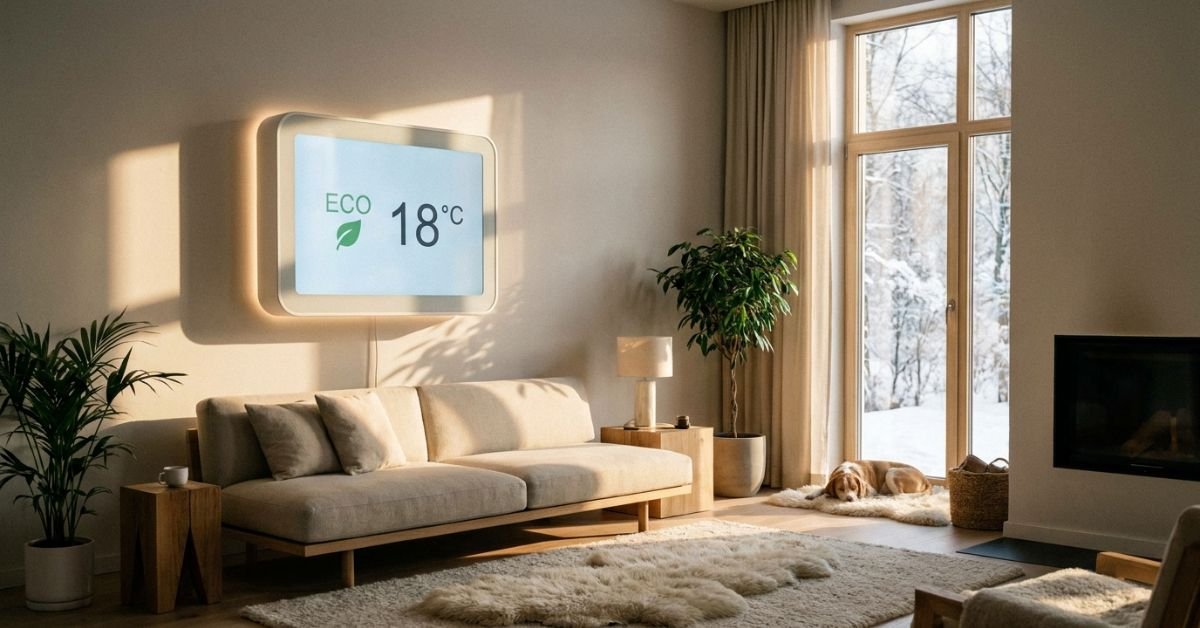
Most people buy a smart thermostat, set a rigid 9-to-5 schedule, and assume the magic happens automatically. It doesn’t. In fact, a poorly configured unit can quietly spike your utility bill.
Here is the trap I fell into early on: I scheduled a steep 8-degree setback during the day, thinking I’d save cash while away at my desk, followed by an aggressive ramp-up right when I walked in the door.
Big mistake.


When your system tries to leap from 60°F to 68°F in freezing weather, modern dual-fuel setups and heat pumps often engage auxiliary resistance heat—the infamous “AUX heat.” That heat strip is essentially a giant toaster element inside your ductwork, and it guzzles electricity at three to four times the cost of your standard compressor run.
💰 More Cheap Living Tips You'll Love
- Pay Off Debt Faster Without Earning More: Tech Guide
- First Steps to Take When You Decide to Get Out of Debt
- How Long to Pay Off Debt? Tech Tools to Find Out Fast
- Debt Snowball vs Avalanche: Which Repayment Strategy Wins?
- Debt Snowball on a Low Income: Does It Still Work in 2026-27?
- Debt Snowball Worksheet: How to Fill It Out Correctly
The Real-World Fixes
- Set target comfort based on occupancy sensors, not clocks. Ditch strict time blocks. I placed wireless remote sensors in our home office and living room. If my partner works late in the study, our Ecobee prioritizes that specific room’s average rather than overheating the empty hallway where the main unit sits.
- Dial in geofencing climate control. Link your thermostat to Home Assistant, Apple Home, or Google Home. When your phone crosses a two-mile perimeter heading home, your system initiates a gentle, low-stage recovery. No sudden demands. No expensive resistance strips kicking on.
- Flatten the swing. Maintain tighter boundaries (a 3° to 4° setback instead of 8° or 10°). Modern heat pump efficiency drops substantially when forced into emergency recovery modes. Slow, steady thermal mass retention wins the race.
2. Thermal Imaging: Spotting Leaks Before Hot Air Escapes
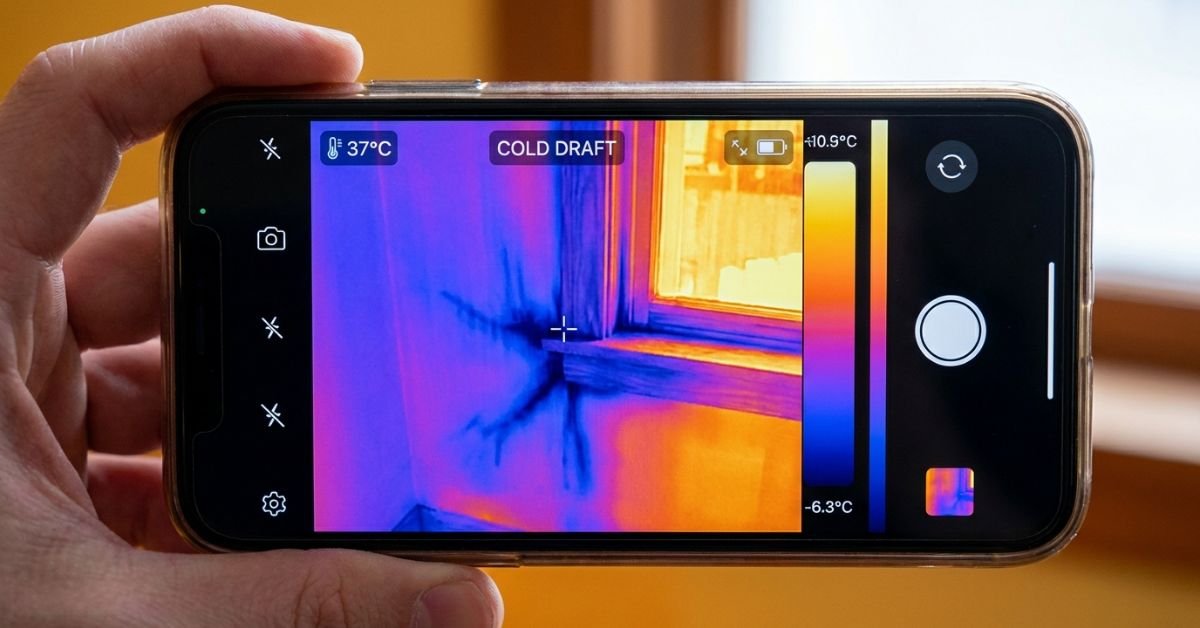
You cannot fix a thermal leak you cannot see. Last November, I plugged a compact thermal imaging camera (the FLIR ONE Gen 3) directly into the USB-C port of my phone and walked around my perimeter walls at 10:00 PM, when the outdoor temperature plummeted to 22°F.


The screen looked like a neon crime scene.
I assumed my old double-pane windows were the primary culprits. They weren’t great, but the real thermal drains were shocking:
- Uninsulated electrical outlet boxes on exterior walls. Deep purple streaks of 40-degree air were cascading down the drywall like mini waterfalls.
- The attic hatch pull-down stairs. It registered at an astonishing 34°F, radiating cold downward into our upstairs hallway ceiling.
- Baseboard baseplates. Tiny gaps beneath the trim were pulling air straight from the vented crawl space.
[Cold Air Intake (Draft)] ---> Baseboard Gaps / Unsealed Outlets
                                      │
                                      ▼
[Living Space Chilled]  ---> Thermostat Triggers Furnace
                                      │
                                      ▼
[High Utility Bills]    <--- Heated Air Escapes Through Attic Bypass
Draft detection doesn’t require a professional energy audit team with a giant blower door to get started. For under $200 (or by renting an infrared tool from your local hardware retailer), you can pinpoint every gap.
I spent a Saturday installing $0.25 foam gaskets behind every switchplate, running clear silicone caulk along the bottom trim, and building an insulated foam-board box over the attic ladder. That weekend project shaved roughly 11% off my baseline heating consumption.
3. Micro-Zoning: Stop Heating Rooms Nobody Uses
Why pay to keep a guest bedroom, formal dining room, and laundry area at a cozy 70°F when nobody enters them between 8:00 PM and morning? Traditional single-zone ducting treats the entire building as a single container, blowing money into empty space.
A full, motorized duct-damper HVAC zoning system can cost $4,000 to $9,000 to retrofit. If you don’t have that cash lying around, you can build a software-driven micro-zoning setup.
Radiator Systems
If you live in a house with hydronic baseboards or cast-iron radiators, install a smart radiator valve (like the Eve Thermo or Aqara TRV) on each unit. These thread onto standard thermostatic valve bodies and let you schedule individual rooms independently via your phone. My guest room stays at 58°F until my calendar shows family visiting, at which point an automation warms the room three hours before their arrival.
Forced Air & Supplemental Heat
If you have central air, closing manual vents in unused rooms can actually damage your blower motor by increasing static pressure—so be careful with that old trick.
A safer approach? Lower your central baseline to 64°F and deploy targeted supplemental heat where you sit.
I keep a compact infrared space heater under my desk, plugged into a heavy-duty 15A smart plug. The radiant panels heat me and my immediate furniture directly through electromagnetic waves, rather than heating all the ambient air in the vaulted room.
💡 Pro Tip: The mmWave Presence Automation
Standard PIR motion sensors fail if you sit still at a computer typing—they assume you left and turn off your space heater. Instead, pair an infrared space heater with an inexpensive mmWave presence sensor (like the Aqara FP2) and a smart plug. The mmWave sensor detects micro-movements like breathing. The moment I sit down at my desk, the space heater powers on; two minutes after I walk away, it cuts power automatically. It’s impossible to accidentally leave it running overnight.
4. Fine-Tuning Heat Pump Efficiency in Sub-Zero Weather
If your house runs on an electric heat pump, conventional wisdom says they turn into useless bricks once the outdoor temperature drops below freezing. That was true in 2005; it isn’t true for modern, inverter-driven units carrying an Energy Star Cold Climate certification.
However, your installer’s default settings might be burning cash without you knowing it.
Most dual-fuel systems come configured with a conservative “compressor lock-out temperature”—often set around 35°F. Below that threshold, the system shuts down the compressor and hands heating duties over to your expensive backup heat source (propane, oil, or auxiliary resistance strips).
Check your equipment manual. Modern variable-speed compressors can pull meaningful heat out of the air down to -5°F or lower with a Coefficient of Performance (COP) well above 1.5.
I went into my installer setup menu and pushed my compressor lockout down to 15°F. That single tweak cut my auxiliary heat run-time from 42 hours down to 4 hours over a two-week cold snap, saving me roughly $90 on one electric bill.
5. Automated Passive Solar Gains and Air Circulation
The sun provides free thermal energy every clear winter day. The problem is managing it consistently while you’re busy with life.
This is where basic home automation pays for itself:
- Smart Shades on South-Facing Windows: I set an automation routine linked to local sunrise and sunset data. At 8:30 AM, our motorized blinds open along the southern facade to harvest passive solar warmth. As soon as the sun dips behind the ridge at 4:15 PM, the blinds drop shut, adding a crucial insulating air barrier against the freezing glass.
- Reversing Ceiling Fans: You’ve probably heard this advice before, but nobody remembers to do it: flip the switch on your ceiling fan to spin clockwise at its lowest speed. Hot air naturally collects at the ceiling. A slow clockwise updraft pushes that hot air outward and down the walls without creating a chilly downward breeze. I hooked our living room fan to a smart switch that triggers this circulation routine only when the thermostat confirms the furnace is cycling.

Real-Time FAQs: Winter Heating & Energy Tech
Will using an infrared space heater actually lower my heating bill?
Yes, but only if you use a strategy called “zone heating.” If you leave your main central thermostat at 70°F and turn on a 1,500-watt space heater, your electric bill will rise. The math works when you drop your central house thermostat down to 62°F–64°F and use the space heater strictly in the room you occupy. Running one 1,500W heater costs roughly $0.20 to $0.35 per hour depending on your local electric rates, which is far cheaper than heating 2,000 square feet of empty bedrooms with gas or oil.
Can smart plugs handle the heavy power draw of space heaters?
You must check the specs carefully. Most space heaters draw 1,500 watts continuously (roughly 12.5 amps on a standard 120V US circuit). Cheap smart plugs rated for 10 amps will overheat, melt, or trigger fire risks. Only use smart plugs specifically rated for 15 amps / 1,800 watts continuous resistive loads (brands like Kasa KP125M or Shelly Plus 1PM work well). Always verify that the smart plug carries ETL or UL safety certifications.
Why does my smart thermostat make my house feel colder than my old manual one?
Old mercury or basic digital thermostats typically measured temperature with a loose ±2°F deadband, causing long, hot furnace cycles that left rooms feeling toasty before slowly cooling off. Smart thermostats prioritize tighter tolerances (often ±0.5°F to 1°F) to prevent energy waste, creating shorter, more frequent cycles. Additionally, if your smart thermostat is installed near a drafty return duct, a hallway doorway, or in direct sunlight, its internal sensor reading will be inaccurate. Adding remote room sensors and averaging the readings solves this issue.
Is closing air vents in unused rooms a good way to save money?
No, and it can actually increase your bills while damaging your heating system. Traditional residential HVAC systems rely on balanced airflow and duct pressure. When you close supply vents, static pressure builds up inside the ductwork. This forces cold air to leak through duct seams in unconditioned attics or crawl spaces, slows down airflow over your heat exchanger (causing it to overheat and short-cycle), and places unnecessary strain on your blower motor. Keep vents open unless you have an engineered HVAC zoning system designed with pressure-relief bypass ducts.
Bringing It All Together
Slashing your winter energy bills doesn’t mean enduring four months of misery in a cold home. It’s about being deliberate with where, when, and how your BTUs get spent.
Don’t try to tackle everything in one weekend. Start small: pick up an inexpensive set of outlet insulation gaskets, adjust your smart thermostat’s setback and recovery logic to stop auxiliary heat spikes, and automate your heat according to where you actually spend your time.
Once you let smart sensors handle the heavy lifting, your home stays consistently comfortable—and your bank account stays intact all winter long.