20 Cheap Meal Prep Ideas for the Whole Week Ahead: Tech Worker Edition.A few years ago, working as a backend engineer in South Lake Union, Seattle, I ran an audit on my bank account. The damage? Over $1,100 a month spent exclusively on mid-tier DoorDash deliveries and overpriced salads near the office. Between frantic sprint cycles and Slack pings pulling me out of deep work, spending $22 on a lukewarm burrito bowl felt like an unavoidable tax on my career.
- 1. The Cost-Efficiency Formula: Auditing Your Grocery Tech Stack and Pantry Basics
- 2. 20 Budget-Friendly Meal Prep Blueprints for Monday through Sunday
- 3. High-Yield Sheet Pan Proteins (Days 1–4)
- 4. Low-Effort Slow Cooker & Pressure Cooker Workhorses
- 5. Modular Carb & Fiber Desk Bowls
- 6. No-Reheat Mason Jar Lunches & Quick Wraps
- 7. High-Efficiency Breakfast Fuel
- 8. Hands-on Optimization Tips: Applying Agile Workflows to Batch Cooking
- 9. Pro Tip: The Moisture Gradient Rule
- 10. Food Safety & The Shelf-Life Boundary
- 11. Common Pitfalls: What Causes Mid-Week Meal Prep Burnout?
- 12. 1. Overcomplicating the Architecture
- 13. 2. Flavor Fatigue (The Plain Chicken Trap)
- 14. Real-World Scenarios: Navigating Crunch Weeks and Sprint Deadlines
- 15. Frequently Asked Questions
- 16. How do I stop my meal preps from getting freezer burned?
- 17. Isn’t eating four-day-old reheated chicken unhealthy or unsafe?
- 18. Can I actually pull off a $40 weekly budget in high-cost tech hubs like SF or Seattle?
- 19. What are the best containers for commuting into tech offices?
It was completely unsustainable.
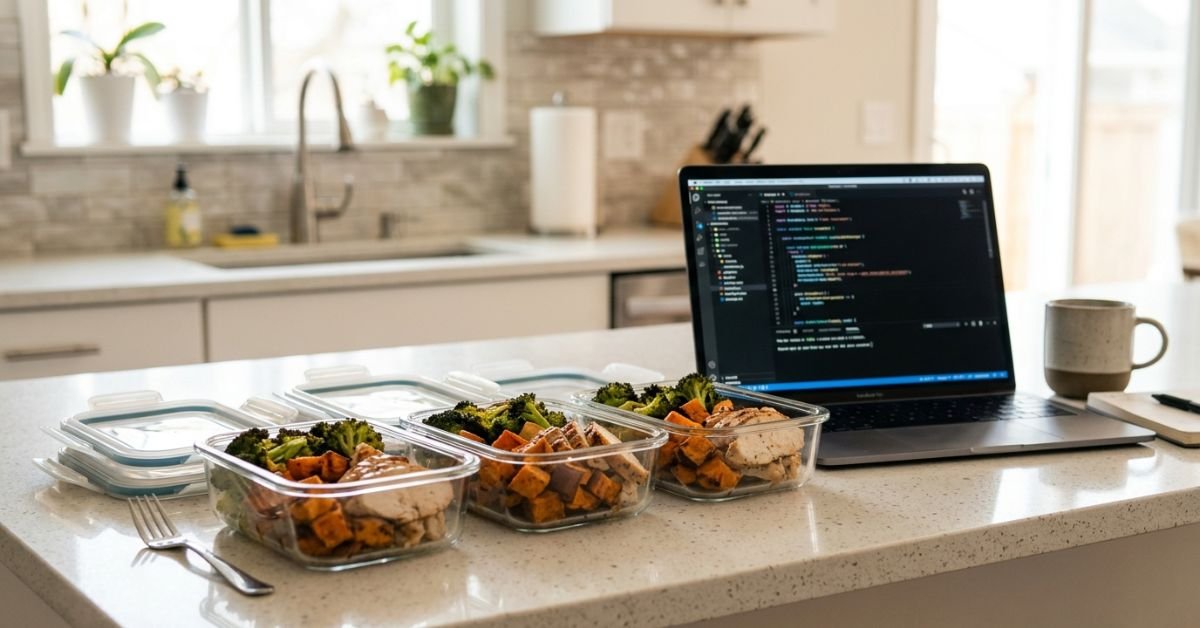
I treated my kitchen like a messy legacy codebase: inefficient, prone to crashing, and expensive to run. Once I refactored my grocery habits—treating meal prep like a continuous integration pipeline—I dropped my weekly food spend down to an average of $38 to $48, while hitting my protein targets consistently.


Whether you are hacking away in Austin, commuting into San Francisco, or juggling hybrid sprints in Seattle, these 20 cheap meal prep ideas for the whole week will keep your brain fueled without blowing your tech compensation on lunch deliveries.
The Cost-Efficiency Formula: Auditing Your Grocery Tech Stack and Pantry Basics
Running a budget kitchen is not about living off instant ramen; it comes down to dry runs and inventory audits. Before you set foot in a store, you need to check your pantry latency. What ingredients are already sitting in your cache?
Weekly Budget Target: $35.00 – $50.00 USD
Core Retailers: Aldi, Walmart, Trader Joe's, Costco
Target Macros: 120g–150g protein/day, high fiber, complex carbs
I rely heavily on the Paprika Recipe Manager app to scrape recipes, build consolidated grocery lists, and strip out redundant ingredients. For macro tracking without bloated user interfaces, Cronometer handles raw ingredient inputs better than almost anything else.


To make budget meal prep for working professionals actually work under a $50 hard cap, your foundation must rely on high-yield, shelf-stable staples:
💰 More Cheap Living Tips You'll Love
- Debt Avalanche Method Step by Step: Fast Debt Payoff
- First Steps to Take When You Decide to Get Out of Debt
- Debt Snowball vs Avalanche: Which Repayment Strategy Wins?
- Pay Off Debt Faster Without Earning More: Tech Guide
- Debt Snowball on a Low Income: Does It Still Work in 2026-27?
- Debt Snowball Worksheet: How to Fill It Out Correctly
- Jasmine or Brown Rice: Buy the 10-20 lb bulk bags at Costco or Asian grocers ($0.70/lb).
- Dry or Canned Black Beans and Chickpeas: Under $0.90 per can at Aldi or Trader Joe’s.
- Green or Brown Lentils: $1.39 a bag, delivering massive amounts of dietary fiber and complex carbs.
- Old-Fashioned Rolled Oats: Massive bulk canisters for under $4.00.
- Whole Block Firm Tofu & Frozen Edamame: $1.79 to $2.20 per unit.
- Bone-in Chicken Thighs or Pork Shoulder: Frequently on sale for $1.99–$2.49/lb at standard US supermarkets.
Buying dry staples up front feels like an initial infrastructure cost, but your recurring cost-per-serving plummets to roughly $1.50 to $2.80 per meal.


20 Budget-Friendly Meal Prep Blueprints for Monday through Sunday
Here is the modular blueprint matrix. These meal prep recipes for tech workers balance cook time, shelf life, and desk-friendly reheating (meaning you won’t clear out the breakroom with offensive fish odors).
High-Yield Sheet Pan Proteins (Days 1–4)
1. Lemon Herb Sheet Pan Chicken Thighs
Toss bone-in, skin-on chicken thighs (or boneless if grabbed on sale) with dried oregano, garlic powder, salt, and lemon juice. Roast at 400°F alongside chopped zucchini and red bell pepper.
- Cost per serving: ~$2.10
- Macro hit: 38g protein, 4g carbs, 18g fat.
2. Smoky Paprika Pork Loin & Roasted Sweet Potatoes
Pork loin is one of the most slept-on cheap lean proteins in American grocery stores ($2.49/lb at Walmart). Slice it into medallions, season heavily with smoked paprika, cumin, and garlic, then bake alongside diced sweet potato cubes.
- Cost per serving: ~$1.85
- Desk usability: Reheats cleanly without drying out.
3. Harissa-Spiced Ground Turkey Hash
Brown a 16-ounce chub of 85/15 ground turkey with two tablespoons of harissa paste, diced yellow onions, and cubed russet potatoes. Finish with chopped fresh cilantro.
- Cost per serving: ~$2.30
- Tip: High volume, ridiculously satiating for long desk sessions.
4. Crispy Garlic Chili Tofu Blocks
Press extra-firm tofu, cube it, toss with cornstarch, soy sauce, and a splash of sesame oil, then air fry at 390°F for 14 minutes. Pair with steamed frozen green beans and jasmine rice.
- Cost per serving: ~$1.45
- Vegetarian win: Packs 24g of plant protein per container.
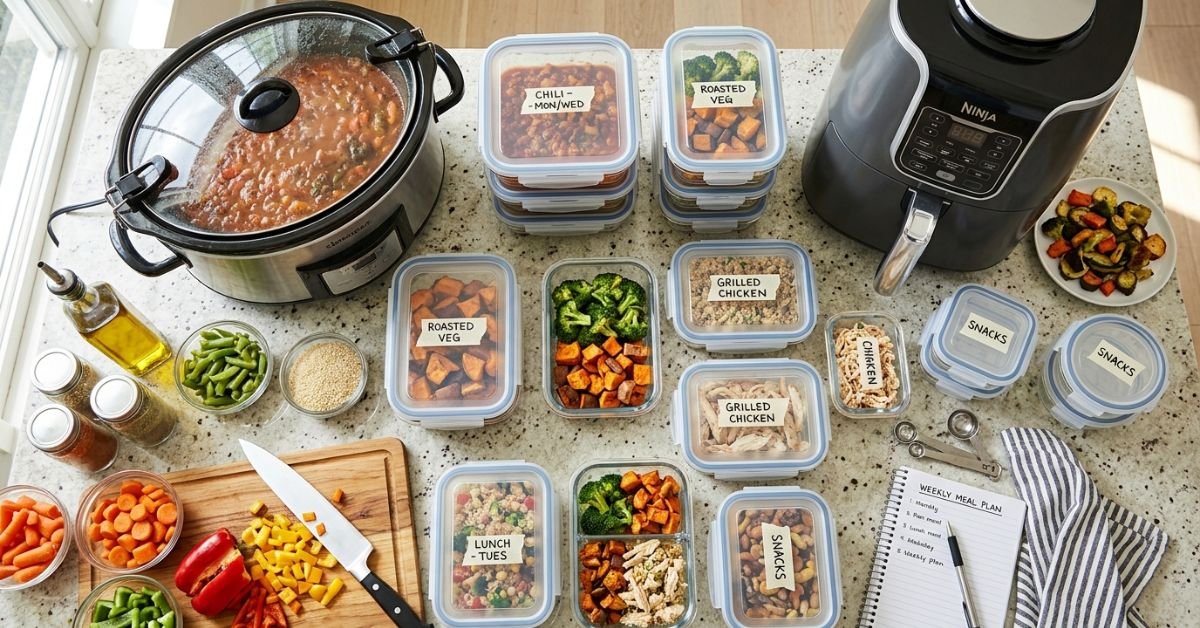
Low-Effort Slow Cooker & Pressure Cooker Workhorses
5. Salsa Verde Shredded Chicken Bowls
Throw three pounds of chicken breast or thighs into an Instant Pot with a 16-ounce jar of Trader Joe’s salsa verde and a teaspoon of cumin. Pressure cook on high for 12 minutes, shred, and distribute over brown rice and rinsed black beans.
- Cost per serving: ~$2.40
- Best for: Cheap high protein meal prep under 50 dollars.
6. Chipotle-Style Barbacoa Chuck or Pork Butt
Grab a cheap cut of pork shoulder (carnitas style) or bottom round beef. Slow cook for eight hours with chipotle peppers in adobo, apple cider vinegar, and Mexican oregano.
- Cost per serving: ~$2.25
- Storage profile: The braising liquid prevents freezer burn when frozen for later in the week.
7. Yellow Lentil & Coconut Milk Dal
A classic Indian comfort staple. Simmer red or yellow split lentils with turmeric, minced ginger, cumin seeds, garlic, and one can of light coconut milk. Serve over basmati rice with frozen peas folded in.
- Cost per serving: ~$1.15
- Fiber punch: Over 12g of prebiotic fiber per portion to avoid post-lunch brain fog.
8. Fire-Roasted Black Bean & Turkey Chili
Combine one pound of browned ground turkey, two cans of fire-roasted diced tomatoes, two cans of black beans, and chili powder in the slow cooker.
- Cost per serving: ~$1.90
- Shelf life: Improves in flavor by Wednesday as spices meld in your fridge.
Modular Carb & Fiber Desk Bowls
9. Mediterranean Quinoa & Chickpea Crunch Bowls
Cook a batch of quinoa in vegetable broth. Toss with drained canned chickpeas, diced English cucumbers, halved grape tomatoes, kalamata olives, and a red wine vinaigrette.
- Cost per serving: ~$1.75
- Cold meal: Perfect for chaotic deployment days when you don’t have time to wait in line for the communal microwave.
10. Roasted Broccoli, Sausage, and Orzo Bake
Slice budget smoked turkey sausage ($3.00/pack), combine with dry orzo and broccoli florets on a baking sheet with chicken stock, and bake until the pasta absorbs the liquid.
- Cost per serving: ~$2.15
- Texture: Rich and comforting without heavy dairy creams.
11. Korean-Style Ground Beef & Cabbage Rice Bowls
Brown lean ground beef with garlic, ginger, soy sauce, and a dash of brown sugar. Sauté shredded green cabbage (which costs roughly $0.89 a head) directly in the beef fat. Serve over calrose rice.
- Cost per serving: ~$2.35
- Low-carb tweak: Swap half the rice for extra shredded cabbage.
12. Pesto Pasta with White Cannellini Beans and Spinach
Toss boiled penne with a 6-ounce jar of store-bought basil pesto, two cans of rinsed cannellini beans, and two large handfuls of baby spinach (which wilts down into the warm pasta).
- Cost per serving: ~$1.60
- Prep speed: Done in under 15 minutes flat.
No-Reheat Mason Jar Lunches & Quick Wraps
13. Layered Southwestern Mason Jar Salad
Put the dressing at the bottom (Greek yogurt + lime + salsa), layer in black beans, corn, diced bell peppers, chopped cooked chicken, and pack chopped romaine tightly at the top to keep it crisp.
- Cost per serving: ~$2.20
- Food science note: Keeping dressing physically separated from leafy greens prevents enzymatic wilt.
14. High-Protein Buffalo Chickpea Salad Sandwiches
Mash two cans of chickpeas with two tablespoons of mayonnaise, a tablespoon of Greek yogurt, celery bits, and your favorite hot sauce (Frank’s RedHot works great). Pack into whole-wheat pita pockets in the morning.
- Cost per serving: ~$1.25
- Desk convenience: 100% spill-proof if wrapped in foil.
15. Spicy Peanut Cold Soba Noodles with Edamame
Boil soba or whole-wheat spaghetti. Whisk smooth peanut butter, soy sauce, warm water, sriracha, and rice vinegar. Toss noodles with thawed frozen edamame, grated carrots, and green cabbage.
- Cost per serving: ~$1.55
- Endurance: Tastes even better cold on Thursday afternoon.
16. Turkey, Cheddar, and Apple Pinwheel Bento
Lay whole-wheat flour tortillas flat. Spread light cream cheese, layer deli turkey, sharp cheddar slices, and thinly sliced Granny Smith apples. Roll, slice into pinwheels, and pack with baby carrots.
- Cost per serving: ~$2.50
- Prep time: 8 minutes. Zero cooking required.
High-Efficiency Breakfast Fuel
17. Overnight Cold Brew Chia Oats
Mix rolled oats, chia seeds, a scoop of vanilla whey protein, and cold brew coffee (instead of water or plain milk) with oat milk. Divide into four jars.
- Cost per serving: ~$1.10
- Morning speed: Grab directly from the fridge before heading out or hopping on standup.
18. Freezer-Friendly Breakfast Burritos
Scramble a dozen eggs with black beans, diced green chilies, and sharp cheddar. Roll into flour tortillas, wrap individually in foil, and freeze. Reheat directly in the toaster oven or air fryer.
- Cost per serving: ~$1.20
- Batch size: Yields 8-10 burritos in one 30-minute sprint.
19. Baked Sheet Pan Berry Protein Pancakes
Stop flipping individual pancakes. Whisk standard pancake mix with two scoops of protein powder and milk, pour across an entire rimmed baking sheet, scatter frozen blueberries, and bake at 350°F for 18 minutes. Slice into six squares.
- Cost per serving: ~$0.85
- Reheat: 45 seconds in the office microwave.
20. Cottage Cheese & Hard-Boiled Egg Savory Bento Box
Steam large eggs in the Instant Pot (5 minutes high pressure, 5 minutes natural release, ice bath). Pack two peeled eggs alongside half a cup of 2% cottage cheese, everything bagel seasoning, and sliced cucumbers.
- Cost per serving: ~$1.30
- Macro target: 28g pure protein without touching a stove.
Hands-on Optimization Tips: Applying Agile Workflows to Batch Cooking
Cooking every night after six hours of pull requests and design reviews is an operational disaster. I treat healthy cheap meals to prep on sunday like a production deployment: parallel execution, zero dead time, and airtight containerization.
00:00 - 00:15 | Sprint Planning & Mise en place (Chop all veg, trim proteins)
00:15 - 00:20 | Fire background tasks (Instant Pot chicken, sheet pan in oven)
00:20 - 01:15 | Active processing (Stove burners running grains, assembly line set up)
01:15 - 01:45 | Cooling stage & sauce mixing (Do NOT pack piping hot food)
01:45 - 02:00 | Packaging, labeling, cold-chain deployment (Fridge/Freezer)
Pro Tip: The Moisture Gradient Rule
Never seal warm food inside your bento containers. When hot steam hits the cold container lid, it turns into trapped liquid condensation. That moisture rains back down onto your roasted veggies and braised meat, resulting in mushy broccoli and rubbery proteins by Wednesday. Let all cooked food cool down completely to ambient room temperature before snapping the lids shut.
Food Safety & The Shelf-Life Boundary
Follow FDA food safety guidelines closely to avoid taking yourself out with food poisoning during crunch week. Cooked poultry, ground meats, and seafood are strictly reliable for three to four days in standard US refrigeration set between 35°F and 38°F.
If you are following this guide on how to meal prep for the week on a budget, make sure you partition your meals logically:
- Fridge Zone (Monday – Wednesday): Keep days 1 to 3 in glass borosilicate containers on the middle shelf.
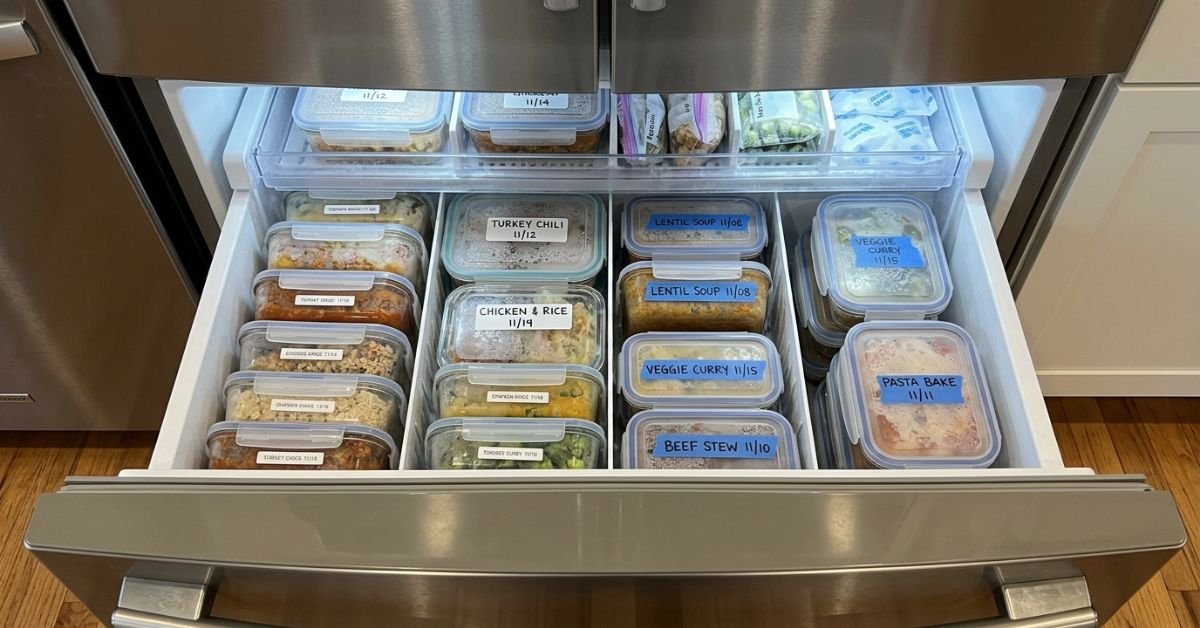
- Deep Freezer (Thursday – Friday): Flash-freeze meals slated for Thursday and Friday immediately on Sunday afternoon. Move them down to the fridge on Wednesday evening so they defrost slowly without losing structural integrity.
Common Pitfalls: What Causes Mid-Week Meal Prep Burnout?
Most people drop meal planning after two weeks not because of the cooking, but because of cognitive friction and palate fatigue.
1. Overcomplicating the Architecture
Beginners often pick five wildly different recipes requiring 34 separate ingredients. That is a recipe for a $95 grocery bill and kitchen misery. Keep ingredients shared across recipes. If you buy a massive bunch of cilantro, use it across your turkey hash, black bean chili, and salsa bowls.
2. Flavor Fatigue (The Plain Chicken Trap)
Eating identical plain baked chicken breast and soggy brown rice four days straight makes DoorDash look irresistible. The solve is modular sauces. Keep your base proteins lightly seasoned, then diversify using low-cost flavor modifiers:
- Sriracha Mayo: Sriracha mixed with light Japanese mayo.
- Pantry Chimichurri: Chopped parsley/cilantro, minced garlic, vinegar, olive oil, red pepper flakes.
- Smoky Greek Yogurt Dip: Plain whole-milk Greek yogurt mixed with lime juice and chipotle powder.
Change the sauce, and you change the entire meal without extra cooking cycles.
Real-World Scenarios: Navigating Crunch Weeks and Sprint Deadlines
What happens when your continuous integration pipeline breaks, a critical bug hits production, and you are stuck working until 9:00 PM?
- The 10-Minute Emergency Fallback: Keep a bag of frozen cauliflower rice or pre-shredded coleslaw mix, two eggs, and a can of tuna in the pantry. Fry them together with soy sauce and sesame oil for an instant “Egg Roll in a Bowl.” Total cost: $1.40. Time: 7 minutes.
- The Zero-Waste Friday Scramble: By Friday, whatever odd ends are left over—half a bell pepper, a quarter cup of black beans, stray pieces of diced pork—go straight into a screaming hot cast-iron skillet for a zero-waste stir-fry. Clear the fridge cache before running your next grocery script on the weekend.
Frequently Asked Questions
How do I stop my meal preps from getting freezer burned?
Freezer burn occurs when moisture sublimates out of food and into air pockets inside your container. Use heavy-duty borosilicate glass containers with silicone gaskets, or press a small piece of parchment paper directly onto the surface of the food before sealing the lid. This eliminates air exposure entirely.
Isn’t eating four-day-old reheated chicken unhealthy or unsafe?
According to USDA food safety standards, cooked chicken stored at 40°F (4°C) or below remains completely safe to consume for up to four days. To keep the texture pleasant, add a tablespoon of water or broth over the chicken before microwaving, and reheat at 70% power instead of blasting it at maximum wattage.
Can I actually pull off a $40 weekly budget in high-cost tech hubs like SF or Seattle?
Yes, provided you avoid specialty boutique grocers and pivot your shopping to Aldi, Costco, or standard regional supermarkets (like WinCo or Grocery Outlet). Focus your basket on store brands, bone-in cuts, bulk dried grains, and seasonal or frozen produce, while strictly avoiding pre-chopped vegetables and branded processed snacks.
What are the best containers for commuting into tech offices?
Invest in a 5-pack of 30oz single-compartment borosilicate glass containers with locking snap lids. They don’t absorb oil or curry stains like plastic does, they are completely dishwasher and oven-safe, and you can place them directly into office microwaves without worrying about microplastics leaching into your food.
Batch cooking isn’t a culinary chore; it’s operational discipline that pays immediate dividends to your wallet and your sustained energy levels. Set a timer for two hours this Sunday, run through your prep sprint, and enjoy breezing through your workday while your coworkers stand in line waiting for overpriced takeout.