Tech-Smart Budget Meal Planning for Picky Eaters and Busy Families.Last October, I hit my breaking point in the Kroger checkout aisle. The register display pinged $238.47. Half of my cart was filled with branded “toddler-friendly” chicken tenders, duplicate snack boxes, and produce I knew deep down would turn into brown sludge in my crisper drawer. That night, my four-year-old took one look at a single fleck of dried oregano on his mac and cheese and pushed the bowl to the floor. Dinner was ruined, and fifty dollars of grocery budget evaporated into thin air.
- 1. The Tech-Driven Meal Plan: Auditing Family Tastes and Budget Needs
- 2. Setting the Baseline with Digital Logs and the USDA Thrifty Food Plan
- 3. Common Pitfalls: Imposing Rigid Menus
- 4. Leveraging Smart Grocery Apps to Compare Store Circulars Digitally
- 5. 1. The Flipp App for Digital Circular Scanning
- 6. 2. AnyList and Cozi for Real-Time Syncing
- 7. 3. Automating Cash-Back with Ibotta and Store Loyalty Apps
- 8. AI Meal Architecture: ChatGPT Prompts and Component Dinners
- 9. How to Use ChatGPT for Family Meal Planning on a Budget
- 10. Smart Deconstruction: The End of Short-Order Cooking
- 11. Real-World Scenario: A 7-Day $125 Meal Plan for Selective Palates
- 12. The $125 Grocery Receipt Breakdown
- 13. The 5-Day Dinner Lineup
- 14. Batch Cooking Tech: Instant Pot Workflows Without Pantry Burnout
- 15. Common Pitfalls: Subscription Fatigue and Bulk Waste
- 16. Frequently Asked Questions
- 17. What is the best budget meal planning app for families with picky eaters?
- 18. How do I build a cheap meal plan for picky toddlers on a budget?
- 19. How can I cut my grocery bill with picky kids without fighting at dinner?
- 20. How do apps like Ibotta and digital store coupons work together?
If you are raising selective eaters while staring down post-inflation grocery receipts at Walmart, Aldi, or Target, you know the dread. Feeding kids is hard enough; trying to do it without going broke feels like a full-time job. Over the last six months, I stopped guessing and turned to my home tech stack. By combining digital grocery circulars, AI recipe workflows, and smart pantry inventory systems, I slashed our household grocery spend from nearly $1,000 a month down to $600—all while feeding a stubborn preschooler and a spice-averse eight-year-old without cooking separate meals.
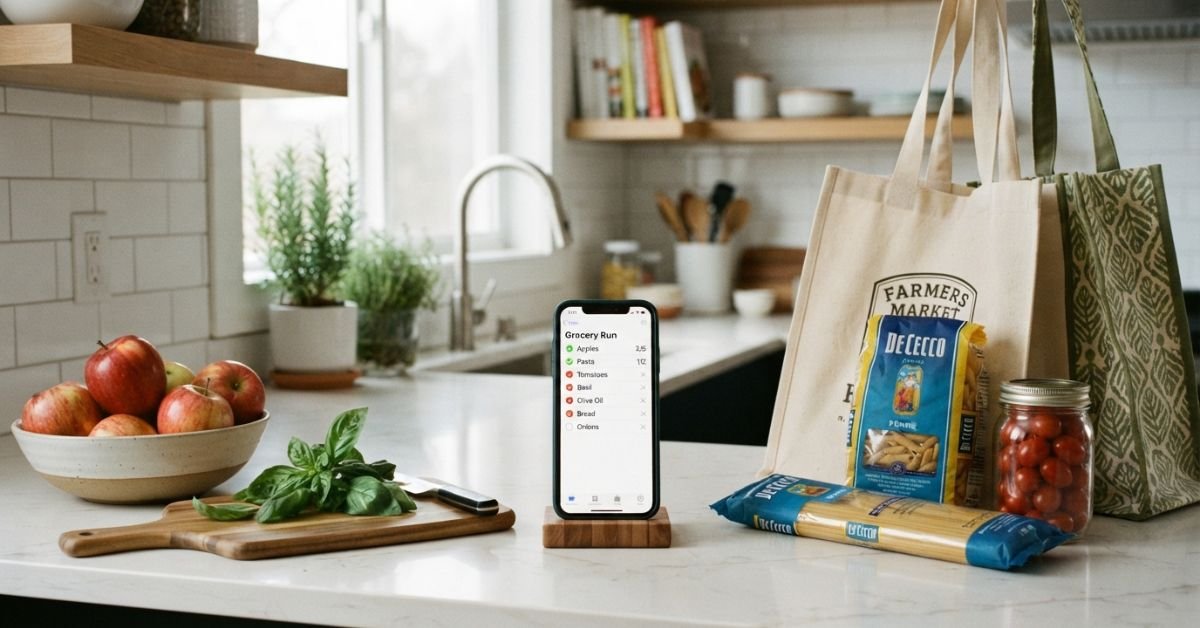
The Tech-Driven Meal Plan: Auditing Family Tastes and Budget Needs
Most traditional meal advice tells you to buy bulk lentils, cook a massive curry on Sunday, and force your kids to eat whatever is served. Anyone with a truly selective child knows that is a fantasy that ends in tears and late-night bowls of dry cereal. To fix your budget, you have to treat your kitchen like a supply chain problem.


Setting the Baseline with Digital Logs and the USDA Thrifty Food Plan
According to the latest USDA Thrifty Food Plan updates, a family of four with two children under eight is estimated to spend roughly $225 to $250 a week on groceries for a low-cost, nutritious diet. In real-world shopping at suburban supermarkets, hitting those federal figures requires insane vigilance.
I started by running a strict $150 Weekly Budget Test across my local Aldi and Walmart Supercenter. To figure out where my money was leaking, I stopped writing lists on sticky notes and built a minimal “Taste Matrix” inside Apple Notes (you can use Notion or Google Keep just as easily).
Here is what I log:


- Safe Foods: Ingredients my kids eat without sensory meltdown (e.g., raw carrots, cheddar blocks, rotisserie chicken, mild Greek yogurt, elbow noodles).
- Bridge Foods: Ingredients one step removed from safe foods (e.g., zucchini coins tossed in familiar parmesan, mild ground turkey instead of beef).
- Refusal Triggers: Textures and visual red flags that trigger total rejection (sauces mixed into carbs, visible green herbs, wet meats).
Tracking refusal patterns showed me something incredible: I wasn’t wasting money on main proteins; I was wasting cash on “hidden veggie” recipe experiments and niche specialty snacks that sat in my pantry until they expired.
💰 More Cheap Living Tips You'll Love
- How Long to Pay Off Debt? Tech Tools to Find Out Fast
- Debt Snowball on a Low Income: Does It Still Work in 2026-27?
- Lower Your Electric Bill as a Renter: 12 Cheap Tech Ways
- Debt Snowball Method: How It Works (With Real Example)
- Pay Off Debt Faster Without Earning More: Tech Guide
- Debt Avalanche Method Step by Step: Fast Debt Payoff
+------------------+-----------------------------+-----------------------------+
| Category         | Child 1 (Age 4)             | Child 2 (Age 8)             |
+------------------+-----------------------------+-----------------------------+
| Safe Foods       | Elbow pasta, cheddar, eggs  | Ground turkey, rice, apples |
| Bridge Foods     | Grated carrots in mac cheese| Mild salsa, sweet potato    |
| Hard Triggers    | Mixed sauces, onions        | Visible pepper, soggy crust |
+------------------+-----------------------------+-----------------------------+
Common Pitfalls: Imposing Rigid Menus
The fastest way to derail a budget meal plan with kids picky eaters included is top-down authoritarian planning. If you dictate that Tuesday is Fish Taco Night without running it past the sensory audit, you will end up ordering a $35 emergency Domino’s delivery. Involving selective eaters doesn’t mean letting them pick candy; it means showing them two budget-approved options in your meal app and letting them tap the screen to decide.


Leveraging Smart Grocery Apps to Compare Store Circulars Digitally
You do not need paper coupons cut with scissors. Domestic coupon technology has moved entirely to mobile, and running a lean grocery cart means pairing digital circular scrapers with shared household lists.
If you are hunting for the best budget meal planning app for families with picky eaters, the secret is actually combining three specialized free apps rather than paying for a bloated monthly subscription.
1. The Flipp App for Digital Circular Scanning
The Flipp app remains the single best tool for cross-referencing US supermarket circulars. Before I plan a single dinner, I open Flipp and search for our foundational “Safe Food” proteins: boneless skinless chicken breasts, 80/20 ground beef, and sharp cheddar.
If Kroger has bone-in chicken thighs on sale for $1.29 a pound, my week’s meal plan pivots to shredded chicken dishes. If Target Circle is running an unexpected 20% off dairy promotion, I stock up on whole-milk blocks to shred at home.
2. AnyList and Cozi for Real-Time Syncing
My spouse and I use AnyList (Cozi is a fantastic alternative for larger families). It categorizes items by supermarket aisle automatically. More importantly, when an item is on sale, I paste the target unit price directly into the list note (e.g., “Eggs – max $2.50/dozen at Aldi”). When my partner stops at the store on the way home, there is no guessing about which specific brand or package size fits our thrifty target.
3. Automating Cash-Back with Ibotta and Store Loyalty Apps
Digital grocery coupons live inside the native retailer apps—Kroger Plus, Walmart Cash, and Target Circle. I scan barcodes in the aisle with my phone before putting anything into the cart.
Pairing those store discounts with Ibotta brings in steady returns on everyday staples like milk, bread, and oats. I routinely pull $15 to $25 a month back into our bank account just by scanning my printed receipts or linking my store loyalty cards. It turns shopping into a low-stakes optimization game.
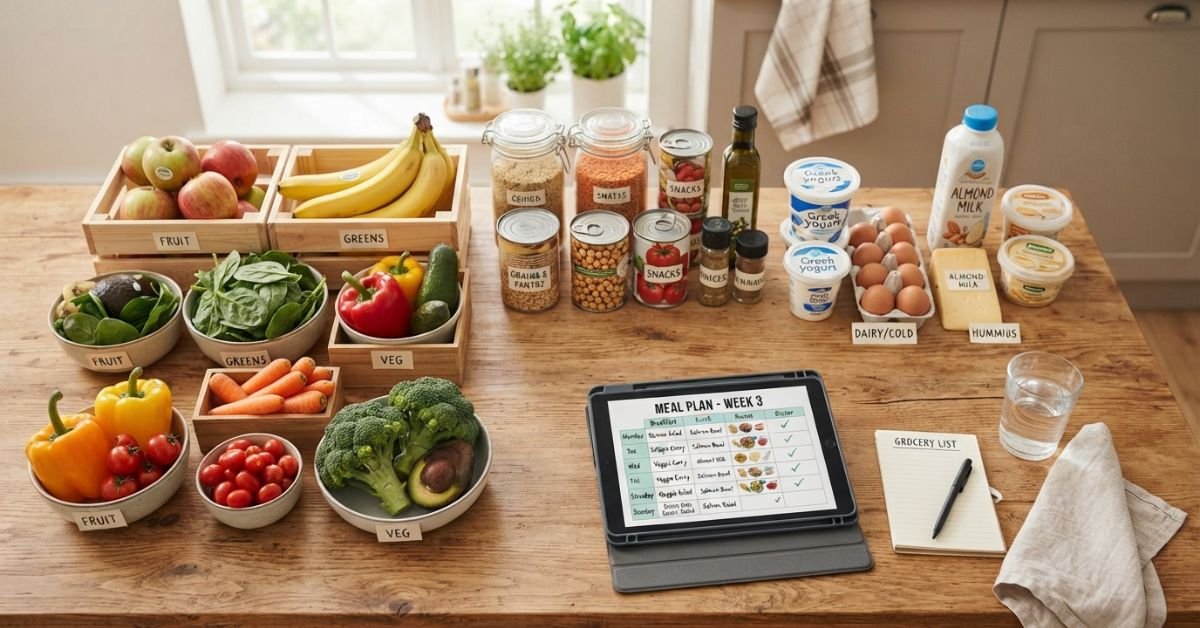
AI Meal Architecture: ChatGPT Prompts and Component Dinners
Generative AI has transformed how I run our kitchen. Instead of scrolling through mommy blogs buried under seven pages of life stories, I treat AI recipe generators like a hyper-customized kitchen assistant.
How to Use ChatGPT for Family Meal Planning on a Budget
Generic prompts like “give me a cheap meal plan” yield useless, generic recipes that picky eaters immediately reject. You have to feed the AI strict constraints: your exact weekly budget, local store pricing baselines, equipment on hand, and non-negotiable safe ingredients.
Here is the exact prompt template I paste into ChatGPT on Sunday mornings:
*”Act as an expert budget meal planner and child feeding specialist. Build a 5-day dinner plan for a family of 4 using an absolute maximum budget of $80 for dinners. Our local store is Aldi/Walmart.
Safe ingredients my kids accept: eggs, mild cheddar cheese, chicken breast, canned black beans, russet potatoes, sweet apples, raw carrots, and elbow macaroni.
Hard constraints:
- No mixed casseroles or heavy visible sauces.
- Every dinner must be a ‘deconstructed component meal’ where elements are served side by side.
- Zero exotic ingredients; utilize common pantry spices only.
- Keep active prep time under 30 minutes.
- Generate a consolidated, categorized grocery list with estimated US prices.”*
This approach delivers hyper-targeted results. It won’t suggest an expensive jar of lemongrass paste or tell you to make a complex shepherd’s pie that your four-year-old will cry over.
Smart Deconstruction: The End of Short-Order Cooking
The absolute holy grail of dinner peace is component cooking. Stop making one fancy dish for the adults and heating up frozen nuggets for the kids. Make one meal, but don’t mix it together.
Take taco night:
- Kids’ plates: Plain seasoned ground turkey, shredded cheese in a neat pile, tortilla chips on the side, and raw carrot coins.
- Adults’ plates: Ground turkey spooned over chopped romaine, topped with black beans, sharp jalapeño salsa, cilantro, and Greek yogurt sour-cream sub.
Same skillet, same budget, zero short-order cooking, zero dinnertime battles.
:::tip Pro Tip: Never buy pre-shredded bagged cheese. It contains anti-caking agents (like potato starch or cellulose) that prevent silky melting, and it costs up to 30% more per ounce than 16-ounce store-brand blocks. Spend three minutes with a box grater or your food processor shredder disc; the savings add up to nearly $100 annually. :::
Real-World Scenario: A 7-Day $125 Meal Plan for Selective Palates
Here is our battle-tested, low-stress weekly grocery list for picky eaters on a budget, built from a single trip to Aldi with fill-ins from Walmart. This covers breakfast, lunches, and five core family dinners for four people.
The $125 Grocery Receipt Breakdown
- Proteins:
- Whole chicken or 3 lbs chicken breasts ($8.97)
- 2 lbs lean ground turkey ($5.98)
- 2 dozen large eggs ($4.50)
- 1 block sharp cheddar cheese, 16 oz ($3.89)
- Pantry Staples & Grains:
- 2 boxes elbow macaroni ($1.96)
- 5 lb bag russet potatoes ($3.49)
- 2 cans black beans ($1.78)
- 1 loaf whole wheat sandwich bread ($1.89)
- Old-fashioned rolled oats, 42 oz ($3.99)
- Tortilla chips or flour tortillas ($1.98)
- Produce & Fruit:
- 3 lb bag Gala or Fuji apples ($3.99)
- 2 lb bag carrots ($1.98)
- 1 bunch bananas ($1.45)
- 1 head broccoli or 2 bags frozen florets ($2.38)
- 1 bag romaine lettuce hearts ($2.89)
- Dairy & Extras:
- Whole milk, 1 gallon ($3.15)
- Plain whole milk Greek yogurt, 32 oz ($3.49)
- Peanut butter, 16 oz ($1.79)
- Marinara sauce, 24 oz jar ($1.69)
- Total Out-of-Pocket: ~$55.85 for core staples (leaving nearly $70 for lunch additions, fruit restocks, and weekend meals).
Weekly Spend Allocation ($125 Target):
[████████████████░░░░░░░░] Core Dinners & Proteins: $55.85
[██████░░░░░░░░░░░░░░░░░░] Breakfast & Lunch Staples: $32.40
[████░░░░░░░░░░░░░░░░░░░░] Fresh Fruit & Snacks: $18.50
[███░░░░░░░░░░░░░░░░░░░░░] Buffer / Emergency Rollover: $18.25
The 5-Day Dinner Lineup
- Monday: Deconstructed Sheet-Pan Fajita Bowls Sliced chicken breasts roasted alongside bell peppers (kept on one half of the tray). Served with rice, black beans, and shredded cheese in separate piles. Kids eat plain chicken strips and rice; adults load up with peppers and salsa.
- Tuesday: DIY Potato Bar Baked russet potatoes. Toppings served family-style in bowls: steamed broccoli florets, melted cheddar, reserved shredded chicken, Greek yogurt. The kids love the autonomy of assembling their own spud.
- Wednesday: Safe-Staple One-Pot Macaroni Boiled elbow macaroni tossed with real melted cheddar, whole milk, and a tiny dollop of Greek yogurt for creaminess. Served with raw, crunchy carrot sticks and sliced apples on the side.
- Thursday: Turkey Smash Sliders & Oven Fries Ground turkey patties seared thin on a cast-iron pan. Served on toasted bread or buns with hand-cut russet potato wedges baked until crispy.
- Friday: “Snack Board” Dinner (Clear the Fridge) Hard-boiled eggs, cheese cubes, sliced fruit, leftover carrot sticks, toasted bread triangles with peanut butter, and whatever leftover proteins remain in the fridge. This feels like a fun indoor picnic to children, and it cuts household food waste to near zero.
Batch Cooking Tech: Instant Pot Workflows Without Pantry Burnout
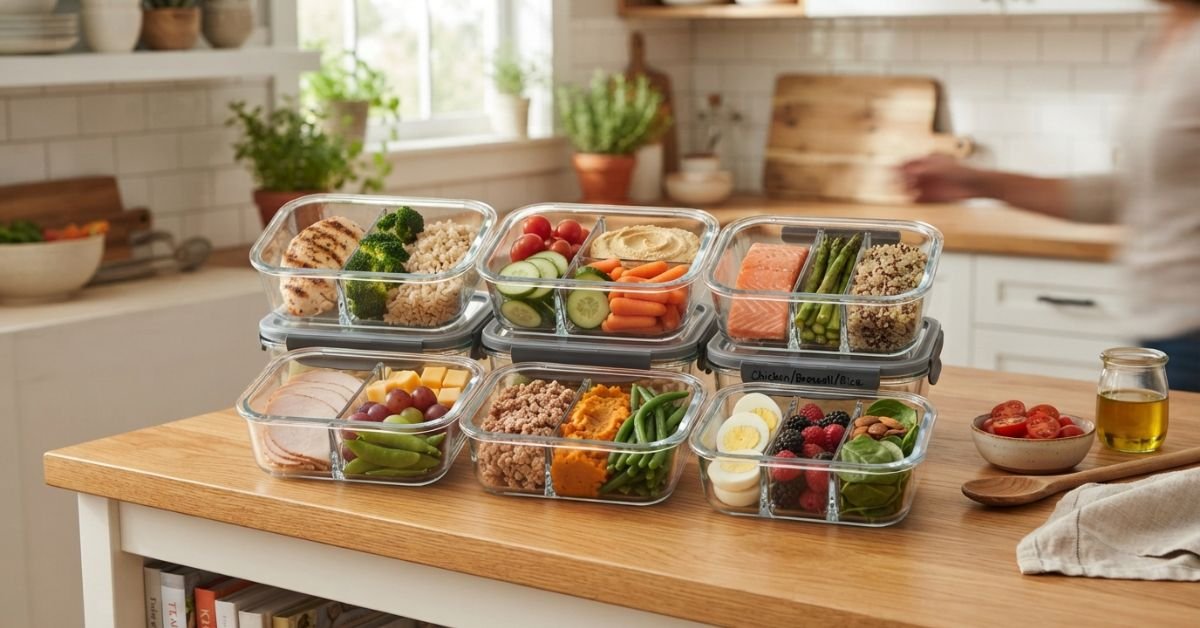
To pull this off consistently without burning out, you need basic batch cooking tech. I rely on an 8-quart Instant Pot and an inexpensive digital kitchen scale.
Every Sunday, I drop three pounds of chicken breasts into the multi-cooker with half a cup of water, a pinch of salt, and a splash of olive oil. Pressure cook on high for 12 minutes, then shred. Half goes into the fridge for meals earlier in the week; the other half gets packed into a freezer bag with the air pressed out.
If you like dedicated meal management software, test out Mealime or Paprika Recipe Manager. Mealime is brilliant because its engine actively reduces ingredient waste by pairing recipes that share fresh ingredients. Paprika, while requiring an upfront app purchase, has the best web scraper in the business: it bypasses all the digital ad clutter and extracts the bare ingredients and directions straight into a clean, offline inventory tracker.
Common Pitfalls: Subscription Fatigue and Bulk Waste
Be careful with the gadget trap. You do not need smart fridges with interior cameras or high-dollar meal subscription kits. In fact, meal kit boxes (like HelloFresh or Blue Apron) are notoriously terrible for picky kids—too many unique glazes, exotic garnishes, and scallions.
Equally dangerous is buying giant bulk packs of niche foods at warehouse clubs like Costco or Sam’s Club just because the unit price looks cheap. If your selective toddler decides on Wednesday that they suddenly despise string cheese, you are now the unhappy owner of 46 unused mozzarella sticks. Buy bulk only on bulletproof items: rolled oats, white rice, pasta, and frozen corn.
Frequently Asked Questions
What is the best budget meal planning app for families with picky eaters?
For most families balancing tight budgets and selective eaters, the winning combination is Mealime paired with Flipp. Mealime allows you to check off specific food dislikes and ingredient allergies while building minimal-waste menus. Flipp then helps you find where those exact items are on sale across local retailers like Aldi, Kroger, and Walmart. If you prefer total control over your recipe files, Paprika Recipe Manager is the best one-time purchase tool available.
How do I build a cheap meal plan for picky toddlers on a budget?
Focus on low-cost single-ingredient building blocks rather than recipes. Toddlers often reject complex foods with mixed textures. Lean into cheap foundational staples: bananas, whole milk, oats, large eggs, dry macaroni, blocks of mild cheddar, and frozen green peas. Serve meals “deconstructed” on divided silicone plates, featuring one safe food you know they love alongside a tiny portion of a bridge food, keeping prep costs under $1.50 per serving.
How can I cut my grocery bill with picky kids without fighting at dinner?
Adopt the “Division of Responsibility” feeding framework assisted by smart pantry planning. You decide what to serve and when to serve it; your child decides if and how much they eat. Always include at least one inexpensive, fill-up safe food on the table (such as bread, rice, or carrot sticks). Since dinner includes an accessible staple, you avoid cooking emergency back-up meals, which eliminates wasted food and unnecessary takeout expenses.
How do apps like Ibotta and digital store coupons work together?
You can double-dip on grocery savings by combining store loyalty coupons with rebate apps. First, clip digital manufacture coupons inside your supermarket app (like Target Circle or Kroger Digital Coupons). When you pay at the register, those discounts drop your register total instantly. Afterward, upload a photo of your receipt to Ibotta to claim additional cash-back rebates on those identical items. The money accumulates in your Ibotta wallet and transfers directly into your bank account or PayPal.