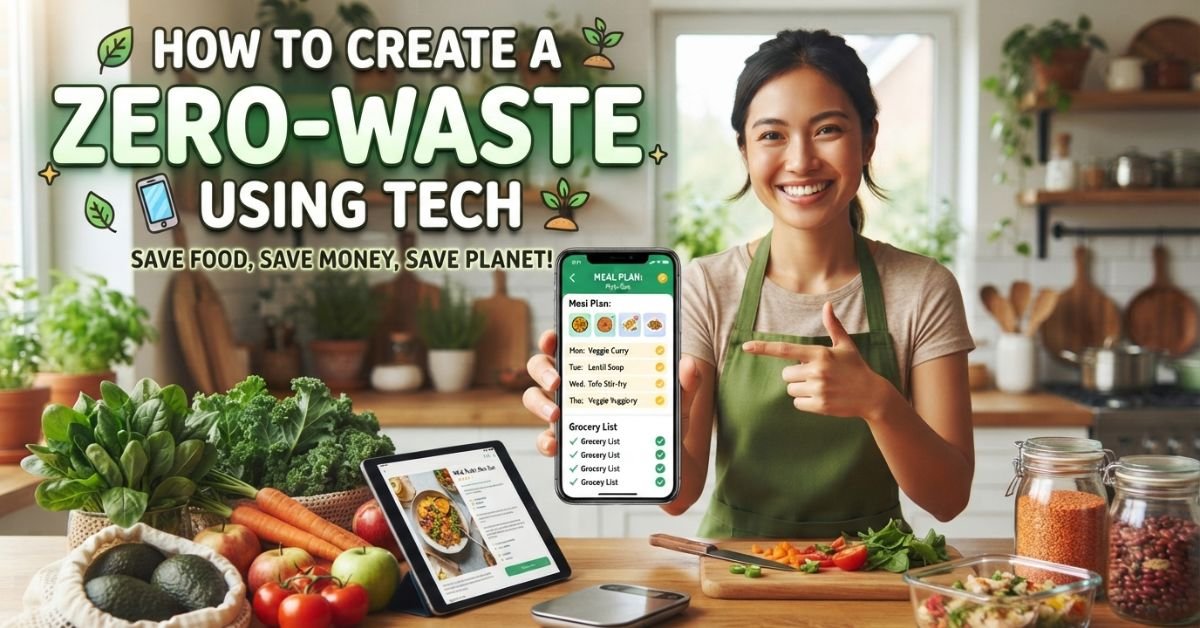
How to Create a Zero-Waste Meal Plan Using Tech.Three months ago, I pulled a bag of once-crisp cilantro from the back of my vegetable crisper. It had turned into an unrecognizable, emerald-green sludge. Beside it sat half a dried-out lemon, a jar with two tablespoons of marinara sauce covered in white fuzz, and a carton of cream that expired during the previous Tuesday’s rush.
- 1. 1. Laying the Digital Foundation: Kitchen Inventory Management
- 2. Barcode Scanning and Inventory Tracking
- 3. What About Smart Refrigerator Tech?
- 4. 2. Dynamic Recipe Interlocking with Algorithms
- 5. The Supercook Algorithm
- 6. Custom AI Recipe Generators: The Prompt System
- 7. 3. The Central Hub: Paprika Recipe Manager
- 8. 4. Advanced Batch Cooking Workflows
- 9. Component Cooking Over Full Meals
- 10. The “Scraps to Stocks” Digital Habit
- 11. 5. Pitfalls I Learned the Hard Way
- 12. Frequently Asked Questions
- 13. Can AI meal planning help save money on groceries?
- 14. What is the best app for tracking food expiration dates?
- 15. How do I use up leftover fresh herbs before they spoil?
- 16. How much time does it take to maintain a digital kitchen inventory?
- 17. What should I do if a recipe calls for an ingredient I don’t have?
According to global figures from the UN Environment Programme, households waste over one billion meals every single day. Standing over my compost bin, watching another $15 worth of groceries rot away, I felt that statistic acutely.
The traditional way we plan meals is fundamentally broken. You find four delicious recipes online, compile a massive shopping list, head to the supermarket, and end up buying full bunches or bottles of items when you only need a pinch. Three days later, you’re exhausted, you order takeout, and those specialty ingredients languish on the shelf.
I decided to treat my kitchen like a micro-logistics hub. By pairing consumer technology—specifically pantry inventory management platforms, automated grocery tracking software, and AI recipe generators—you can build an interlocking meal plan where every single item you purchase gets completely consumed.


1. Laying the Digital Foundation: Kitchen Inventory Management
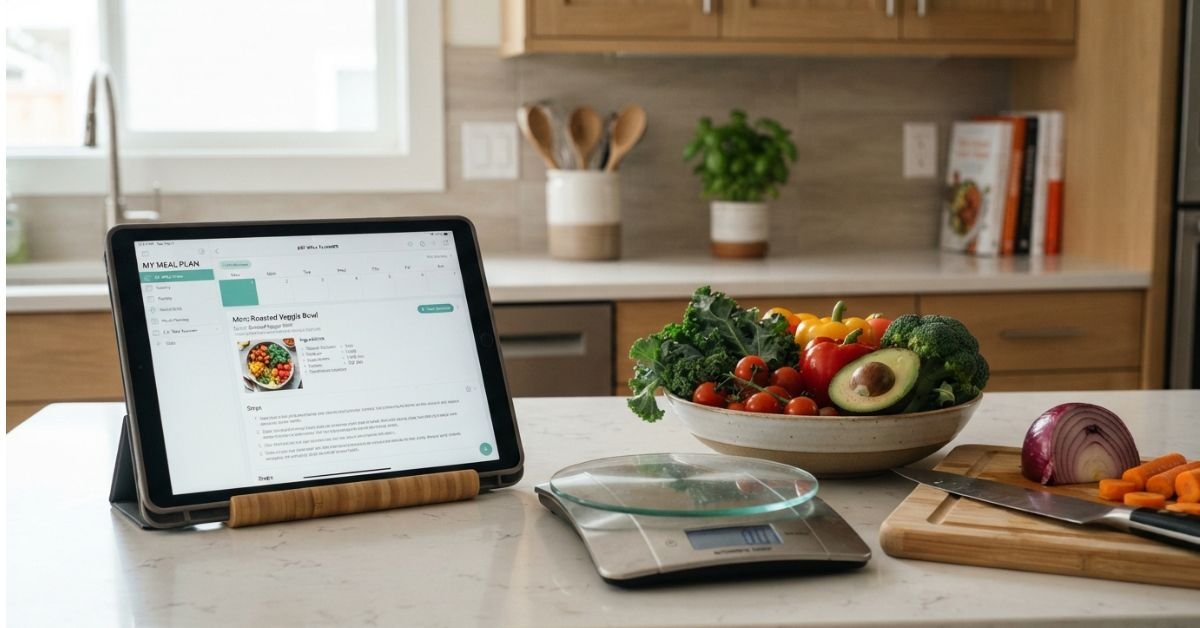
You cannot eliminate waste if you don’t know what you already own. Most people plan meals backwards: they pick a meal, check what they need, and go shopping. A zero-waste workflow flips this entirely. You check what you have, calculate its shelf-life decay, and let your existing stock dictate dinner.
Barcode Scanning and Inventory Tracking
Forget scribbling lists on magnetic notepads. You need real-time data sync across all devices in your home so nobody buys duplicate tubs of sour cream.


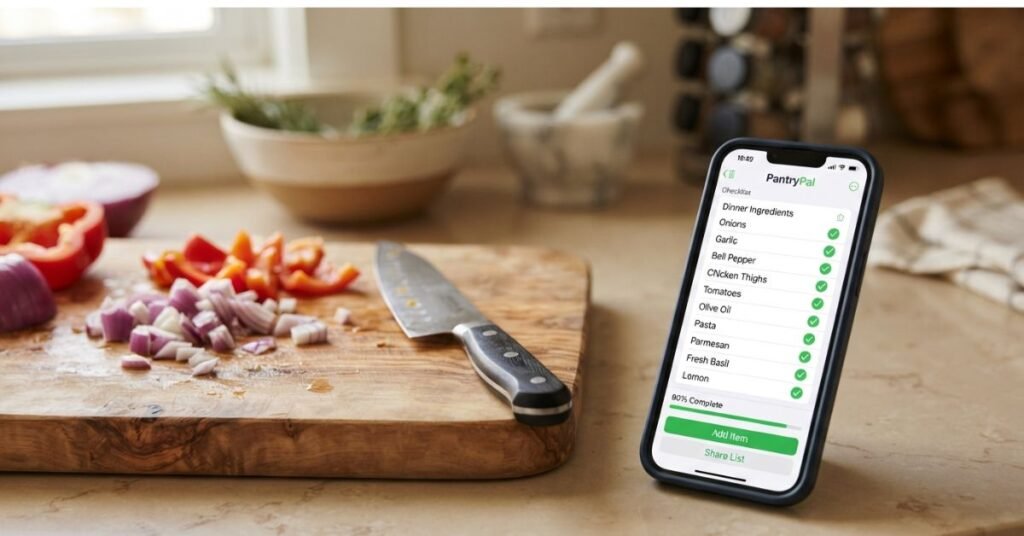
- Pantry Check & KitchenPal: Both of these apps utilize native smartphone cameras as rapid-fire barcode scanners. When you unpack your grocery bags, scan the Universal Product Codes (UPCs). The apps automatically pull the item name, categorize it (produce, dairy, pantry), and assign an estimated shelf life based on built-in freshness databases.
- Grocy (For the Self-Hosted Tech Nerd): If you love home automation platforms like Home Assistant, Grocy is an open-source ERP system built specifically for home kitchens. It tracks stock levels, batch dates, open-versus-unopened status, and automated chore assignments. It requires more setup, but it eliminates tracking errors entirely.
What About Smart Refrigerator Tech?
High-end appliances like the Samsung Family Hub feature internal cameras with computer vision that tag food items as you place them inside. While neat, they’re expensive and struggle with opaque containers or crowded shelves.
💰 More Cheap Living Tips You'll Love
- First Steps to Take When You Decide to Get Out of Debt
- Lower Your Electric Bill as a Renter: 12 Cheap Tech Ways
- Save Money or Pay Off Debt First? Tech-Driven Guide
- Debt Snowball Worksheet: How to Fill It Out Correctly
- How Long to Pay Off Debt? Tech Tools to Find Out Fast
- Debt Snowball on a Low Income: Does It Still Work in 2026-27?
You don’t need a $3,000 fridge to make this work. A basic phone running KitchenPal or NoWaste gives you 95% of the utility for free. The trick is building the scanning habit. I stick my phone on a magnetic mount right above the kitchen counter where I unpack groceries. Scanning 25 items takes under three minutes.


2. Dynamic Recipe Interlocking with Algorithms
Once your raw inventory exists as structured data, the fun begins. The secret to zero-waste cooking isn’t making giant, boring pots of soup; it’s recipe interlocking.
Interlocking means selecting recipes whose residual outputs feed directly into the next day’s inputs. If Recipe A requires 100ml of heavy cream from a 250ml carton, Recipe B must require the remaining 150ml within 48 hours. Human brains are terrible at calculating these permutations. Computers, however, excel at it.
[Monday: Roast Chicken & Root Veg]
         │
         ├── Bones + Trimmings ──> [Slow Cooker Bone Broth]
         │                                 │
         └── Shredded Leftover Meat        ▼
                     │            [Wednesday: Risotto]
                     ▼                     ▲
           [Tuesday: Enchiladas]           │
                     │                     │
                     └── Leftover Cilantro ┘
The Supercook Algorithm
The Supercook algorithm is one of the most practical food waste reduction engines available. Unlike typical cooking websites that demand you buy missing spices, Supercook indexes millions of recipes strictly against what is currently sitting in your cupboards.
You toggle your scanned pantry list on, and the engine serves up meals categorized by:
- “Zero missing ingredients”
- “1 missing ingredient”
- “2 missing ingredients”
When I have an awkward assortment—say, half a head of cabbage, three eggs, stale bread, and some cheddar—Supercook surfaces things like savory bread puddings or okonomiyaki variations that would never occur to me.
Custom AI Recipe Generators: The Prompt System
When generic algorithms fail, large language models (LLMs) step in as your custom sous-chef. Generic recipe prompts produce bland results, so you have to feed the AI strict boundary conditions and constraints.
Here is the exact prompt workflow I drop into Claude or ChatGPT when building a weekly plan:
“Act as an expert zero-waste chef. Here is my current inventory of perishables that must be used within 5 days: [Paste perishable list from inventory app]. Here are my shelf-stable pantry staples: [Paste staples].
Create a 4-day dinner meal plan for 2 adults that obeys these rules: 1. Every single perishable ingredient listed must reach a zero-balance state by Day 4. 2. Each meal must use the leftovers or secondary components of the previous day’s prep. 3. Do not introduce any new ingredient unless it can be purchased in the exact amount needed or is fully consumed within the 4 days. 4. Output the plan alongside a preparation timeline.”
The resulting output gives you targeted culinary paths. If you have celery, the model will tell you to chop the stalks for a stew on Monday, use the inner leaves as an herb garnish for fish on Tuesday, and simmer the root base in a Wednesday stockpot.
3. The Central Hub: Paprika Recipe Manager
An inventory list and an AI prompt are helpful, but you need an orchestrator. That is where Paprika Recipe Manager comes in. It has been the cornerstone of my kitchen tech stack for years.
Unlike flashy, subscription-bloated apps, Paprika is a straightforward, one-time-purchase tool that strips clutter off the internet:
- Clipboard & Browser Scraping: Found a recipe on a bloated blog filled with life stories and popups? Tap the share sheet, and Paprika extracts only the raw ingredients, cook times, and directions via structured JSON-LD data parsing.
- Dynamic Yield Scaling: If a recipe calls for 400g of tofu and your package is 250g, hit “Scale” to calculate fractional measurements instantly.
- Integrated Pantry Depletion: When you pin recipes to Paprika’s calendar, it flags the required items against its built-in pantry tracker, letting you build shopping lists exclusively for what you don’t already have.
4. Advanced Batch Cooking Workflows
Tech handles the calculations, but physics governs the kitchen. To ensure your digital meal plan actually works, pair your apps with efficient culinary workflows.
Traditional Cooking:
Shop -> Cook (1 hr) -> Clean -> Eat -> Forget Leftovers -> Spoil -> Bin

Zero-Waste Tech Workflow:
Scan In -> Algorithmic Interlock -> Prep Once (90 mins) -> Rotate Containers (FIFO) -> Scan Out
Component Cooking Over Full Meals
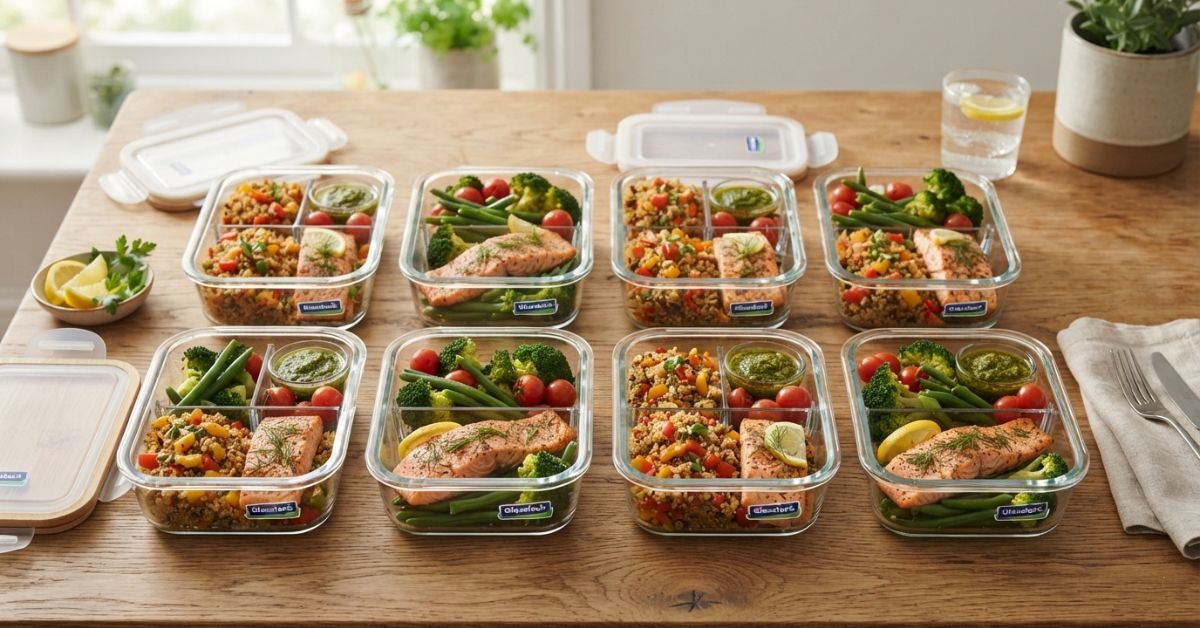
Stop making four separate casseroles. Batch cooking workflows work best when you prep flexible components rather than rigid, finished dishes:
- The Base Carb: 1 kg of brown rice or quinoa cooked in an Instant Pot.
- The Proteins: Sheet-pan spiced chickpeas and marinated chicken thighs baked simultaneously.
- The Veggie Base: Roasted broccoli stems, carrots, and peppers.
- The Flavor Emulsions: A blender sauce (like chimichurri or tahini-lemon) utilizing wilted herbs.
Using your meal planning app, tag these components. Monday is a grain bowl; Tuesday, that same roasted veg and grain becomes a skillet stir-fry; Wednesday, the remainder gets folded into broth with eggs for quick ramen.
The “Scraps to Stocks” Digital Habit
Keep a gallon freezer bag labeled “Broth Assets.” When you chop onions, save the skins. Cut carrot tips? Drop them in. Celery leaves, parsley stems, mushroom caps—all of it goes into the bag.
Track this in your pantry inventory management app as an ongoing item. Once its digital weight hits roughly 500g, schedule a pressure-cooker broth run on your calendar. You’ll produce rich stock for zero additional dollars, extracting every milligram of value from produce you used days ago.
Professional kitchens live by FIFO (First In, First Out). Consumer refrigerators fail here because fresh items get pushed to the front after shopping, hiding older items in the shadows.
Whenever you buy fresh proteins or greens, slap a piece of blue painter’s tape on the lid marked with a bold “Use By” date derived from your tracking app. Place the soonest-expiring items exclusively on the middle shelf at eye level. If an ingredient sits on that shelf, nobody in the house eats anything else until it is gone.
5. Pitfalls I Learned the Hard Way
Transitioning to a tech-driven, zero-waste kitchen is satisfying, but it’s easy to hit roadblocks if you try to over-engineer it right away.
- Barcode Logging Fatigue: Do not track salt, black pepper, cooking oil, or flour down to the gram. Trying to maintain a 100% accurate database of staple pantry powders will make you quit within two weeks. Track only high-spoilage items: fresh produce, open dairy, fresh meats, and specialized sauces.
- The Bulk-Buy Illusion: Buying 5 kg of spinach at a warehouse club because it’s cheap per gram is a trap. Unless you own an industrial freeze-dryer or process it into purees immediately, you’re buying organic trash. Let your apps confirm your historical consumption before buying in bulk.
- Partner Desynchronization: If your housemate or spouse grabs three eggs and a wedge of parmesan without checking off the digital inventory, the system breaks down. We set up an old iPad mounted to the pantry wall running our synchronized list. If you pull something out, tap the minus icon. Simple, frictionless, visible.
Frequently Asked Questions
Can AI meal planning help save money on groceries?
Yes, significantly. Most households throw away 20% to 30% of the food they buy. By using AI recipe generators to create interlocking plans and apps like Supercook to run your pantry down to zero before shopping, you skip roughly one out of every four grocery runs. Users typically see a 15% to 25% drop in monthly food bills within their first sixty days of running an inventory-first system.
What is the best app for tracking food expiration dates?
For pure simplicity and iOS/Android cross-compatibility, KitchenPal and NoWaste lead the pack. Both offer fast barcode scanning, automated expiration warnings, and shared household syncing. If you want a deeper setup that combines recipe curation, shopping lists, and pantry counts in one offline ecosystem, Paprika Recipe Manager is the gold standard.
How do I use up leftover fresh herbs before they spoil?
Fresh herbs are the single most wasted culinary item. Skip trying to cook them in tiny pinches. Instead, blend soft herbs (cilantro, parsley, basil, dill) with garlic, oil, and nuts into a pesto or chimichurri sauce, then freeze the mixture in silicone ice cube trays. For woody herbs (rosemary, thyme), dehydrate them on a paper towel in the microwave for 60 seconds, crush them into small flakes, and store them in your dried spice rack.
How much time does it take to maintain a digital kitchen inventory?
It takes roughly two to four minutes during your post-shopping unpack to scan perishable items via barcode. Day-to-day maintenance requires only tapping items to mark them as consumed. The initial setup takes about twenty minutes to log your existing baseline pantry, but the time saved wandering grocery store aisles without a plan easily balances it out.
What should I do if a recipe calls for an ingredient I don’t have?
Instead of heading back to the store, plug the ingredient and your current pantry list into an AI tool or check Supercook for direct substitutes. For instance, Greek yogurt readily replaces sour cream, applesauce can step in for eggs in many baked goods, and soy sauce combined with lemon juice mimics Worcestershire. Let software calculate culinary substitutions before you spend money on a single-use bottle.