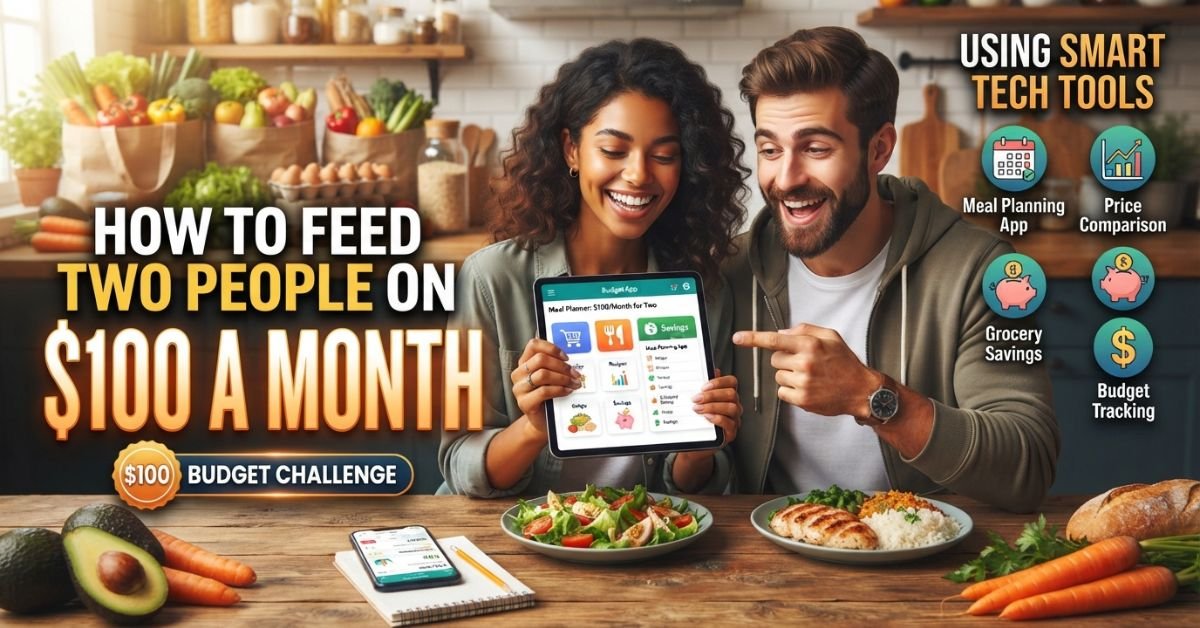
How to Feed Two People on $100 a Month Using Smart Tech Tools.Three months ago, my partner and I decided to run an extreme experiment. Food price inflation across the US had pushed our suburban grocery bill past $650 a month, and I wanted to see if my engineering background could solve the problem. Could we survive—without getting scurvy or constantly fighting over empty stomachs—on an extreme grocery budget for 2 tech tools could optimize down to just $100 a month?
- 1. 1. The $100 Math: Caloric Needs and Digital Baseline Tracking Tools
- 2. Macronutrient Tracking via Cronometer
- 3. 2. Tech Stack Setup: Automated Grocery Couponing and Price Monitoring
- 4. The Flipp App and Digital Coupon Aggregators
- 5. 3. The $25 Weekly Cart Run: Tactical In-Store Shopping and Markdown Scraping
- 6. Scraping Food Surplus Apps: Flashfood and Too Good To Go
- 7. Timing In-Store Markdown Sweeps
- 8. 4. Smart Pantry Inventory and Zero Food Waste Management
- 9. Barcode-Driven Pantry Inventory Management
- 10. 5. Meal Engine Execution: High-Yield Batch Cooking and Meal Repurposing
- 11. The Power of Bulk Staples Purchasing
- 12. Preventing Flavor Fatigue
- 13. 6. Navigating Nutritional Gaps and Tech Fatigue in Extreme Budgeting
- 14. Auditing Daily Micronutrients
- 15. Avoiding Tech Burnout
- 16. Frequently Asked Questions
- 17. Can two people realistically get enough protein on $100 a month?
- 18. What are the best grocery tracking apps for extreme budgeting?
- 19. How do you deal with food price inflation when regional prices vary?
- 20. Is this $100 monthly meal plan SNAP-eligible?
- 21. The Real Payoff
That breaks down to exactly $25 a week, or roughly $1.66 per person per day. Most personal finance articles covering this topic tell you to “buy in bulk” and leave it at that. That advice is useless when you have a two-digit bank balance. Surviving on this budget requires treating your kitchen like an inventory-driven supply chain. Over 90 days, we logged every receipt into custom CSV sheets, tracked our micronutrients in Cronometer, and automated local store deal scrapers.
Here is the exact framework, data, and software stack we used to pull off budget meal planning for two people on $100 a month without starving.



1. The $100 Math: Caloric Needs and Digital Baseline Tracking Tools
Before buying a single ounce of food, you have to run the energy math. Two active adults need roughly 4,000 calories combined per day (2,000 kcal each). Across a 30-day month, that is 120,000 calories.
When you ask how to feed two people on 100 dollars a month, you are looking at a hard target: 1,200 calories per dollar spent. If you buy a $4 head of iceberg lettuce containing 50 total calories, you have broken the system.
Total Monthly Budget: $100.00
Daily Budget (Combined): $3.33 / day
Daily Budget (Per Person): $1.66 / day
Target Energy Density: ≥ 1,200 kcal / $1.00
To prevent energy crashes, I set up a synchronized Google Sheets database linked to a unit price calculator formula. Every ingredient had to pass a strict metric: cost per 100 calories and cost per gram of complete protein.


Macronutrient Tracking via Cronometer
We synced our daily intake into Cronometer to avoid nutritional blind spots. Cutting your food bill this aggressively can easily lead to severe iron, calcium, or B12 deficiencies if you just eat plain white rice.
💰 More Cheap Living Tips You'll Love
- Pay Off Debt Faster Without Earning More: Tech Guide
- Save Money or Pay Off Debt First? Tech-Driven Guide
- Debt Snowball Worksheet: How to Fill It Out Correctly
- Debt Snowball vs Avalanche: Which Repayment Strategy Wins?
- Debt Snowball on a Low Income: Does It Still Work in 2026-27?
- First Steps to Take When You Decide to Get Out of Debt
- Pinto and Black Beans (Dry): ~$1.10/lb at WinCo or Walmart (~1,580 kcal/lb).
- Enriched Long-Grain White Rice: ~$0.68/lb in 10-20 lb bags (~1,650 kcal/lb).
- Rolled Oats: ~$0.95/lb in bulk cylinders (~1,700 kcal/lb).
- Vegetable Oil / Peanut Butter: Crucial for caloric density optimization when lean staples fall short of daily energy needs.
One mistake we made during week one was underestimating pure caloric burn. I felt lightheaded on day four because we tried eating “clean” low-calorie veggies without enough fat. We quickly learned to calculate cooking oil down to the tablespoon to hit our energy baselines safely.


2. Tech Stack Setup: Automated Grocery Couponing and Price Monitoring
Scouring newspaper circulars is dead. If you want the cheapest way to feed two adults 100 dollars, you need automated digital tools running in the background.
┌────────────────────────────────────────────────────────┐
│                   OUR WEEKLY TECH STACK                │
├───────────────────────┬────────────────────────────────┤
│ TOOL                  │ PRIMARY FUNCTION               │
├───────────────────────┼────────────────────────────────┤
│ Flipp App             │ Local circular price scraping  │
│ Ibotta & Fetch        │ Post-purchase cash-back audits │
│ Store Loyalty Apps    │ Digital coupon clipping        │
│ Google Sheets / Notion│ Pantry inventory & unit prices │
│ Cronometer            │ Micronutrient & calorie logs   │
└───────────────────────┴────────────────────────────────┤
The Flipp App and Digital Coupon Aggregators
The Flipp grocery app became my command center on Tuesday nights when weekly ads reset. I set global search alerts for staple categories: “eggs,” “flour,” “dry beans,” and “carrots.”
Using a flipp app meal plan under 100 dollars allowed us to spot loss-leaders across our neighborhood routes. Loss leaders are products stores sell at an actual loss just to get you inside (like a 10-lb bag of chicken leg quarters for $4.90).
We paired this with the store-brand digital coupon clip systems in the Walmart and ALDI ecosystems. Clip the store coupons on manufacturer deals before setting foot inside. Many digital apps offer “Store Brand Cash Back” promotions early in the month that reset on the first of each billing cycle.
Expert Insight: Never buy an item simply because you have a $0.75 digital coupon for it. If a name-brand box of cereal drops from $5.00 to $4.25 with a coupon, you are still overpaying. The 32-ounce bag of generic rolled oats at $2.18 yields three times the calories for half the out-of-pocket cash.
3. The $25 Weekly Cart Run: Tactical In-Store Shopping and Markdown Scraping
Hitting a strict $25 weekly cart target means you cannot walk into the store with vague aspirations. You need an exact, itemized list pulled straight from the circular data.
Scraping Food Surplus Apps: Flashfood and Too Good To Go
If you have access to regional grocers like Meijer, Giant Eagle, or Tops, download the Flashfood surplus marketplace app immediately. Grocers post meat and dairy nearing their “sell-by” date at 50% to 75% off directly to the app. You pay inside the interface and pick the items up from a designated purple cooler near customer service.
We scored 3 lbs of lean ground turkey for $2.80 through Flashfood during week two. That meat went directly into our freezer within thirty minutes of pickup.
Timing In-Store Markdown Sweeps
Skip weekend shopping entirely. Grocery retail markdowns follow predictable corporate schedules:
- The 7:00 AM Rule: Yellow markdown stickers on store meats and bakery items at Kroger and Walmart are typically placed between 6:30 AM and 8:00 AM.
- Manager Clearance Carts: Seek out the unadvertised, wire rolling carts tucked near the back stockroom doors. That is where dinged cans and crushed oat boxes hide for pennies on the dollar.
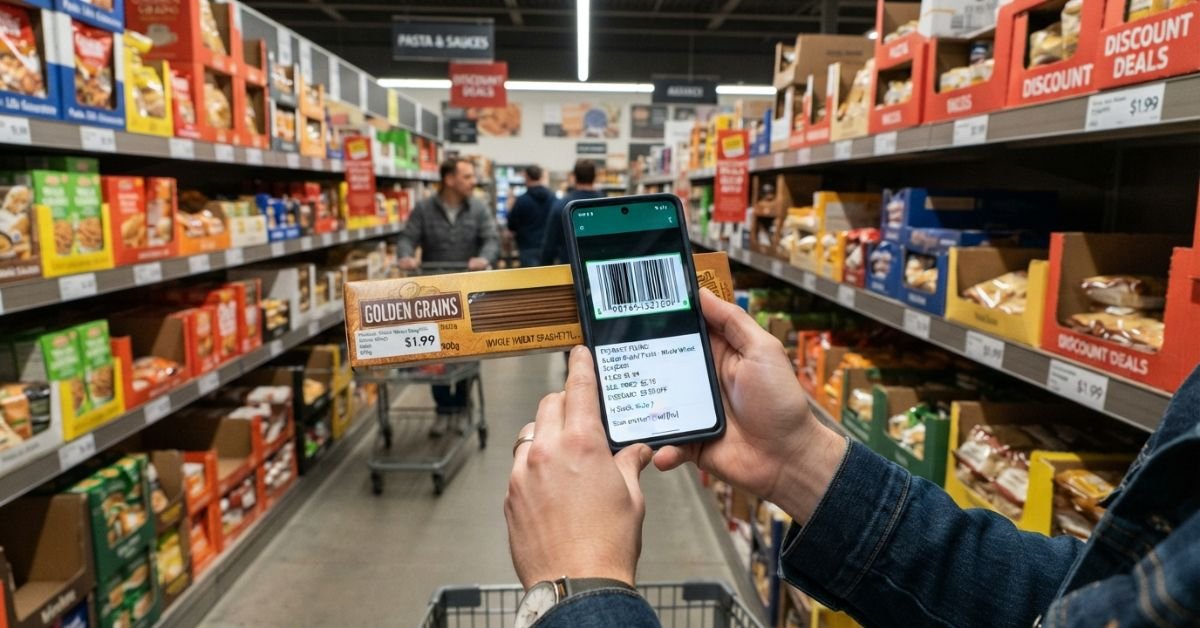
Before dropping anything into the physical cart, verify the sticker with your phone’s calculator. Compare the shelf tag’s price-per-ounce against your baseline spreadsheet.
4. Smart Pantry Inventory and Zero Food Waste Management
The quickest way an extreme budget fails is when produce rots inside your crisper drawer. In an American household, roughly 30% of edible food gets thrown away. On a $100 budget, wasting a $1.20 bundle of celery destroys your financial runway for that entire week.
We treated our small kitchen like a commercial warehouse using zero-waste kitchen workflows.
Barcode-Driven Pantry Inventory Management
Using free apps like KitchenPal or a clean Notion database, we created an active pantry inventory management workflow.
- Every item brought home gets logged with its purchase date and dry weight.
- We stick blue painter’s tape on mason jars with open dates.
- Our system operates on a strict FIFO rule (First In, First Out).
[Store Run] ➔ [Weigh & Date Tape] ➔ [Log to Notion DB] ➔ [Weekly Recipe Generation]
When supplies ran low by Thursday night, we fed our leftover inventory list into an algorithmic meal planning prompt using an AI engine: “I have 200g pinto beans, 1 cup enriched rice, half an onion, ground cumin, and 2 corn tortillas. Generate a 600-calorie high-protein dinner for two.” It eliminates the guesswork and stops you from caving to expensive takeout.
5. Meal Engine Execution: High-Yield Batch Cooking and Meal Repurposing
Cooking twice a day on an extreme budget burns you out fast. The mental overhead of turning basic, bland ingredients into food you actually want to eat requires batch automation.
The Power of Bulk Staples Purchasing
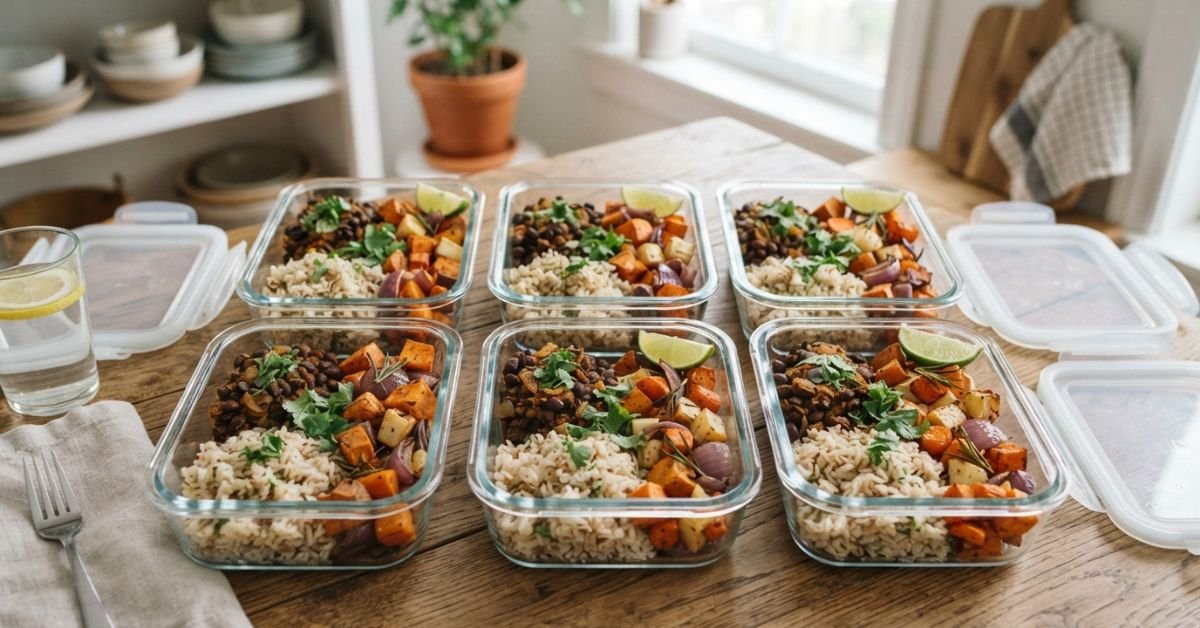
Here is how we broke down our actual recurring 100 dollar monthly grocery budget 2 people meal plan:
- Breakfast: Rolled oats cooked in water, enriched with 1 tbsp peanut butter, a pinch of salt, and a quarter-sliced banana ($0.28 per serving).
- Lunch: Seasoned bean-and-rice bowls with homemade pickled cabbage and diced onions ($0.38 per serving).
- Dinner: Scratch-made flatbreads (flour, water, yeast, salt) with curried lentils or potato-lentil hash ($0.52 per serving).
Preventing Flavor Fatigue
Eating basic legumes and grains will test your patience quickly. The fix lies in building up a targeted spice array that fits inside the $100 budget upfront or relies on pantry rollover stock:
- Buy whole spices exclusively from local ethnic markets (Indian, Hispanic, or Middle Eastern grocers). A 7-ounce bag of whole cumin seeds costs around $1.99 at an international market, compared to $6.49 for a tiny 1.5-ounce glass jar at an upscale supermarket chain.
- Make your own condiments: pickled red onions require only white vinegar, water, sugar, and salt, but they completely change the profile of dry pinto beans.
- Use a programmable electric pressure cooker (like an Instant Pot). It cooks dry, unsoaked beans in 45 minutes, saving you both prep time and stove electricity costs.
Here is a look at our core rotation for high calorie budget meals for two 25 a week:
MEAL ROTATION MATRIX:
Mon/Wed/Fri: Instant Pot Dal with Scratch Skillet Flatbread
Tue/Thu: Mexican-Style Black Bean & Cabbage Rice Bowls
Saturday: Potato, Onion, and Lentil Savory Stew
Sunday: "Clean out the Crisper" Fried Rice (using leftover grain surpluses)
6. Navigating Nutritional Gaps and Tech Fatigue in Extreme Budgeting
Can you run this setup forever? Honestly, you probably shouldn’t. Surviving on an extreme grocery limit is an exceptional short-term emergency protocol, debt-payoff accelerator, or financial resilience test—not a permanent lifestyle choice.
Auditing Daily Micronutrients
After 60 days, our Cronometer logs showed consistent green checkmarks for basic macronutrients (protein, carbohydrates, fats). However, hitting target levels for Vitamin D, Potassium, and Vitamin C required deliberate interventions.
NUTRITIONAL AUDIT WATCHLIST:
- Vitamin C: Add $0.89/lb raw cabbage or frozen spinach (cheaper than citrus fruit).
- Calcium: Fortified corn masa flour or bone broth extracted from discounted meat trims.
- Potassium: Russet potatoes (bought in 10-lb bags for ~$3.50; better potassium-per-dollar than bananas).
Avoiding Tech Burnout
Do not spend three hours running complex calculations just to save twelve cents on a can of tomato paste. That leads to app fatigue. Once you determine that your local ALDI has the cheapest rolled oats and your regional WinCo has the cheapest bulk dry beans, stick to those vendors. Automate your core purchases and save the deep-dive app searches exclusively for high-ticket clearance proteins.
Frequently Asked Questions
Can two people realistically get enough protein on $100 a month?
Yes, but the vast majority of your protein will come from plant-based staples like dry lentils, black beans, pinto beans, and peanut butter. A standard cup of cooked lentils contains roughly 18 grams of protein. By combining dry legumes with enriched grains (like rice or homemade flour flatbreads), you create complete amino acid profiles at a fraction of the cost of beef or chicken breast. When buying meat, prioritize 10-lb bulk bags of chicken leg quarters or clearance pork loins marked down via store loyalty apps.
What are the best grocery tracking apps for extreme budgeting?
The most reliable combo is Flipp (for monitoring circular deals and digital price drops), Flashfood (for snagging 50% off clearance meats and dairy nearing expiration), and Cronometer (to ensure your extreme budget does not trigger serious micronutrient deficiencies). If you shop at Walmart, using their integrated store app barcode scanner lets you confirm exact shelf-price unit costs before reaching the register.
How do you deal with food price inflation when regional prices vary?
Rely on national discount grocers like ALDI and regional employee-owned stores like WinCo Foods. In areas where discount supermarkets aren’t available, shift away from packaged goods and shop exclusively at local ethnic supermarkets (such as Asian, Hispanic, or Mediterranean grocers). These markets consistently offer produce, dry spices, and bulk grains at 30% to 50% lower prices than traditional American grocery chains.
Is this $100 monthly meal plan SNAP-eligible?
Yes. Every raw ingredient featured in this plan—including dry legumes, bulk grains, fresh produce, cooking oils, and clearance markdown items—is fully eligible for SNAP (Supplemental Nutrition Assistance Program) benefits across the US. Applying these digital scraping methods to your EBT balance can stretch your monthly benefits significantly further.
The Real Payoff
Slashing our food spend to $100 a month for two adults taught us that kitchen budgeting is not about willpower—it is about data control. By swapping vague spending habits for digital coupon aggregators, precise inventory management, and systematic batch cooking, we redirected over $550 a month straight into our high-yield savings account.
If you are facing an unexpected financial crunch or aggressively paying down high-interest debt, run this system for thirty days. Fire up your spreadsheets, watch your store apps closely, and let the software handle the heavy lifting.