
I Saved $10,000 in One Year on Minimum Wage and Here Is How.Let’s address the elephant in the room right away: saving ten grand in twelve months while earning the United States federal minimum wage of $7.25 an hour sounds mathematically delusional.
- 1. 1. The Core Infrastructure: Direct Deposit Split and the HYSA Moat
- 2. Automated Routing at the Payroll Level
- 3. 2. Zero-Based Tracking via Digital Envelope Budgeting
- 4. 3. Radical Tech Frugality: Squeezing Fixed Digital Overhead
- 5. Dumping the Big Telecom Monopolies
- 6. Living on Refurbished Electronics
- 7. 4. Micro-Optimization: Cashback Aggregators and Algorithmic Micro-Saving
- 8. Pro Tip: The “Two-Step Authentication” Spending Blocker
- 9. 5. Unexpected Setbacks and the Overdraft Trap
- 10. How I Fixed the System
- 11. The 365-Day Total: Where the Numbers Landed
- 12. Frequently Asked Questions
- 13. Is it really possible to save $10,000 in one year on minimum wage without help?
- 14. What is the best free personal finance software for low earners?
- 15. Won’t micro-savings apps drain my checking account into an overdraft?
- 16. Why use an MVNO instead of a major wireless carrier?
- 17. What should I look for in a high-yield savings account (HYSA)?
At 40 hours a week, 52 weeks a year, your gross income sits right at $15,080. After basic payroll taxes (FICA and state withholdings in Indiana, where I was living at the time), you walk away with roughly $13,600 in net take-home pay. Saving $10,000 out of $13,600 means surviving an entire year on roughly $3,600 in living expenses—or $300 a month.
Is that normal? Absolutely not. Was it comfortable? Not even slightly.
I was splitting a run-down three-bedroom flat in Terre Haute with three roommates ($225 per person for rent), commuting exclusively on a used single-speed road bike, eating rice, beans, and discounted bulk frozen vegetables, and working every legal hour I could get.


Living that frugally requires serious willpower. But sheer willpower always fails around month three when your shoes split open or your teeth hurt. The only reason I actually hit five digits in cash was because I treated my finances like an automated DevOps pipeline. I removed my own hands, biases, and emotional spending triggers from the steering wheel.
Here is the exact software architecture, mobile tooling, and tech automation pipeline that made the impossible math work.
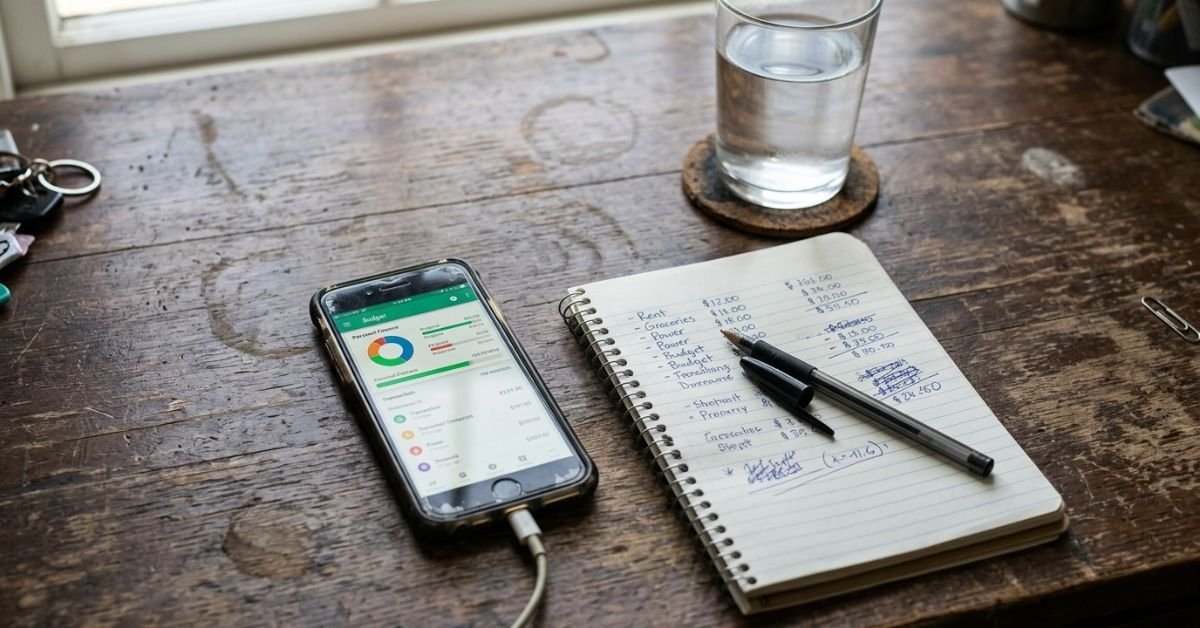


1. The Core Infrastructure: Direct Deposit Split and the HYSA Moat
When every dollar determines whether you eat or miss rent, manual transfers don’t cut it. If money lands in an everyday checking account, you mentally register it as available capital. You buy the name-brand peanut butter or grab a gas station coffee.
💰 More Cheap Living Tips You'll Love
- Debt Snowball Worksheet: How to Fill It Out Correctly
- Save Money or Pay Off Debt First? Tech-Driven Guide
- Debt Snowball on a Low Income: Does It Still Work in 2026-27?
- How Long to Pay Off Debt? Tech Tools to Find Out Fast
- Debt Snowball vs Avalanche: Which Repayment Strategy Wins?
- Debt Snowball Method: How It Works (With Real Example)
I completely severed the psychological connection between earning money and holding it.


Automated Routing at the Payroll Level
I didn’t rely on self-discipline to transfer money on payday. Instead, I logged into our employer’s payroll portal (an archaic ADP interface) and set up an automated direct deposit split.
Federal labor laws require employers to let you allocate pay to multiple accounts if their payroll software supports direct ACH routing. I configured mine with surgical precision:
- 80% of net pay: Routed directly to a remote high-yield savings account (HYSA) at an online institution (I used Marcus by Goldman Sachs, paired with a backup account at Ally).
- 20% of net pay: Sent to my everyday checking account at a local credit union.
[Paycheck: ~$523 Bi-Weekly]
        │
        ├──> (80%) $418.40 ──> Remote HYSA (Untouchable Emergency Vault)
        │
        └──> (20%) $104.60 ──> Local Checking Account (Living Expenses Pool)
Because the HYSA had no physical branches in my town and didn’t come with an active debit card (I shredded it the day it arrived in the mail), moving money back into my spending account required an ACH transfer taking 48 to 72 business hours.
That three-day transfer delay was my greatest defense mechanism. Impulsive purchases died in that holding period. By the time the funds cleared, the urge to spend was gone. Meanwhile, the balance sat inside a 4.5% APY yield vehicle, pulling risk-free yield on every tiny deposit.
2. Zero-Based Tracking via Digital Envelope Budgeting
Traditional budgeting spreadsheets are useless when margins are paper-thin. A static Excel sheet tells you where your money went last month; it does nothing to prevent you from overspending right now.
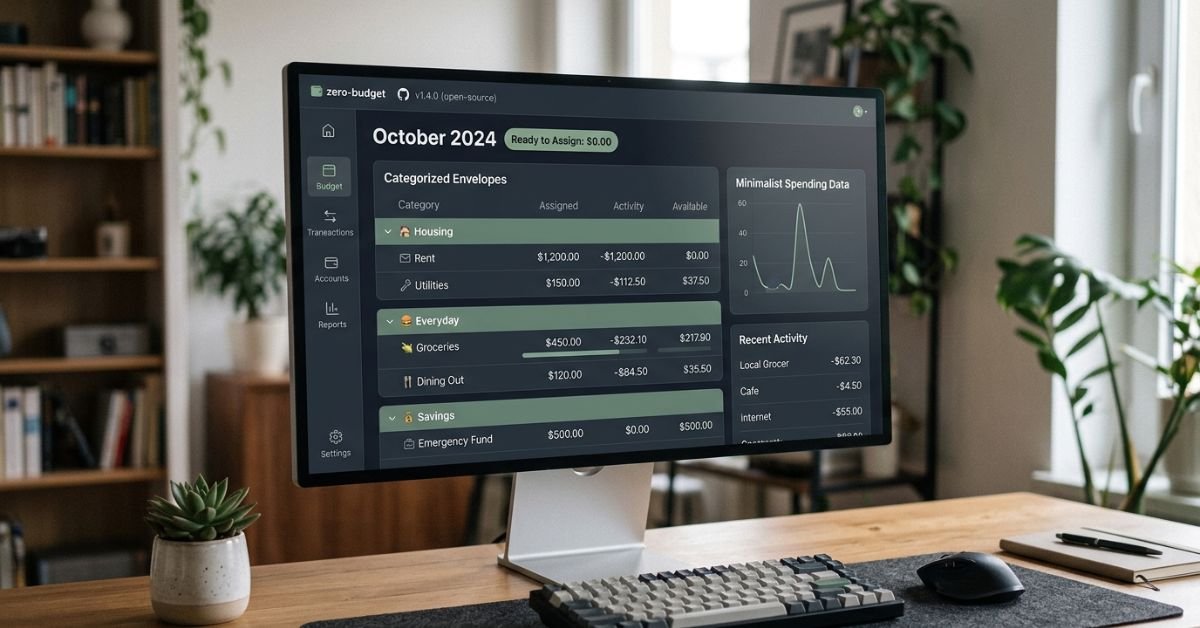
I needed real-time visibility. I deployed a digital envelope budgeting method powered by open-source tooling.
┌────────────────────────────────────────────────────────┐
│               MONTHLY ALLOCATION MODEL                 │
├────────────────────────────────┬───────────────────────┤
│ Fixed Base Rent (Split 4 ways) │ $225.00               │
│ Utilities & Shared Fiber Web   │ $45.00                │
│ Bulk Food Staples              │ $75.00                │
│ Digital Safety Reserve         │ $25.00                │
├────────────────────────────────┼───────────────────────┤
│ Total Operating Budget         │ $370.00 / month       │
└────────────────────────────────┴───────────────────────┘
I skipped subscription-heavy trackers like YNAB (which charges nearly $100 annually—an absurd expense when you make $7.25/hour) and opted for Actual Budget, an incredible local-first, open-source software personal finance tool.
I hosted it on a free-tier cloud platform, creating dedicated virtual envelopes for every non-negotiable cost:
- Base housing overhead
- Shared fiber-optic internet connection
- Dry grocery provisions
- Hardware maintenance (bike tubes, chain lube)
Every single transaction got logged from my phone the moment I walked away from a register. If the “Food Staples” envelope ran out of funds on day 18 of the month, I didn’t pull from the rent bucket. I ate down the pantry reserves until the next cycle began.
3. Radical Tech Frugality: Squeezing Fixed Digital Overhead
Most Americans leak hundreds of dollars every month through recurring subscriptions and hardware payment plans. If you finance a $1,200 smartphone on an unlimited postpaid carrier plan, you are effectively giving away weeks of physical labor just to stay connected.
I attacked recurring hardware and utility costs with extreme prejudice.
Dumping the Big Telecom Monopolies
I ditched primary carrier networks and switched to MVNO mobile carriers (Mobile Virtual Network Operators). I ported my number over to Tello (running on T-Mobile towers) and chose their bare-bones plan: 1GB of high-speed data plus unlimited text messages for just $6 to $8 a month.
I lived on Wi-Fi. I downloaded offline city maps on Google Maps, used open-source messaging apps on open networks, and treated cellular data as an absolute emergency utility. That simple swap alone saved me roughly $70 every month compared to the average US carrier contract.
Living on Refurbished Electronics
My entire computing setup cost less than a pair of designer sneakers. I ran a beat-up ThinkPad T480 bought off eBay for $110. It had a scratch on the lid and a worn trackpad, but it came with an easily upgradeable chassis.
I wiped Windows, installed a lightweight Linux distribution (Debian with XFCE), and had a responsive, modern machine for learning technical skills without spending a fortune.
Whenever I needed replacement hardware or accessories, I relied exclusively on refurbished electronics from back-market platforms and hardware liquidators. Refurbished tech gives you enterprise-grade durability at pennies on the retail dollar.
4. Micro-Optimization: Cashback Aggregators and Algorithmic Micro-Saving
When base margins are compressed to the absolute physical limit, pennies matter. I stacked automated software scripts and aggregation tools across every necessary purchase.
       Everyday Inevitable Purchase (Groceries / Hardware)
                                │
        ┌───────────────────────┴───────────────────────┐
        ▼                                               ▼
[Cashback Aggregator Layer]                  [Algorithmic Round-Up]
• Upside / Rakuten / Ibotta                  • Automatic spare-change sweeps
• Instant rebate sweeps to cash              • Swept into secondary HYSA
        │                                               │
        └───────────────────────┬───────────────────────┘
                                ▼
               Compounded Yield Accumulation (~4.5% APY)
I deployed a stack of automated cashback aggregators like Rakuten, Upside, and Ibotta. I didn’t use them to hunt for deals on things I didn’t need; I strictly used them on staples. Before buying a sack of oats or dry lentils at a discount supermarket, I ran the receipt through receipt-scanning tools that credited cash back directly to a connected PayPal balance.
Simultaneously, I turned on algorithmic micro-saving rules via automated fintech apps. Every time my spending account settled a charge, the software rounded the transaction up to the nearest dollar and swept the difference into an offsite account.
If my grocery bill came to $14.12, eighty-eight cents immediately vaporized into my secondary savings vault. By letting background algorithms siphon spare change hundreds of times a year, I harvested nearly $400 in hidden savings without ever consciously feeling the pinch.
Pro Tip: The “Two-Step Authentication” Spending Blocker
Want an instant way to curb online retail therapy? Remove your saved credit and debit cards from Apple Pay, Google Wallet, and your web browser caches.
Next, store your primary payment cards inside a password-protected zip file or locked physical lockbox in another room. Forcing yourself to manually type a 16-digit number, expiration date, and CVV code on every single digital purchase creates enough cognitive friction to break subconscious spending patterns entirely.
5. Unexpected Setbacks and the Overdraft Trap
Automating your finances isn’t set-and-forget magic. It requires tuning. In month four, I hit a massive roadblock that nearly ruined the entire experiment.
I had dialed my automated savings thresholds too aggressively. My micro-saving bot was sweeping funds out of my checking account based on predictive spending models, while my direct deposit split was draining paychecks immediately upon arrival.
One Tuesday morning, an unexpected quarterly water bill hit my checking balance for $42. My account balance at the time? Just $31.
The bank slapped me with an automated $35 overdraft fee.
When you make $7.25 an hour, a $35 fee is nearly five hours of hard physical labor wiped out in a single microsecond by an automated banking script. I felt completely defeated.
How I Fixed the System
That failure forced me to re-architect my automated rules:
- The Safety Buffer: I established a static, permanent $100 floor inside the checking account that was never allocated to any budget envelope.
- Alert Hooks: I set up custom webhook alerts using an automation tool to push an SMS ping to my phone whenever my checking balance dipped below $75.
- Overdraft Protection Removal: I called my credit union and opted out of discretionary overdraft coverage. If a charge exceeded my balance, it would simply decline at the point of sale rather than triggering punitive fees.
The 365-Day Total: Where the Numbers Landed
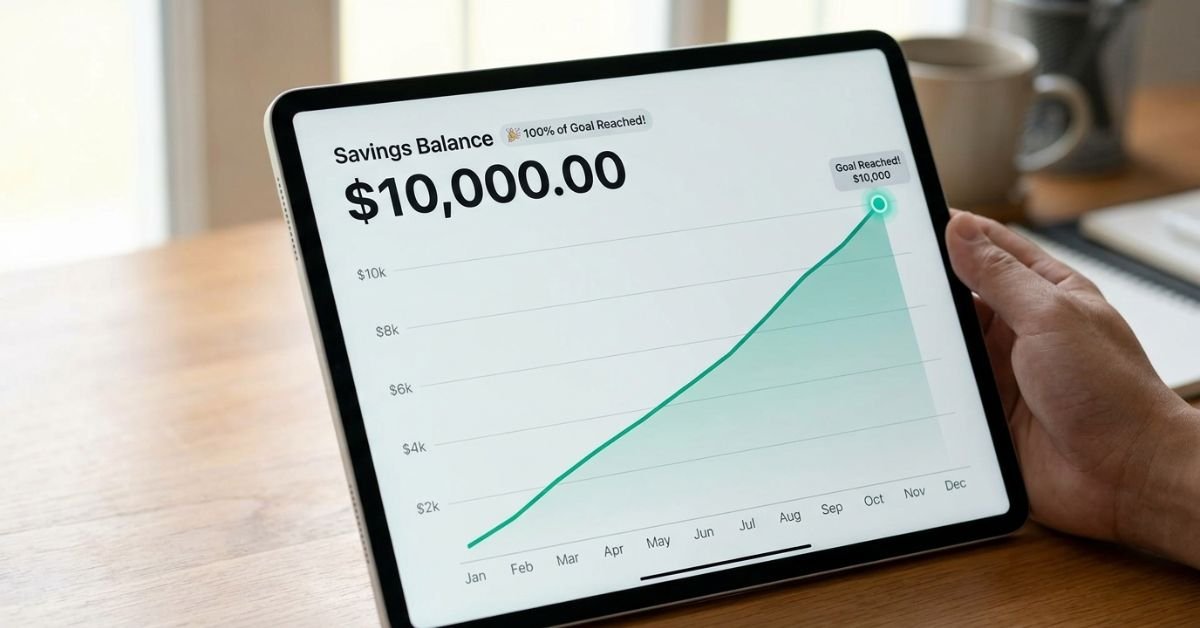
By day 365, the dashboard crossed the finish line.
┌────────────────────────────────────────────────────────┐
│             ANNUAL SAVINGS BREAKDOWN SUMMARY           │
├────────────────────────────────┬───────────────────────┤
│ Direct Deposit HYSA Routing    │ $8,700.00             │
│ Algorithmic Micro-Savings      │ $412.50               │
│ High-Yield Compound Interest   │ $318.20               │
│ Cashback & Aggregator Sweeps   │ $245.80               │
│ Off-Cycle Tech Gigs & Selling  │ $380.00               │
├────────────────────────────────┼───────────────────────┤
│ TOTAL ACCUMULATED CAPITAL      │ $10,056.50            │
└────────────────────────────────┴───────────────────────┘
Hitting $10,056.50 on a minimum-wage income required living like an ascetic monk, but the technology stack did the heavy lifting. The software eliminated human error, blunted impulsive tendencies, and maximized every sliver of yield.
If you are stuck at the lower end of the income scale, don’t buy into the lie that budgeting apps are only for folks with six-figure salaries. Deploying open-source code, stripping telecom bills down to MVNO rates, and leveraging automated cash routing can give you a financial buffer—even when the macro economy feels completely stacked against you.
Frequently Asked Questions
Is it really possible to save $10,000 in one year on minimum wage without help?
It is possible, but it requires extraordinary baseline conditions: radically lowered housing overhead (such as sharing rent with multiple roommates in a low-cost-of-living state), having no dependent family members, zero existing high-interest consumer debt, and an absolute commitment to tracking every cent. For most people living in medium- or high-cost areas, this level of savings is impossible without additional income or working significant overtime hours.
What is the best free personal finance software for low earners?
Actual Budget is one of the top choices. It is a free, open-source, local-first digital envelope budgeting application that runs on Windows, macOS, Linux, or a basic home server. Because it doesn’t sell your personal data or charge recurring monthly subscription fees like corporate alternatives, it keeps your operational tech overhead at zero.
Won’t micro-savings apps drain my checking account into an overdraft?
They can if left unmonitored. Many automated savings apps use predictive algorithms that sweep money based on historic trends, which can trigger overdraft fees if an unexpected automatic bill posts simultaneously. To prevent this, opt out of bank overdraft coverage, set up balance-alert webhooks, and maintain a static $100 cash floor in your spending account at all times.
Why use an MVNO instead of a major wireless carrier?
Major wireless carriers package high-margin perks, device financing, and unlimited high-speed data buckets into monthly plans costing anywhere from $60 to $100 per line. MVNOs (Mobile Virtual Network Operators) buy excess wholesale capacity from those same national tower networks and resell it without the bloat. If you spend most of your day within range of home or workplace Wi-Fi networks, switching to an MVNO cuts your phone bill down to between $10 and $15 a month with identical local cellular coverage.
What should I look for in a high-yield savings account (HYSA)?
Look for an account with zero monthly maintenance charges, no minimum balance requirements, and FDIC insurance backing. Choose an institution that makes ACH transfers take two to three business days rather than offering instant debit card access; that deliberate friction stops impulse spending while allowing your core capital to compound safely.










