How Living Cheaply Helped Me Pay Off My Car Loan Two Years Early.I was staring at my banking app at 11:30 PM on a Tuesday when the reality of my car debt finally hit me.
- 1. The Wake-Up Call: Auditing My 60-Month Auto Loan with Tech Tools
- 2. Aggressive Digital Frugality: Eliminating Tech and Lifestyle Subscriptions
- 3. Slicing the Streaming and Cloud Bloat
- 4. The MVNO Carrier Swap
- 5. The Grocery Optimization Strategy
- 6. Automating Extra Principal Payments with Fintech Apps
- 7. The Biweekly Payment Schedule Trick
- 8. The “Paid-Ahead” Trap: Does Paying Extra on Car Loan Go to Principal?
- 9. Expert Insight: How to Lock in True Principal Allocation
- 10. Fueling Payoffs with Micro-Sustained Tech Side Gigs
- 11. Liquidating the Tech Graveyard
- 12. Accounting for Taxes on Tech Hustles
- 13. The Final Stretch: Psychological Milestones and Debt Freedom
- 14. Requesting the Digital Lien Release
- 15. Dodging the Lifestyle Inflation Trap
- 16. Frequently Asked Questions
- 17. Can I pay off my car loan early without penalty in the US?
- 18. Does paying extra on a car loan automatically go toward principal?
- 19. What are the best apps to pay off car loans faster?
- 20. How do biweekly car payments work online with US credit unions?
There it was, sitting on my personal balance sheet like a lead weight: $21,450 remaining on a 60-month auto loan through a regional US credit union. My monthly payment was $416.50 at a 6.2% interest rate. Every single month, roughly $110 of that payment vanished directly into the financial institution’s pockets as interest, without moving the needle on the car’s equity at all.
Five full years of that? I couldn’t stomach it.
I resolved right then to figure out how to pay off a 60 month car loan in 3 years—or even faster if my discipline held up. By stripping my digital overhead down to the bone, optimizing everyday expenses, and directing every spared dollar into automated principal reduction, I eliminated that loan in exactly 36 months.


Here is the exact playbook, financial plumbing, and tech stack I used to wipe out my auto loan debt two full years ahead of schedule.
The Wake-Up Call: Auditing My 60-Month Auto Loan with Tech Tools
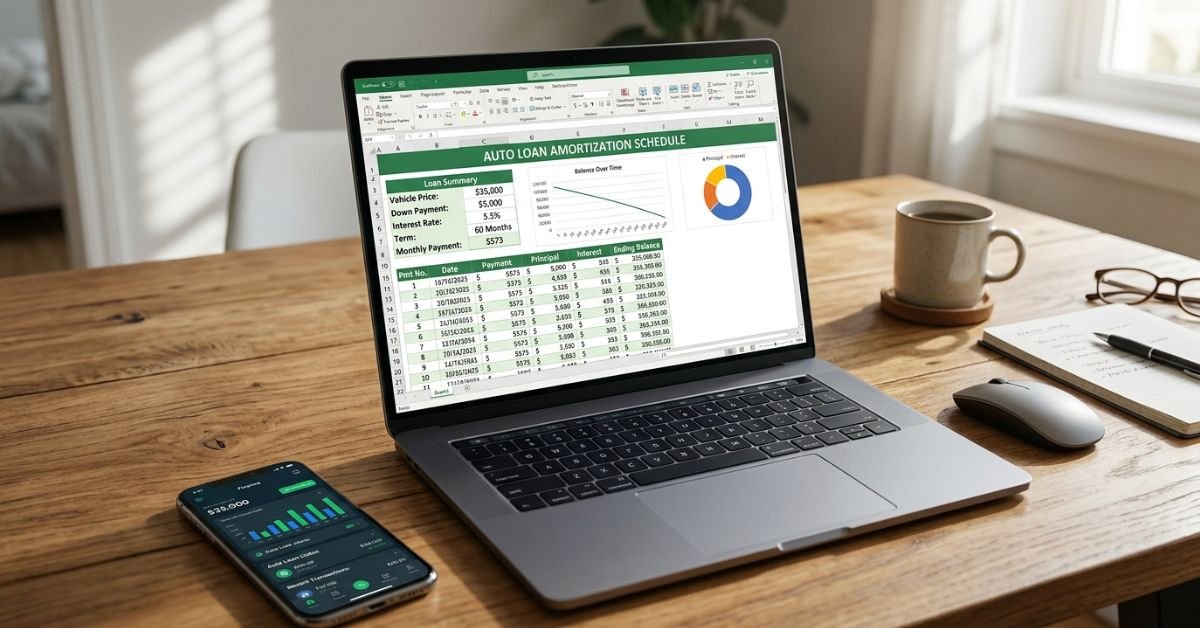
Most people sign loan agreements at the dealership finance office while exhausted, just wanting to drive their new car home. That was my mistake. I nodded along, glanced at the Truth in Lending Act disclosure box, saw the monthly payment fit my paycheck, and ignored the long-term math.


When I finally pulled my loan documentation into my budgeting software—I use both YNAB (You Need A Budget) and Monarch Money to monitor cash flow—I mapped out the full amortization schedule.
💰 More Cheap Living Tips You'll Love
- Save Money or Pay Off Debt First? Tech-Driven Guide
- Debt Snowball Worksheet: How to Fill It Out Correctly
- Pay Off Debt Faster Without Earning More: Tech Guide
- Debt Snowball on a Low Income: Does It Still Work in 2026-27?
- Debt Snowball vs Avalanche: Which Repayment Strategy Wins?
- Debt Snowball Method: How It Works (With Real Example)
Original Balance:       $21,450.00
Term:                   60 Months
Interest Rate (APR):    6.20% (Simple Interest)
Scheduled Monthly P&I:  $416.50
Total Scheduled Cost:   $24,990.00
Interest on Contract:   $3,540.00
Three and a half thousand dollars just for the privilege of borrowing money for a depreciating metal box on wheels.


Auto loans at American credit unions typically run on simple daily interest. Every morning, the bank takes your outstanding principal balance, multiplies it by your daily interest rate (6.2% divided by 365), and adds that accrued amount to your tab. The longer that principal sits high, the more interest you eat.
Before throwing money at the loan, I had to answer a critical legal question: can i pay off my car loan early without penalty?
Under Federal Trade Commission (FTC) guidelines and standard US consumer credit regulations, modern retail auto installment contracts rarely include prepayment penalties. However, some predatory or subprime dealer-arranged loans still carry “precomputed interest” structures or early termination fees buried in the fine print.
I pulled up my credit union’s online document vault, read the original PDF note, and confirmed two things:
- No prepayment penalty clauses existed.
- The loan calculated interest on a standard simple-interest basis, meaning every dollar paid early would directly trigger an interest rate recalculation on the remaining balance.
If your lender calculates interest using the outdated “Rule of 78s,” refinancing platforms like RateGenius or SuperMoney should be your first stop before you start aggressive overpayments. In my case, the credit union financing was fair; I just needed to attack the balance.
Aggressive Digital Frugality: Eliminating Tech and Lifestyle Subscriptions
I didn’t want to live on plain ramen, but I needed to find $250 to $350 in unallocated cash each month. The fastest way to create that margin was living frugally to eliminate car debt by running an aggressive audit on my recurring digital overhead.
Slicing the Streaming and Cloud Bloat
I ran my transaction history through Rocket Money to expose recurring zombie charges. The results were embarrassing:
- Two cloud storage tiers running simultaneously (iCloud 2TB and Google One 2TB): canceled Google One, saving $9.99/mo.
- Three video streaming services running concurrently: pruned down to one rotating service at a time, saving $31.98/mo.
- An unused domain renewal platform and an idle fitness app: canceled, saving $24.00/mo.
Total recurring subscriptions reclaimed: $65.97 per month.
The MVNO Carrier Swap
My biggest quick win came from my cell phone bill. I had been on an unlimited postpaid plan with a major carrier costing roughly $85 per month after taxes and regulatory fees.
I ported my number over to Mint Mobile, buying an upfront 3-month allotment for $15 per month on the 5GB tier (which I later renewed for an annual plan). Because I work from home and spend 90% of my time on home Wi-Fi, my data usage rarely cracked 3GB anyway.
Old Carrier:  $85.00/mo
Mint Mobile:  $15.00/mo
Net Savings:  $70.00/mo ($840/year redirected to principal)
The Grocery Optimization Strategy
Food costs in the US ballooned over the last few years, but meal prepping with basic digital inventorying made a massive difference.
Instead of ordering takeout twice a week via DoorDash (which racked up delivery fees, tips, and service markups averaging $75 a week), I planned weekly meals around staple groceries using the AnyList app synced with my partner.
Just cutting out restaurant delivery runs netted around $250 a month without feeling like starvation.
Automating Extra Principal Payments with Fintech Apps
Trimming expenses creates cash, but letting extra cash sit in your standard checking account is dangerous. It evaporates into impulse Amazon buys or casual weekend trips. You need friction-free automation.
The Biweekly Payment Schedule Trick
Many borrowers wonder how to make biweekly car payments online. It sounds complex, but it comes down to calendar mechanics.
Instead of sending $416.50 once a month (12 payments per year), you pay half that amount—$208.25—every two weeks. Because there are 52 weeks in a year, you end up making 26 half-payments. That equals 13 full payments over twelve months instead of 12.
That single extra payment per year quietly shaves months off a standard 60-month term.
To make this seamless:
- Log into your US bank or credit union checking account.
- Set up an automated biweekly ACH transfer synced precisely to your employer’s biweekly payroll Friday.
- Schedule the recipient as your auto loan account number.
The “Paid-Ahead” Trap: Does Paying Extra on Car Loan Go to Principal?
This is the single most dangerous pothole in auto debt payoff.
When you send extra money to your lender through their online banking portal, does paying extra on car loan go to principal?
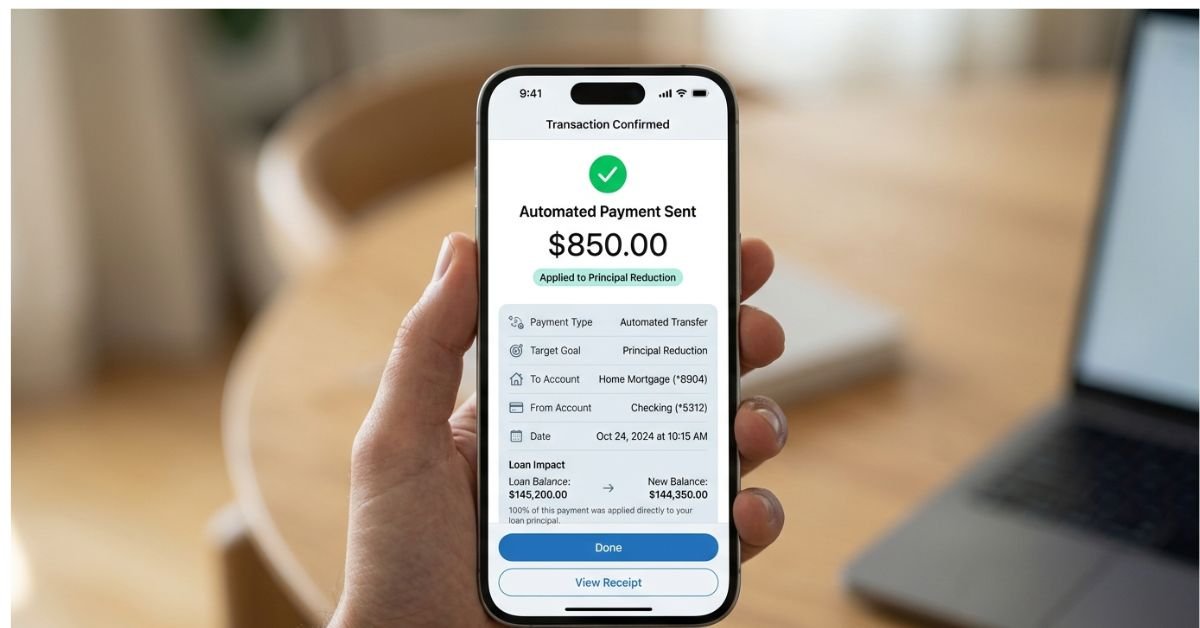
Often, NO. By default, many loan management systems automatically place surplus payments into “Paid-Ahead Status” (sometimes labeled as “Advance Payment Due Date”).
Here is what happens: if your payment is $416.50 and you send $700, the bank takes $416.50 for this month’s installment, marks your next due date as 45 or 60 days out, and holds the remaining $283.50 as a pre-payment for next month’s bill!
When that happens, your principal balance does not drop immediately, and daily interest continues to accumulate on the full balance.
Expert Insight: How to Lock in True Principal Allocation
Call your credit union or lender’s loan servicing department directly. Ask them: “Does your automated ACH system apply unallocated overpayments directly to the principal balance, or does it push the maturity due date forward?”
If the online portal doesn’t have a distinct checkbox for “Principal-Only Payment”, instruct them to permanently configure your account profile so that any amount received beyond the contractual payment immediately executes a direct principal reduction.
To accelerate the payoff beyond basic biweekly transfers, I leveraged the best apps to pay off car loan faster:
- Qapital & Oportun: These apps deploy microsaving algorithms that analyze checking account cash flow fluctuations and sweep surplus $5 to $20 increments into a dedicated payoff bucket.
- Undebt.it: A phenomenal, free debt-snowball and avalanche tracker that calculates real-time payoff projections whenever you inject extra cash.
Every time my microsaving bucket accumulated $150, I logged into my credit union and submitted a standalone transfer tagged explicitly as “Principal Only.”
Fueling Payoffs with Micro-Sustained Tech Side Gigs
Living cheaply establishes the defensive foundation. Offensive income accelerates the timeline from “two years early” to “done before you know it.”
I didn’t take on an exhausting 30-hour-a-week second job. Instead, I monetized assets and skills I already had through targeted digital side hustles.
Side Hustle Source            Total Reinvested into Loan
------------------------------------------------------
Old Tech Hardware (Swappa)    $840.00
Local PC Repairs & Tune-ups   $1,250.00
Freelance Tech Writing Gigs   $2,100.00
Unused Household Gear (eBay)  $430.00
------------------------------------------------------
Total Lump-Sum Injections:    $4,620.00
Liquidating the Tech Graveyard
If you are into technology, you likely have unused assets sitting in drawers collecting dust.
I took an inventory of my desk drawers:
- An older iPad Air that had been replaced by my work laptop.
- Two mechanical keyboards from past desk setups.
- A previous-generation Nvidia graphics card sitting in an anti-static bag.
- An older backup phone.
I skipped lowball local buyers on Facebook Marketplace and listed the electronics on Swappa and eBay. Within three weeks, I cleared out the closet clutter and generated $1,270 in pure liquid cash.
Instead of letting that money stay in PayPal or roll into an upgrade, I initiated an ACH withdrawal directly to my checking account and immediately dumped 100% of it into the loan principal.
Watching the principal balance cross below the $15,000 threshold inside month four gave me an incredible psychological boost.
Accounting for Taxes on Tech Hustles
One trap that catches many gig workers off guard: the IRS expects their share of third-party platform sales and freelance contract work.
Whenever I generated $300 writing technical guides or troubleshooting a local small business’s network setup, I moved 30% into an external high-yield savings account (HYSA) reserved for quarterly estimated taxes. The remaining 70% went straight to my credit union auto loan.
Never compromise your federal tax standing to pay down consumer debt early; that just trades low-interest bank debt for high-penalty IRS issues.
The Final Stretch: Psychological Milestones and Debt Freedom
By combining automated biweekly payments, $200+ in monthly digital frugality savings, and sporadic lump-sum tech side hustles, the math compressed dramatically.
A 60-month loan schedule looks like an endless desert at the start. But when your balance falls faster than the calendar months tick by, the compounding effect flips in your favor. Because I was crushing the principal early, the daily interest accrual cratered from $3.64 per day down to less than $0.80 per day by month 28.
On month 36, I made my final transfer of $384.12.
Requesting the Digital Lien Release
When you pay off an auto loan in the United States, your journey isn’t finished until the paperwork clears.
Once the final transaction cleared:
- I waited 10 business days for the funds to fully settle.
- I contacted the credit union titling department to request an official Lien Release Letter.
- Depending on your state (some states use Electronic Lien and Titling, or ELT systems), the credit union notifies your local DMV to print a clean paper vehicle title with no lienholders attached.
Holding that clean, unencumbered title in my hands was one of the most liberating financial milestones I have experienced.
Dodging the Lifestyle Inflation Trap
The biggest mistake people make after paying off a car early is immediately talking themselves into an upgrade.
“Well, I proved I can afford $416 a month, so now I can go lease a new EV!”
Don’t do it.
The day my loan cleared, I kept the automated $416.50 transfer active. But instead of routing it to my credit union auto loan, I pointed the ACH pipeline directly into an S&P 500 index fund via my Vanguard brokerage account.
That money was already budgeted out of my life; by continuing to live without it, I turned a former debt liability into an appreciating wealth engine.
Frequently Asked Questions
Can I pay off my car loan early without penalty in the US?
Yes, the vast majority of consumer auto loans issued by US banks, credit unions, and major captive auto lenders (like Toyota Financial or Ford Credit) do not carry prepayment penalties. Under federal regulations, simple-interest loans calculate charges daily, allowing you to settle the balance at any time without fees. However, you should always check your Truth in Lending disclosure document for any “prepayment penalty” or “precomputed interest” checkboxes before making lump-sum payments.
Does paying extra on a car loan automatically go toward principal?
Not necessarily. Many US lending portals categorize extra payments as “paid ahead,” which simply credits the money toward your next scheduled monthly bill rather than reducing the balance today. To ensure your extra cash saves you money on interest, select the “Principal Only” option on your lender’s online portal or call your loan servicer directly to instruct them to apply overpayments strictly to principal reduction.
What are the best apps to pay off car loans faster?
The most effective apps include YNAB (You Need A Budget) for zero-based allocation, Monarch Money for tracking multi-account net worth, Undebt.it for custom debt snowball/avalanche payoff models, and Qapital or Oportun for automated microsavings algorithms that pull small surpluses from checking accounts to build payoff lump sums.
How do biweekly car payments work online with US credit unions?
Biweekly payments involve splitting your standard monthly car payment directly in half and scheduling a transfer every two weeks through your bank’s bill pay or ACH system. Since there are 52 weeks in a calendar year, you end up making 26 half-payments, which equates to 13 full payments annually. That single extra monthly payment per year accelerates your amortization schedule and reduces your payoff timeline by months.










