
Feed Family of 4 for $75 a Week: Tech & Budget Guide. Six months ago, I stood in the checkout aisle watching the digital register tick past $214. Two bags of groceries. Barely four days of meals for my partner, two kids, and me. I’m a technologist by trade, someone who automates data pipelines and audits server efficiency for fun, yet my family’s food budget was bleeding out every single week.
- 1. The $75/Week Digital Blueprint: Foundational Tech Stack
- 2. 1. The Digital Inventory Tracker
- 3. 2. Digital Circulars and Price Aggregators
- 4. 3. Price Trackers and Unit Cost Calculators
- 5. The Step-by-Step Shopping Workflow
- 6. Step 1: Algorithmic Meal Planning
- 7. Step 2: Digital Coupon Clipping & Store Loyalty Programs
- 8. Step 3: Deployment of Barcode Scanner Apps
- 9. Step 4: Stacking Cashback Apps at Checkout
- 10. Pro Tip: The “Aldi Finds” Rotation Strategy
- 11. Sample $75 Grocery Cart Breakdown (Family of 4)
- 12. Critical Budget Pitfalls to Avoid
- 13. 1. The “Rebate Bait” Illusion
- 14. 2. The Pre-Cut Convenience Tax
- 15. 3. Buying Perishables Without a Plan
- 16. Frequently Asked Questions
- 17. Is $75 a week genuinely realistic with current inflation?
- 18. What if my local grocer doesn’t offer digital coupons?
- 19. How do I handle picky eaters on such a tight budget?
- 20. Should I pay for a subscription meal planning or budgeting app?
- 21. What happens when staples like cooking oil, spices, or flour run out?
That was the breaking point. I decided to treat our household food supply like a lean systems engineering problem. The target: feed all four of us on a hard cap of $75 a week without eating plain instant ramen or sacrificing balanced nutrition.
Most conventional budgeting guides tell you to cut coupons from Sunday circulars or buy dry beans in twenty-kilo sacks. That’s nice in theory, but who has three spare hours on a Sunday morning? Instead, I assembled an agile, app-driven tech stack that does the heavy lifting for me. Here is the exact system, the data-driven workflows, and the digital tools that keep our grocery bill locked at $75 every single week.
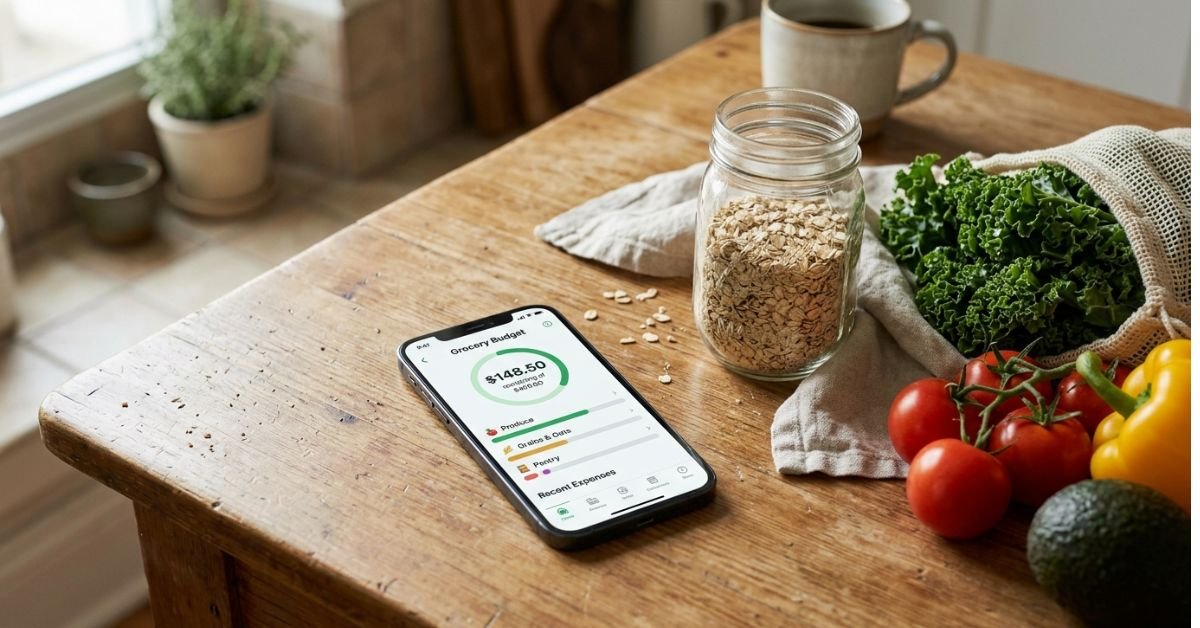


The $75/Week Digital Blueprint: Foundational Tech Stack
Slashing a food bill down to roughly $10.70 a day for four people ($2.67 per person per day) requires eliminating zero-value spending. Food waste is budget suicide. If you throw away a head of lettuce, you might as well toss two dollars straight into the trash bin.
To prevent that, we start outside the grocery store. Here is the core software pipeline running our kitchen:
1. The Digital Inventory Tracker
Before buying a single calorie, you need real-time visibility into what you already own. We maintain a lightweight pantry inventory tracker in Notion (though an open-source tool like Grocy or a shared Google Sheet works just as well).


Every dry staple, spice, freezer protein, and root vegetable gets logged by shelf-life category:
💰 More Cheap Living Tips You'll Love
- Debt Snowball on a Low Income: Does It Still Work in 2026-27?
- Lower Your Electric Bill as a Renter: 12 Cheap Tech Ways
- First Steps to Take When You Decide to Get Out of Debt
- Debt Snowball Worksheet: How to Fill It Out Correctly
- Debt Avalanche Method Step by Step: Fast Debt Payoff
- Debt Snowball vs Avalanche: Which Repayment Strategy Wins?
- Tier 1 (Volatile): Fresh greens, berries, opened dairy (must eat within 3–4 days).
- Tier 2 (Sturdy Fresh): Carrots, cabbage, potatoes, apples (good for 2–3 weeks).
- Tier 3 (Static): Dry brown rice, lentils, rolled oats, canned crushed tomatoes.
When an ingredient drops to zero, we flip its status flag. We never guess what is behind the pasta boxes.


2. Digital Circulars and Price Aggregators
Forget paper leaflets. We deploy the Flipp app to index every weekly flyer across our local grocers (Aldi, Lidl, local regional supermarkets, and discount grocers). Flipp aggregates weekly deals and lets you highlight specific sales across competing chains simultaneously.
If chicken drumsticks are on sale for $0.99/lb at Store A, while Store B has pork loins on clearance, the app pinpoints where your baseline protein comes from before you leave the house.
3. Price Trackers and Unit Cost Calculators
Never look at the large, bold sticker price on an aisle shelf. It’s psychological bait. The only metric that matters is unit price (cents per ounce, gram, or kilogram).
I use a simple unit price calculator on my phone when comparing bulk items versus standard packages. Bulk isn’t automatically cheaper; packaging sizes shift silently, an annoying retail trick known as shrinkflation.
The Step-by-Step Shopping Workflow
Executing a $75 grocery run is an exact tactical operation. You can’t wander down the middle aisles hoping for inspiration. Here is the operational runbook I follow every Thursday and Friday.
[Inventory Audit] ➔ [AI Meal Generation] ➔ [Digital Coupon Clipping] ➔ [Targeted Route Shopping] ➔ [Receipt Arbitrage]
Step 1: Algorithmic Meal Planning
Instead of browsing food blogs for hours, I use an AI meal planning prompt fed directly with our current pantry inventory:
“Generate a 7-day dinner menu for 4 people with lunch leftovers. Primary staples available: 2 cups dried brown rice, 1 can black beans, cooking oil, spices. Prioritize low-cost, dense ingredients: rolled oats, eggs, whole cabbage, carrots, bone-in chicken thighs, dry lentils. Total raw ingredient purchase cost must stay under $45 for supplemental items. Limit unique ingredients across meals to reuse bulk produce.”
The output becomes our weekly core:
- Breakfasts ($8 total): Rolled oats cooked with water/touch of milk, topped with sliced bananas or cinnamon sugar. Homemade peanut butter toast on discount bread.
- Lunches ($12 total): Large-batch lentil dal with rice, or leftover dinners repurposed into wraps.
- Dinners ($45 total): Cabbage roll soup, sheet-pan roasted drumsticks with root vegetables, vegetarian bean chilis, and egg fried rice.
- Snacks/Flex Buffer ($10 total): Popcorn kernels popped on the stove, seasonal apples, or carrots with homemade sunflower dip.
Step 2: Digital Coupon Clipping & Store Loyalty Programs
Before setting foot inside the store, fire up the respective store loyalty programs on your phone. Most major supermarket chains lock their lowest sale prices behind digital rewards tiers.
Take five minutes for deliberate digital coupon clipping. Look for manufacturer coupons that overlap with items already marked down in the weekly special. Stacking an in-app $1.00 off store coupon on top of an item on clearance can bring household essentials down to literal pennies.
Step 3: Deployment of Barcode Scanner Apps
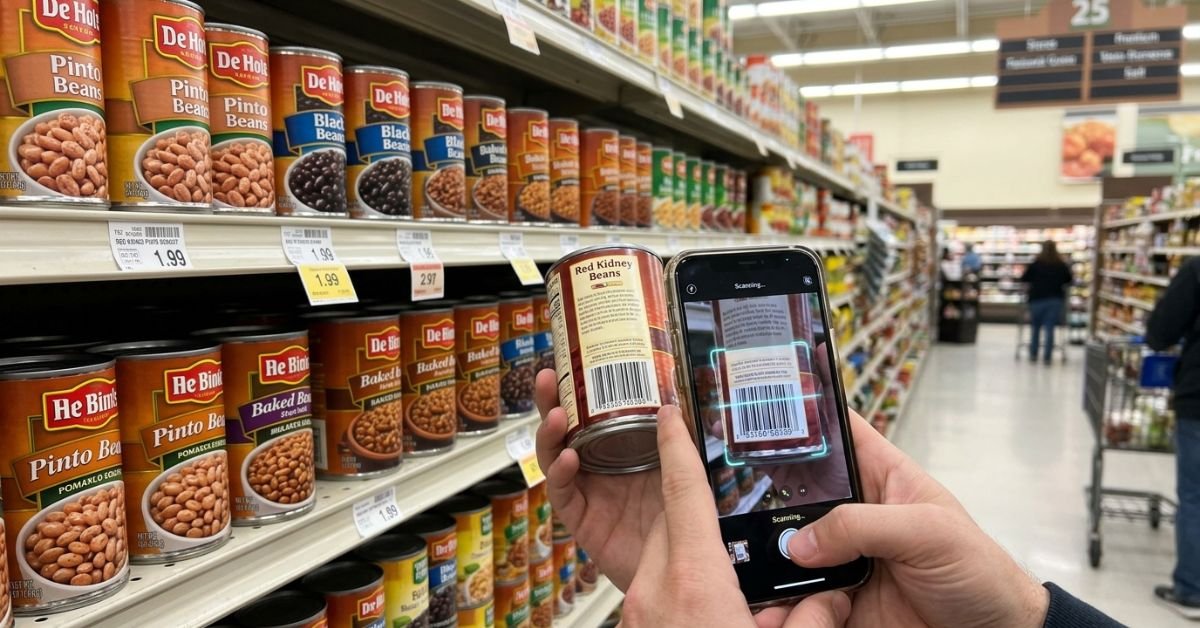
Inside the aisles, store shelf tags can be misleading or outdated. We utilize barcode scanner apps to check if an item qualifies for unadvertised digital rebates or instant clearance drops.
More importantly, compare sizes immediately. If an 18-count carton of large eggs is $0.18 per egg, but a 30-count flat works out to $0.14 per egg, you pivot immediately.
Step 4: Stacking Cashback Apps at Checkout
The transaction doesn’t stop when your card hits the payment terminal. Keep every paper receipt pristine.
As soon as we get back to the car, we process receipt arbitrage:
- Ibotta: Check off pre-selected grocery rebates. Getting $0.50 back on oats, $0.75 on milk, or $0.20 on “any item” adds up over four weeks.
- Fetch Rewards: Snap a photo of the receipt immediately. Even standard receipts spit out bonus points that convert into grocery gift cards down the line.
These cashback apps typically return between $3 and $7 weekly. That rebate gets rolled straight into next week’s $75 budget, artificially boosting your purchasing power.
Pro Tip: The “Aldi Finds” Rotation Strategy
Download the Aldi Finds app every Tuesday night. Aldi updates their limited-run inventory and seasonal meat discounts midweek. Look specifically for their “Meat Special of the Week.” When pork shoulder drops to $1.49/lb or whole chicken reaches $0.99/lb, pivot your meal plan on the fly. Cook it low and slow, shred it, and stretch that single $8 protein investment across four separate family dinners.
Sample $75 Grocery Cart Breakdown (Family of 4)
To prove this isn’t just abstract budgeting theory, here is an authentic receipt ledger from our regular discount grocer run:
| Item Category | Exact Item | Quantity | Estimated Cost | | :— | :— | :— | :— | | Proteins | Bone-in Chicken Drumsticks | 5 lbs | $5.95 | | | Large White Eggs | 2 dozen (24 ct) | $4.80 | | | Dry Brown Lentils | 2 lbs | $2.78 | | | Dry Black Beans | 2 lbs | $2.90 | | | Canned Tuna | 4 cans | $3.60 | | Produce | Whole Green Cabbage | 1 head (3.5 lbs)| $2.40 | | | Yellow Onions | 3 lb bag | $2.29 | | | Whole Carrots | 2 lb bag | $1.98 | | | Bananas | 6 lbs | $3.54 | | | Russet Potatoes | 5 lb bag | $3.49 | | Grains & Staples | Rolled Oats | 42 oz tub | $3.99 | | | Enriched Long Grain White Rice| 5 lbs | $3.89 | | | Whole Wheat Bread (Store Brand)| 2 loaves | $2.90 | | | Peanut Butter | 16 oz jar | $1.89 | | Dairy & Fats | Whole Milk | 1 gallon | $3.15 | | | Block Cheddar Cheese (Shred yourself)| 8 oz | $2.10 | | | Canola or Vegetable Oil | 32 oz | $2.99 | | Pantry Additions| Crushed Canned Tomatoes | 2 large (28 oz)| $3.18 | | | Salt / Basic Seasoning refill | 1 unit | $1.20 | | Tax / Buffer | Dynamic variance / local tax | — | $6.97 | | TOTAL | | | $74.00 |
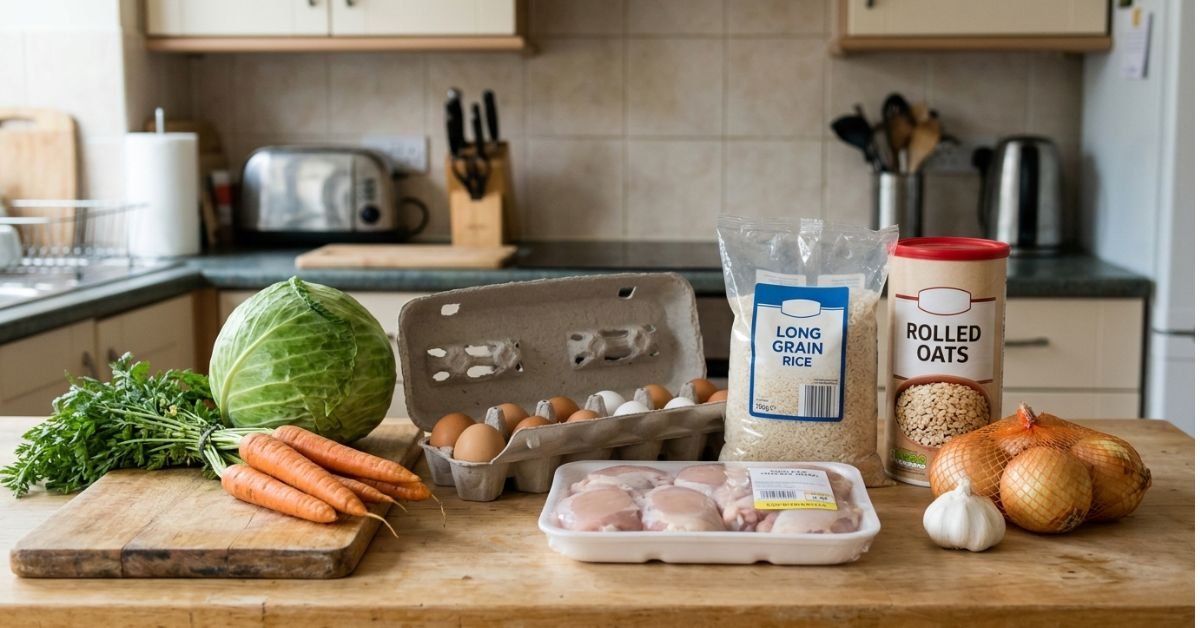
This cart yields roughly 21 to 24 unique meal portions per person for the week. The secret is that whole cabbage, carrots, and potatoes do not break down into water or rot within 48 hours like pre-packaged baby spinach does. They add fibrous bulk and crunch to stir-fries, soups, and bakes without draining funds.
Critical Budget Pitfalls to Avoid
Even with solid apps, human error can easily blow your budget past $100. Watch out for these traps:
1. The “Rebate Bait” Illusion
Cashback apps love dangling high-dollar rebates on brand-name items. You will see a $2.00 rebate on a box of name-brand cereal that costs $6.49. Even after the rebate, you paid $4.49. The store-brand equivalent right next to it costs $1.89 with no rebate at all. Do the math: you’re still losing $2.60 just to feel the dopamine hit of cashback. Brand-name processing remains a net negative.
2. The Pre-Cut Convenience Tax
A bag of pre-shredded cheddar cheese contains added anti-caking agents (like potato starch or cellulose) that alter melting texture, and you pay anywhere from 30% to 50% more per ounce for the privilege. Buy the solid brick, pull out a stainless-steel box grater, and shred it in 90 seconds. Apply that same logic to whole carrots versus baby carrots, and bone-in poultry versus boneless breasts.
3. Buying Perishables Without a Plan
Never purchase leafy salad greens, fresh berries, or zucchini on sale without knowing the exact day and meal they will be consumed. If you don’t eat them within 72 hours, they turn into brown sludge at the bottom of the crisper drawer, torpedoing your cost-per-calorie ratio.
Frequently Asked Questions
Is $75 a week genuinely realistic with current inflation?
Yes, but it demands strict discipline: you must cook entirely from scratch and minimize processed, packaged convenience snacks. It relies on foundational caloric staples (rice, oats, potatoes, dry beans, eggs) and cheaper meat cuts (drumsticks, bone-in thighs, pork shoulder) rather than boneless beef or specialty products. You won’t eat ribeye steaks, but your family will be well-fed, energetic, and nutritionally balanced.
What if my local grocer doesn’t offer digital coupons?
If you shop primarily at discount chains like Aldi, Lidl, or local salvage grocers, you won’t encounter manufacturer coupons. That’s actually fine because their baseline prices are already lower than conventional supermarkets running sales promotions. Focus your energy on unit price calculators, the Aldi Finds app, and general receipt apps like Fetch Rewards that reward any scanned receipt regardless of the store origin.
How do I handle picky eaters on such a tight budget?
Deconstruct meals. Instead of cooking a complex casserole that a child might reject entirely, prepare components simply: rice, roasted chicken, sliced raw carrots, and cheese cubes. Let kids assemble their own plates. Familiar, simple staples like oats with sliced bananas, eggs and toast, or homemade quesadillas are naturally kid-friendly, inexpensive, and easy to modify without buying specialty toddler snacks.
Should I pay for a subscription meal planning or budgeting app?
No. Paying a $10 to $15 monthly subscription for a budgeting app completely undermines your mission when running a lean $75 weekly grocery budget. Free tiers of Flipp, Ibotta, Fetch, standard notes apps, and free foundational AI models provide all the computing power required to organize your pantry, track prices, and plan meals without eating into your food funds.
What happens when staples like cooking oil, spices, or flour run out?
Treat staple replenishment as a rotating slot in your weekly $10 buffer. Never replace all your bulk condiments in the same week. If oil runs out this week, buy the $3 bottle and rely on current spices. If salt and cumin run out next week, allocate that week’s flex funds to spices. By staggering pantry restocks, your spending stays completely flat without sudden spikes.