
How to Feed Your Family for $50 a Week Without Eating Badly.Last month, I pulled up our household spending dashboard and felt a familiar spike of anxiety. Inflation was chewing through our checking account, and grocery bills for our family of four had crept past $220 a week. That night, I decided to treat our pantry like a software optimization problem. Could we run an extreme budget meal plan of $50 a week without relying on sodium-heavy instant ramen, nutrient-void boxed mac, or ultra-processed mystery meats?
- 1. The Tech Stack Behind the $50 Digital Grocery Framework
- 2. 1. Digital Circular Aggregators
- 3. 2. Surplus & Flash-Sale Mobile Apps
- 4. 3. Digital Loyalty Stacking and SNAP/EBT Digital Coupons
- 5. 4. Automated Cashback Reward Apps
- 6. Nutritional Density vs. Calorie Fillers: The Real Math
- 7. How to Use AI to Plan Cheap Meals
- 8. The $50 Baseline Shopping Haul (Aldi / Walmart Baseline)
- 9. 7-Day Extreme Budget Meal Plan ($50 Family Blueprint)
- 10. Breakfasts (Rotational System)
- 11. Lunches (Batch-Made)
- 12. Dinners
- 13. Managing Your Kitchen with Digital Pantry Inventory Software
- 14. Expert Insight: Beware the “Driving to Save” Illusion
- 15. 3 Critical Traps That Break a $50 Budget
- 16. 1. The Junk Food Digital Coupon Trap
- 17. 2. Buying Produce Out of Season
- 18. 3. Ignoring the Whole Animal
- 19. Frequently Asked Questions
- 20. Can you really feed a family of 4 on $50 a week long-term?
- 21. What are the best apps to save money on groceries right now?
- 22. What if my family has food allergies like gluten or dairy intolerance?
- 23. How do I handle picky eaters who hate beans and lentils?
- 24. Does buying in bulk at Costco or Sam’s Club beat Aldi?
Turns out, yes. We did it for thirty days straight.
Feeding four people on seven dollars and fourteen cents a day requires abandoning old-school coupon clipping. Paper inserts won’t save you here. Instead, it takes a lean, tech-driven framework: using modern grocery price trackers, scraping digital circulars, hacking unit price calculation metrics, and deploying AI prompts to build zero-waste menus. Here is the exact system, real receipts included, to hit healthy family meals on a 50 dollar budget without destroying your health.


The Tech Stack Behind the $50 Digital Grocery Framework
Walking into a supermarket without data guarantees you’ll overspend. Supermarket layouts are physical algorithms designed to extract maximum cash from your wallet. To counter that, I run a lightweight software stack before I ever grab a shopping cart.
1. Digital Circular Aggregators
Stop flipping through paper mailers. I use the Flipp circular scanner to search local ads across Aldi, Walmart, and regional chains like Kroger or Meijer simultaneously. If chicken drumsticks drop to $0.99 a pound at one store while black beans are on sale for $0.75 a can at another, Flipp highlights the deal instantly.
2. Surplus & Flash-Sale Mobile Apps
Retailers dump short-dated proteins and produce daily. I keep background alerts active on the Flashfood app and Too Good To Go.


- Flashfood partners with chains like Meijer, Giant, and Tops to sell meat and dairy nearing their “best by” date at 50% off.
- A $12 family pack of lean ground turkey routinely drops to $6. You buy it directly in the app and pick it up from a designated purple cooler inside the store. Pop it into the freezer the minute you get home.
3. Digital Loyalty Stacking and SNAP/EBT Digital Coupons
Even if you do not use SNAP/EBT, grocery loyalty platforms (Kroger Plus, Meijer mPerks) allow you to clip digital manufacturer coupons that stack directly onto weekly store promotions. If you do utilize SNAP/EBT, platforms like Walmart and Instacart now support digital EBT integration, letting you track eligible balances down to the penny before checkout.
💰 More Cheap Living Tips You'll Love
- Debt Snowball on a Low Income: Does It Still Work in 2026-27?
- Pay Off Debt Faster Without Earning More: Tech Guide
- Debt Snowball Method: How It Works (With Real Example)
- Debt Snowball Worksheet: How to Fill It Out Correctly
- Debt Snowball vs Avalanche: Which Repayment Strategy Wins?
- Lower Your Electric Bill as a Renter: 12 Cheap Tech Ways
4. Automated Cashback Reward Apps
After checking out, I run receipts through Ibotta and Fetch Rewards. These aren’t get-rich schemes; they are automated kickbacks. During my 30-day budget audit, these rebate scrapers refunded an average of $3.40 weekly, which rolled over into the following week’s staple budget.


Nutritional Density vs. Calorie Fillers: The Real Math
The biggest myth about budget eating is that cheap food is inherently unhealthy. That only happens when you buy shelf-stable junk food. A box of brand-name sugary cereal costs $5.50 and offers zero satiety. A five-pound bag of whole rolled oats costs $3.98 at Walmart, providing thirty hearty servings loaded with soluble fiber, iron, and complex carbs.
When you’re trying to figure out how to feed a family of 4 for $50 a week, you have to prioritize nutritional density per dollar, aligning purchases with the USDA MyPlate guidelines:
+----------------------------+-----------------------+---------------------+
| Staple Ingredient          | Cost / Package (USD)  | Unit Cost Metric    |
+----------------------------+-----------------------+---------------------+
| Brown Rice (5 lbs)         | $3.64 (Walmart)       | $0.04 per ounce     |
| Dry Green Lentils (1 lb)   | $1.38 (Kroger)        | $0.08 per ounce     |
| Whole Carrots (3 lbs)      | $2.28 (Aldi)          | $0.04 per ounce     |
| Large Eggs (Dozen)         | $2.15 (Aldi)          | $0.18 per egg       |
| Frozen Spinach (12 oz)     | $1.16 (Walmart)       | $0.09 per ounce     |
| Russet Potatoes (10 lbs)   | $4.98 (Aldi)          | $0.03 per ounce     |
+----------------------------+-----------------------+---------------------+
Always ignore the large shelf sticker price. Your eyes must lock onto the bottom left corner: the unit price calculation (price per ounce, per pound, or per count). Retailers frequently place smaller packages on promotion to make them look cheaper, but the bulk alternative often yields a 25% better price per ounce.
How to Use AI to Plan Cheap Meals
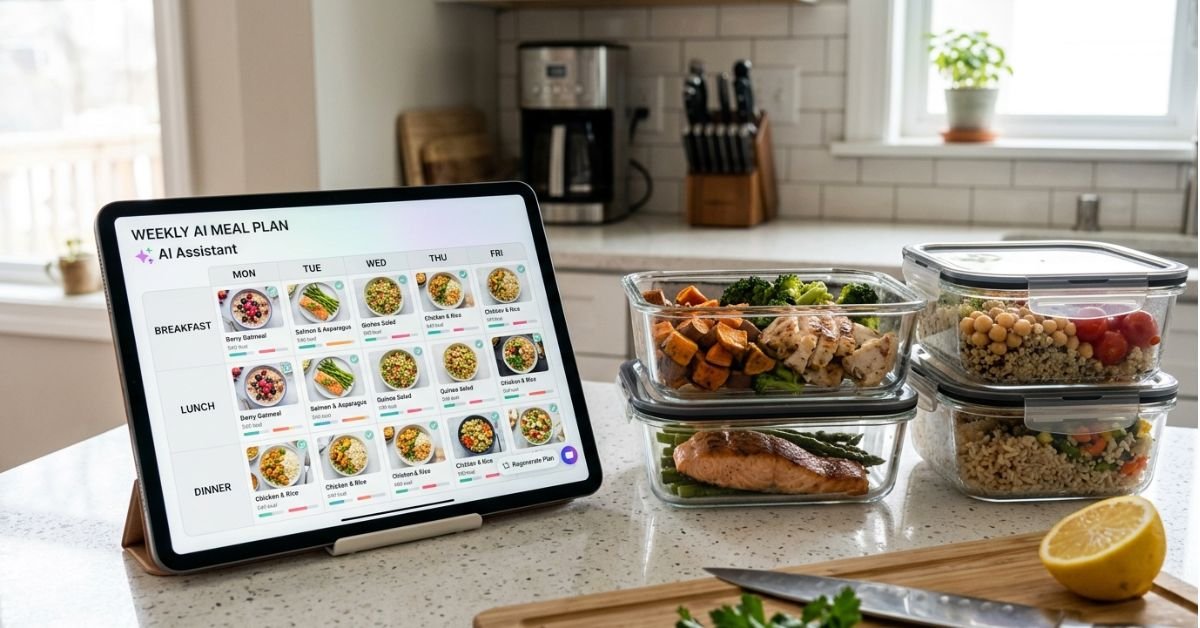
Unplanned ingredients equal rotted food in the trash. Throwing away half an onion or a cup of cooked rice wastes precious capital. To combat this, I lean on AI meal planning alongside the SuperCook ingredient matcher.
SuperCook lets you check off every raw staple currently sitting in your fridge and pantry. Its engine cross-references thousands of recipes, showing only meals you can cook right now with zero extra store trips.
When building a full week from scratch, I run a tailored prompt through ChatGPT.
Prompt Template:
"Act as an expert budget nutritionist. Create a 7-day clean eating family meal prep dinner schedule for 2 adults and 2 kids under a hard $50 budget.

Constraints:
- Must rely heavily on staples: eggs, green lentils, dry pinto beans, brown rice, whole carrots, cabbage, rolled oats, and frozen peas.
- Only one whole chicken or bone-in pork shoulder as the primary animal protein.
- No obscure spices or specialty ingredients. Use only salt, pepper, garlic powder, and oil.
- Each meal must hit approximately 550-650 calories per adult portion with at least 22g protein.
- Provide a consolidated shopping list with estimated Walmart/Aldi US pricing."
The key trick? Forbid the AI from introducing rare culinary components. If a recipe calls for tahini, saffron, or specialty vinegars, your budget is blown on day one. Keep your seasonings simple: salt, black pepper, smoked paprika, garlic powder, and soy sauce.
The $50 Baseline Shopping Haul (Aldi / Walmart Baseline)
Here is a verified shopping list pulled straight from our local Aldi and Walmart store runs in early 2026. Total checkout price: $48.74.
- Whole Chicken (approx. 5 lbs): $6.45 ($1.29/lb)
- Large White Eggs (2 dozen): $4.30
- Dry Green Lentils (2 lbs): $2.76
- Dry Black Beans (2 lbs): $2.84
- Long Grain Brown Rice (5 lbs): $3.64
- Rolled Oats (42 oz): $3.98
- Russet Potatoes (10 lb bag): $4.98
- Yellow Onions (3 lb bag): $2.29
- Whole Carrots (2 lb bag): $1.68
- Green Cabbage (1 large head): $2.10
- Frozen Peas & Corn blend (2 bags): $2.30
- Canned Crushed Tomatoes (28 oz): $1.48
- Bananas (3 lbs): $1.62
- Store-brand Peanut Butter (16 oz): $1.84
- Whole Milk (1 gallon): $3.18
- Store-brand Olive/Vegetable Oil blend (16 oz): $2.90
7-Day Extreme Budget Meal Plan ($50 Family Blueprint)
Breakfasts (Rotational System)
- Days 1, 3, 5, 7: Stovetop oatmeal cooked with milk and water, topped with sliced bananas and a swirl of peanut butter.
- Days 2, 4, 6: Scrambled eggs (2 per adult, 1 per child) served over crispy pan-fried potato hash browns with diced onions.
Lunches (Batch-Made)
- Lentil & Carrot Puree Soup: Simmer 1 lb of lentils with diced onions, carrots, and water. Season with salt and garlic. Hearty, thick, and served with roasted potato wedges.
- Cold Rice & Black Bean Bowls: Seasoned black beans tossed with chilled brown rice, diced raw cabbage for crunch, and a splash of oil and vinegar.
Dinners
Monday: Slow-Roasted Whole Chicken with Root Vegetables
Roast the whole chicken over a bed of quartered onions, carrots, and potatoes. Carve off only the drumsticks, wings, and part of the thighs for dinner tonight.
- Crucial Step: Save every single bone, wingtip, and scrap of skin. Drop them straight into a stockpot with water, simmer overnight, and strain to yield 3+ quarts of rich bone broth for free.
Tuesday: Smoky Lentil & Cabbage Skillet
Sauté sliced green cabbage and onions until caramelized. Stir in cooked green lentils, garlic powder, and crushed tomatoes. The sweet cabbage balances the earthy lentils beautifully.
Wednesday: Shredded Chicken & Brown Rice Fried Rice
Shred one chicken breast from Monday’s roast. Stir-fry it in your skillet with cold leftover brown rice, frozen peas, scrambled eggs, onions, and a splash of soy sauce. High volume, high protein.
Thursday: Hearty Black Bean & Potato Stew
Cube potatoes and simmer them with soaked black beans, diced onions, and leftover chicken bone broth until tender. Top with crunchy shredded cabbage.
Friday: Dutch Baby Pancake & Scrambled Egg Night
Whip remaining eggs, a cup of milk, and flour (from your pantry reserve) into an airy baked Dutch baby pancake. Serve alongside soft-scrambled eggs and sliced bananas. Kids love breakfast for dinner, and it costs less than $2.50 to make.
Saturday: Golden Chicken & Rice Congee (Porridge)
Shred the final bits of chicken carcass meat. Simmer one cup of brown rice in eight cups of rich homemade chicken broth for 90 minutes until the rice grains burst into a creamy, savory porridge. Stir in shredded meat, frozen vegetables, and a fried egg on top.
Sunday: “Clean the Fridge” Hash Frittata
Dice whatever potatoes, onions, cabbage, and beans are left over from the week. Crisp them in a hot skillet, pour beaten eggs over the top, cover with a lid, and let it set into a firm frittata. Zero waste.
                       WEEKLY MACRONUTRIENT & COST SPLIT

  Proteins (Chicken, Eggs, Lentils, Beans)   [$$$$$$$$$$$$$$$$] ~38% Cost
  Complex Carbohydrates (Rice, Oats, Spuds)  [$$$$$$$$$$$]      ~26% Cost
  Produce (Cabbage, Carrots, Onions, Bananas)[$$$$$$$$]         ~20% Cost
  Fats & Dairy (Oil, Peanut Butter, Milk)    [$$$$$$$]          ~16% Cost
Managing Your Kitchen with Digital Pantry Inventory Software
Meal plans fall apart when you lose track of what’s hiding behind your pantry shelves. Half-used bags of beans get pushed to the back, expire, or get forgotten while you needlessly buy duplicates.
To solve this, I run a lightweight pantry setup inside AnyList (or Paprika). Both apps feature built-in barcode scanners.
- Scan on Entry: Whenever I bring groceries home, I spend three minutes scanning barcodes directly into my digital inventory.
- Organize Fridge Zones: Label crisper drawers by perishability. Top shelf for items expiring within 48 hours; bottom drawers for hardy root vegetables.
- Audit Before Planning: Before running my weekly AI prompt, I open my inventory list. The prompt strictly takes our existing leftovers into account before suggesting new grocery runs.
Expert Insight: Beware the “Driving to Save” Illusion
Don’t chase extreme budget grocery hacks to the point of absurdity. If you drive five miles across town to save $0.40 on eggs at a discount store, and then drive another four miles to buy cheaper cabbage elsewhere, you’ve burned half a gallon of fuel. At $3.50 a gallon, your travel expenses just wiped out your grocery savings. Pick a maximum of two stores with close proximity (like an Aldi sharing a strip mall with a Walmart) and execute your digital list there.

3 Critical Traps That Break a $50 Budget
During my 30-day tracking test, I hit several snags. These are the traps that quietly destroy your wallet:
1. The Junk Food Digital Coupon Trap
Grocery store loyalty apps are loaded with digital coupons for name-brand potato chips, sodas, and frozen pizzas. “Save $2.00 when you buy three!” It looks like a win on the screen. In reality, you’re paying $10 for products that offer near-zero nutritional density and leave your family hungry two hours later. Delete those coupons. Stick exclusively to single-ingredient staples.
2. Buying Produce Out of Season
Fresh strawberries, blueberries, and asparagus will crush a $50 budget in seconds. Fresh berries can easily cost $4.99 for a tiny six-ounce clam shell. If you want fruit, lean on year-round value kings: whole bananas and large bags of apples. For green vegetables, buy whole heads of green cabbage or frozen steamable vegetable bags. Frozen produce is flash-frozen at peak harvest, retaining full nutrient profiles at a fraction of the price.
3. Ignoring the Whole Animal
Boneless, skinless chicken breasts often retail at $3.99 to $4.99 per pound. A whole chicken or bone-in pork shoulder hovers around $1.29 to $1.99 per pound. Buying the whole bird gives you white meat, dark meat, skin for cooking fat, and bones for broth. Learning basic knife work to break down a chicken saves you dozens of dollars every month.
Frequently Asked Questions
Can you really feed a family of 4 on $50 a week long-term?
While running an extreme budget meal plan of $50 a week is completely doable for short-term resets, debt payoffs, or tight months, it requires strict discipline and repetitive staple rotations. For long-term sustainability without meal fatigue, most families prefer bumping this budget to $75–$80 a week to introduce more fresh meats, diverse spices, and seasonal fruits.
What are the best apps to save money on groceries right now?
The top software stack includes Flipp (for scanning local flyers and matching prices), Flashfood (for snagging 50% off meats and dairy near sell-by dates), and SuperCook (to match random pantry leftovers into real recipes). Stack these with receipt cash-back tools like Ibotta and Fetch Rewards to recoup extra funds.
What if my family has food allergies like gluten or dairy intolerance?
The $50 framework actually works smoothly for allergen-restricted diets because it completely bypasses processed foods. Naturally gluten-free staples like brown rice, potatoes, lentils, and black beans form the backbone of the caloric intake. If milk is an issue, swap dairy milk for store-brand fortified soy milk or simply reallocate those funds into extra eggs and beans.
How do I handle picky eaters who hate beans and lentils?
Texture is usually the main culprit. Instead of serving whole boiled lentils, puree them with crushed tomatoes, garlic, and onions to build a rich, thick marinara sauce over baked potatoes or rice. Black beans can also be lightly mashed with garlic and baked inside crispy corn tortillas to create cheap, appealing crunchy tacos.
Does buying in bulk at Costco or Sam’s Club beat Aldi?
Not always. While wholesale clubs offer incredible unit prices on bulk nuts, oils, and rice, the high upfront cost will blow a weekly $50 cap instantly. Furthermore, buying perishable produce in bulk often leads to spoilage. For strict weekly cash-flow limits, discount grocers like Aldi or Walmart Neighborhood Markets remain your most reliable bet.