
Why Buying in Bulk at Wholesale Clubs Might Actually Cost You More Money.Last spring, I stood in the middle of a cavernous Costco Wholesale aisle, staring at a three-pack of 32-fluid-ounce mayonnaise jars. The price tag looked ridiculously low compared to the neighborhood supermarket, and my brain immediately registered a win: Stock up now, save later.
- 1. The Bulk Illusion: Psychology Behind the Oversized Cart
- 2. Real-World Scenarios: The High Cost of Perishable Spoilage
- 3. The Mathematics of Unit Pricing: When Supermarkets Beat Club Warehouses
- 4. Expert Insight: The Cash Flow Trap
- 5. Tying Up Liquidity: The Opportunity Cost of Pantry Inventory
- 6. Common Pitfalls: Memberships, Mileage, and Forced Upgrades
- 7. Hands-On Tips: The Split-Cart Audit and the 30-Day Rule
- 8. 1. Apply the 30-Day Consumption Rule
- 9. 2. Run a Split-Cart Audit
- 10. 3. Track Your Own Price Per Ounce Book
- 11. Frequently Asked Questions
- 12. Does buying in bulk actually save money for most families?
- 13. Is Costco or Sam’s Club worth it for a single person?
- 14. What are the hidden costs of wholesale club memberships?
- 15. What items should you never buy in bulk?
Three months later, I scraped half an oxidized, yellowing tub of that very same mayo straight into the garbage disposal.
That single wasted jar completely erased the $3.40 I thought I saved at checkout.
We’ve all been conditioned to believe that buying in bulk is the golden rule of frugal living in the United States. Whether you flash an executive badge at Costco, scan your app at Sam’s Club, or wander the aisles at BJ’s Wholesale Club, the promise is identical: purchase bigger volumes today, shrink your monthly grocery overhead tomorrow.


To see if that promise holds water, I spent 90 days running an empirical grocery receipt audit. I logged every single receipt across four retailers—Costco, Sam’s Club, an ALDI store down the street, and my local Kroger and Walmart Supercenter outlets. I tracked prices, weighed spoiled food on a digital kitchen scale, and cross-referenced price per ounce tags.
The results were jarring. For a massive chunk of American households, buying in bulk isn’t saving money at all. In fact, it’s operating as an invisible tax on your monthly budget.
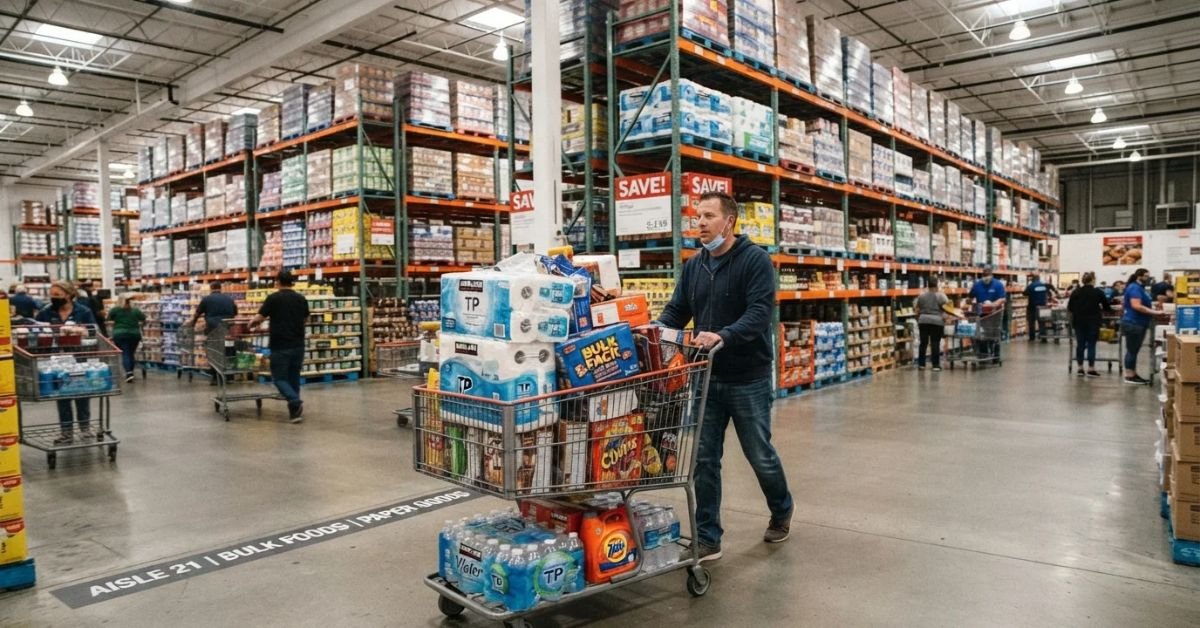


The Bulk Illusion: Psychology Behind the Oversized Cart
Step inside any domestic warehouse club and your shopping experience is deliberately altered from the ground up.
💰 More Cheap Living Tips You'll Love
- Debt Avalanche Method Step by Step: Fast Debt Payoff
- Debt Snowball vs Avalanche: Which Repayment Strategy Wins?
- How Long to Pay Off Debt? Tech Tools to Find Out Fast
- Lower Your Electric Bill as a Renter: 12 Cheap Tech Ways
- Pay Off Debt Faster Without Earning More: Tech Guide
- Save Money or Pay Off Debt First? Tech-Driven Guide
First, consider the shopping cart itself. A standard supermarket cart holds roughly 150 liters; a warehouse cart clocks in at nearly double to triple that volume. Dropping a family-sized pack of chicken thighs and a 30-pack of paper towels into that metal cavern leaves it looking barren. Your subconscious brain registers emptiness, quietly nudging you to hunt for more items to justify the trip.


Then there is the floor plan. Unlike your local Kroger or regional grocer, wholesale clubs rarely use aisle signs. They want you hunting. Retail analysts call this the “treasure hunt” model.
You wander past seasonal outdoor furniture, oversized flat-screen televisions, and bulk designer athletic socks just to get to the eggs and milk stationed at the far corner of the warehouse. High-margin endcaps feature enticing seasonal snacks—think 40-ounce bags of gourmet trail mix or specialty s’mores kits—positioned right at eye level.
Whenever the question surfaces on community forums—does buying in bulk actually save money reddit—users inevitably zero in on this psychological trap. The problem isn’t just the sticker price on the staples; it’s the $42 worth of gourmet beef jerky, sparkling water cases, and seasonal bakery pastries you never planned on buying when you left your house. Impulse buying isn’t an accidental byproduct here; it is the core business model.
Real-World Scenarios: The High Cost of Perishable Spoilage
The math behind bulk shopping falls apart the moment biological realities collide with your pantry.
According to USDA data, between 30% and 40% of the United States food supply is wasted each year. When you shift your shopping to wholesale clubs, that baseline waste jumps exponentially if you are purchasing perishable goods.
During my 90-day receipt audit, I kept a precise food spoilage journal on my kitchen counter. I logged the date, the store of origin, the purchase price, and the exact weight of any food that spoiled before we could consume it.
Spoilage Audit (30-Day Sample Window):
- 5-lb Bag of Organic Honeycrisp Apples: $9.99 (Lost 2.1 lbs to mold = $4.20 loss)
- 16-oz Clamshell Organic Baby Spinach: $4.99 (Lost ~50% to slime = $2.50 loss)
- 3-Pack English Cucumbers: $4.49 (Lost 1 cucumber = $1.50 loss)
- 2-Loaf Bread Multi-pack: $6.29 (Lost half of second loaf = $1.57 loss)
Total Direct Waste: $9.77 across one single run.
That $9.77 loss wiped out every penny of unit savings across the entire receipt.
Produce from club stores typically comes packaged in massive containers: 5-pound bags of lemons, 3-pound clamshells of strawberries, or twin packs of sandwich loaves wrapped together in plastic sleeves. Unless you have three ravenous teenagers who run track, the shelf life of fresh produce simply doesn’t move as fast as your consumption rate.
People frequently search how much food waste from bulk buying occurs, and the reality is painful: throwing away just a third of a bulk perishable package immediately makes that item 33% more expensive than if you had bought a smaller, single unit at a standard grocer.
The Mathematics of Unit Pricing: When Supermarkets Beat Club Warehouses
One of the most persistent myths is that wholesale clubs hold an unbreakable monopoly on the lowest price per ounce. That might have been true twenty years ago, but the retail landscape has shifted dramatically.
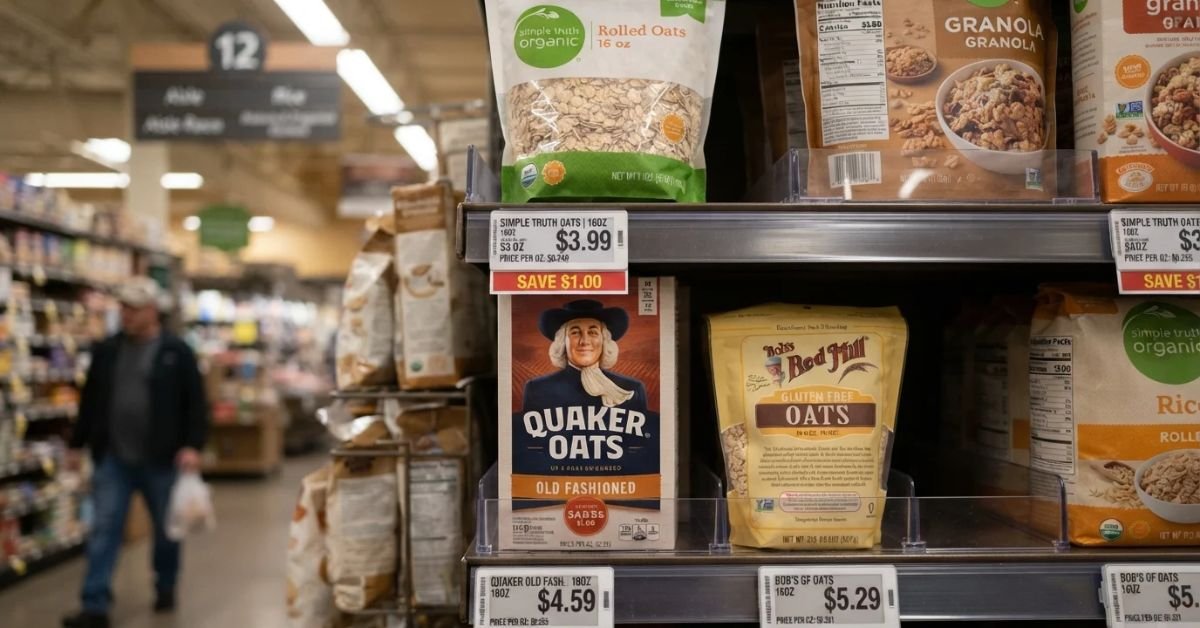
During our price tracking, we conducted a direct costco vs aldi price comparison 2024 across ten standard pantry staples. The results shattered my assumptions:
Discount grocers like ALDI frequently match or beat club warehouse pricing on dry staples without forcing you to commit to a 25-pound bag.
Then you have regional supermarkets like Kroger, Meijer, or Publix. When traditional grocers run loss leaders—steep weekly promotions designed to get you through the front doors—combined with digital manufacturer coupons loaded directly onto their smartphone apps, their shelf prices drop beneath club rates.
A 16-ounce block of store-brand sharp cheddar might go on sale at Kroger for $1.99 with a digital coupon. At that sale price, it runs laps around the 32-ounce club equivalent. If you aren’t comparing the strict unit price listed on the shelf edge tag, you are running on blind faith.
There are specific items never to buy at sam’s club or Costco, particularly ground spices and whole-wheat flours. Ground spices begin degrading in flavor within six months. Unless you operate a commercial kitchen or host daily neighborhood barbecues, buying a 16-ounce tub of ground cumin or paprika means you are spending money on seasoning that will taste like dust before you reach the bottom third of the plastic jug.
Expert Insight: The Cash Flow Trap
“Bulk buying treats family finances like commercial inventory management, which is a structural mistake,” says Sarah Jenkins, an accredited financial planner (CFP) based in Ohio. “A family’s budget relies on liquidity. When you lock up $250 in paper goods, cleaning solutions, and bulk sauces that will sit in your basement for eight months, you’re turning cold cash into dead pantry inventory. If an unexpected $400 car repair pops up that week, you can’t pay your mechanic with twelve bottles of dish soap.”
Tying Up Liquidity: The Opportunity Cost of Pantry Inventory
Every square foot of real estate in your home comes with an economic cost.
In suburban America, the bulk-buying habit has fueled an entire secondary industry: dedicated 7-cubic-foot chest freezers humming in the two-car garage, secondary pantry racks in the basement, and custom garage shelving to store four dozen rolls of bath tissue.
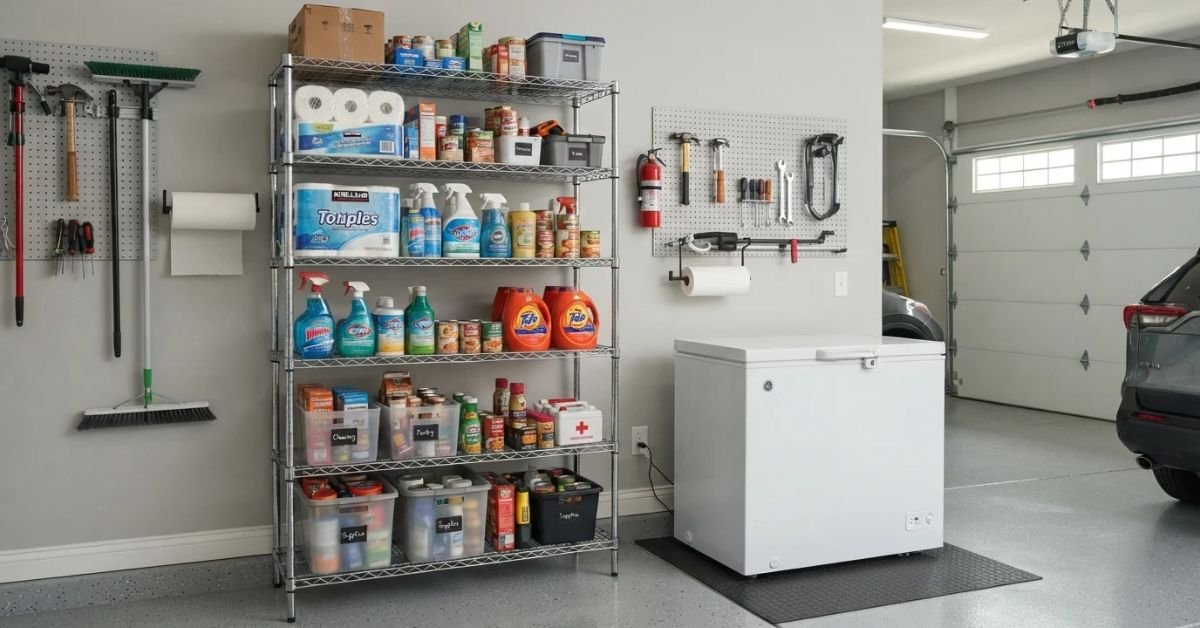
Consider the real costs of that infrastructure:
- Capital Outlay: A standard chest freezer runs anywhere from $220 to $450 upfront.
- Electricity Draw: Running that secondary compressor year-round adds roughly $40 to $70 annually to your utility bills depending on your local kilowatt-hour rate.
- Pantry Space Inflation: If you live in an 850-square-foot apartment in an urban center like Chicago or Seattle, physical space is at a massive premium. Stashing bulk paper products in living spaces or cluttering bedroom closets actively degrades your quality of life.
This is the classic opportunity cost problem. When you sink $300 at a wholesale club on items that take six to nine months to use, that capital is completely illiquid. It cannot earn 4.5% to 5% interest in a high-yield savings account. It cannot pay down revolving credit card balances charging 22% APR. You’ve transformed flexible financial protection into boxes of laundry detergent sitting quietly on a concrete garage floor.
Common Pitfalls: Memberships, Mileage, and Forced Upgrades
The basic overhead of simply holding a club card is climbing.
Costco raised its entry-level Gold Star membership to $65 per year, while the Executive tier sits at $130 annually. Sam’s Club runs $50 for standard and $110 for their Plus tier. BJ’s Wholesale Club charges $55 to $110.
These fees are pure profit for the clubs—in fact, membership fees historically account for the vast majority of Costco’s total operating income.
To break even on a standard $65 annual membership fee, you need to save at least $5.42 every single month strictly on the price differential between the warehouse and your cheapest local supermarket alternative. If you only make a club run once every couple of months, that membership hurdle gets significantly harder to clear.
Warehouse Club Membership Break-Even Ledger (Annual Cost: $65):
- Net monthly savings required: $5.42
- Trips per year: 6 runs
- Net savings needed per trip: $10.83 just to hit $0 net benefit
Then consider the travel overhead. Most suburban areas only have one warehouse club for every five or six traditional supermarkets.
If your closest Costco is a 24-mile roundtrip down an interstate, driving a mid-sized crossover averaging 24 miles per gallon at $3.50 a gallon costs you $3.50 in direct fuel, plus standard vehicle depreciation. Compare that to an ALDI or Walmart located two miles from your house.
There’s also the issue of forced brand upgrades.
Traditional supermarkets give you the choice between three distinct tiers: high-end name brands, reliable national brands, and budget-friendly private labels (such as Walmart’s Great Value).
Wholesale clubs, by design, carry very limited stock keeping units (SKUs). If your club doesn’t carry a budget generic option for olive oil, marinara sauce, or dish pods, you are forced to buy the ultra-premium or organic name brand. Even if the unit price on that premium item is discounted relative to its retail price, you are still spending more cash out of pocket than you would have spent buying the bare-bones generic alternative at a regular store.
This dynamic answers a question countless young professionals ask: is costco worth it for a single person? Almost universally, no. Unless you have access to cheap storage, live immediately next to a warehouse gas station, or split purchases with a roommate, the combination of membership overhead and forced premium tiering works against smaller households.
Hands-On Tips: The Split-Cart Audit and the 30-Day Rule
If wholesale clubs can easily drain your wallet, why does half the country still shop there? Because when used surgically, warehouse buying genuinely works. The trick lies in dismantling emotional assumptions and establishing strict boundaries before you flash your membership card at the door.
Here is the exact method I now use to keep our warehouse trips ruthlessly profitable:
1. Apply the 30-Day Consumption Rule
Never purchase any item with an expiration date—canned goods, bottled sauces, oils, or perishables—unless your household reliably consumes that specific volume within 30 days.
The moment an item sits on your pantry shelf past day 45, the risk of ambient spoilage, kitchen neglect, or flavor loss skyrockets. The only exceptions are non-perishable paper products, trash bags, laundry detergent, and over-the-counter pharmaceuticals like generic cetirizine or ibuprofen, which offer astronomical savings per pill.
2. Run a Split-Cart Audit
For one month, ditch the “one big haul” mindset.
Separate your shopping list into two categories before leaving home:
- The Dry Utility List: Toilet paper, paper towels, parchment paper, dishwasher pods, trash bags.
- The Daily Fuel List: Produce, dairy, bread, proteins, snacks, condiments.
Buy the Dry Utility List at the club warehouse. Buy the Daily Fuel List at your local ALDI, WinCo, or neighborhood grocery store with sales circulars in hand. By removing perishables from your warehouse trip, you neutralize the entire threat of food spoilage while keeping your bulk savings locked onto shelf-stable goods.
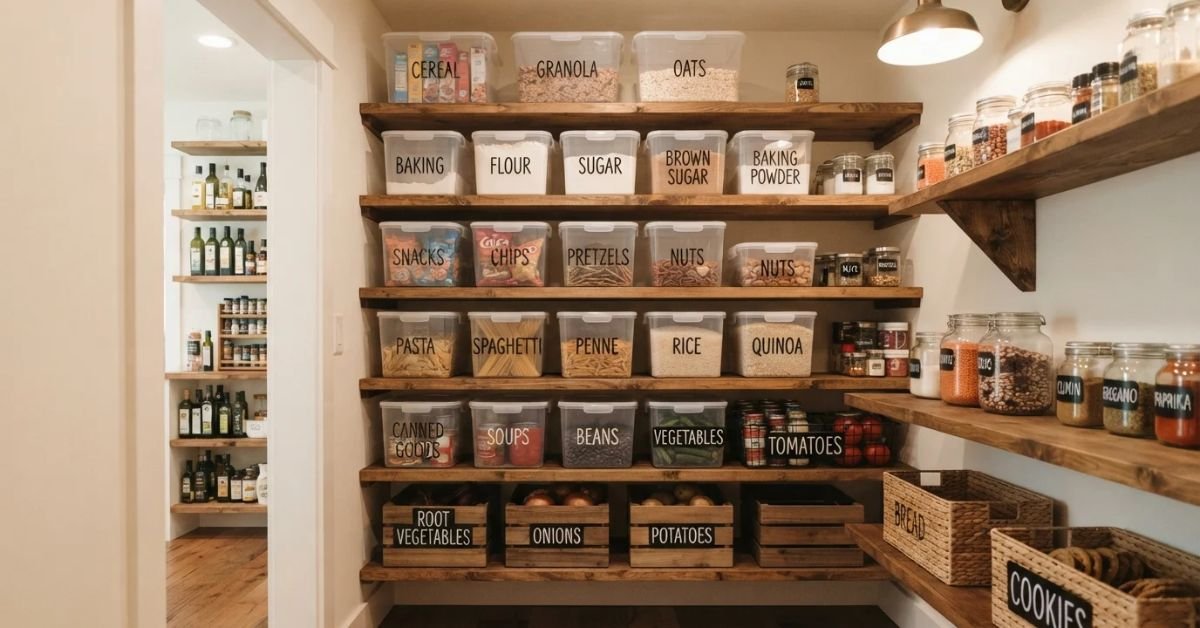
3. Track Your Own Price Per Ounce Book
Don’t trust the warehouse yellow tags blindly. Keep a quick note inside your phone with your local grocery store’s baseline prices for your five most-consumed items (e.g., chicken breasts, rolled oats, coffee beans, eggs, olive oil).
When you see a tempting bulk package at the club, divide the total dollar cost by the total fluid ounces, count, or pounds right there on your calculator. If the club price per ounce doesn’t beat your local supermarket’s everyday price by at least 15%, leave it on the pallet. You need that 15% buffer to justify the membership fee, the fuel, and the inventory holding cost in your home.
Recognizing why buying in bulk is a bad idea isn’t about ditching wholesale clubs entirely. It’s about realizing that wholesale clubs are giant, finely tuned operations designed to maximize cart size. Once you look past the sheer scale of the aisles, do the unit math, and ruthlessly cut out bulk perishables, you finally start putting money back into your pocket instead of dumping it in the trash.
Frequently Asked Questions
Does buying in bulk actually save money for most families?
It depends heavily on the category of goods purchased. Bulk purchasing typically saves families 20% to 40% on shelf-stable non-perishables like toilet paper, trash bags, laundry detergents, and over-the-counter medications. However, when families buy bulk fresh produce, dairy, bakery items, or specialty snacks, food waste and unplanned impulse spending usually offset the savings, often making the total grocery bill higher than shopping at discount supermarkets.
Is Costco or Sam’s Club worth it for a single person?
For a single person living alone, a warehouse club membership is rarely cost-effective solely for groceries. Perishable items spoil long before one person can safely consume them, and smaller living spaces make storing massive paper goods difficult. A membership can only make financial sense for a single individual if they take heavy advantage of non-grocery perks, such as discounted prescription eyeglasses, cheap vehicle tires, discounted gasoline, or bulk over-the-counter medicines.
What are the hidden costs of wholesale club memberships?
The hidden costs extend far beyond the $50 to $130 annual membership fee. They include transportation overhead (driving further distances and burning fuel), increased household carrying costs (investing in secondary freezers or storage racks and paying for extra electricity), dead capital (cash tied up in months of unused household inventory), and the cost of wasted food caused by bulk perishable spoilage.
What items should you never buy in bulk?
Avoid buying ground spices, cooking oils, whole-wheat flour, fresh produce, and bakery items in bulk. Ground spices and whole-wheat flours oxidize and lose potency within three to six months. Cooking oils can go rancid once opened to air and light, and fresh fruits or vegetables often spoil within a week, turning paper savings into direct household financial waste.