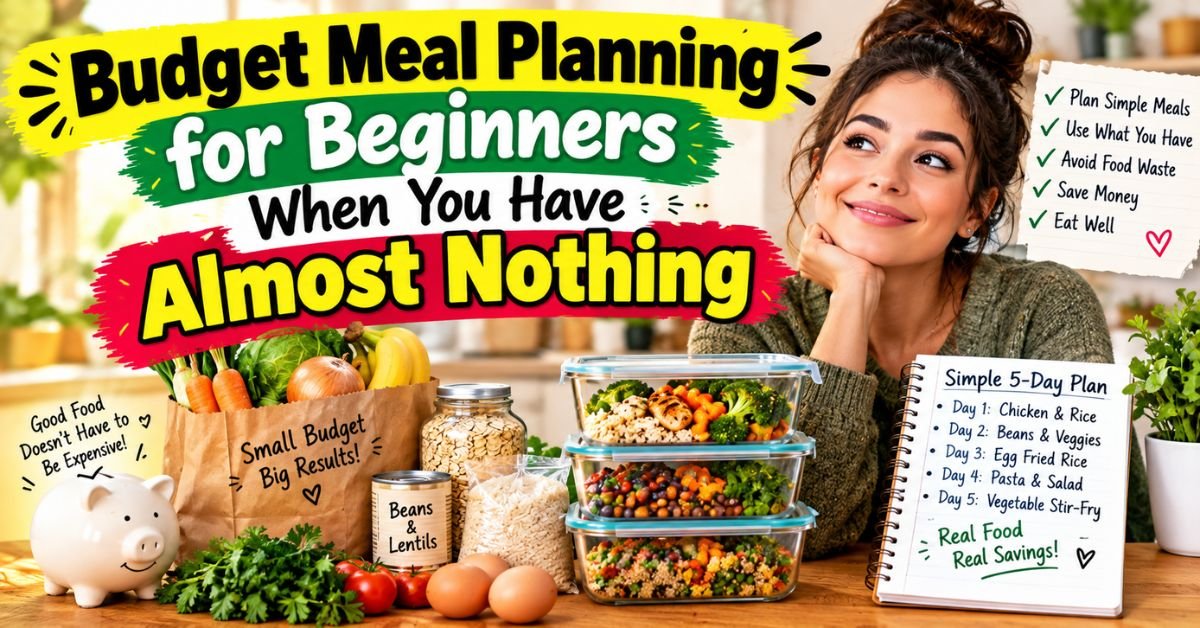
Budget Meal Planning for Beginners When Broke: Tech Guide.I remember sitting on my kitchen floor in 2021 with $4.18 left across two checking accounts, staring into a pantry that held half a box of stale penne, some dry lentils, garlic powder, and a single can of crushed tomatoes. Panic is the default human response there. But if you spend enough time around computers, you realize something liberating: scarcity is just an input constraint.
- 1. 1. The Zero-Dollar Baseline: Emergency Digital Scavenging
- 2. Step 1: Query Direct Aid Locators
- 3. Step 2: Digital Public Assistance Utilities
- 4. 2. The Digital Pantry Audit: Turning Stray Odds into Meals
- 5. Deploying a Pantry Inventory Tracker
- 6. The Specialized ChatGPT Meal Prompt
- 7. 3. High-Displacement Retail Sourcing: Apps for Near-Expired Food
- 8. Flashfood
- 9. Too Good To Go
- 10. Flipp Digital Circulars
- 11. 4. Bulk Staple Algorithms: The Calorie-per-Dollar Formula
- 12. The Frugal Triad Architecture
- 13. Expert Insight: The Thermal Energy Factor
- 14. 5. Technical Specs: A $10 Weekly Survival Architecture
- 15. The Seven-Day Batching Routine
- 16. 6. Common Pitfalls to Avoid When Shopping Under Stress
- 17. Frequently Asked Questions
- 18. What should I do if I literally have $0.00 right now?
- 19. How do I balance nutrition when I can only afford cheap starch?
- 20. Are coupon apps like Ibotta worth it on a rock-bottom budget?
- 21. Can I meal prep for an entire week safely without a working freezer?
- 22. How do I use ChatGPT without getting ridiculous, expensive recipes?
- 23. Moving Forward From the Brink
When you have almost nothing, food planning stops being a lifestyle hobby and turns into an inventory management problem. You do not need aesthetic glass mason jars or subscription boxes. You need algorithms, free mobile utilities, and a dead-eyed focus on nutritional cost-per-gram.
Here is how we hack a week of eating using free consumer tech, open-source resources, and automated deal finders—even when your wallet is completely empty.


1. The Zero-Dollar Baseline: Emergency Digital Scavenging
Before you spend a single cent (or if your balance is literally $0.00), you audit community infrastructure using your phone. There is zero shame in this. Tax dollars and non-profit grants fund these pipelines—use them.
Step 1: Query Direct Aid Locators
Do not search generic web pages that return broken PDF lists from 2018. Use targeted geospatial engines:
- Feeding America Locator & FoodFinder: If you are in the US, the Feeding America locator maps active food pantries, church drives, and drive-through distribution spots by zip code. For those outside the US, tools like the Trussell Trust map (UK) or Food Bank Canada engines provide identical geolocated distribution hubs.
- Mutual Aid Hubs: Check platforms like Mutual Aid Hub or local community subreddits (
r/MutualAid, local city subs). Search specifically for “community fridges.” These are volunteer-maintained public refrigerators where local bakeries, markets, and neighbors drop fresh produce, dairy, and prepared meals daily with zero signup required.
Step 2: Digital Public Assistance Utilities
If you receive government food assistance, install dedicated SNAP EBT mobile apps (such as Providers, formerly Fresh EBT). These utilities do more than check balances; they automatically scrape store-level discount circulars, map farmers markets offering “Double Up Food Bucks” (which match your funds dollar-for-dollar on fresh produce), and alert you to unexpected retail perks.


2. The Digital Pantry Audit: Turning Stray Odds into Meals
Most people think their kitchen is bare when it is actually just disorganized. Your first technical task is converting scattered physical items into a queryable dataset.
💰 More Cheap Living Tips You'll Love
- How Long to Pay Off Debt? Tech Tools to Find Out Fast
- Lower Your Electric Bill as a Renter: 12 Cheap Tech Ways
- Pay Off Debt Faster Without Earning More: Tech Guide
- Save Money or Pay Off Debt First? Tech-Driven Guide
- Debt Avalanche Method Step by Step: Fast Debt Payoff
- Debt Snowball Worksheet: How to Fill It Out Correctly
+-------------------------------------------------------------+
|               THE ZERO-DOLLAR DATA PIPELINE                 |
|                                                             |
|   [Scattered Pantry]  --->  [SuperCook App / AI Scanner]    |
|                                     |                       |
|                                     v                       |
|   [Flipp Circulars]   --->  [Targeted Recipe Engine]        |
|                                     |                       |
|                                     v                       |
|   [Missing Staples]   --->  [Unit Price Calculator]         |
+-------------------------------------------------------------+
Deploying a Pantry Inventory Tracker
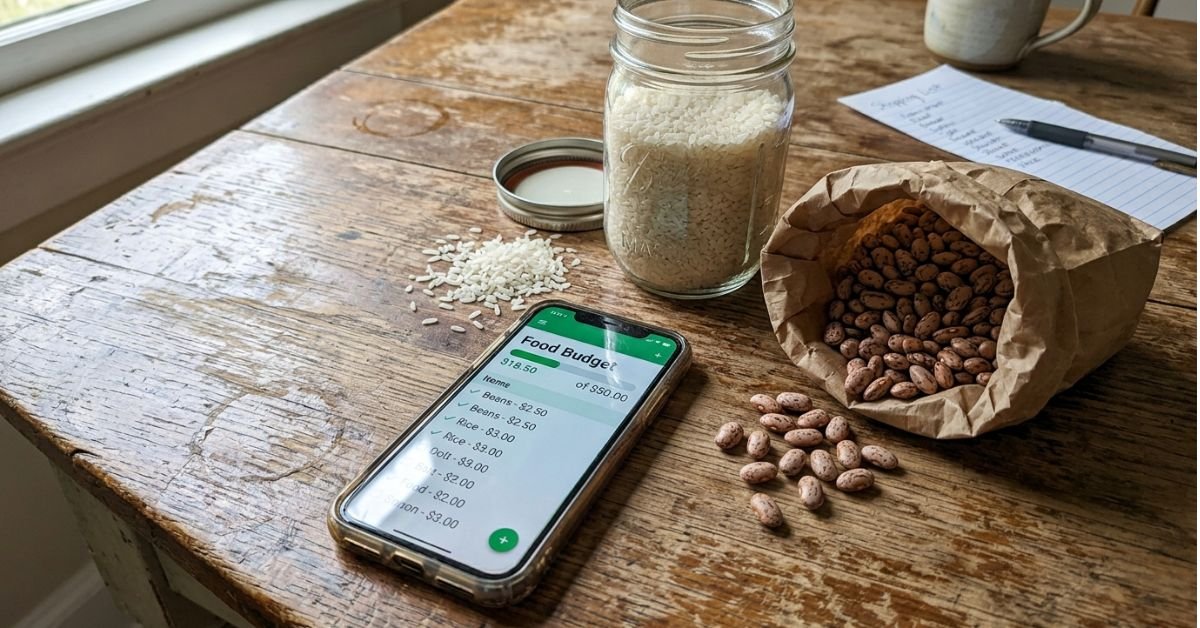
Grab an open-source budgeting spreadsheet (using Google Sheets or LibreOffice Calc) or a lightweight, free database tool like Notion. Create three columns:


- Ingredient (e.g., rolled oats, soy sauce, black beans)
- Approximate Servings Left
- Macronutrient Class (Carb, Protein, Fat, Flavor/Acid)
If you hate manual data entry, download the SuperCook app. SuperCook is essentially a reverse recipe search engine. You tap every single item you own—right down to salt, tap water, half an onion, and that weird bottle of cumin—and its matching algorithm filters millions of recipes to display only meals you can cook right now with zero shopping required.
The Specialized ChatGPT Meal Prompt
Large language models are remarkable at unsticking your brain when you have odd ingredients that seem incompatible. Skip vague prompts like “what can I cook?” Instead, copy and paste this specific constraint model:
“Act as an extreme frugal culinary chef. I have exactly these ingredients: [insert your list from your pantry audit]. I have $0 to buy extra items. Give me 3 dinner recipes and 2 lunches using strictly these components or common tap water. Prioritize minimum 400 calories per serving and balance protein and carbs. Do not assume I have butter, eggs, or milk unless listed.”
You will get practical, surprising ideas: turning old oats and bouillon cubes into a savory oat risotto, or turning dry lentils and baking soda into flatbread. This is modern zero-waste cooking tech at work.
3. High-Displacement Retail Sourcing: Apps for Near-Expired Food
If you do have a tiny pool of cash—say, $5 to $15—you cannot shop like an average consumer. Walking down the center aisles of a corporate grocery store paying retail is financial suicide when broke. You need retail clearance arbitrage.
Flashfood
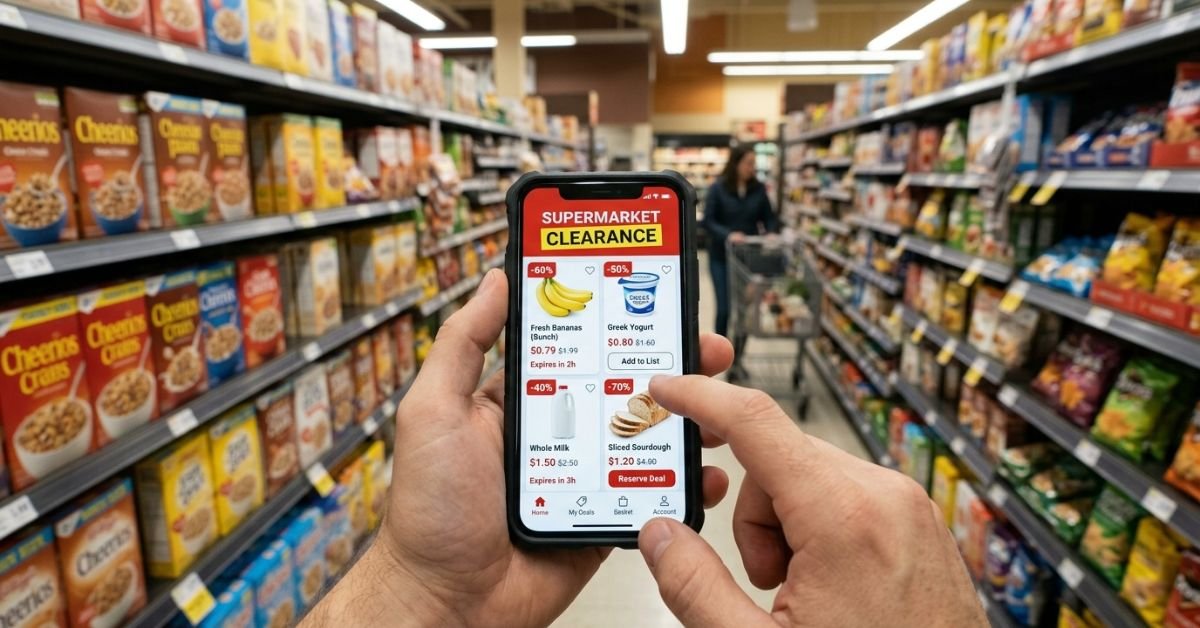
Flashfood partners with major supermarket chains (like Meijer, Giant, Tops, and Loblaw) to sell surplus food nearing its “best before” date at 50% to 70% off. You browse inventory directly on the app, pay within the interface, and pick up your items from a purple chill fridge inside the store.
- What to watch for: Giant boxes of “mixed produce” for $5. I have pulled 8 pounds of bell peppers, apples, and squash from a single box. Chop them immediately and freeze them.
Too Good To Go
Operating across North America and Europe, Too Good To Go addresses bakery, supermarket, and restaurant surpluses. You purchase an end-of-day “Surprise Bag” for roughly a third of retail value ($4 to $6).
- Pro tip: Focus exclusively on bakeries and independent grocery stores on the app. A $4 bag from an artisanal bakery often yields four or five loaves of sourdough and whole-grain bread. Slice it, freeze it, and your carb foundation for breakfast and toast is secured for three weeks.
Flipp Digital Circulars
Paper circulars are dead. Flipp digital circulars aggregates weekly ads from every grocery store, pharmacy, and discount market in your area code. Use its global search bar to enter raw inputs like “eggs”, “rice”, or “cabbage”. The tool indexes all regional sales side-by-side so you can identify the single retailer running a loss-leader promotion this week.
4. Bulk Staple Algorithms: The Calorie-per-Dollar Formula
When funds run razor-thin, you must drop brand preferences and calculate absolute nutritional density per unit of local currency.
$$\text{Value Metric} = \frac{\text{Total Calories}}{\text{Total Cost}}$$
Take out your smartphone’s unit price calculator (or simply use the native calculator app inside the store aisle). Never look at the item’s sticker price. Look at the price per ounce, gram, or kilogram.
+------------------+-------------------+--------------------+
| Staple Food      | Avg Cost per 1000 | Core Prep Function |
|                  | Calories (USD)    |                    |
+------------------+-------------------+--------------------+
| Dry White Rice   | ~$0.30 - $0.45    | Base Carbohydrate  |
| Dry Pinto/Black  | ~$0.55 - $0.70    | Fiber + Protein    |
| Rolled Oats      | ~$0.40 - $0.60    | Breakfast / Binder |
| Sunflower Oil    | ~$0.25 - $0.35    | Essential Lipids   |
| Green Cabbage    | ~$0.80 - $1.10    | Micronutrients/Bulk|
+------------------+-------------------+--------------------+
The Frugal Triad Architecture
Every sustainable bare-bones weekly plan rests on three items:
- The Core Starch (Rice or Oats): Extremely high calorie yield per dollar, near-infinite shelf life.
- The Clean Legume (Dry Lentils or Pinto Beans): Lentils are superior because they require no overnight soaking and cook in 20 minutes without consuming high amounts of cooking gas or electricity.
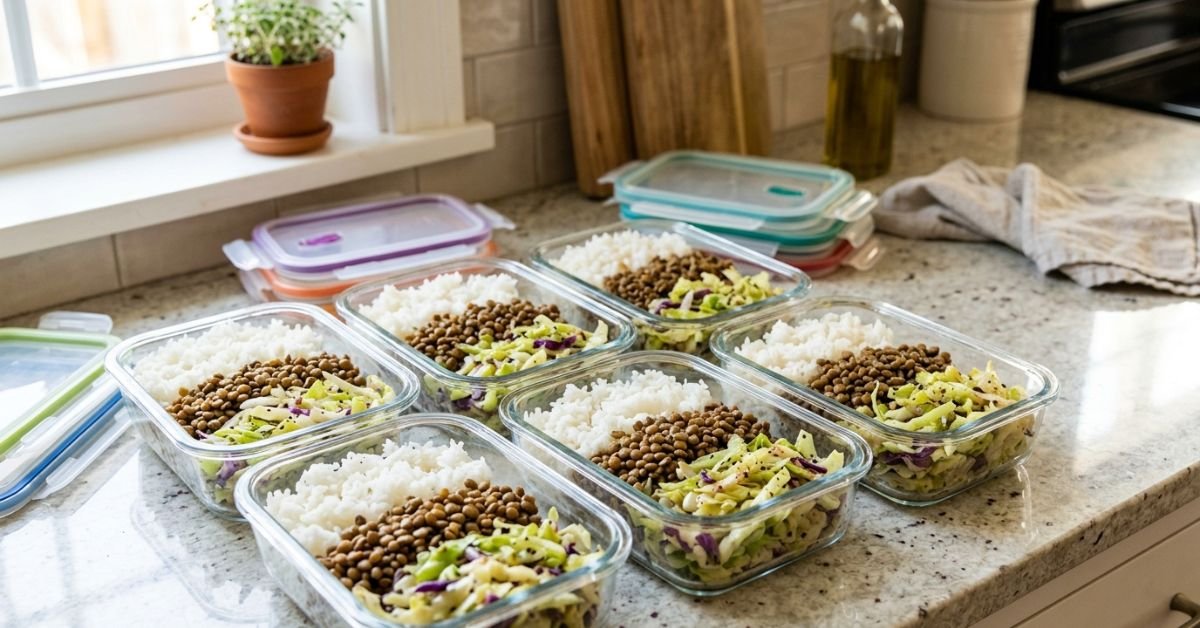
- The Indestructible Brassica (Green Cabbage): Do not buy boxed salad greens; they turn into slime in 72 hours. A single whole green cabbage costs roughly $1.50, keeps in the fridge for a month, provides crucial vitamin C, and can be sautéed, roasted, shredded raw into slaws, or dropped into soups.
Expert Insight: The Thermal Energy Factor
When you are severely broke, utilities matter. Simmering dried kidney beans on an electric burner for three hours burns measurable electricity. Opt for brown or red split lentils: they cook in 15–20 minutes and consume a fraction of the power. Alternatively, use a thermal retention method: bring your dry grain/legume soup to a rolling boil for 5 minutes, kill the heat completely, seal the pot with a heavy lid, and wrap it securely in a thick bath towel. The trapped latent heat finishes cooking the food over the next hour with zero additional power draw.
5. Technical Specs: A $10 Weekly Survival Architecture
If you only have a single ten-dollar bill (or equivalent €/£), here is the shopping execution matrix using baseline discounter pricing (Aldi, Lidl, or local budget grocers):
- 2 lbs (900g) Dry Long Grain Rice: ~$1.80
- 1 lb (450g) Dry Brown Lentils: ~$1.40
- 1 dozen Large Eggs (or 1 block Firm Tofu): ~$2.20
- 1 head Green Cabbage: ~$1.50
- 1 bottle Cooking Oil or Margarine: ~$1.80
- Bouillon Cubes / Seasoning Salt: ~$1.10
- Total: ~$9.80
The Seven-Day Batching Routine
- Mornings: Savory rice porridge (congee). Boil 1/4 cup of rice in 2.5 cups of water with a bouillon cube until broken down into a creamy soup. Top with a drop of oil and a pinch of salt.
- Mid-Day: Pan-charred cabbage tossed with seasoned lentils and boiled rice.
- Evenings: Lentil-cabbage stew with a fried egg on top. The runny egg yolk provides the fat emulsion you need to absorb fat-soluble vitamins (A, D, E, K) from the cabbage.
6. Common Pitfalls to Avoid When Shopping Under Stress
When your nervous system is flooded with stress hormones from money problems, your brain craves instant gratification: sugar, processed fats, and pre-packaged convenience. Grocery store layouts are deliberately engineered to exploit this vulnerability.
- Avoid the “Snack Mirage”: You see chips or instant ramen for $0.40 a pack and think it is cheap. Look at the nutrition labels. Instant ramen offers empty carbs, minimal protein, and leaves you physically famished two hours later. Dry beans and rice beat instant noodles in caloric longevity every single time.
- Beware the Spoilage Tax: Never buy fresh berries, bagged spinach, or artisanal bread on a survival budget unless you intend to consume them that afternoon. If food rots in your drawer, you threw your tiny net worth into the garbage can.
- The Single-Store Trap: If transport allows (walking, transit, bicycle), don’t buy everything at one shop. Discount markets have dirt-cheap staples, while produce stands frequently discount bruised apples or loose veggies for pennies at the end of the market day.
Frequently Asked Questions
What should I do if I literally have $0.00 right now?
Download the SuperCook app immediately and inventory every salt grain, condiment, and dry item in your cupboards. Next, load the Feeding America locator (or local equivalent) or Mutual Aid Hub on a browser to find a nearby community fridge or active food pantry. If you are a student, check your college’s student union—nearly all higher-ed institutions operate discreet, no-questions-asked emergency food closets.
How do I balance nutrition when I can only afford cheap starch?
Rely on green cabbage and dry lentils. Cabbage supplies vitamin C, potassium, and roughage for gut health, while lentils provide bioavailable plant protein, iron, and complex fiber. Add eggs or sunflower seeds when pennies allow to introduce sulfur-bearing amino acids and essential fatty acids.
Are coupon apps like Ibotta worth it on a rock-bottom budget?
Generally, no. Cash-back apps like Ibotta frequently focus on brand-name consumer packaged goods (cereals, name-brand sodas, processed frozen meals). Even with a $0.75 cash-back rebate, the name-brand product costs significantly more than a generic store-brand staple. Flipp is superior because it tracks basic commodity discounts across retailers.
Can I meal prep for an entire week safely without a working freezer?
Yes, but you need to stage it. Cooked rice and lentils stay food-safe in a standard refrigerator (below 40°F / 4°C) for 3 to 4 days. Cook in two distinct sessions: make a batch on Sunday evening, then your second batch on Wednesday night. Never leave cooked rice sitting at room temperature; cool it quickly to avoid Bacillus cereus germination.
How do I use ChatGPT without getting ridiculous, expensive recipes?
You must explicitly set negative constraints. Tell the model: “You cannot suggest any ingredient not explicitly provided in my prompt. Do not use olive oil, fresh herbs, butter, or stock unless listed. Assume standard kitchen salt and tap water are my only free additions.” Tight computational constraints produce actionable, genuinely inexpensive meals.
Moving Forward From the Brink
Food insecurity creates cognitive overload. When you don’t know where next Tuesday’s calories are coming from, making deliberate financial choices feels nearly impossible.
Treat this system like software engineering: lean on free tools, let AI handle the creative burden of combining odds and ends, and use unit price calculators to strip emotion out of the grocery aisles. Build your baseline with cabbage, lentils, and starch. Once your physical needs are steady, the cognitive space opens up to start fixing the rest of the puzzle. You’ve got this. Take it one meal at a time.