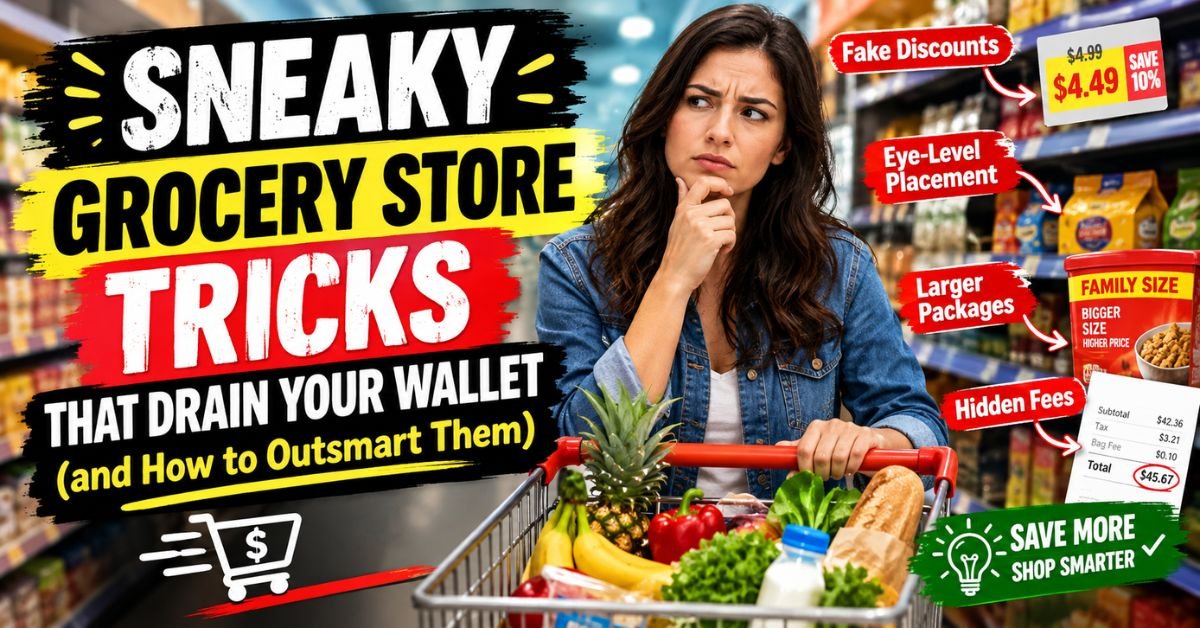
Sneaky Grocery Store Tricks That Drain Your Wallet (and How to Outsmart Them).Last October, I walked into my local Kroger with a simple two-item mental checklist: a gallon of 2% milk and a dozen pasture-raised eggs.
- 1. 1. The Psychology of Store Architecture: Why Staples Hide in the Back
- 2. Actionable Countermeasures: Strategic Route Mapping
- 3. 2. Visual and Spatial Traps: Oversized Carts and Eye-Level Markups
- 4. Tactical Adjustments: The “Look Up, Look Down” Rule
- 5. 3. The Illusion of Savings: Endcaps, BOGO Schemes, and Multi-Buys
- 6. The Defense: Obsess Over Unit Pricing
- 7. 4. Sensory Manipulation: Bakery Aromas, Ambient Tempos, and Mist
- 8. The Wet Produce Swindle
- 9. The Hands-On Defense
- 10. 5. Stealth Price Hikes: The Shrinkflation Shell Game
- 11. Savvy Responses: Auditing Net Weight
- 12. 6. The Final Gauntlet: Beating the Checkout Trap
- 13. Expert Insight: The Digital Mobile-App Shield
- 14. Checkout Lane Rules of Engagement
- 15. Frequently Asked Questions
- 16. Do grocery stores change their prices dynamically throughout the week?
- 17. Why is shopping at ALDI or discount grocers usually cheaper?
- 18. Are digital supermarket loyalty programs worth the loss of privacy?
- 19. Does paying with cash really lower your grocery bill?
- 20. How do stores use “loss leaders” to get you to spend more?
Twenty-five minutes later, I stood at the self-checkout terminal watching the digital total climb to $68.40. In my oversized cart sat a bag of honey-roasted pistachios, two craft sodas, a scented seasonal candle, and a block of specialty white cheddar I didn’t even remember grabbing.
How does that happen?
It wasn’t a failure of willpower. It was engineering. Modern supermarkets are not simple food warehouses; they are intricately calibrated behavioral science labs designed to separate you from your hard-earned dollars. Over the last 90 days, I decided to fight back. Armed with a pocket notebook, a digital hanging scale, receipt-scanning apps, and price logs across Kroger, Walmart, ALDI, and Trader Joe’s, I audited my weekly grocery runs to dissect exactly how grocery stores manipulate shoppers.
Here is what I uncovered about these sneaky grocery store tricks—and the exact tactical countermeasures you can use to protect your bank account.
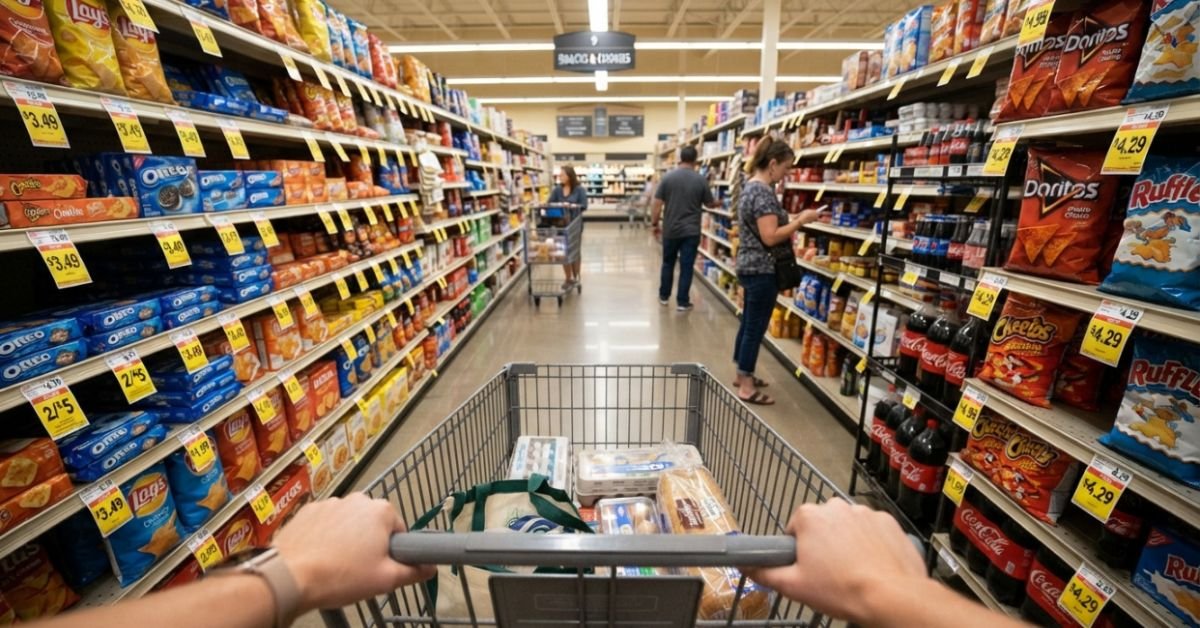
1. The Psychology of Store Architecture: Why Staples Hide in the Back
Ever wonder why you can never run in, grab an egg carton, and dash back out in under sixty seconds? That design is intentional.
Store architects rely on a concept called the grocery store psychology layout. The absolute essentials—cow’s milk, alternative milks, poultry, bread, and eggs—are deliberately anchored along the far back wall or the deepest corner of the perimeter. To collect your baseline proteins and dairy, you are forced to walk a gauntlet past thousands of non-essential, high-margin products.
[Store Entrance] ---> Forced Floral/Bakery Zone (Slows you down)
       |
       v
[Outer Perimeter Loop] ---> High-Margin Packaged Goods
       |
       v
[Rear Wall Destination] ---> Essentials (Milk, Eggs, Meat)
During my field tracking at a suburban Kroger, reaching the dairy case required walking past roughly 450 linear feet of eye-catching display endcaps. Even if you walk with your eyes glued straight ahead, your peripheral vision takes in hundreds of colorful brand logos.
Actionable Countermeasures: Strategic Route Mapping
- Adopt the “Reverse-U” Sweep: Don’t browse aisle by aisle. Park your cart at the head of a major aisle, walk down on foot to retrieve the exact item on your list, and return to your cart. You cut your visual exposure to marketing by half.
- Never Shop Without a Categorized List: Organize your notes app by store section (Produce, Dairy, Pantry, Frozen). If an item isn’t scribbled down before your sneakers hit the automatic entrance tile, it stays on the shelf.
- Skip the Center Aisles Entirely: Roughly 70% of heavily processed foods loaded with high markups sit in the middle aisles. Stick to the perimeter for whole foods, ducking into middle aisles strictly for canned beans, grains, or spices.
2. Visual and Spatial Traps: Oversized Carts and Eye-Level Markups
The moment you clear the sliding doors, you face the first trap: the shopping cart bay.
💰 More Cheap Living Tips You'll Love
Over the last few decades, standard American shopping carts have quietly doubled in cubic volume. This triggers the cart size effect. Behavioral economists have noted that an empty or half-filled cart creates a subtle psychological tension. We instinctively want to fill the void. When I switched from pushing a standard double-decker cart at Target to carrying a simple handheld red basket, my average checkout total dropped from $82 to $43 per trip.
Your physical posture matters, too. Supermarket category managers rely heavily on planogram strategy and eye-level marketing.
Brand manufacturers pay eye-watering slotting fees to land their items between eye level and chest level—often called the “bullseye zone” (roughly four to five feet off the floor). The priciest name brands sit dead center.
+------------------------------------------------------+
| Top Shelf: Specialty, regional, and niche items      |
+------------------------------------------------------+
| Bullseye Zone (Eye-Level): High-priced name brands   | <-- High Slotting Fees
+------------------------------------------------------+
| Lower-Middle: Kid-level cereals, colorful mascots   | <-- Impulse Targets
+------------------------------------------------------+
| Bottom Shelf: Private label, bulk, bargain basics    | <-- Best Value Per Oz
+------------------------------------------------------+
Kids aren’t spared, either. Have you ever noticed that sugary cereals featuring cartoon characters aren’t at your eye level? They sit roughly 36 to 40 inches off the ground, placing them directly in the line of sight of a toddler sitting in the cart basket.
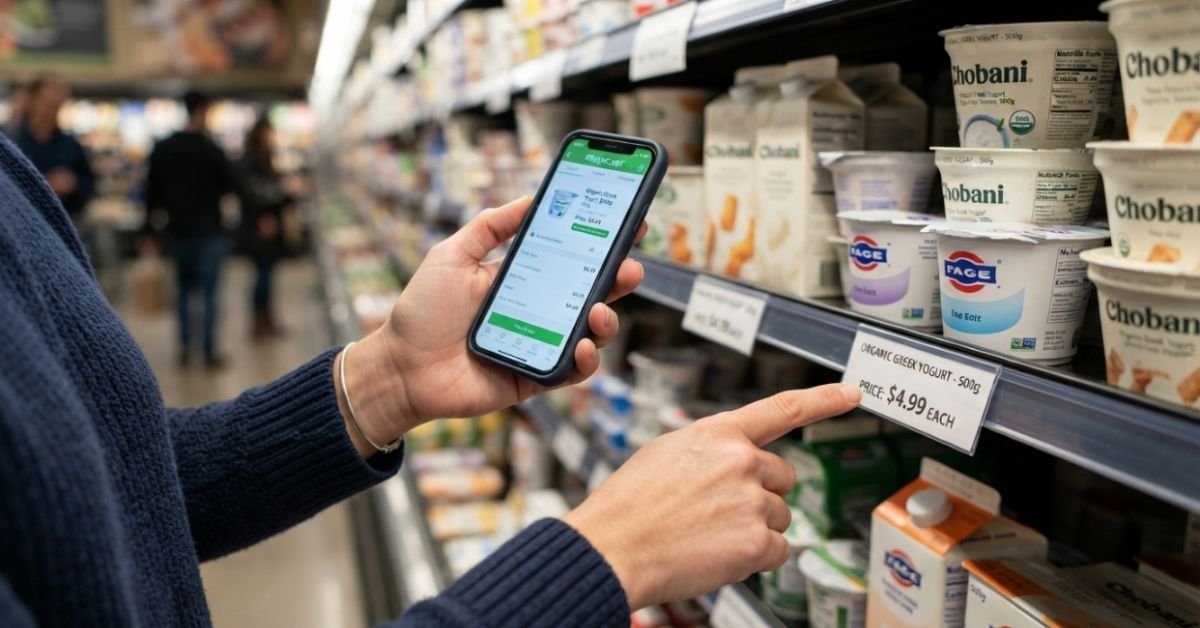
Tactical Adjustments: The “Look Up, Look Down” Rule
Break your gaze away from the shelf center:
- Crane Your Neck: The top shelf usually holds organic or smaller batch alternatives that offer decent ingredients without corporate advertising markups.
- Bend Your Knees: The absolute best price-to-weight values, including store private label brands (think Great Value at Walmart, Simple Truth at Kroger, or Kirkland at Costco), sit on the very bottom shelf.
- Keep Young Kids Out of the Main Basket: If you have small children with you, engage them with a scavenger hunt game based on finding the lowest price per ounce, redirecting their focus away from mascot packaging.
3. The Illusion of Savings: Endcaps, BOGO Schemes, and Multi-Buys
Step into any major grocery aisle and you will run headfirst into massive endcap displays.
Retailers know these prime pieces of real estate scream “BARGAIN!” to the passing brain. Yet, when I audited 30 distinct endcaps at my neighborhood supermarket over three weeks, 14 of those featured items were being sold at full manufacturer suggested retail price (MSRP). The store simply dressed them up with bright yellow or red tags shouting “Everyday Low Price” or “Manager’s Special.” The display itself creates an unearned halo of affordability.
Then come the promotional word games:
- The “10 for $10” Myth: Shoppers routinely put ten boxes of crackers in their cart to secure the “$1 each” deal. In 90% of US grocery stores (excluding specific promotions like “Buy 5, Save $5”), you don’t need to purchase all ten to get the sale price. A single box will ring up for $1.00.
- The Deceptive BOGO: A “Buy One, Get One Free” deal sounds unbeatable, but look out for artificial markups right before the promotion launches. If the baseline price was quietly bumped from $3.99 to $5.49 ahead of time, your savings evaporate.
- Decoy Pricing: You will often see three sizes of cooking oil: an 8 oz bottle for $4, a 16 oz bottle for $7, and a giant 32 oz jug for $8. The middle option exists solely to make the giant jug feel like an absolute steal, pushing you to spend $8 when you only needed $4 worth of oil.
| Promotion Type | What They Want You to Think | What Is Actually Happening | | :— | :— | :— | | Endcap Feature | “This item is on deep discount!” | Full retail price placed in a high-traffic dead zone. | | 10 for $10 | “I must buy ten units to get the deal.” | You can usually buy just one for $1.00. Check the fine print. | | BOGO 50% Off | “I am saving half my money.” | You are buying an unneeded unit for an effective 25% discount. | | Decoy Trio | “The largest size is practically free.” | The middle tier exists only to nudge you toward the highest total spend. |
The Defense: Obsess Over Unit Pricing
Stop looking at the big bold numbers on the shelf tag. Look at the tiny text in the upper or lower corner: the unit pricing (price per fluid ounce, pound, or count).
During my receipts audit, I found a brand-name peanut butter offering an “Economy Family Size” 40 oz jar priced at $0.22 per ounce, while the standard 16 oz jar of the exact same brand on sale next to it broke down to $0.18 per ounce. The larger container cost more per pound. Never trust the bulk packaging illusion without checking the math first.
4. Sensory Manipulation: Bakery Aromas, Ambient Tempos, and Mist
Grocery shopping is an intensely sensory experience, and retailers exploit that.
Step through the sliding doors of almost any modern store and the first things you encounter are fresh flowers and the bakery department. That isn’t accidental. The smell of freshly baked French bread and warm cinnamon rolls triggers salivary glands, breaks down rational budgeting resistance, and activates hunger cues. This form of sensory marketing primes you to make fast, emotion-driven purchases.
The soundtrack isn’t accidental, either. Most shoppers don’t pay attention to the background music playing overhead. Retail analysts found that playing slow-tempo music (slower than a human resting heartbeat, around 60 to 70 beats per minute) subconsciously slows down your physical walking cadence. You stroll slower, linger in front of displays longer, and spend roughly 29% more money compared to shopping under fast-tempo music.
The Wet Produce Swindle
Then there is the produce mister. Every twenty minutes, a thunder-sound effect rolls over the speakers and fresh cold water sprays over the leafy greens, carrots, and radishes.
It looks fresh, organic, and appealing. In reality, that water mist serves two costly purposes:
- It speeds up vegetable rot once you get the greens into your refrigerator drawer, forcing you to replace them sooner.
- You are paying for tap water at vegetable prices.
Field Test Results: I took two identical heads of green leaf lettuce at Walmart. One was bone-dry from an un-misted top shelf; the other was freshly soaked by the automatic sprayer. I weighed both on the produce scale. The soaked head weighed 3.2 ounces more due to surface water retention. At $2.49 a pound, that pleasant fresh mist added roughly $0.50 of pure water weight to a single head of lettuce.
Dry Leaf Lettuce: 16.0 oz = $2.49
Misted Leaf Lettuce: 19.2 oz = $2.99
Cost of Supermarket Tap Water: $0.50 per head
The Hands-On Defense
- Pop in Earbuds: Put on your favorite upbeat, fast-tempo playlist or an informative podcast. Overriding the store’s ambient acoustic environment keeps your feet moving quickly through the aisles.
- Shake the Greens: When grabbing kale, lettuce, cilantro, or broccoli from a wet display rack, hold the bunch by the stems and give it three vigorous shakes downward into the drainage trough before putting it into your bag.
- Shop on a Full Stomach: Eating a high-protein snack or drinking a large glass of water 15 minutes before stepping foot in the parking lot completely neutralizes those bakery aroma tricks.
5. Stealth Price Hikes: The Shrinkflation Shell Game
Inflation is tough on household budgets, but shrinkflation is downright deceptive. Instead of raising the sticker price—which alarms shoppers—manufacturers quietly downsize the net weight of their containers while keeping the packaging silhouette and shelf pricing identical.
Over my 90-day testing window, I kept track of packaging shifts across common pantry items:
- A popular brand of family-size tortilla chips quietly shaved their bag weight down from 15 ounces to 13 ounces. Same price: $4.99.
- A staple canned tuna brand dropped from 5.0 ounces to 4.5 ounces of product.
- Paper towel rolls cut square footage by making the inner cardboard tube wider.
Before: [████████████████] (15 oz for $4.99 -> $0.33/oz)
After:  [██████████████  ] (13 oz for $4.99 -> $0.38/oz)
Result: Hidden 15.1% price increase without changing the sticker.
Because your brain recognizes the familiar box, can, or jar design, you assume you are receiving the same volume of food you purchased last month.
Savvy Responses: Auditing Net Weight
- Ignore Package Silhouette: Turn the package around and read the net weight in grams or ounces at the bottom front corner.
- Pivot to Private Labels: Store brands take much longer to downsize their volumes compared to multinational consumer packaged goods brands. Switching to generic store labels saves an immediate 20% to 30% without sacrificing package size.
- Track Staples with a Digital Note: Keep a running list of the baseline weight of your regular pantry staples (pasta, cereal, cooking oils). When you spot a downsized container, skip the brand and seek out an alternative that didn’t trim value.
6. The Final Gauntlet: Beating the Checkout Trap
You made it through the aisles, stuck closely to your list, checked the unit prices, and shook the water off your produce. Now you face the most profitable square footage in the entire store: the checkout lane.
By the time you reach the register, you are experiencing decision fatigue. You have just made dozens of micro-evaluations over the course of 30 or 40 minutes. Your willpower reserves are tapped.
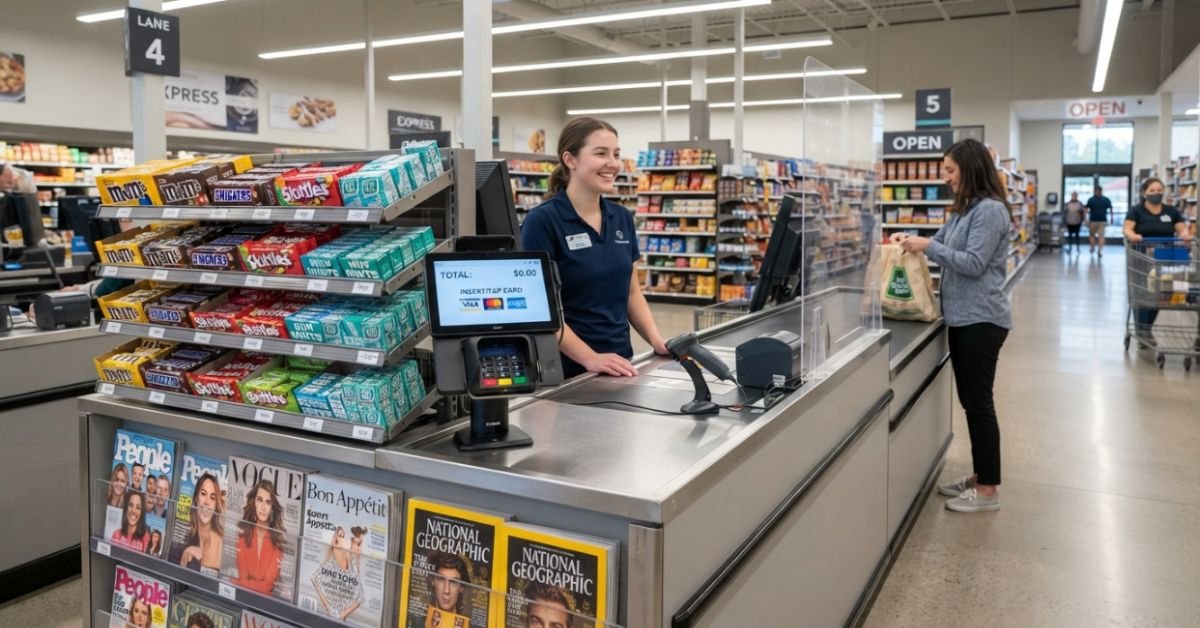
Retailers capitalize on this vulnerability by designing narrow lanes boxed in by chilled single-serving beverages, king-sized candy bars, lip balms, phone charging cables, and sensationalist magazines. These are pure impulse purchases. They carry markups exceeding 100% compared to buying those same items in multipacks just four aisles over. A cold 20 oz soda at the register costs $2.69; a six-pack of 16.9 oz bottles of the same soda in aisle 5 often costs $4.50.
Expert Insight: The Digital Mobile-App Shield
The most effective way to eliminate checkout traps, sensory overstimulation, and impulse spending altogether is to use your store’s free store loyalty app for digital clip-coupons, or bypass the physical aisles entirely via free curbside pickup. When I used Kroger and Walmart pickup services for my weekly staples, my impulse purchases dropped to literal zero. You don’t smell the bakery, you can’t hear the slow soundtrack, and you can review your cart’s bottom-line total and edit it calmly from your kitchen counter before spending a cent.
Checkout Lane Rules of Engagement
- Never Look at the Register Racks: Treat the final queue as a financial hazard zone. Keep your eyes on your receipt or pull up your banking app to review your budget.
- Watch the Scanner Like a Hawk: Price discrepancies happen constantly. According to consumer watchdog agencies, shelf-tag sales frequently fail to apply correctly at the register. Keep your mental tally running and politely point out mismatched promotional prices to the cashier immediately.
- Use Self-Checkout with Care: While self-checkout lets you scan items at your own pace and catch pricing errors instantly, watch out for sudden on-screen tipping prompts or warranty upsells on minor household electronics.
Frequently Asked Questions
Do grocery stores change their prices dynamically throughout the week?
Yes. Many major grocery chains roll out their sales circulars on Wednesdays, making Wednesday mornings one of the best times to find newly discounted items and clearance meats. Additionally, stores with digital electronic shelf tags (e-ink displays) are beginning to test dynamic pricing adjustments based on inventory fluctuations and shopping traffic patterns.
Why is shopping at ALDI or discount grocers usually cheaper?
ALDI uses architectural psychology in reverse. Instead of 40,000 distinct product choices, an ALDI store carries roughly 1,400, eliminating decision fatigue. They keep products inside their original cardboard shipping pallets, reducing labor overhead. They also charge a 25-cent deposit for carts to avoid paying staff to collect them from the parking lot, passing those operational savings directly onto you.
Are digital supermarket loyalty programs worth the loss of privacy?
From a strict dollars-and-cents standpoint, yes. Chains like Kroger, Safeway, and Target reserve their best promotions, customized fuel points, and personalized 10%–20% off digital coupons exclusively for loyalty program members. If you are uncomfortable sharing your personal email address or phone number, create an alias email account specifically for retail reward programs.
Does paying with cash really lower your grocery bill?
It provides a tangible physiological speed bump. Swiping a plastic credit card or tapping a phone via Apple Pay produces almost zero psychological friction. When you carry an exact envelope of $100 in paper cash into the store, you physically feel the money leaving your hands, and you are hard-stopped from adding that $7 impulse wheel of cheese at the register.
How do stores use “loss leaders” to get you to spend more?
A loss leader is an item priced so low the supermarket actually loses money on every unit sold—such as a $4.99 rotisserie chicken at Costco or a whole turkey sold for $0.49 a pound before Thanksgiving. Stores place these loss leaders at the very back of the building. They gladly take a $2 loss on the chicken because they know you will spend $40 on high-margin sides, rolls, drinks, and snacks on your way to get it. Outsmart them by grabbing the loss leader, purchasing your staple items, and heading straight for checkout.