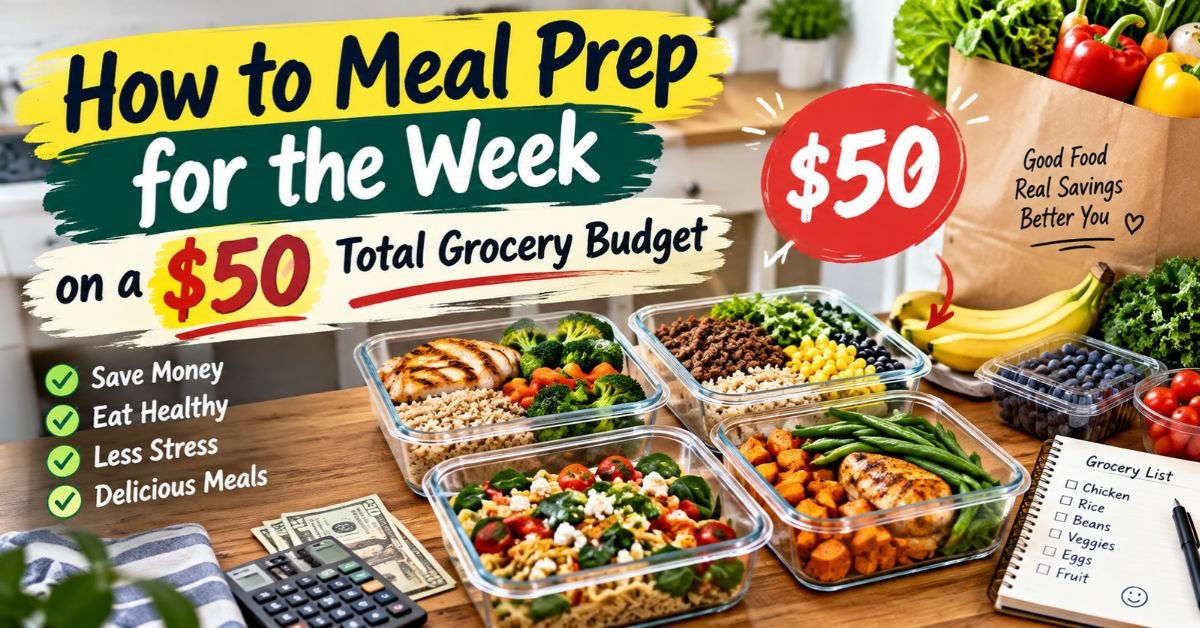
How to Meal Prep for the Week on a $50 Total Grocery Budget.Two years ago, standing in the supermarket dairy aisle holding an $8 tub of Greek yogurt, I realized my grocery spending had completely decoupled from reality. Between casual midweek grocery runs, random takeout orders, and produce slowly liquifying in my crisper drawer, I was bleeding hundreds of dollars a month.
- 1. 1. The Digital Strategy: Build Your Cart with Tech Tools
- 2. Leverage Digital Circulars and Aggregate Apps
- 3. Audit with a Pantry Inventory Tracker
- 4. Apply Meal Planning Algorithms
- 5. 2. The $50 Master Shopping List: High-Yield Nutrition
- 6. 3. Designing for Macronutrient Balance
- 7. 4. The Optimized Batch Cooking Workflow
- 8. Step 1: The Pressure Cooker Phase (T-0:00 to T-0:40)
- 9. Step 2: The Sheet Pan Roast (T-0:10 to T-0:50)
- 10. Step 3: Stovetop Simmer (T-0:20 to T-0:45)
- 11. Step 4: Assembly Line Division (T-1:00 to T-1:30)
- 12. 5. Zero-Waste Food Tech and Preservation
- 13. 6. What I Learned the Hard Way
- 14. Frequently Asked Questions
- 15. Can you really hit your protein goals on $50 a week?
- 16. Isn’t shopping at multiple stores to find sales counterproductive?
- 17. How do I prevent prepped food from spoiling by Friday?
- 18. What if I don’t have an Instant Pot?
I decided to treat my kitchen like an optimization problem. Could someone eat nutritious, high-protein, delicious meals on just $50 a week without resorting to instant noodles?
With the right algorithmic approach to meal planning, algorithmic deal-hunting tools, and efficient batch-cooking workflows, the answer is a definitive yes. Here is the blueprint for pulling off a healthy, flavorful, $50 weekly meal prep using smart planning and modern kitchen tech.
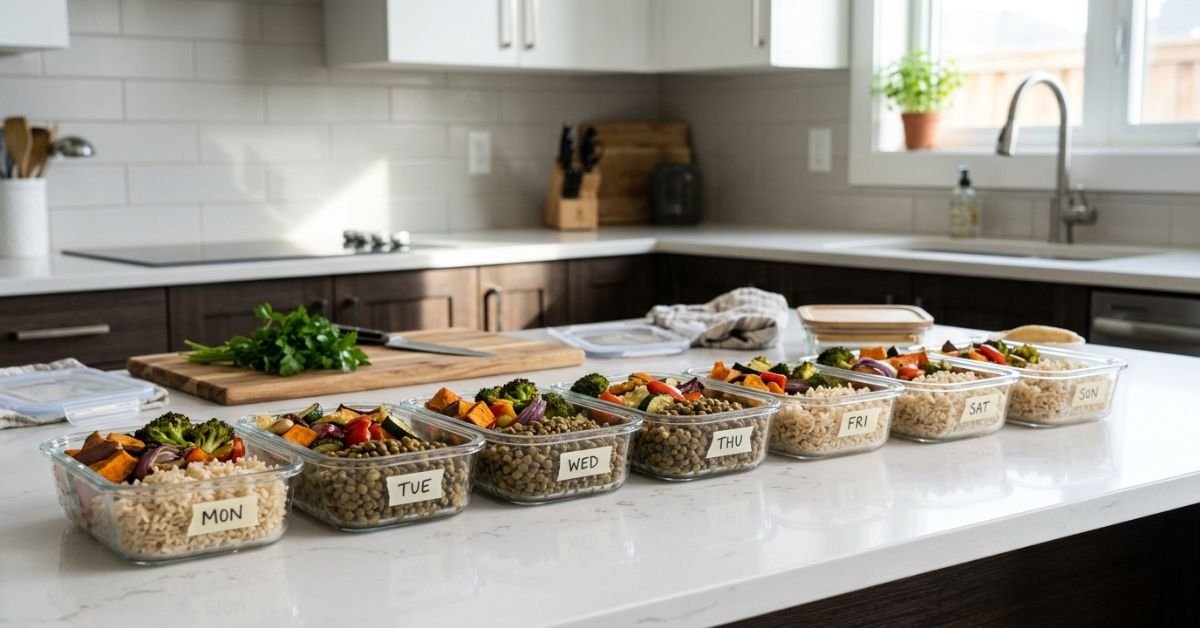


1. The Digital Strategy: Build Your Cart with Tech Tools
Stepping into a grocery store without a plan on a $50 budget is financial suicide. You will overspend. To hit this aggressive target, your work starts on your phone 24 hours before you buy a single carrot.
Leverage Digital Circulars and Aggregate Apps
Paper flyers are obsolete. Download Flipp or AnyList. Flipp aggregates local grocery flyers (Aldi, Lidl, Walmart, Trader Joe’s, regional discount grocers) and makes them searchable. If boneless chicken thighs are on sale for $1.99/lb across town, you’ll know instantly.
Audit with a Pantry Inventory Tracker
One of the easiest ways to blow your budget is rebuying spices, cooking oil, or grains you already own. Apps like Pantry Check or simple Notion templates keep an updated log of your dry goods. Before building your recipe list, query your pantry. If you already have 2 pounds of jasmine rice, half a carton of eggs, and some soy sauce, you just saved $8 of your $50 budget.


Apply Meal Planning Algorithms
Services like Eat This Much or open-source meal planners let you specify:
💰 More Cheap Living Tips You'll Love
- Pay Off Debt Faster Without Earning More: Tech Guide
- Lower Your Electric Bill as a Renter: 12 Cheap Tech Ways
- How Long to Pay Off Debt? Tech Tools to Find Out Fast
- Debt Snowball on a Low Income: Does It Still Work in 2026-27?
- Debt Avalanche Method Step by Step: Fast Debt Payoff
- First Steps to Take When You Decide to Get Out of Debt
- Target daily calories (e.g., 2,200 kcal)
- Macro split (e.g., 30% Protein / 40% Carbs / 30% Fats)
- Budget cap per meal or week
Inputting your constraints into an algorithmic meal planner yields an objective baseline of recipes that hit your nutritional targets at your exact price ceiling.


2. The $50 Master Shopping List: High-Yield Nutrition
The secret to maximizing a $50 budget is prioritizing unit pricing calculations (cost per gram of protein and cost per calorie) over convenience.
Here is our baseline roster, calibrated to discount stores like Aldi:
| Item | Category | Quantity | Estimated Cost | | :— | :— | :— | :— | | Dried Black Beans | Legume / Protein | 1 lb bag | $1.49 | | Dried Green Lentils | Legume / Protein | 1 lb bag | $1.59 | | Brown or White Rice | Bulk grain staple | 5 lb bag | $3.49 | | Rolled Oats | Bulk grain staple | 32 oz | $2.89 | | Eggs (Large) | Whole food protein | 2 dozen | $4.50 | | Canned Tuna in Water | Lean protein | 4 cans | $3.96 | | Firm Tofu or Bone-in Chicken Thighs | Main Protein | 3 lbs | $6.99 | | Frozen Broccoli Florets | Frozen vegetables | 2x 16 oz | $2.58 | | Frozen Mixed Berries | Frozen fruit | 16 oz | $2.49 | | Bananas | Carbohydrate / Fruit | 1 bunch (~3 lbs) | $1.50 | | Sweet Potatoes | Complex carb | 3 lbs bag | $2.99 | | Carrots, Onions, Celery (Mirepoix) | Aromatic base | 1 unit each | $3.29 | | Peanut Butter | Healthy fats | 16 oz jar | $1.99 | | Sunflower Seeds or Peanuts | Fat / Micronutrients | 1 bag | $1.99 | | Block Cheddar Cheese | Fat / Dairy | 8 oz | $2.20 | | Corn Tortillas | Carbohydrate | 30-pack | $1.99 | | Total Estimated Spend | | | ~$45.94 |
(Leaves ~$4.00 buffer for local taxes, fresh garlic, or an onion).
3. Designing for Macronutrient Balance
Eating cheap is easy if you only consume white flour, ramen, and margarine. Eating healthy on a budget requires intentional macronutrient balance.
With this specific grocery list, you hit:
- Protein: ~90g to 110g per day (via eggs, lentils, black beans, chicken/tofu, tuna, oats).
- Fats: ~60g to 75g per day (via whole eggs, peanut butter, cheese, seeds, poultry skin).
- Carbohydrates: ~220g to 260g per day (via brown rice, oats, sweet potatoes, legumes, bananas).
- Fiber: Exceeds the RDA (35g+ daily) thanks to the legumes and oats, which helps you stay full longer and regulates insulin response.
Using dry beans instead of canned yields double the yield per dollar while avoiding sodium preservatives. Pre-cooking your carbs creates resistant starch, a form of prebiotic fiber that improves gut health and lowers glycemic spikes.
4. The Optimized Batch Cooking Workflow
To pull off a week’s worth of food without burning out, you must treat your cooking like a manufacturing line. Do not cook day by day; run a single 90-minute batch session on Sunday afternoon.
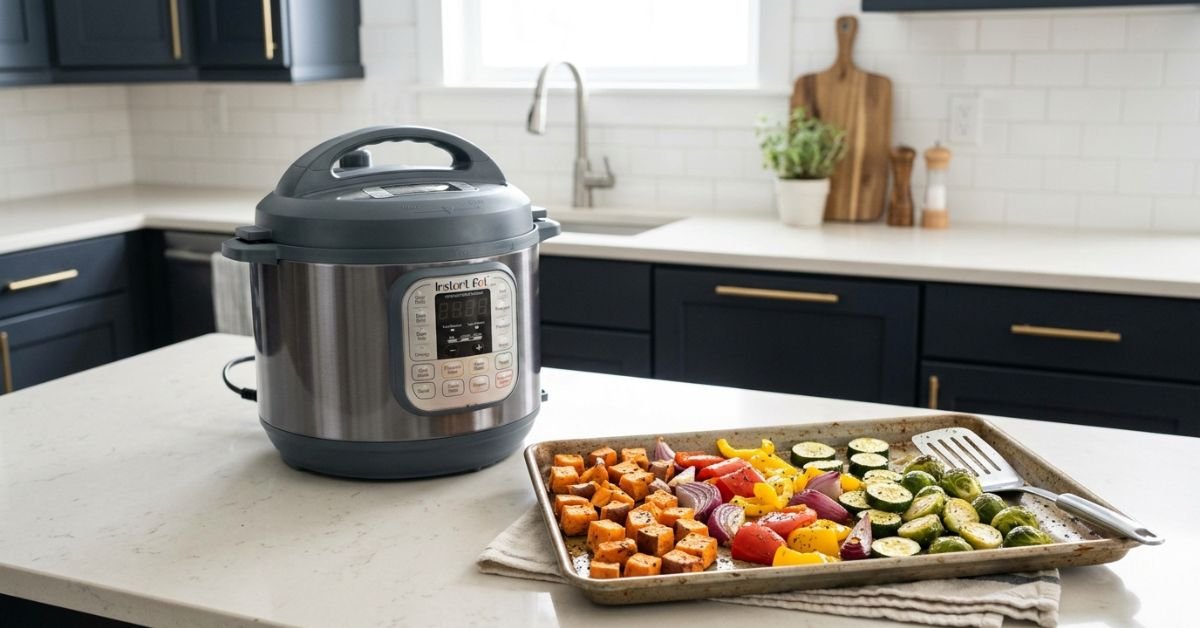
Step 1: The Pressure Cooker Phase (T-0:00 to T-0:40)
Fire up your smart pressure cooker (an Instant Pot or similar multi-cooker). Throw in your dried black beans with salt, garlic powder, cumin, and water. Set it for 30 minutes on high pressure. Once done, let it natural-release while you cook the rice.
Step 2: The Sheet Pan Roast (T-0:10 to T-0:50)
Preheat your oven to 400°F (200°C). Peel and cube your sweet potatoes. Toss them with a drizzle of oil, salt, and smoked paprika. Spread them onto a large baking sheet. Place your chicken thighs on a second sheet with your mirepoix vegetables (carrots, onions, celery). Roast both trays simultaneously for 35 to 40 minutes.
Step 3: Stovetop Simmer (T-0:20 to T-0:45)
While the oven and pressure cooker run hands-free, put a pot of water on the stove and cook your green lentils into a hearty Mediterranean dal or soup base using the sauteed aromatics from your sheet pan.
Step 4: Assembly Line Division (T-1:00 to T-1:30)
Set out your storage containers. Portion everything out systematically:
- Breakfasts: Jar up overnight oats (rolled oats + water/dash of milk + peanut butter + mashed banana).
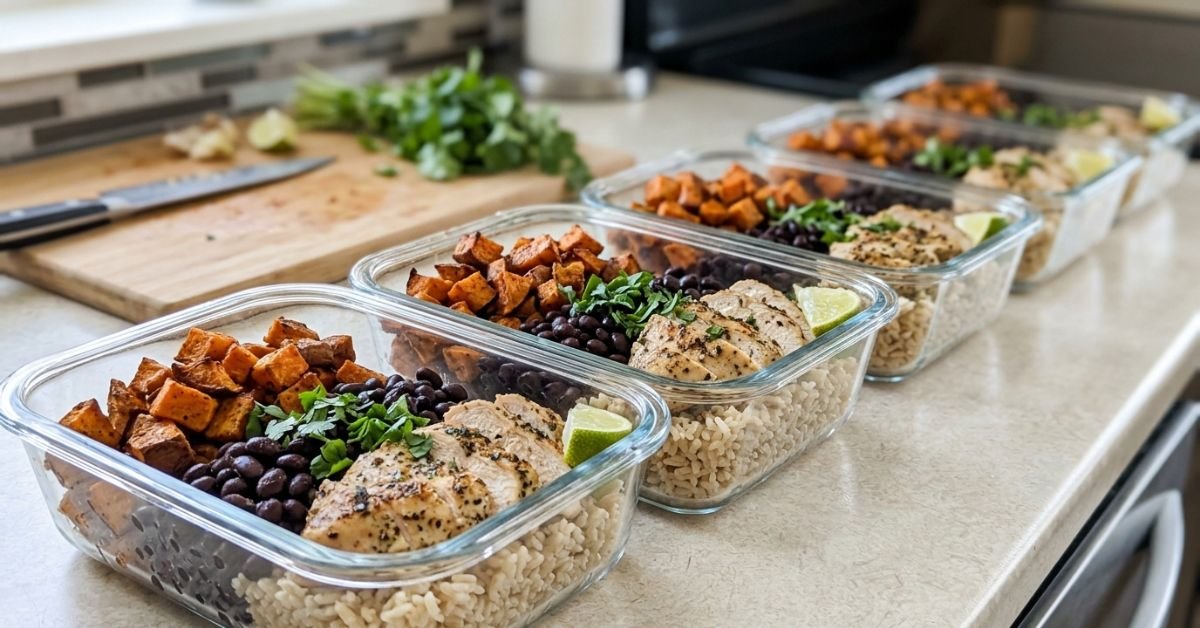
- Lunches: Brown rice base + seasoned black beans + shredded roasted chicken thighs + salsa/cheese.
- Dinners: Spiced green lentils + roasted sweet potatoes + steamed frozen broccoli.
       ┌───────────────────────────────┐
       │   Sunday Prep: 90 Minutes     │
       └──────────────┬────────────────┘
                      │
     ┌────────────────┼────────────────┐
     ▼                ▼                ▼
[Instant Pot]     [Oven Trays]    [Stovetop]
 Black Beans    Sweet Potatoes      Lentil
  & Rice         & Chicken        Stew Base
     │                │                │
     └────────────────┼────────────────┘
                      ▼
     ┌─────────────────────────────────┐
     │ 14 Complete, Balanced Containers│
     │      (Ready for the Week)       │
     └─────────────────────────────────┘
5. Zero-Waste Food Tech and Preservation
Wasting food is effectively setting your budget on fire. If you throw away 10% of your groceries, your $50 budget just became a $55 budget.
- Deploy Zero-Waste Kitchen Tech: If you have an entry-level vacuum sealer, use it for proteins you don’t plan to eat by Wednesday. Divide fresh meat into individual portions, seal, and freeze.
- First-In, First-Out (FIFO) Inventory: Apply commercial kitchen standards to your fridge. Place older leftovers and expiring items at eye level in clear glass containers. Out of sight is out of mind.
- Save the Scraps: Freeze all your vegetable ends (onion skins, carrot tops, celery nubs) in a freezer bag. When the bag is full, simmer them with salt and peppercorns in your pressure cooker for free, zero-sodium vegetable broth.
Pro Tip: Never freeze cooked potatoes unless you mash them; their water crystalline structure breaks down and makes them unpleasantly grainy. Keep roasted sweet potatoes in the fridge for up to four days, or swap them out for cooked rice in freezer bowls.
6. What I Learned the Hard Way
When I first attempted this $50 limit, I made a classic blunder: monotony burnout.
I cooked five identical meals of plain chicken, white rice, and boiled broccoli. By Wednesday evening, the thought of eating that plain chicken turned my stomach, and I ended up ordering a $25 pizza—destroying half my weekly savings in thirty minutes.
Now, I use what I call component prep.
Don’t assemble identical finished dishes. Keep the grains, proteins, and veggies separate. Day one, combine the chicken and black beans in a warm tortilla with cheese for burritos. Day two, mix the chicken, rice, and broccoli with a splash of soy sauce and sriracha for an Asian-inspired bowl. Small tweaks to sauces and spices eliminate palate fatigue without increasing your grocery receipt.
Frequently Asked Questions
Can you really hit your protein goals on $50 a week?
Yes. Relying entirely on chicken breast or beef will blow your budget, but combining high-yield plant proteins (dried lentils, black beans, oats) with cost-effective complete proteins (eggs, canned tuna, chicken thighs) makes hitting 100g+ of protein daily easily achievable on under $50.
Isn’t shopping at multiple stores to find sales counterproductive?
If you’re driving 15 miles across town to save $1.20 on eggs, yes, you lose that saving in gas and time. Use apps like Flipp to identify one discount grocer (like Aldi, WinCo, or Lidl) that carries the lowest average prices across your entire list, and do all your primary shopping there.
How do I prevent prepped food from spoiling by Friday?
Follow the 3-day rule: keep three days of meals in the refrigerator and freeze the remaining portions immediately after cooling on Sunday. On Wednesday night, transfer Thursday and Friday’s meals from the freezer to the fridge to thaw safely.
What if I don’t have an Instant Pot?
You can use a simple heavy-bottomed pot or Dutch oven on the stove. Just soak dried beans overnight first to cut down boiling time to roughly 45–60 minutes. An electric pressure cooker simply saves active attention, not the ability to cook budget staples.