
How I Built a $5,000 Emergency Fund While Earning a Low Income.Two years ago, my checking account balance hovered around $84. Every notification from my banking app triggered a spike of adrenaline. Was it a recurring bill clearing? An overdraft fee? Or another subscription I forgot to cancel?
- 1. The Starting Point: Auditing Cash Flow Using Open Banking Tools
- 2. Direct Deposit and Algorithmic Micro-Savings
- 3. Real-World Scenarios: Managing Car Breakdowns and Healthcare Dips
- 4. Hands-On Tech Stack: The Apps That Accelerated the Goal
- 5. 1. The Core Repository: Ally Bank (HYSA)
- 6. 2. The Allocation Engine: You Need A Budget (YNAB)
- 7. 3. Frictionless Buffers: Cash-Back Redirection
- 8. Pro Tip: The 72-Hour “Friction Moat”
- 9. Common Pitfalls: Subscription Traps and Predatory FinTech
- 10. Beware “Earned Wage Access” and Cash Advance Apps
- 11. Avoid High-Risk Micro-Investing for Liquid Safety
- 12. Beware the Over-Saving Overdraft Trap
- 13. Reaching $5,000: Maintenance and Next Financial Milestones
- 14. Frequently Asked Questions
- 15. How much emergency fund should a low-income single parent maintain?
- 16. What are the best emergency fund steps for beginners on Reddit personal finance forums?
- 17. Which high-yield savings accounts have no minimum balance requirements?
- 18. Are micro-savings and automated round-up apps safe to use?
At the time, I made roughly $28,500 a year working entry-level tech support in Ohio. According to the Federal Reserve’s survey on household economic wellbeing, over a third of Americans can’t comfortably cover an unexpected $400 expense with cash. I wasn’t just part of that statistic; I was living on the razor’s edge of it.
Every personal finance blog I read offered the same condescending advice: “Just stop buying $6 oat milk lattes” or “Save $1,000 this month by cutting your restaurant budget.” When you earn near minimum wage, you aren’t drinking artisanal lattes—you’re buying store-brand coffee and calculating your gas tank fill-ups to the exact gallon.
I didn’t reach a $5,000 safety net through monastic self-deprivation. I built it by treating my personal finances like an engineering problem. By chaining together Open Banking protocols, automated micro-transfers, and behavioral fintech triggers, I removed my own willpower from the equation. Here is the blueprint of how I built an emergency reserve from scratch on a shoestring budget.



The Starting Point: Auditing Cash Flow Using Open Banking Tools
Before writing a single line of automation, I needed real data. Looking at bank statements manually is painful, and traditional spreadsheets usually fall apart after week two because life gets in the way.


I linked my primary checking account to an aggregator through secure Plaid integrations. By pulling raw transaction history into a digital dashboard, I could see an unfiltered look at where my dollars vanished.
💰 More Cheap Living Tips You'll Love
- Debt Snowball Method: How It Works (With Real Example)
- Debt Snowball vs Avalanche: Which Repayment Strategy Wins?
- Debt Avalanche Method Step by Step: Fast Debt Payoff
- Pay Off Debt Faster Without Earning More: Tech Guide
- How Long to Pay Off Debt? Tech Tools to Find Out Fast
- Lower Your Electric Bill as a Renter: 12 Cheap Tech Ways
The audit revealed three major cash leaks:


- Zombie recurring charges: A $4.99 cloud storage plan I hadn’t opened in six months, an $11.99 streaming trial that rolled over, and duplicate music services.
- The “Convenience Tax”: Late-night corner store runs when I ran out of basics, paying double what an item cost at a discount grocery store.
- Micro-transaction bleeding: Small $3 to $5 purchases that flew under my radar because they didn’t seem large enough to worry about.
Baseline Audit (Monthly Take-Home: ~$2,150)
---------------------------------------------
Fixed Costs (Rent, Utilities, Car, Gas): $1,680
Unmonitored Subscriptions (Cancelled):       $38
Target Discretionary Baseline:             $282
Initial Automated Savings Target:          $150/month ($37.50/week)
If you are figuring out how to build emergency fund on low income terms, start small. Forget the daunting four-figure goals at first. My initial target was simply $500. Five hundred dollars prevents a blown car tire or a clinic copay from instantly turning into toxic 28% credit card debt. Once I had an accurate baseline of non-discretionary expenses, I set up my first automated guardrails.
Direct Deposit and Algorithmic Micro-Savings
Willpower is a finite resource. If you wait until the end of the month to tuck away whatever cash is left over, the balance will almost always be zero. Parkinson’s Law applies to personal checking accounts just as easily as productivity: spending rises to meet the exact amount available to spend.
To beat my own psychology, I bypassed my checking account using Direct Deposit Splitting.
Most standard payroll providers (like ADP, Gusto, or Workday) let you split paychecks across multiple routing numbers. Instead of sending 100% of my paycheck to my daily checking account, I modified my direct deposit settings:
- 92% routed to Checking (bills, rent, groceries).
- 8% routed directly via Automated Clearing House (ACH) into a separate, unlinked High-Yield Savings Account (HYSA).
When that money never hits your debit card, you stop calculating it as spendable cash. You adjust to living on the remaining balance naturally.
Beyond direct deposit, I layered budgeting algorithms and micro-savings apps that automatically save money for you. Using apps with round-up investments and cash transfers, every purchase was bumped up to the nearest dollar. If a gas purchase cost $23.40, the extra $0.60 transferred silently into my savings.
On top of that, I enabled dynamic sweep algorithms (tools like Chime’s automated features or Oportun). These programs scan your account history, predict upcoming bills based on past cycles, and pull tiny increments—maybe $2.14 on a Tuesday, $4.50 on a Thursday—only when the algorithm detects safe cash headroom.
Real-World Scenarios: Managing Car Breakdowns and Healthcare Dips
Saving money on paper looks clean; in practice, it’s chaotic. Roughly four months into this process, my 2011 Honda Civic started making a grinding metallic roar. The alternator gave out.
The repair estimate was $415.
In my old life, this would have triggered a full-blown financial tailspin. I would have put it on a high-APR credit card, carried the balance, paid minimum fees, and ended up shelling out $600 over the course of a year.
Because I had accumulated $620 in my fund by that point, I paid the mechanic with my emergency fund debit card. The feeling wasn’t despair—it was relief. That is what an emergency fund actually buys you: it converts an existential crisis into an annoying Tuesday inconvenience.
      [ Paycheck Arrives ]
               │
        ACH Direct Split
         ┌─────┴──────────────┐
         ▼                    ▼
   [ Checking: 92% ]   [ High-Yield Savings: 8% ]
         │                    │
   Daily Bills & Ops          │
         │                    ▼
   Round-Up Microsavings ──> [ Emergency Cash Reserve ]
                              (Locked away from debit access)
However, paying that bill dropped my cash buffer back down to around $200. I had to pause my automatic sweeps for two pay periods to regain breathing room.
When you encounter unexpected expenses, don’t abandon the system. Use the mobile app controls to temporarily pause deposits. Once your cash flow stabilizes, switch the rules back on. Rebuilding after an emergency isn’t a failure; it’s the exact reason the fund exists in the first place.
Hands-On Tech Stack: The Apps That Accelerated the Goal
You don’t need expensive enterprise software to manage cash flow. I built my stack using low-barrier, fee-free consumer fintech tools designed for daily use.
1. The Core Repository: Ally Bank (HYSA)
Brick-and-mortar banks frequently pay insulting APYs—often hovering around 0.01%—while penalizing users with maintenance fees if their balances drop below $1,500. That model is predatory for lower-income households.
I chose an online bank with a high yield savings account low balance requirement (in this case, zero balance minimums and zero monthly maintenance fees). Earning a 4.00%+ APY meant my emergency balance was actively paying me dividends every month, fully backed by FDIC Insurance up to the standard $250,000 regulatory limit.
Ally also features a built-in “Buckets” tool. Within a single savings account, I partitioned my cash into distinct digital envelopes:
- Core Emergency ($3,000 goal)
- Car Maintenance ($1,200 goal)
- Healthcare Out-of-Pocket ($800 goal)
2. The Allocation Engine: You Need A Budget (YNAB)
I applied the methodology of Zero-Based Budgeting using YNAB. The philosophy is straightforward: every single dollar that enters your account gets assigned a specific job before you spend it. If you earn $1,000, you assign $1,000 down to the penny. If you overspend in one category, you physically drag money from another category to cover it. That simple friction makes impulse spending visible instantly.
3. Frictionless Buffers: Cash-Back Redirection
Instead of using cash-back credit cards (which carry too much risk if you carry balances), I relied on receipt aggregators and debit-card cash-back features. Every quarter, I swept those earned rewards—often $20 or $30—directly into my HYSA via ACH transfer.
Pro Tip: The 72-Hour “Friction Moat”
Never link your emergency fund to your primary checking account at the same bank. Instant internal transfers make it too tempting to “borrow” money for non-emergencies. Keep your emergency fund at a completely different financial institution without an active debit card in your wallet. The standard 2-to-3 business day ACH transfer window acts as a natural cooling-off period that stops impulse withdrawals cold.
Common Pitfalls: Subscription Traps and Predatory FinTech
When looking for the best automated savings apps for low income earners, the fintech landscape can be a minefield. Many tools marketed directly to cash-strapped workers carry hidden costs that undermine your financial progress.
Beware “Earned Wage Access” and Cash Advance Apps
Platforms that let you tap into your paycheck early often market themselves as lifesavers. However, many subtly push “optional” tips or steep fees for instant transfers. A $5 fee on a $50 cash advance translates to an astronomical annualized interest rate. Avoid these tools entirely; they trap you in an artificial payday debt loop.
Avoid High-Risk Micro-Investing for Liquid Safety
Apps promoting round-up investments often steer your spare change straight into stock portfolios or crypto baskets. While investing is critical for wealth generation, your emergency cash reserves do not belong in volatile equities. If the market takes a 20% dive at the same moment your employer cuts your hours, your safety net evaporates when you need it most. Keep emergency money in cash or liquid equivalents backed by the FDIC or NCUA.
Beware the Over-Saving Overdraft Trap
Algorithms are clever, but they aren’t psychic. If you configure automated sweeps too aggressively without keeping an eye on irregular pending charges, you can inadvertently bounce your balance and trigger costly bank fees. Always calibrate your micro-savings apps with a hard “floor”—a balance minimum (like $100 or $150) below which the app is forbidden from making transfers.
Reaching $5,000: Maintenance and Next Financial Milestones
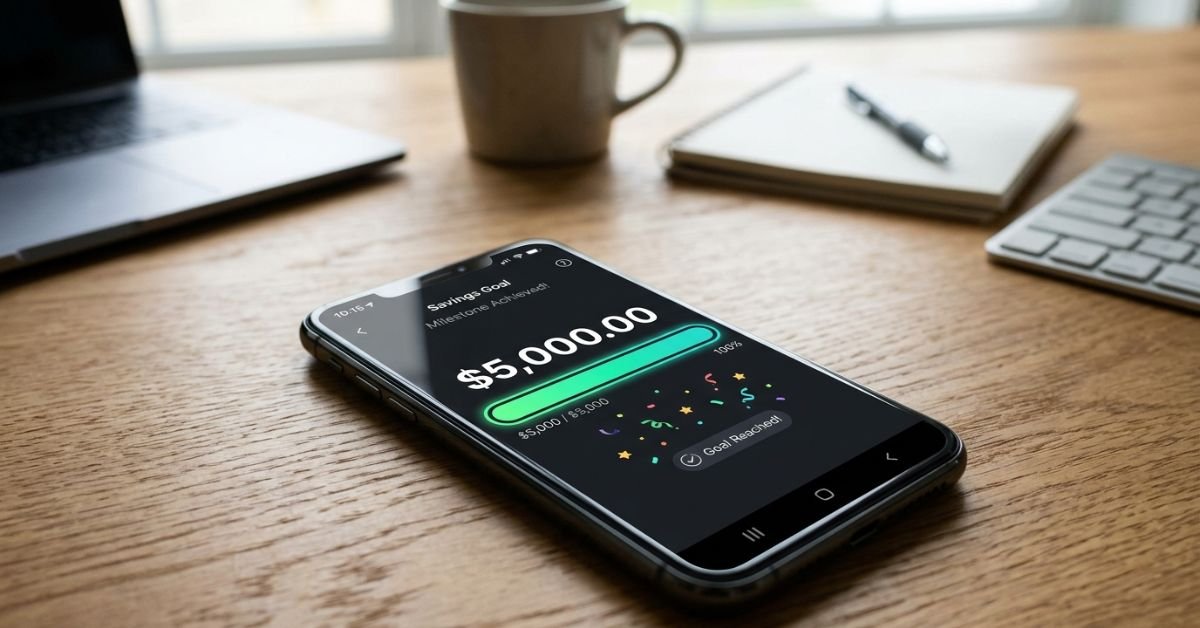
It took me roughly 16 months of consistent micro-transfers, tax refund allocations, and strict payroll splits to cross the $5,000 threshold. On an income below $30,000, that milestone felt like climbing Everest.
Reaching that benchmark changes how you navigate daily life. You sleep better. You stop dreading phone calls from unknown numbers. You are no longer one mechanical hiccup or medical copay away from financial disaster.
Once my emergency fund hit $5,000, my tactical approach evolved:
- Throttled aggressive cash automation: I scaled back my direct deposit split to the emergency fund down to a maintenance trickle (just enough to cover baseline inflation).
- Redirected cash flow to retirement accounts: I shifted the automated 8% payroll split into an employer-matched 401(k) and a low-cost Roth IRA, funneling money into broad-market index funds.
- Established strict withdrawal definitions: Cash from this reserve is reserved strictly for three conditions: sudden job loss, urgent unexpected medical events, or essential transportation repairs required to get to work.
If you are looking at your current balance wondering how to save 5000 fast on minimum wage, know this: speed is secondary to mechanics. Do not get discouraged by tiny numbers. Fifty cents saved by an app algorithm today is fifty cents that will defend your dignity tomorrow. Set up the digital pipeline, step out of your own way, and let the software run.
Frequently Asked Questions
How much emergency fund should a low-income single parent maintain?
For single parents or sole breadwinners, standard advice recommending three months of living expenses is often not enough cushion. Aiming for a full six months of non-discretionary expenses (rent, utility minimums, shelf-stable groceries, child essentials) provides a much safer operational runway. If six months feels unrealistic, focus first on a firm $1,000 micro-milestone using payroll direct deposit splits before gradually scaling the balance upward.
What are the best emergency fund steps for beginners on Reddit personal finance forums?
The general consensus across community forums like r/personalfinance and r/povertyfinance boils down to a clear hierarchy:
- Build a basic starter buffer ($500 to $1,000) inside an online bank.
- Attack high-interest debts (credit cards, payday loans) aggressively while keeping that baseline cash cushion intact.
- Once toxic debt is cleared, systematically expand the fund to cover three to six months of absolute baseline living costs.
Which high-yield savings accounts have no minimum balance requirements?
Digital banking platforms like Ally Bank, Capital One 360, Marcus by Goldman Sachs, and American Express National Bank routinely offer competitive APYs with zero monthly account maintenance fees and no minimum balance mandates. Credit unions backed by the NCUA (National Credit Union Administration) also offer competitive local alternatives.
Are micro-savings and automated round-up apps safe to use?
Yes, provided they use end-to-end 256-bit encryption, connect using established Open Banking frameworks like Plaid, and store your money in accounts covered by standard FDIC insurance. Always verify the app’s pricing model: stick with tools that don’t charge hefty monthly subscription fees that cancel out the interest you earn.










