
The Secret Psychology Behind Why Retail Therapy Feels So Good and How to Quit.It was 10:45 PM on a damp Tuesday. I was curled up on the couch, thoroughly drained after a grueling 50-minute crawl down I-95 and ten straight hours of back-to-back Zoom calls. My brain felt like static electricity. Without a second thought, I opened the Amazon app on my iPhone, tapped around for four minutes, and ordered a $78 matte-black pour-over kettle I definitely didn’t need.
- 1. 1. The Neurochemical Illusion: Why Your Brain Craves the Checkout Click
- 2. 2. The Anatomy of an Emotional Spend: Identifying Internal vs. External Triggers
- 3. The Financial HALT Method
- 4. The Algorithmic Panopticon
- 5. 3. The Hidden Cost: The Post-Purchase Crash and Hedonic Adaptation
- 6. 4. Hands-On Strategies: 6 Psychological Hacks to Rewire Your Shopping Urge
- 7. 1. The 72-Hour Friction Rule
- 8. 2. The Labor Hours Mental Model
- 9. 3. Intentional Cart Abandonment
- 10. 4. Strip Your Digital Wallets
- 11. 5. Turn Your Smartphone Display to Grayscale
- 12. 6. Delete Every Single BNPL App
- 13. Pro Tip: The “Reverse Wishlist” Journal
- 14. 5. Common Pitfalls When Quitting Retail Therapy
- 15. 6. Creating Your “Dopamine Menu”: Zero-Cost Replacements for Emotional Regulation
- 16. High-Impact Low-Cost Dopamine Swaps
- 17. Frequently Asked Questions
- 18. Why does retail therapy feel so good in the moment?
- 19. How do I know if my retail therapy has become compulsive buying behavior?
- 20. Does the “72-hour rule” actually work for chronic impulse shoppers?
- 21. How do Buy Now, Pay Later (BNPL) services hijack our brain’s spending brakes?
- 22. What should I do immediately after experiencing intense buyer’s remorse?
Two minutes later? Pure, unadulterated relief. A subtle, warm wave washed over my chest.
That brief high had nothing to do with specialty coffee. It had everything to do with neurochemistry. According to the Federal Reserve, balance-carrying American households held a median credit card debt of roughly $6,500 in recent years—and a massive slice of those balances isn’t born of emergencies. It’s born of quiet, everyday stress. We hit Target for laundry detergent and walk out with $140 worth of seasonal candles, decorative baskets, and speculative loungewear.
If you have ever caught yourself asking why do i shop when i am stressed psychology or wondered why your bank account drains every time work gets hectic, you aren’t broken. Your ancient neurobiology is simply colliding with frictionless 21st-century commerce.



1. The Neurochemical Illusion: Why Your Brain Craves the Checkout Click
Most people assume retail therapy is driven by the desire to own things. It isn’t. The secret lies in the dopamine reward pathway.
Dopamine isn’t the neurochemical of satisfaction; it is the neurochemical of anticipation. Pioneering neuroscientist Wolfram Schultz discovered that dopamine neurons fire most intensely during the search and anticipation phase, not when you actually consume the reward. That means you get a far bigger neurochemical rush while browsing aesthetic items and tapping “Place Order” than you do when the cardboard box actually lands on your front porch three days later.


This explains why does buying things feel so good temporarily. When life feels chaotic—whether you are dealing with commuter burnout, corporate micromanagement, or domestic friction—your sense of agency collapses. Clicking “Buy Now” provides instant micro-control.
💰 More Cheap Living Tips You'll Love
- First Steps to Take When You Decide to Get Out of Debt
- Debt Snowball Method: How It Works (With Real Example)
- Pay Off Debt Faster Without Earning More: Tech Guide
- Debt Snowball Worksheet: How to Fill It Out Correctly
- Debt Avalanche Method Step by Step: Fast Debt Payoff
- Save Money or Pay Off Debt First? Tech-Driven Guide
Dr. Scott Rick, an associate professor of marketing at the University of Michigan’s Ross School of Business and author of Tightwads and Spendthrifts, conducted groundbreaking studies on emotional spending. His research revealed that sadness and distress trigger a feeling of helplessness. Shopping actually alleviates that residual sadness by restoring perceived personal control over our immediate environment.


Modern commerce weaponizes this biological vulnerability. In the past, parting with physical cash triggered what behavioral economists call the “pain of paying”—a measurable activation in the insula, the brain region associated with physical pain. Today, innovations like Apple Pay, one-click ordering, and Buy Now, Pay Later (BNPL) platforms like Klarna and Affirm numb that pain. They decouple the gratification of the purchase from the agonizing realization of cash leaving your account, completely bypassing your prefrontal cortex self-regulation before your logic can intervene.
2. The Anatomy of an Emotional Spend: Identifying Internal vs. External Triggers
To break the pattern, we have to look past the checkout screen and examine the emotional baseline that preceded it. The psychology behind shopping addiction and retail therapy rarely starts at the cash register; it starts hours, sometimes days, earlier.
Psychologists use cognitive appraisal theory to explain how our subjective interpretation of an event determines our emotional response. If an unexpected email from your boss makes you feel inadequate, your brain frantically scans for an immediate emotional counterbalance to restore equilibrium.
Trigger Event (Work Stress / Loneliness)
  ↓
Internal Appraisal ("I have no control / I need comfort")
  ↓
Frictionless Action (Target run, Amazon 1-Click, Klarna Checkout)
  ↓
Dopamine Surge (Temporary relief and perceived control)
  ↓
Post-Purchase Crash (Buyer's remorse & financial guilt)
The Financial HALT Method
In recovery programs, the acronym HALT stands for Hungry, Angry, Lonely, Tired. In my own journey climbing out of $13,400 of revolving credit card debt, applying HALT to my finances was an eye-opener:
- Hungry: Ever walk into a Trader Joe’s on an empty stomach? You don’t just buy food; you buy instant dopamine.
- Angry: Retaliatory consumption is real. When someone disrespects your boundaries at work, buying expensive gear feels like taking something back for yourself.
- Lonely: Packages arriving at your doorstep mimic social interaction. Unboxing feels like receiving a gift from a friend—even if the sender was just your late-night self.
- Tired: Decision fatigue destroys willpower. By 9:00 PM, your prefrontal cortex is exhausted, leaving your limbic system to run your financial life.
The Algorithmic Panopticon
External triggers have evolved far beyond the classic Sunday newspaper circular. Your phone tracks your browsing pauses, your location data, and your engagement metrics. If an algorithm detects you linger on home renovation reels while feeling burned out in a cramped rental apartment, your feed will immediately serve up curated aesthetic solutions. Combine those ads with manufactured artificial scarcity—like flash sales during Memorial Day weekend or countdown timers on Prime Day—and impulse buying behavior shifts from an occasional indulgence into an automated coping mechanism.
3. The Hidden Cost: The Post-Purchase Crash and Hedonic Adaptation
The tragic paradox of retail therapy is that the cure worsens the underlying disease. The high dissipates almost immediately after checkout, leading directly to buyer’s remorse and acute financial anxiety.
Humans are fundamentally governed by hedonic adaptation (the hedonic treadmill). We adapt with astonishing speed to positive lifestyle changes. That new laptop, those designer boots, or that gleaming kitchen gadget brings a spike in perceived happiness for roughly forty-eight hours. Then, baseline reality resets. The novelty evaporates, but the $350 charge sitting on your Chase Sapphire card remains—accruing 24.99% APR if left unpaid.
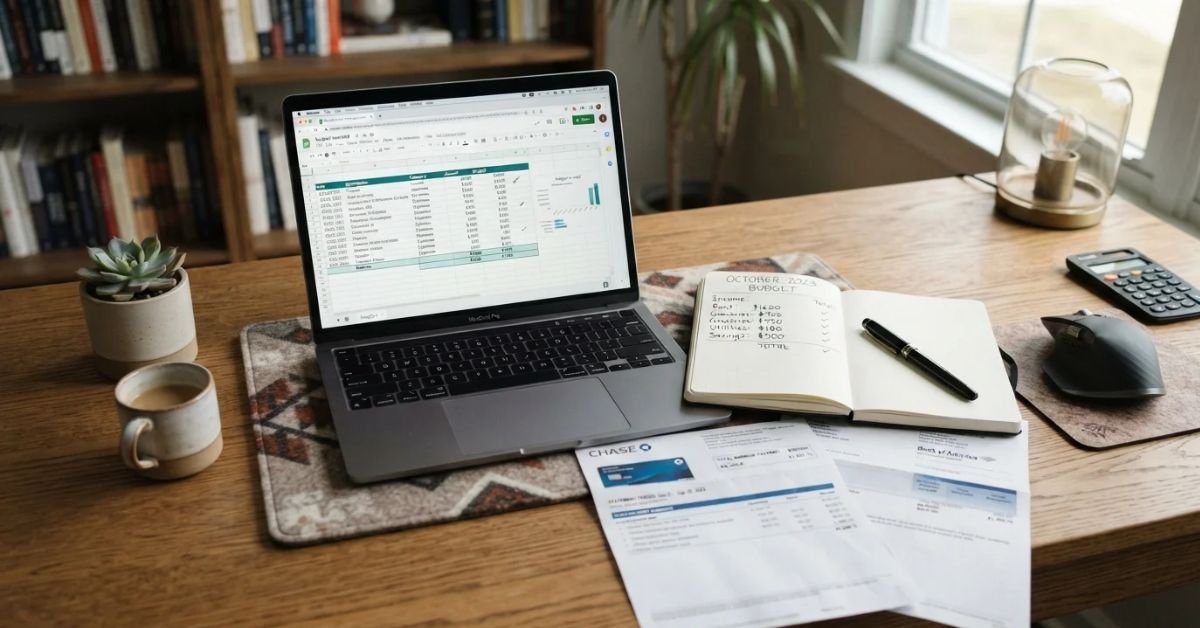
This cycle creates a self-fulfilling loop of shame. You spend money to numb stress; the resulting debt produces financial panic; the panic drives your brain to seek comfort; you return to shopping to quiet the panic.
Over a five-year horizon, this behavioral leak quietly dismantles your financial wellness. An extra $300 a month spent on unnecessary emotional splurges isn’t just $3,600 lost annually—it’s roughly $45,000 in lost compounding growth over a single decade if invested in a standard S&P 500 index fund within an IRA or 401(k). That is the true price of unresolved emotional spending.
4. Hands-On Strategies: 6 Psychological Hacks to Rewire Your Shopping Urge
Willpower is an unreliable defense mechanism. If you are exhausted at the end of the day, telling yourself to “just be more disciplined” is a guaranteed failure. You need environmental friction to disrupt automatic neurological loops.
Here is how to stop spending money on unnecessary things using behavioral science.
1. The 72-Hour Friction Rule
Whenever you feel a sudden surge to buy a non-essential item online, add it to your cart and step away for exactly 72 hours. This delay allows your heightened autonomic nervous system to cool down and forces your rational prefrontal cortex back into the driver’s seat. In my experience, at least 75% of the items I placed on a 72-hour hold lost their appeal entirely by day three.
2. The Labor Hours Mental Model
Instead of evaluating an item by its dollar price, calculate its cost in your actual life energy.
- Take your take-home pay (after federal, state, and payroll taxes).
- Divide it by the hours you work each week to get your true hourly wage.
- If you net $25 an hour, a $150 jacket doesn’t cost $150; it costs six full hours of your life spent sitting under fluorescent office lights. Framing costs this way taps into natural loss aversion—suddenly, the trade-off feels uneven.
3. Intentional Cart Abandonment
You can exploit the dopamine loop without spending a single cent. Because dopamine peaks during browsing and planning, build your ideal shopping cart—and then deliberately close the browser tab. You get roughly 70% of the neurochemical novelty hit just from curation, completely shielding your bank balance from harm.
4. Strip Your Digital Wallets
Convenience is the enemy of self-control.
- Go into your mobile settings and delete your saved credit cards from Apple Pay and Google Wallet.
- Turn off Safari and Chrome Autofill for payment cards.
- Force yourself to physically stand up, walk to another room, locate your wallet, and manually type in all 16 digits, the expiration date, and the CVV code every single time you want to purchase something. That sixty seconds of forced effort gives your logical mind the window it needs to ask: Do I actually want this?
5. Turn Your Smartphone Display to Grayscale
E-commerce interfaces are meticulously engineered color palettes designed to spark sensory arousal. Red sale badges, crisp product photography, and vibrant banners stimulate your senses.
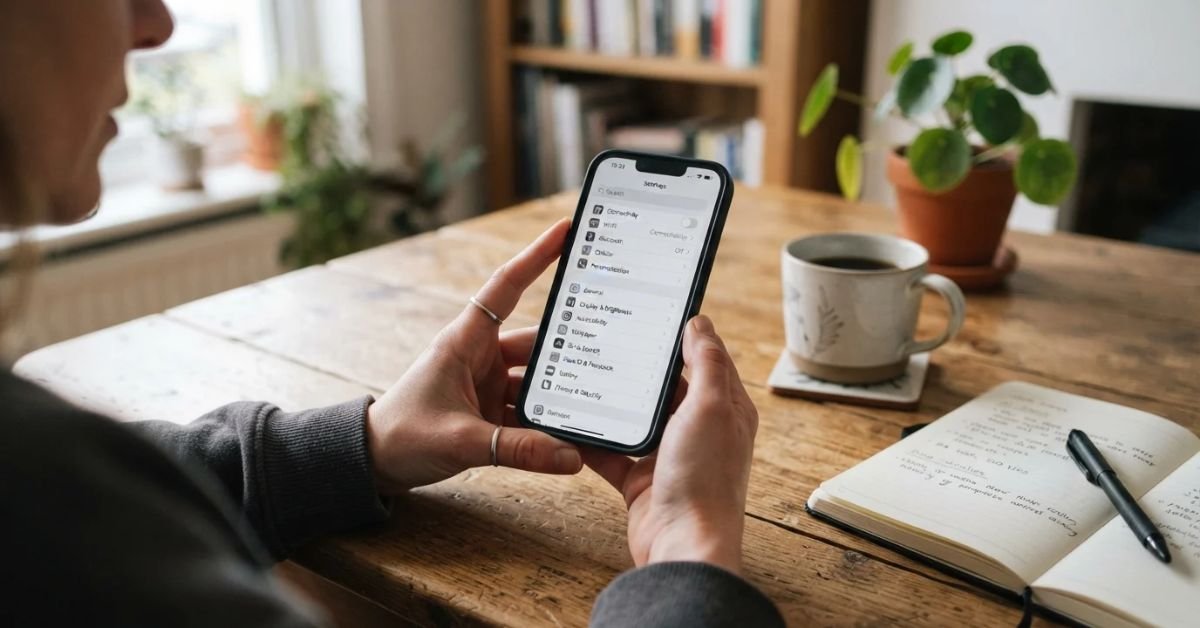
- On iOS: Go to Settings > Accessibility > Display & Text Size > Color Filters > Grayscale.
- Stripping out all color makes your phone visually dull, instantly muting the aesthetic allure of shopping apps.
6. Delete Every Single BNPL App
Uninstall Klarna, Affirm, and Afterpay. Splitting a $120 purchase into “four easy payments of $30” tricks your brain into assessing the risk of the purchase as negligible. Force yourself to pay for your lifestyle in full, in real time. If you can’t comfortably afford to buy the item twice over without touching your emergency fund, you cannot afford it today.
Pro Tip: The “Reverse Wishlist” Journal
When I was breaking my impulse shopping habits, I kept an Apple Notes file titled Things I Didn’t Buy. Every time I walked away from a temptation—whether it was a $45 sweater at Target or an $85 gadget on Reddit—I logged the item and its price. At the end of every month, I tallied the sum and manually transferred that exact dollar amount from my checking account into my high-yield savings account (HYSA). Watching that real cash balance grow gave me a far more enduring dopamine high than any transient package ever could.
5. Common Pitfalls When Quitting Retail Therapy
As you recalibrate your spending habits, watch out for these predictable psychological traps.
- The Financial Starvation Diet: Going on an absolute, zero-fun spending freeze sounds noble, but it almost always backfires. Just like crash diets trigger midnight binge-eating, extreme financial deprivation leads to massive, guilt-ridden retail benders. Build a reasonable, non-negotiable “fun money” buffer (even just $40 a month) directly into your budget to release the pressure valve safely.
- Swapping One Coping Vice for Another: If you cut off your online shopping addiction without addressing your underlying stress, that restless energy will migrate elsewhere. You might find yourself ordering $45 worth of late-night DoorDash, buying expensive video game microtransactions, or gambling on speculative stocks. Always monitor where that emotional impulse redirects.
- The Sales Event Panic: Prime Day, Black Friday, and Cyber Monday create artificial social pressure. You aren’t “saving $80” on a robot vacuum if you never needed a robot vacuum to begin with. Spending $200 on an item marked down from $300 is still a net negative of $200.
6. Creating Your “Dopamine Menu”: Zero-Cost Replacements for Emotional Regulation
You cannot successfully eliminate an emotional coping habit without replacing the underlying neurochemical stimulus. If you simply sit with your stress while denying yourself relief, you will eventually cave.
Instead, construct a personalized dopamine menu—a curated list of zero-cost actions that supply stimulation, novelty, or calm when you feel vulnerable.
       ┌──────────────────────────────────────────────┐
       │             THE DOPAMINE MENU                │
       ├─────────────────┬────────────────────────────┤
       │ APPETIZERS      │ • Cold water face rinse    │
       │ (5 Minutes)     │ • 10 pushups / deep stretch│
       │                 │ • Step into direct sun     │
       ├─────────────────┼────────────────────────────┤
       │ ENTREES         │ • Public library trip      │
       │ (30-60 Minutes) │ • Closet declutter session │
       │                 │ • Intense gym workout      │
       ├─────────────────┼────────────────────────────┤
       │ DESSERTS        │ • Rewatching a comfort movie│
       │ (Passive Rest)  │ • Gaming with friends      │
       └─────────────────┴────────────────────────────┘
High-Impact Low-Cost Dopamine Swaps
- The Public Library Haul: If your brain craves the physical sensation of acquiring things, go to your local public library. Grab a basket. Walk down the aisles and pick out four books, two graphic novels, and a documentary. Bring them to the counter, scan them, and take them home. You satisfy the hunter-gatherer novelty drive completely free of charge.
- Somatic Physical Interrupts: When a wave of financial impulsivity hits, physically change your environment. Do ten push-ups, step outside into direct sunlight for five minutes, or splash cold water on your face to trigger the mammalian dive reflex. Shocking your nervous system halts the cognitive loop that demands immediate shopping satisfaction.
- Physical Decluttering: Facing the reality of past impulse purchases is sobering. Pick a closet or a junk drawer and clean it out. The physical act of handling items you bought six months ago that are now gathering dust acts as an immediate psychological deterrent against buying more stuff.
- Micro-Journaling the Urge: Keep a pen and notebook by your bed. The moment you feel the itch to browse, write down the answer to this question: What emotion am I trying to avoid feeling right now? Naming the underlying emotion—boredom, loneliness, fear of tomorrow’s schedule—instantly strips the urge of its unconscious power.

Frequently Asked Questions
Why does retail therapy feel so good in the moment?
Retail therapy triggers a rapid surge of dopamine within the brain’s mesolimbic pathway during the search and anticipation phase. Shopping provides an immediate sense of novelty and personal control, which temporarily soothes underlying emotional distress like workplace stress, loneliness, or anxiety.
How do I know if my retail therapy has become compulsive buying behavior?
Occasional emotional spending becomes compulsive buying behavior when purchases are consistently hidden from partners, lead to unmanageable high-interest debt, cause severe distress or shame, and serve as your sole coping mechanism for negative emotions despite recurring negative life consequences.
Does the “72-hour rule” actually work for chronic impulse shoppers?
Yes. The 72-hour rule introduces essential behavioral friction. It allows your sympathetic nervous system to settle, breaking the acute dopamine loop. Once the emotional surge recedes, your prefrontal cortex can evaluate the purchase objectively, leading people to abandon over two-thirds of impulse items.
How do Buy Now, Pay Later (BNPL) services hijack our brain’s spending brakes?
Under normal conditions, spending money activates the insula, triggering the psychological “pain of paying.” Services like Klarna and Affirm divide costs into small micro-installments, which effectively masks the true price of the item and silences your brain’s natural financial self-regulation mechanisms.
What should I do immediately after experiencing intense buyer’s remorse?
First, do not spiral into self-criticism, which often triggers another round of emotional spending. Leave the item in its original packaging, immediately initiate a return or print a shipping return label, and transfer the refunded amount straight into a savings account. Finally, log the emotional trigger that caused the purchase in a spending journal.










