Clever Meal Planning Routines That Cut Food Waste Down to Zero.Three months ago, I pulled a bag of organic baby spinach out of my refrigerator crisper drawer that had somehow liquefied into a puddle of dark green slime. Beside it sat half an onion coated in gray fuzz, a dry brick of cheddar cheese, and a container of yogurt that expired during the previous presidential administration.
- 1. The True Cost of Kitchen Waste: Why Zero-Waste Meal Planning Saves Serious Cash
- 2. The ‘Reverse Meal Planning’ Routine: Shop Your Pantry and Fridge First
- 3. How to Run a 5-Minute Inventory Audit
- 4. The FIFO System and Storage Hacks: Keeping Fresh Food Alive Longer
- 5. FIFO Method Home Kitchen Tips
- 6. Crisper Drawer Humidity: Stop Suffocating Your Greens
- 7. Weekly Rhythm: The Power of the ‘Flex Night’ and Prep Day
- 8. The 5+1+1 System
- 9. Real-World Scenarios: Navigating Grocery Over-Buys and Mid-Week Takeout Fatigue
- 10. The Freezer Transition Rule
- 11. Reviving Wilted Produce
- 12. Common Pitfalls: Where Zero-Waste Aspirations Fall Apart
- 13. The Scrap Strategy: Turning Trimmings into Flavor and Savings
- 14. Frequently Asked Questions
- 15. How much money does zero waste cooking save?
- 16. What should I do if I get exhausted and can’t stick to the meal plan?
- 17. How do I stop berries from molding within two days?
- 18. What is the most effective zero waste grocery list strategy?
- 19. Can you safely freeze milk, cheese, and yogurt?
I decided to run an experiment. For 30 days, I clipped my digital luggage scale to our kitchen trash can and logged every single ounce of discarded food alongside our grocery store receipts.
The results were sickening. In four weeks, our two-person household tossed 18.4 pounds of edible food into the trash, representing roughly $112 in pure, flushed cash. Scaling that up to an average American household of four paints a grim picture: USDA food loss estimates show that roughly 30 to 40 percent of the food supply is wasted, costing a family of four roughly $1,500 each year.
I was essentially taking a crisp twenty-dollar bill and tossing it into the disposal every single Tuesday. That realization forced me to scrap traditional calendar cooking and replace it with a set of battle-tested, low-effort meal planning routines that bring kitchen food waste down to practically zero.


The True Cost of Kitchen Waste: Why Zero-Waste Meal Planning Saves Serious Cash
Most people think cutting food waste is an environmental virtue project. It is, of course, but it’s primarily an aggressive wealth-building tool.
According to joint reports from the USDA and the EPA, American families send tens of millions of tons of edible groceries straight to municipal landfills annually. The culprit isn’t usually malevolence or laziness; it’s over-optimism in commercial supermarket aisles.
We love the illusion of bulk savings. Warehouse clubs like Costco and Sam’s Club lure us into buying five-pound tubs of sour cream and double-packs of sandwich bread the size of throw pillows. But when you ask yourself how much money does zero waste cooking save, the math is dead simple: saving 15% on unit pricing at a warehouse store means nothing if you pitch 30% of the item into the garbage because it expired before you could eat it.


Every discarded bell pepper isn’t just wasted roughage; it represents water, transport, labor, and, most importantly, the post-tax dollars you traded hours of your life to earn. When you adopt tight meal planning routines, you automatically claw back between $100 and $250 a month without changing your caloric intake.
💰 More Cheap Living Tips You'll Love
- Lower Your Electric Bill as a Renter: 12 Cheap Tech Ways
- Debt Snowball on a Low Income: Does It Still Work in 2026-27?
- How Long to Pay Off Debt? Tech Tools to Find Out Fast
- First Steps to Take When You Decide to Get Out of Debt
- Debt Avalanche Method Step by Step: Fast Debt Payoff
- Debt Snowball Worksheet: How to Fill It Out Correctly
The ‘Reverse Meal Planning’ Routine: Shop Your Pantry and Fridge First
The traditional way people meal plan is fundamentally backwards.


Usually, on a Sunday morning, you sit down with a blank notepad or an iPad, pull up Pinterest, find five recipes that look incredible, jot down every missing ingredient, and march through the supermarket. By Wednesday night, you are left with three random tablespoons of tomato paste, half a bunch of cilantro, and a pantry full of older staples slowly turning rancid behind newly bought cereal boxes.
To fix this, switch entirely to the reverse meal planning method.
Instead of asking “What do I feel like eating this week?”, you ask: “What will rot first if I don’t eat it by Thursday?”
Traditional Planning:
  Dream Recipes -> Make Grocery List -> Shop -> Stash in Fridge -> Old Food Rots

Reverse Meal Planning:
  Pantry & Fridge Audit -> Identify Perishables -> Build Base Meals -> Buy Gap Items Only
How to Run a 5-Minute Inventory Audit
Grab your phone or a magnetic whiteboard stuck to your fridge. Don’t list every can of black beans; only document your high-risk shelf items:
- Critical Perishables: Produce showing softness, open dairy products, thawed proteins.
- Short-Life Dry Goods: Open bags of corn chips, bakery bread, nuts nearing their rancidity window.
- Pantry Anchors: Long-shelf-life carbs (rice, pasta, lentils) you can pair with those dying vegetables.
Drafting a zero waste grocery list on a budget means purchasing only the structural bridges needed to complete meals out of what you already own. If you have four limp carrots, half a package of bacon, and half an onion, you don’t go buy ingredients for tacos. You buy a single carton of chicken broth, crack open your jasmine rice, and make a restaurant-quality fried rice or carrot-ginger soup.
The FIFO System and Storage Hacks: Keeping Fresh Food Alive Longer
Commercial restaurants operate on razor-thin margins. If a head chef let wholesale produce rot at the rate the average homeowner does, that restaurant would be bankrupt in six months. They avoid this using basic inventory control tactics that work just as well at home.
FIFO Method Home Kitchen Tips
FIFO stands for First In, First Out. When you return from Trader Joe’s or Kroger, do not shove the new items in front of the existing ones.
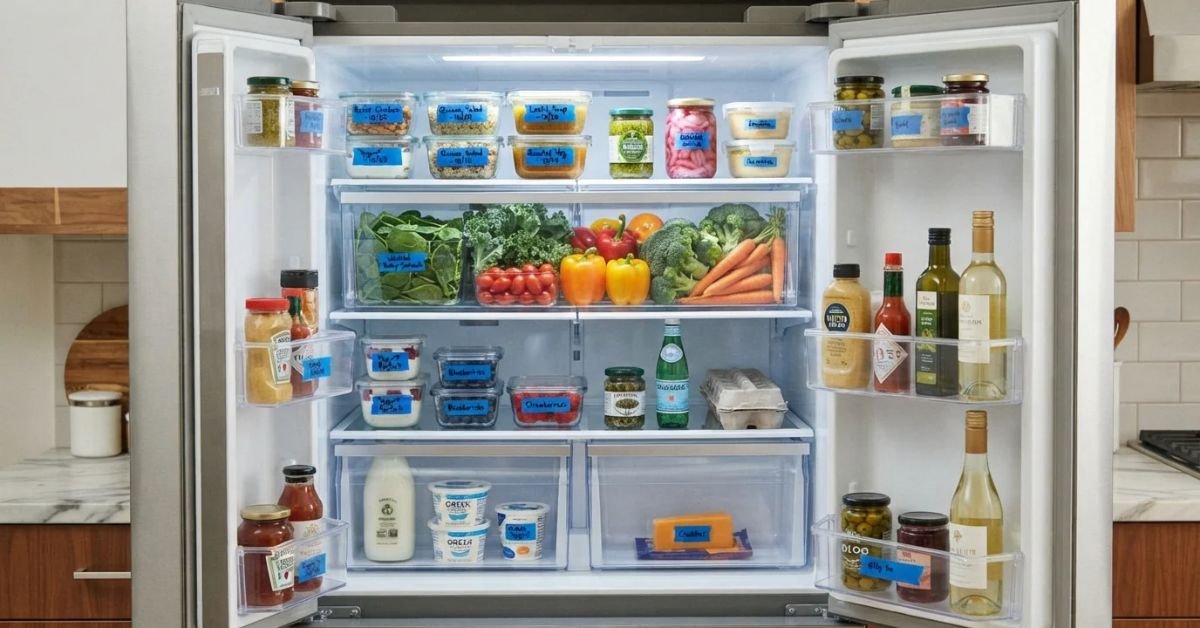
Physically move older Greek yogurt, berries, and bagged salad to the front row of the eye-level shelf. The newly purchased items go directly to the back. If you don’t see it, you won’t eat it. Out of sight is out of mind—and straight into the compost bin.
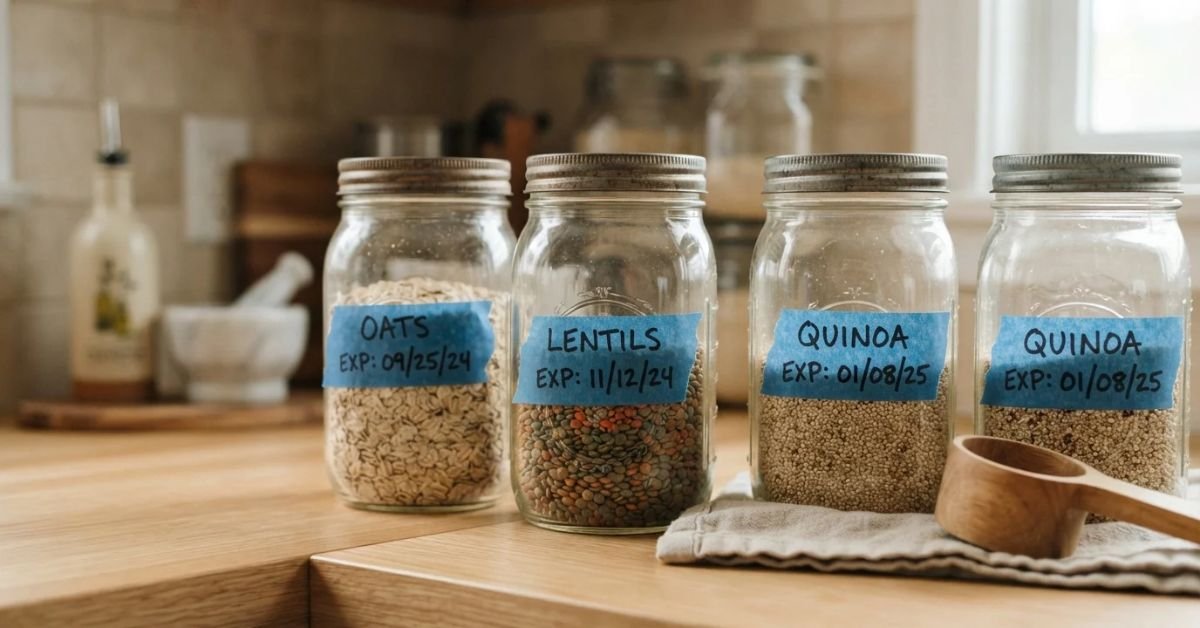
Keep a roll of blue painter’s tape and an indelible black Sharpie in the utensil drawer. Whenever you open a carton of chicken stock, break open deli meat, or transfer dry goods into airtight storage containers, slap a piece of tape on it with the date opened. Blue painter’s tape peels off cleanly in the dishwasher without leaving sticky adhesive residue.
Crisper Drawer Humidity: Stop Suffocating Your Greens
Most people don’t touch the little plastic sliders on their refrigerator produce bins. Those aren’t decorative; they regulate air ventilation to stop perishable produce from turning to mush.
- High Humidity (Closed Vent): Keeps air trapped inside. Use this for leafy greens, broccoli, cucumbers, carrots, and herbs. These items are sensitive to moisture loss and wilt when dry.
- Low Humidity (Open Vent): Lets ethylene gases escape. Use this for items that naturally off-gas and rot quickly if sealed, such as apples, pears, stone fruit, and cantaloupe.
Never store ethylene gas-emitters (like apples) in the same drawer as ethylene-sensitive produce (like leafy greens), or your lettuce will yellow and rot in 48 hours.
Weekly Rhythm: The Power of the ‘Flex Night’ and Prep Day
The biggest failure point in standard meal plans is rigidity. You plan seven dinners for seven nights. But on Wednesday, an emergency meeting runs until 6:30 PM; on Thursday, a friend invites you out for drinks; by Friday, you have three untouched, raw meals sitting in your fridge and zero mental energy to cook.
To learn how to meal plan to reduce food waste, you must build failure into the schedule.
The 5+1+1 System
- 5 Planned Dinners: Flexible base meals.
- 1 Flex Night (Zero-Waste Cleanout): The magic buffer meal.
- 1 Social/Takeout Night: Planned break with no cooking required.
The Flex Night is your weekly cleanup hitter. Instead of following a recipe, your goal is figuring out what to make with leftover produce before it goes bad.
You don’t need a recipe book for this; you just need a culinary canvas:
- The Crisper Frittata: Whisk eight eggs, toss in every odd piece of chopped vegetable (zucchini, wilted spinach, softened tomatoes), crumble in rogue cheeses, and bake at 375°F for 20 minutes.
- The Fried Rice Sweep: Day-old rice, sesame oil, soy sauce, and finely diced bits of random vegetables and leftover proteins.
- The Scrap Grain Bowl: Farro, quinoa, or brown rice topped with roasted vegetable ends and a quick lemon-tahini dressing.
┌──────────────────────────────────────────────────────────┐
│                    THE 5+1+1 WEEKLY RHYTHM               │
├───────────┬──────────────────────────────────────────────┤
│ Mon - Fri │ 5 Core Dynamic Meals (Cooked from pantry base)│
├───────────┼──────────────────────────────────────────────┤
│ Saturday  │ 1 Takeout / Dinner Out (Zero home cooking)   │
├───────────┼──────────────────────────────────────────────┤
│ Sunday    │ 1 Flex Cleanout Night (Frittata / Grain Bowl)│
└───────────┴──────────────────────────────────────────────┘
Expert Insight: Move away from “recipe-based cooking” toward “component cooking.” Instead of cooking a hyper-specific Thai red curry requiring eight unique roots and leaves, roast a sheet pan of sweet potatoes, steam a pot of quinoa, and braise a batch of chicken thighs. You can turn those three core components into a Mexican burrito bowl on Monday, a Mediterranean salad on Tuesday, and an Asian stir-fry on Wednesday with simple sauce swaps.
Real-World Scenarios: Navigating Grocery Over-Buys and Mid-Week Takeout Fatigue
Life happens. You had every intention of searing salmon fillets on Tuesday, but your day imploded, and you ordered Thai takeout on DoorDash. Now what?
If you want to know how to stop wasting groceries every week, you need rapid triage protocols:
The Freezer Transition Rule
The freezer is the pause button of the kitchen, but it is not a trash can. You cannot freeze produce that has already turned to brown water.
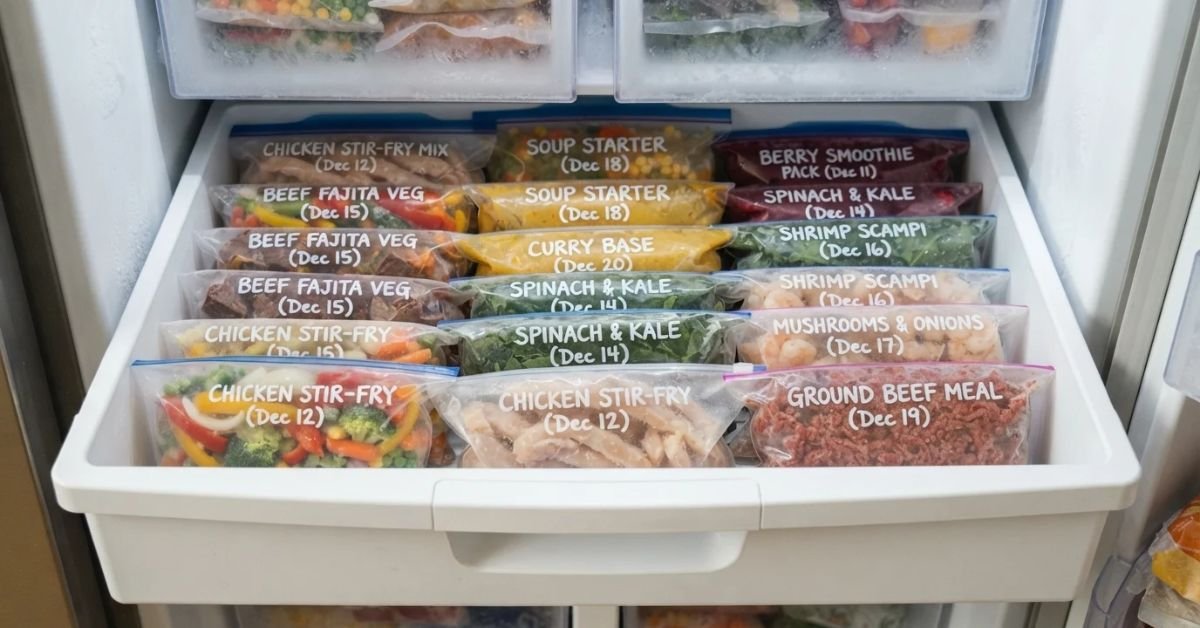
If you know you will not cook that raw protein tonight, move it directly to the freezer now. Wrap meats tightly in freezer paper or vacuum-seal them to eliminate surface air and block out freezer burn.
Got half a bunch of fresh herbs? Pulse them in a food processor with a glug of olive oil, spoon the paste into silicone ice cube trays, and freeze them. Whenever you make pasta or soup, drop one herb-oil cube straight into the hot pan.
Reviving Wilted Produce
Don’t throw away soft celery, rubbery carrots, or floppy radishes. Root vegetables and stalks wilt because their plant cells have lost water through evaporation.
Chop the bottom quarter-inch off the ends and submerge them entirely in an ice water bath in your fridge for four hours. The cellular structure reabsorbs water through osmosis, crisping them up as if you just picked them from the garden.
Common Pitfalls: Where Zero-Waste Aspirations Fall Apart
The biggest leak in household grocery budgeting is misunderstanding the printed dates stamped onto grocery packaging.
In the United States, there is no standardized federal requirement for date labeling on food packaging, with the sole exception of infant formula. The Food Safety and Inspection Service (FSIS) of the USDA notes that labels like “Best If Used By,” “Sell By,” and “Best Before” are manufacturer estimates of peak food quality, not safety boundaries.
- Best If Used By: Relates to optimal flavor and texture. The crackers aren’t toxic the day after; they just might taste slightly stale.
- Use By: The final date recommended for peak quality. Still not a hard safety cliff for most dry and acidic shelf goods.
Trust your sensory inputs over an arbitrary printed date. Look for mold, inspect for color shifts, and smell the item. If a sealed container of sour cream smells clean, has no mold or sour separation, and tastes normal, it is fine to consume, regardless of whether yesterday’s date is printed on the lid.
Another major pitfall is cooking from hyper-specialized recipes. If a recipe calls for two teaspoons of fresh tarragon and you must buy an entire plastic clamshell of it for $4.99, swap it. Use dried tarragon you already own, substitute flat-leaf parsley, or ditch that recipe entirely for something using pantry-friendly herbs.
The Scrap Strategy: Turning Trimmings into Flavor and Savings
Before any organic matter enters your trash can or green bin, check if it has a second life. A scrap system turns trash into free food, cutting your monthly grocery outlay.
Keep a one-gallon silicone or ziplock freezer bag directly in your freezer door. Throughout the week, toss in clean vegetable trimmings:
- Onion skins and allium roots
- Carrot ends and peels
- Celery tops and leafy greens
- Mushroom stems
- Parsley stems and smashed garlic cloves
Note: Avoid brassicas (broccoli, cauliflower, Brussels sprouts, kale) in your stock bag; they turn vegetable broths bitter and sulfurous.
When the freezer bag is jammed full, dump the contents into an Instant Pot or stock pot. Add a bay leaf, whole peppercorns, any roasted chicken carcasses or beef bones you saved, and cover with cold filtered water. Simmer on low for four hours (or 60 minutes under high pressure in an electric pressure cooker), strain through a fine-mesh sieve, and you have rich, mineral-dense scrap stock for zero marginal dollars.
Pour that stock into wide-mouth mason jars (leaving an inch of headspace so freezing liquid doesn’t shatter the glass) and freeze them for soups, braises, and grains.
When you connect pantry awareness, FIFO inventory control, and scrap extraction together, food waste stops being an inevitable cost of living. It becomes an obsolete habit that never empties your wallet again.
Frequently Asked Questions
How much money does zero waste cooking save?
For an average American family of four, cutting household food waste down to zero saves between $1,500 and $2,000 annually. By running disciplined inventory audits, storing produce under proper crisper humidity, and repurposing scraps, the average home reduces its weekly grocery expenditure by roughly 20% to 25% instantly.
What should I do if I get exhausted and can’t stick to the meal plan?
Pivot to your freezer safety net. If you don’t have the energy to cook the raw ingredients you bought, portion them into airtight bags and freeze them immediately before they spoil. Rely on low-effort pantry staples (like canned tuna, shelf-stable pasta, or frozen dumplings) for dinner instead of letting expensive perishable meats and produce rot in the fridge.
How do I stop berries from molding within two days?
Do not wash berries until you are ready to eat them, as surface moisture accelerates mold spore growth. If you want them to last up to two weeks, give them a quick soak in a vinegar bath (three parts water to one part white vinegar), rinse thoroughly with fresh water, dry them completely on paper towels, and store them in a paper-towel-lined glass container in the fridge with the lid slightly cracked.
What is the most effective zero waste grocery list strategy?
Use reverse meal planning. Instead of listing ingredients for new recipes, audit your refrigerator crisper and dry pantry first. Identify items that are on the verge of expiring, and create a grocery list containing only the bridge ingredients needed to turn those existing items into complete meals.
Can you safely freeze milk, cheese, and yogurt?
Yes. Block cheese can be shredded, tossed with a pinch of cornstarch to prevent clumping, and stored in freezer bags for melting over casseroles or tacos. Milk can be frozen directly in its jug (pour out half a cup first to allow for expansion). While yogurt’s texture separates when thawed, frozen yogurt remains entirely safe and blends smoothly into morning smoothies.