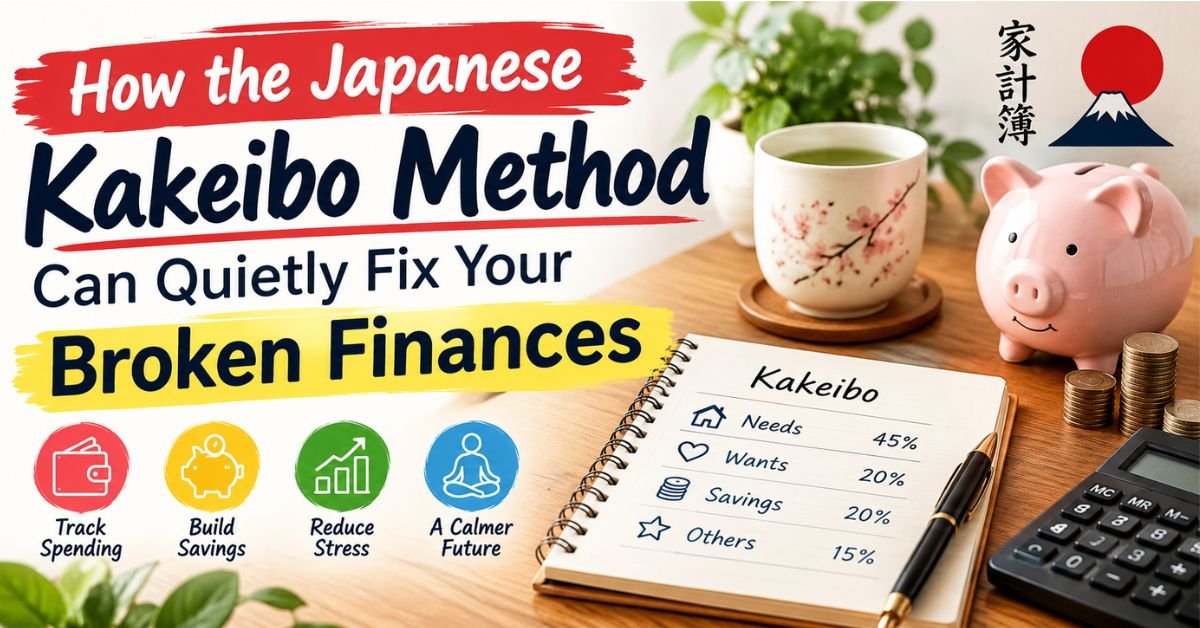
How the Japanese Kakeibo Method Can Quietly Fix Your Broken Finances.I hit my breaking point on a Tuesday night in line at Target.
- 1. The Hidden Fatigue of Modern Digital Budgeting Apps
- 2. The 4 Core Questions of Kakeibo: Setting the Mental Blueprint
- 3. Categorizing Without Chaos: Mastering the Four Pillars of Expense
- 4. 1. Survival (Needs)
- 5. 2. Optional (Wants)
- 6. 3. Culture & Enrichment (Personal Growth)
- 7. 4. Extra (Unanticipated Expenses)
- 8. Japanese Budgeting Method vs Cash Stuffing
- 9. The Neurological Power of Handwriting: Why Notebooks Outperform Automated Apps
- 10. Weekly and Monthly Reflection: The Hansei Ritual
- 11. Common Pitfalls American Households Face and How to Avoid Them
- 12. 1. The Bi-Weekly Paycheck Dilemma
- 13. 2. Disguising Lifestyle Creep as “Needs”
- 14. 3. Quitting After Missing a Few Days
- 15. 4. Obsessing Over Every Last Penny
- 16. Step-by-Step Transition Guide: Moving from Paycheck-to-Paycheck to Calm Consistency
- 17. Frequently Asked Questions
- 18. Can I practice Kakeibo using an iPad or tablet with a stylus?
- 19. How does Kakeibo handle shared expenses with a partner?
- 20. What should I do if an emergency expense destroys my monthly budget?
- 21. Does Kakeibo work if my income is irregular or commission-based?
- 22. The Quiet Peace of Mindful Money
My phone vibrated with three notifications simultaneously: a push alert from Mint telling me I was 14% over my “Dining & Drinks” threshold, an email receipt for a $14.99 software subscription I forgot I had, and a text from my bank warning me that my checking account had dipped below $200.
I was making decent money at my tech job. I dutifully contributed to my 401(k), paid my student loans on time, and tracked everything across two different automated budgeting apps connected via Plaid. Yet, despite all the slick charts, automated categorizations, and synced credit card feeds, I had zero clue where my money actually went. Every tap of Apple Pay felt weightless. Every frictionless 1-Click checkout on Amazon felt like play money. The apps weren’t solving my financial stress; they were just archiving my bad habits in real time.
That was the week I abandoned the screens, closed my budgeting apps, and picked up a $2 grid notebook to test a 120-year-old Japanese system called Kakeibo (pronounced kah-keh-boh).
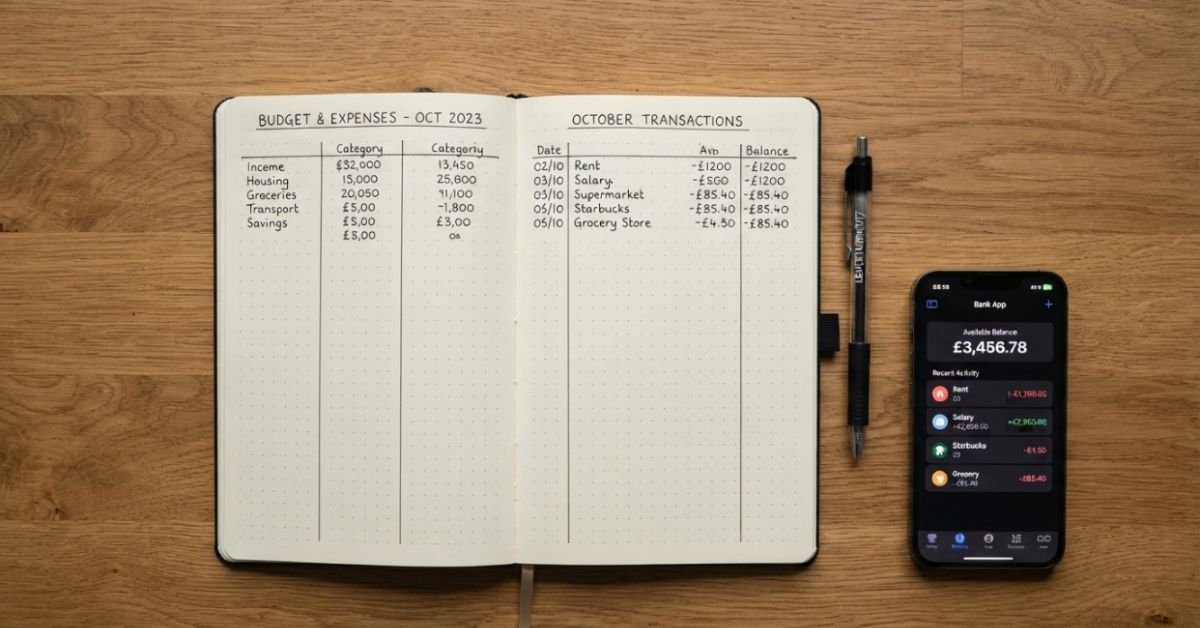
The Hidden Fatigue of Modern Digital Budgeting Apps
We are drowning in financial frictionlessness. Between contactless card readers prompting us for 25% tips on counter-service coffees, Buy Now Pay Later (BNPL) options baked into every checkout screen, and automated recurring charges draining our checking accounts, the modern US consumer is fighting a psychological war against their own wallet.
Digital budgeting apps promised to fix this. They failed because they automate the very thing that requires our deliberate attention: awareness.
When an algorithm downloads your transactions three days after you swipe, categorizes your $68 DoorDash splurge under “Groceries,” and buries it in an interactive pie chart, your brain registers zero emotional accountability. You look at the graph, feel a fleeting twinge of guilt, and swipe open another app.
This is where the Japanese concept of Kakeibo changes everything.
Invented in 1904 by Hani Motoko, Japan’s first female journalist, Kakeibo translates simply to “household financial ledger.” Motoko designed it for Japanese homemakers who needed a practical, empowering way to manage family finances with authority and clear judgment. It wasn’t invented as an austerity measure or a diet-style punishment. It was created as an instrument of mindful spending—a way to carve out space between your emotional impulses and your bank account.
💰 More Cheap Living Tips You'll Love
By slowing down the velocity of money through pen and paper, this analog system provides an antidote to notification fatigue and unthinking financial drift.
The 4 Core Questions of Kakeibo: Setting the Mental Blueprint
If you search for kakeibo method rules and examples, you will find that the framework strips away complex spreadsheets and centers around four deceptively simple questions asked across the month:
- How much money do you have available? (Your actual baseline after fixed commitments)
- How much would you like to save? (Your non-negotiable target set before spending starts)
- How much are you actually spending? (Tracked manually in real time)
- How can you improve? (The reflective feedback loop at month’s end)
To understand how to start kakeibo budget step by step in an American context, let’s look at how the math actually shakes out when dealing with bi-weekly paychecks, high rents, and retirement deductions.
Monthly Net Income (Take-home after 401k/HSA/Taxes): $4,400
- Fixed Expenses (Rent, Car Note, Student Loans, Utilities): -$2,600
= Remaining Discretionary Base: $1,800

- Monthly Savings Goal (Sent straight to HYSA on payday): -$400
= Total Spendable Cash for the Month: $1,400 ($350/week across 4 weeks)
In standard American budgeting, people spend whatever they want, wait for the dust to settle, and hope there is money left over to toss into savings. Kakeibo flips that entirely. You pay your future self first, establish your weekly spending ceiling, and log every single dime that leaves your hands.
Categorizing Without Chaos: Mastering the Four Pillars of Expense
Most budgeting frameworks force you into dozens of hyper-specific buckets: Utilities, Dining, Hobbies, Personal Care, Subscriptions, Gas, Groceries. Two weeks in, you abandon the system because you don’t know whether that Target haul belongs in “Toiletries,” “Home Goods,” or “Snacks.”
Kakeibo eliminates this cognitive load. The method funnels every single dollar into just four distinct categories, known as the Four Pillars.
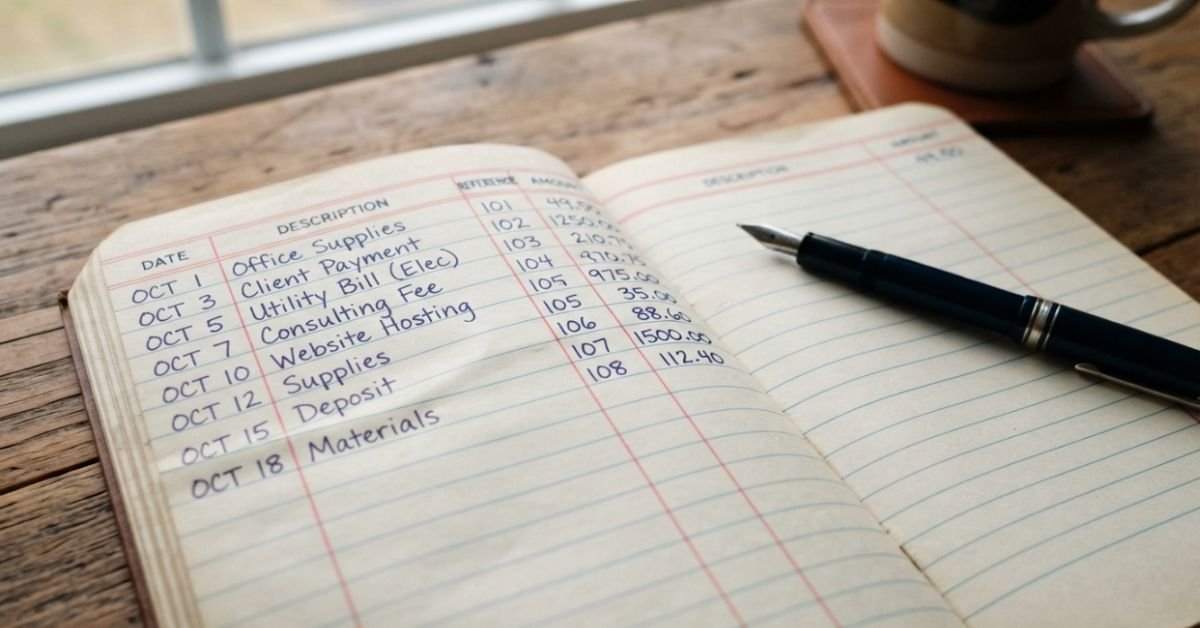
Here are the kakeibo 4 pillars explained through the lens of modern living:
1. Survival (Needs)
These are the non-negotiables required to keep you healthy, employed, and sheltered. It includes basic groceries (produce, staples, proteins), your subway pass or gas, prescription medications, minimum debt payments, and hygiene essentials.
2. Optional (Wants)
Discretionary items that make life convenient or entertaining, but aren’t vital for survival. That afternoon cold brew, takeout dinners, Uber rides when you could have taken the bus, that new pair of running shoes when your old ones are still intact, and that extra streaming channel you added for one television show.
3. Culture & Enrichment (Personal Growth)
This is the secret weapon of the Kakeibo method. While traditional Western budgets treat everything outside of basic food and shelter as a frivolous “want,” Kakeibo carves out sacred space for the human spirit.
Books, tickets to an indie theater, museum admissions, craft supplies, educational courses, and music live here. Hani Motoko understood that if you starve a human of curiosity and personal enrichment, their budget will eventually implode in a binge-spending crash—just like a crash diet.
4. Extra (Unanticipated Expenses)
The irregular shocks that derail standard spreadsheets: an emergency vet visit, a punctured tire on the highway, your best friend’s sudden bachelor party dinner, or an unexpected gift for a coworker’s baby shower.
Japanese Budgeting Method vs Cash Stuffing
A common question online is: how does the japanese budgeting method vs cash stuffing compare?
Cash stuffing (the physical envelope system popularized on social media) requires you to pull out physical cash from an ATM and divide it into literal envelopes labeled for each category. It works, but it’s clunky in an economy where paying rent or filling up a gas tank with physical bills is increasingly inconvenient.
Kakeibo gives you the exact same psychological friction and spending control as cash stuffing, but keeps your money safe in your high-yield account while you track the cash flow on paper.
The Neurological Power of Handwriting: Why Notebooks Outperform Automated Apps
Why does drawing lines in a paper notebook stop overspending when a $100-a-year subscription to Monarch or YNAB doesn’t?
The answer lies in cognitive writing retention and modern behavioral economics.
When you tap a screen or tap a plastic card against a POS terminal, the sensory input is identical whether you are spending $4 on a latte or $1,400 on a laptop. There is no physical feedback loop. No resistance. Automated financial apps perpetuate this numbness: they quietly sync your transactions in the background while you sleep. You aren’t interacting with your spending; you’re just observing the aftermath.
Writing down your purchases by hand forces physical deceleration. You have to locate your notebook. You uncap your pen. You write the date, the merchant, the item, and the dollar amount into its pillar.
Your brain’s reticular activating system processes the tactile friction of pen dragging across paper fibers. You actively confront the trade-off.
[The Daily 3-Minute Protocol]
1. Set your journal and pen next to your keys or phone charger.
2. Every evening at 9:00 PM, review your daily bank activity.
3. Write down each transaction into your ledger column.
4. Round up to the nearest whole dollar (treat the change as a mental buffer).
5. Calculate your remaining balance for the week.
If you’re wondering, does kakeibo work for impulsive spenders? The data and lived experience say an emphatic yes.
When you know you will have to sit down tonight, pull out your pen, look yourself in the mirror, and handwrite “$84.20 — UberEats (Wants)” into your notebook, you think twice before clicking “Place Order” at 8:00 PM. It introduces an intentional delay mechanism—a brief pause between the dopamine hit of wanting something and the mechanical effort of recording it.
Pair your Kakeibo practice with an impulse delay protocol. When an unplanned “Wants” item catches your eye online, write it in the margins of your ledger with the current date and price tag. Give yourself a hard 72-hour window. If you still feel the purchase brings genuine value to your life after three days, buy it without guilt. Over six months, I found that nearly 65% of the items I jotted down lost their appeal before the 72 hours were up.
Weekly and Monthly Reflection: The Hansei Ritual
The daily logging is just the data gathering. The real transformation happens during the weekly and monthly reflection sessions, rooted in the Japanese philosophy of Hansei—the practice of honest, non-judgmental self-reflection.
At the end of every week, add up the four pillars and see if you stayed within your weekly allowance.
Then, at the end of the month, perform a comprehensive monthly cash flow audit by sitting down for 20 minutes to review the entire picture. You answer the fourth question: How can you improve?

During my third month of Kakeibo, my monthly audit revealed a massive leak: I had spent $312 under “Wants” exclusively on mid-week delivery meals.
Because I had written down every transaction, the emotional context became instantly clear. Every single one of those orders happened on Wednesday or Thursday nights after 7:30 PM—the days I had grueling commutes and back-to-back meetings.
My issue wasn’t a lack of willpower; it was physical exhaustion. The solution wasn’t a harsher budget; it was spending $40 under “Survival” on simple freezer meals at Trader Joe’s so I wouldn’t default to delivery apps when running on fumes.
A digital app would have categorized that spending as “Dining Out” and sent me a judgmental push notification. Kakeibo showed me the behavioral trigger behind the cost, allowing me to fix the root cause.
This analytical clarity is also why this system doubles as an effective japanese ledger method for debt payoff. When paying down lingering credit card balances, the psychological hurdle isn’t mathematical; it’s emotional.
By identifying your unexamined spending habits and redirecting that recovered cash into debt principal, you regain control over your debt consolidation journey without feeling stripped of your humanity.
Common Pitfalls American Households Face and How to Avoid Them
Transitioning from modern digital ease to a manual, analog system comes with a few stumbling blocks. I stumbled over almost all of them during my first 90 days. Here is how to navigate around them:
1. The Bi-Weekly Paycheck Dilemma
Most corporate jobs in the United States pay bi-weekly (26 paychecks a year), whereas Kakeibo is built on a traditional monthly calendar.
- The Fix: Base your monthly Kakeibo budget entirely on two paychecks per month (totaling 24 paychecks). Treat the two “extra” three-paycheck months that happen each year as non-budgeted windfalls to throw directly toward your debt payoff or emergency fund.
2. Disguising Lifestyle Creep as “Needs”
It is extraordinarily easy to classify convenience as survival. A carton of eggs and bread is a Need; buying high-end organic prepared meals from the specialty grocer because you didn’t feel like cooking is a Want. Be ruthlessly honest with your classifications.
3. Quitting After Missing a Few Days
You will get busy. You will take a weekend road trip, forget to log receipts, and realize on Tuesday that you haven’t touched your journal in three days. Do not throw the notebook away. Pull open your mobile banking app, pull the last five numbers, write them in, and keep moving. Perfect is the enemy of consistent.
4. Obsessing Over Every Last Penny
Don’t waste mental energy calculating pennies. If a coffee costs $4.65, write down $5. If your gas was $38.22, write down $39. Rounding up to the nearest dollar adds a minor mathematical cushion to your calculations and keeps the practice fast, clean, and painless.
Step-by-Step Transition Guide: Moving from Paycheck-to-Paycheck to Calm Consistency
You don’t need an expensive leather-bound planner or an official imported Japanese notebook to get started. In fact, spending $40 on a specialized planner before you’ve even formed the habit is just another form of impulse spending.
Follow this practical 30-day roadmap:
[Phase 1: Day 1 to Day 3]
• Buy an inexpensive grid or lined notebook.
• Calculate your baseline monthly take-home pay.
• List your fixed monthly costs (Rent, Debt, Utilities).
• Choose a realistic savings goal (e.g., $150 or $300) and transfer it on payday to a separate HYSA.
• Divide the remaining balance by 4 to get your weekly spending target.

[Phase 2: Day 4 to Day 28]
• Set up your four pillars across two open pages: Survival, Wants, Culture, Extra.
• Spend 3 minutes every evening hand-writing your daily transactions.
• Check your total every Sunday night to ensure you haven't breached the weekly ceiling.

[Phase 3: Day 29 to Day 30]
• Add up each column.
• Compare your total spend against your initial target.
• Ask yourself the Hansei questions: What did I spend on that brought no value? What brought joy?
• Adjust your categories for the upcoming month.
If you prefer a pre-formatted structure rather than drawing your own lines, search for a simple kakeibo template pdf free printable to slip into a standard three-ring binder. Just make sure you preserve the act of writing by hand. The physical act of holding a pen is what triggers the mental transformation.
Frequently Asked Questions
Can I practice Kakeibo using an iPad or tablet with a stylus?
Yes, using a digital pen on a tablet app like GoodNotes or Notability works reasonably well because it still activates your cognitive writing retention. However, try starting with physical paper first. A physical notebook eliminates the risk of notification pop-ups pulling you back into the digital ecosystem while you’re trying to reflect.
How does Kakeibo handle shared expenses with a partner?
Run a hybrid model. Maintain a joint checking account for your shared “Survival” expenses (rent, electric bills, shared bulk groceries), but use individual Kakeibo notebooks for personal discretionary spending. This gives each partner individual financial autonomy, eliminates petty disagreements over small purchases, and keeps both people accountable to their personal habits.
What should I do if an emergency expense destroys my monthly budget?
That is precisely why the “Extra” pillar exists. If an unexpected car repair wipes out your cash flow for the month, do not abandon the journal. Log the expense in the Extra column. During your monthly Hansei session, review how having an emergency fund softened the blow, and recalibrate your savings targets for the following month to rebuild your reserves.
Does Kakeibo work if my income is irregular or commission-based?
It works, but you need to adjust your starting baseline. Calculate your monthly discretionary base using the average of your three lowest-earning months from the past year. Any commission or freelance income that arrives above that floor goes straight into a tax reserve or high-yield savings account—never into your everyday discretionary spending ledger.
The Quiet Peace of Mindful Money
Fixing broken finances doesn’t require complex software, artificial intelligence, or extreme frugality that strips all the joy out of your daily routine.
By stepping away from the frictionless digital churn and spending three minutes an evening with an analog journal, you bridge the disconnect between the money you make and the life you actually want to live. Grab a notebook, find a quiet place, pick up a pen, and give yourself the space to breathe.