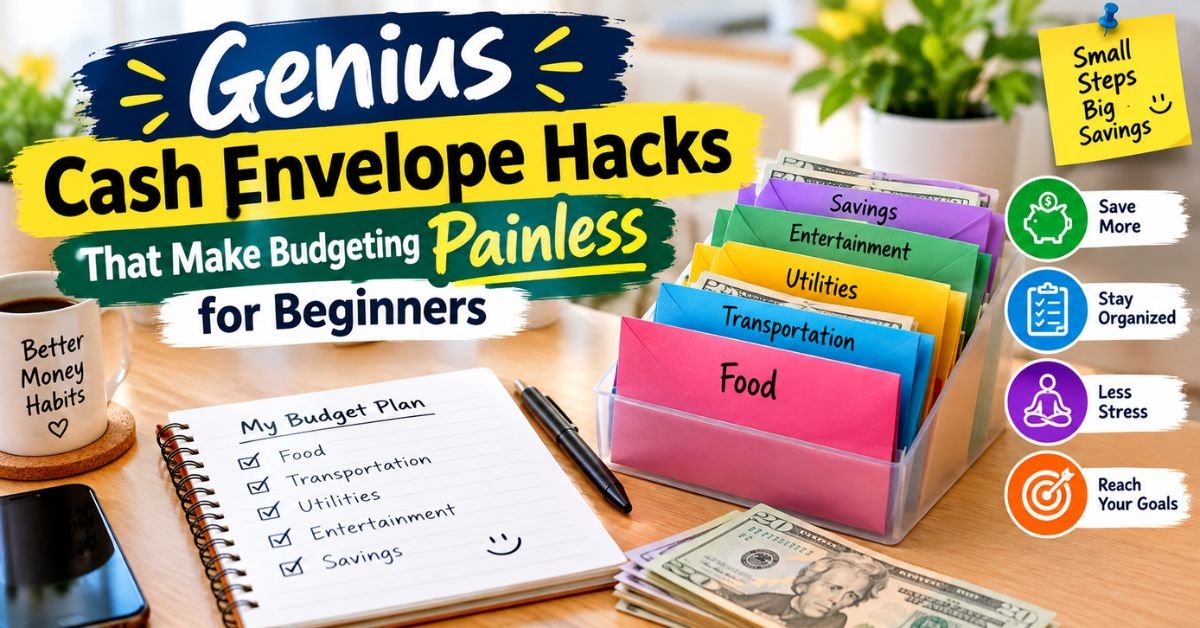
Genius Cash Envelope Hacks That Make Budgeting Painless for Beginners.There is a very specific type of panic that hits when you’re standing at an Aldi checkout, the cashier is slinging items through the scanner at warp speed, and your banking app spins a little wheel of death while you pray your debit card won’t get declined.
- 1. 1. The Psychology of Tangible Cash: Why Swiping Fails and Paper Works
- 2. 2. Cash Envelope System for Beginners Step by Step
- 3. Step 1: Carve Out Fixed vs. Discretionary Spending
- 4. Step 2: Build a Zero-Based Budget
- 5. Step 3: Schedule Payday Teller Runs
- 6. 3. The Teller Slip Trick: Master Currency Denominations
- 7. 4. Cash Envelope Categories List: Dave Ramsey vs. Real Life
- 8. High-Impact Cash Categories
- 9. Don’t Forget the “State Sales Tax Buffer”
- 10. 5. Budgeting Hacks: Cash Envelopes No Binder
- 11. Expert Insight: The “Rule of Two Envelopes”
- 12. 6. How to Do Cash Envelopes with Bills Online & Sinking Funds
- 13. The Reverse Envelope Method for Online Orders
- 14. The Cash Envelope System with Credit Card Setup
- 15. Digital Sinking Funds (Using Prepaid Debit Cards)
- 16. 7. Real Mistakes I Made (So You Don’t Have To)
- 17. Frequently Asked Questions
- 18. What happens if I lose my cash envelopes?
- 19. Is the cash envelope system outdated for modern life?
- 20. How do I handle changes in grocery prices due to local sales tax?
- 21. Can I do cash envelopes if my partner prefers using credit cards?
- 22. How much money should I leave in my checking account as a buffer?
- 23. The Path to Financial Peace
I’ve been there. In fact, sixteen months ago, my checking account was a disaster zone. I was juggling two maxed-out rewards cards, casually tapping my iPhone for $7 oat-milk lattes, and telling myself I’d “sort it out next paycheck.” That abstract digital money made it way too easy to pretend I wasn’t running a personal monthly deficit of $600.
Desperate for a reset, I withdrew $400 in crisp twenties from my credit union, shoved them into white mailing envelopes, and set out to test the classic paper cash budgeting system.
It was messy at first. I held up lines, dropped coins under car seats, and felt ridiculous walking around with paper envelopes like an extra in an 80s movie. But over six months, those envelopes killed my runaway retail therapy at Target and permanently rewired how my brain processes value.
If you want the life-changing spending control of cash stuffing without looking like an organized hoarder or drowning in awkward change, you don’t need aesthetic stationery. You just need a few practical, battle-tested hacks.
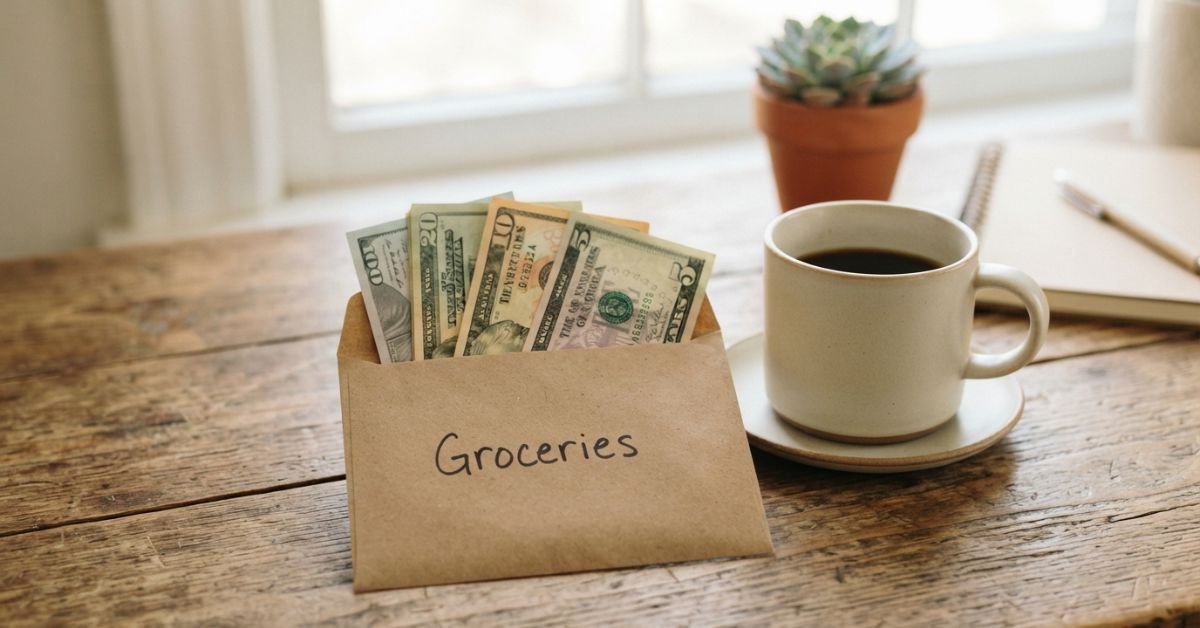
1. The Psychology of Tangible Cash: Why Swiping Fails and Paper Works
Swiping a card removes all neurological friction from buying things. When you pull plastic through a terminal or double-click the side button of your phone to trigger Apple Pay, your brain registers zero physical loss. You get the product immediately, while the financial hit is delayed to an abstract monthly statement you won’t read until three weeks later.
Physical cash breaks that trance.
When you hand over three crisp twenty-dollar bills at a Walmart register for a throw blanket you didn’t need, your fingers physically surrender resources. You watch the bills disappear into the drawer. Neuroscientists call this impulse buying friction—that instantaneous split-second hesitation that makes you evaluate: Is this item worth walking out of the store with empty hands?
Passive budgeting apps like Mint (rest in peace) or retro expense trackers simply document your failures in pretty pie charts after you’ve already blown the budget. Paper cash budgeting is proactive. It builds an uncrossable wall right at the register. When the envelope is empty, the spending stops. No micro-accounting nightmares. No guessing your available balance.
💰 More Cheap Living Tips You'll Love
2. Cash Envelope System for Beginners Step by Step
Getting started doesn’t require an overhaul of your entire life. If you try to pay your mortgage, auto insurance, and electric utility in physical dollar bills, you will quit by Wednesday.
Here is the exact cash envelope system for beginners step by step workflow that worked for me:
[Take-Home Paycheck]
       │
       ├── (Leave in Checking) ──> Fixed Bills (Rent, Utilities, Insurance)
       │
       └── (Withdraw as Cash)  ──> Discretionary Envelopes
                                         ├── Groceries
                                         ├── Dining Out / Coffee
                                         ├── Fun Money / Personal Care
                                         └── Gas / Household Run
Step 1: Carve Out Fixed vs. Discretionary Spending
Log into your checking account and pull the last 60 days of transactions. Separate your expenses into two buckets:
- Fixed Bills (Keep Digital): Mortgage/rent, car payment, cell phone, internet, streaming services, utilities. Leave the exact money for these inside your checking account on autopay.
- Variable/Discretionary Spending (Convert to Cash): Groceries, restaurants, Target runs, clothing, pet treats, entertainment, salon trips.
Step 2: Build a Zero-Based Budget
Give every incoming dollar a job before the month begins. Take your monthly net income, subtract your fixed expenses, and divide the leftover cash among your variable categories until you hit zero.
Step 3: Schedule Payday Teller Runs
Determine how much cash you need per pay period (bi-weekly or monthly). Plan to get that cash in one clean trip to your local branch so you aren’t running back and forth to an ATM.
3. The Teller Slip Trick: Master Currency Denominations
One of the biggest mistakes beginners make is hitting an ATM, pulling out eight $50 bills, and tossing them into envelopes.
Try spending a $50 bill at a drive-thru for a $4 iced tea. You end up with a pocketful of crumpled $1s and $5s that inevitably get lost in your cup holder or spent on vending machine snacks.
Skip the ATM. Daily ATM withdrawal limits—often capped between $300 and $1,000 depending on your bank (like Wells Fargo or Chase)—can restrict your plan anyway. Walk inside your local bank or credit union branch and fill out a withdrawal slip at the counter.
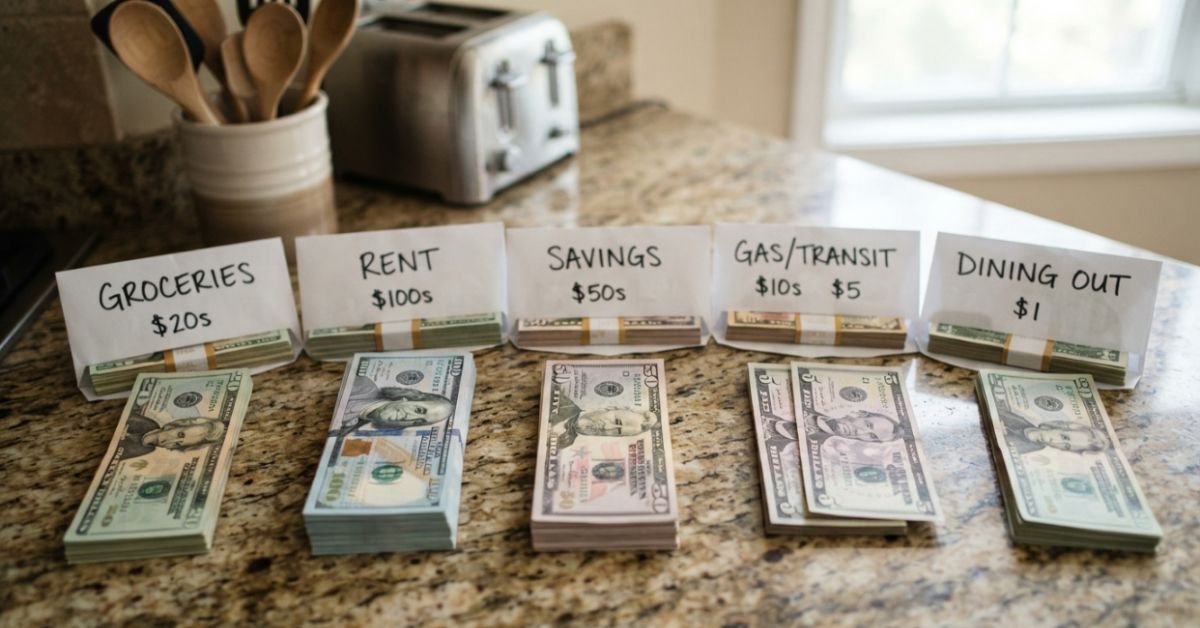
Here is my proven denomination breakdown for every $500 withdrawn:
| Denomination | Amount Requested | Total Value | Best Use Case | | :— | :— | :— | :— | | $20 Bills | 15 bills | $300 | Big grocery trips (Aldi/Costco) | | $10 Bills | 10 bills | $100 | Target runs, fast-casual meals | | $5 Bills | 12 bills | $60 | Coffee shops, school drop-off fees | | $1 Bills | 40 bills | $40 | State sales tax buffers, tips |
Having smaller bills prevents you from breaking big money on micro-purchases and saves you from carrying around mounds of loose metal coins.
 .
.
4. Cash Envelope Categories List: Dave Ramsey vs. Real Life
If you read Dave Ramsey’s The Total Money Makeover, you’ve probably seen the traditional cash envelope categories list dave ramsey advocates for his Baby Steps. His blueprint is incredible for debt elimination, but modern spending habits have evolved.
The classic advice suggests carrying an envelope for gas. Have you tried paying for fuel with paper cash lately? Walking across an icy parking lot into a gas station to prepay $30 on Pump 4, walking back to fill up, and returning to the counter to collect $4.18 in change is deeply frustrating.
Keep gas on a debit card. Use your physical cash where emotional overspending actually hurts you.
High-Impact Cash Categories
- Groceries & Household Goods: Combined trips to Costco, Trader Joe’s, or local grocery stores.
- Dining Out & Social: Date nights, weekend takeout, midday DoorDash urges.
- Target / Fun Money: Guilt-free personal allowance. When the envelope runs out, your personal shopping pauses until next payday.
- Beauty & Grooming: Haircuts, nails, skincare replenishment.
Don’t Forget the “State Sales Tax Buffer”
In Europe, the sticker price is what you pay. In the US, state and local sales tax can swing wildly—from 0% in Delaware and Oregon to near 10% in parts of California, Tennessee, or Washington state.
If you take a single $20 bill into a store for an item priced at $19.99, you are going to get caught short at the register once local taxes trigger. Always tuck two single dollar bills behind every twenty to absorb the register bump painlessly.
5. Budgeting Hacks: Cash Envelopes No Binder
You have almost certainly seen the cash stuffing method for beginners on TikTok or Instagram: gorgeous pastel, six-ring A6 binders with clear, zippered PVC pouches and holographic lettering.
I bought one. It sat on my counter looking fantastic for three weeks, and then reality set in.
Those binders are thick, heavy, and awkward. Shoving an A6 zippered binder into a back pocket or a compact sling bag before walking into a store makes you feel like you are hauling a brick. Furthermore, unzipping four plastic envelopes at a register while an impatient line forms behind you is social torture.
Here is a smarter way to tackle budgeting hacks cash envelopes no binder:
- The Accordion Clutch: Buy a slim, expanding card organizer or a dedicated envelope wallet. They feature built-in paper dividers, weigh almost nothing, and slip easily into any purse or coat pocket.
- Heavy Kraft Envelopes + Paperclips: Standard white #10 mailing envelopes rip along the seams within two weeks. Buy 32lb brown kraft coin envelopes (size #7). They are virtually tear-proof, fit US currency without folding, and cost about $6 for a pack of 50.
- The Color-Coded Paperclip System: If you hate paper envelopes entirely, ditch them. Use heavy-duty plastic-coated paperclips: green for Groceries, red for Restaurants, blue for Household. Stash the clips directly in your normal daily billfold.
Expert Insight: The “Rule of Two Envelopes”
Never carry your entire cash collection in public. If your wallet gets lost or stolen, your whole month of living expenses vanishes. Keep your reserve cash and long-term sinking funds locked at home in a fireproof lockbox. Carry only two active envelopes in your daily bag: Groceries (on shopping days) and Daily Discretionary Spending. Leave everything else behind.
6. How to Do Cash Envelopes with Bills Online & Sinking Funds
The number one question beginners ask: “What do I do about digital transactions, Amazon purchases, and sinking funds?”
Here is how you handle the real digital world without quitting paper budgeting.
The Reverse Envelope Method for Online Orders
Suppose you find your favorite shampoo on Amazon for $15, which is $5 cheaper than your local Target. You want to buy it online, but the money is sitting as physical paper inside your “Personal Care” envelope.
- Buy the item using your linked checking account or debit card.
- Immediately take a physical $15 out of your “Personal Care” cash envelope.
- Slide that $15 into a separate home envelope marked “Bank Deposit”.
- At the end of the week (or month), deposit that cash back into your checking account to cover the online balance.
This maintains spending friction. You still feel the physical hit to your personal allowance even though the transaction happened through a web browser.
The Cash Envelope System with Credit Card Setup
If you depend on credit card purchase protection or travel points, you can still use the envelope system as an accountability mechanism.
Create your physical envelopes, but instead of holding real paper currency, fill them with faux money or laminated spending trackers. When you swipe your card at Costco for $120, transfer $120 from your primary checking account to a designated “Credit Card Payoff” sub-account right from your banking app before you leave the parking lot. If that feels like too much work, stick with physical green paper until your debt is completely paid off.
       [ Grocery Store Purchase: $85 ]
                      │
        ┌─────────────┴─────────────┐
        ▼                           ▼
[ Pure Cash Method ]     [ Hybrid Card Method ]
Take $85 paper cash      Swipe card, immediately
out of grocery envelope  move $85 in bank app to
and hand to cashier.     "Card Payoff" sub-account.
Digital Sinking Funds (Using Prepaid Debit Cards)
For mid-term savings goals that occur months down the road—like Christmas gifts, car brakes, or vet visits—leaving hundreds in paper cash in a shoebox can feel risky.
Instead of physical envelopes for these, use digital sinking funds. Many modern banks (like Ally or Capital One 360) let you set up free “savings buckets” or separate checking sub-accounts. Alternatively, assign individual prepaid debit cards (like Bluebird or Greenlight) to specific yearly expense categories.
7. Real Mistakes I Made (So You Don’t Have To)
I failed twice before I got comfortable with paper cash. Here are the hurdles you will hit, along with straightforward fixes:
- The Loose Change Disaster: When you pay with bills, you get metal coins back. Do not try to carry coins back into the store. Keep a wide-mouth mason jar on your counter at home. The second you walk through the door, dump your pocket change into the jar. Every six months, run that jar through a Coinstar machine (opt for an Amazon or Starbucks eGift card to bypass the 12% coin fee) or take it to your credit union’s free coin sorter to fund a fun night out.
- The Forgotten Envelope Trap: You drive all the way to Trader Joe’s only to realize your Grocery envelope is sitting on your kitchen island. Fix: Keep a strict emergency $40 bill hidden behind your driver’s license. If you forget your envelope, that $40 is your hard spending ceiling for that trip. You will quickly learn to buy only milk, eggs, and bread instead of wandering down the snack aisle.
- Stealing from Other Envelopes: Two weeks into the month, you run out of dining money, so you quietly slide a twenty out of the Grocery envelope to buy tacos. We call this “envelope rob-jobbing.” If you find yourself consistently raiding other categories, your baseline allocations are unrealistic. Increase your dining-out line item next month and pull back somewhere else to balance the sheet.
Frequently Asked Questions
What happens if I lose my cash envelopes?
Losing cash is everyone’s primary fear. Mitigate this by never carrying your whole budget at once. Carry only the category you need for that specific day’s errand run, leaving emergency and long-term funds at home. If you lose an envelope containing $80, it hurts, but it will not wreck your month the way a stolen identity or hijacked digital wallet balance might.
Is the cash envelope system outdated for modern life?
Not at all. In fact, cash stuffing has had a massive resurgence because touchless, friction-free payment methods have made overspending easier than ever. The system adapts easily when paired with online banking for fixed bills while using physical cash for problem spending areas like food, clothing, and entertainment.
How do I handle changes in grocery prices due to local sales tax?
Always budget your envelopes based on the out-the-door total, not the shelf price. If your state or municipality has an 8% sales tax, mentally calculate that an item priced at $10 will cost roughly $10.80 at checkout. Keep a buffer of five single-dollar bills tucked behind your larger cash stack in your grocery envelope so taxes never push you over your limit.
Can I do cash envelopes if my partner prefers using credit cards?
Yes, by using a hybrid split. Keep fixed household expenses and shared utilities on card autopay, then hand your partner their agreed-upon discretionary allowance in cash or via a separate secondary checking account. Many couples find that agreeing on a “no questions asked” cash allowance completely eliminates arguments over day-to-day spending.
How much money should I leave in my checking account as a buffer?
Never run your checking account down to exactly zero dollars. Keep a persistent cash cushion of $200 to $500 in your primary checking account at all times. This prevents accidental overdraft charges from unexpected automatic subscriptions or slight variations in variable utility bills (like your water or power bill).
The Path to Financial Peace
The cash envelope system is not about punishment or cutting all joy out of your life. It is simply a practical boundary that brings honesty back to your relationship with money.
You do not need an aesthetic desk setup, twenty different color-coordinated markers, or complex spreadsheets. Start small this upcoming pay period: pick just one problem area—whether that’s your Friday night takeout habit or weekend shopping runs—put that specific money into an envelope, and leave your cards at home.
Once you feel the control that comes with paper money, you’ll never look back.