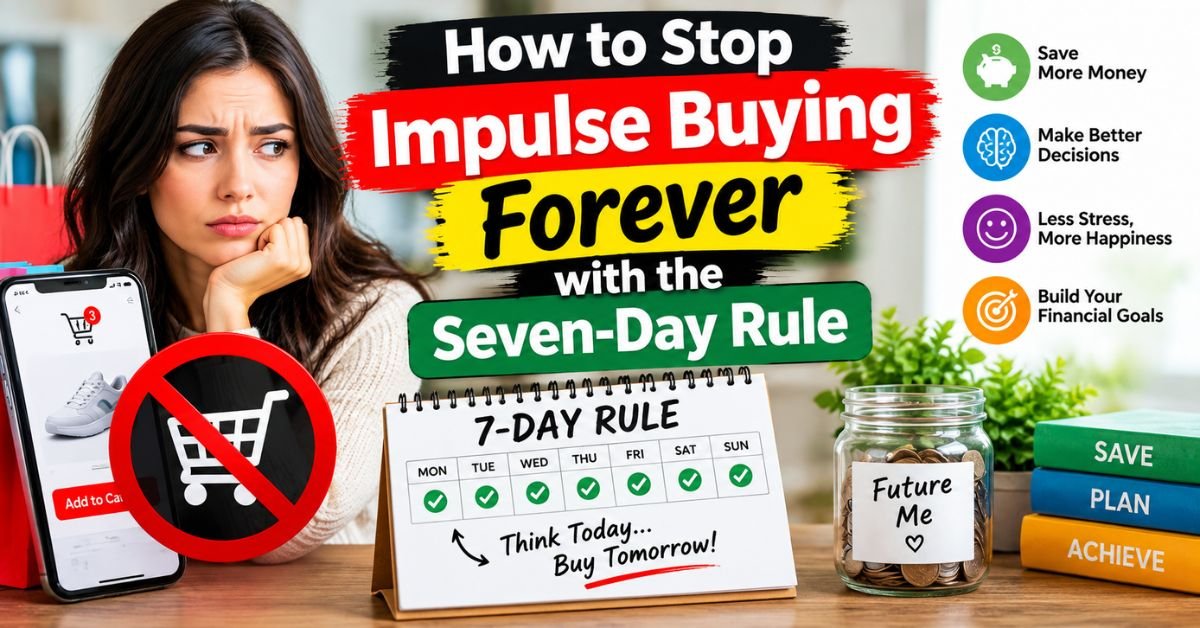
How to Stop Impulse Buying Forever with the Seven-Day Rule.It was 1:14 AM on a rainy Tuesday when I caught myself about to buy a $140 Japanese carbon-steel chef’s knife.
- 1. The Biology of Impulse Spending: Why Willpower Fails Against Modern Algorithms
- 2. What Exactly Is the Seven-Day Rule?
- 3. Engineering Friction: A Practical 4-Step Implementation System
- 4. Step 1: Create a Digital “Staging Cart”
- 5. Step 2: Strip the Invisible Payment Rails
- 6. Step 3: Run the “Working Hours” Calculation
- 7. Step 4: Divert the Cash Immediately
- 8. Pro Tip: The “One-In, One-Out” Friction Filter
- 9. Cognitive Biases That Trick Your Brain (And How the Rule Neutralizes Them)
- 10. 1. The Scarcity Heuristic
- 11. 2. The Anchor Effect in Discounting
- 12. 3. Sunk Cost and Identity Projection
- 13. Integrating the Seven-Day Rule into Your Broader Personal Budget Framework
- 14. The Exception Protocol: Emergencies vs. Justified Urgency
- 15. Frequently Asked Questions
- 16. What should I do if an item goes out of stock during the seven days?
- 17. Does the seven-day rule apply to real-world in-store shopping?
- 18. How do I stop myself from obsessively checking the item during the waiting period?
- 19. What if the item is on a massive, limited-time discount?
- 20. Can I shorten the rule to 48 or 72 hours?
- 21. Breaking the Cycle for Good
I don’t cook elaborate meals on Tuesdays. I had a perfectly sharp knife sitting twenty feet away in my kitchen. Yet there I was, illuminated by the cold blue glow of my phone screen, thumb hovering over the Apple Pay double-click button.
TikTok had fed me a thirty-second video of someone slicing a tomato with surgical precision. Two clicks later, an algorithmic retargeting ad on Instagram nudged me toward a boutique kitchenware site with a glowing red banner: “Only 3 left at this price.”
My brain wasn’t evaluating utility. It was chasing a neurochemical hit.


I didn’t buy the knife. Instead, I forced myself to use an analog psychological tactic I stumbled across after years of wasting cash on gadgets I abandoned within weeks: The Seven-Day Rule. That single mental speed bump has saved me thousands of dollars, completely cured my late-night checkout reflex, and rewired how I interact with consumer tech.
The Biology of Impulse Spending: Why Willpower Fails Against Modern Algorithms
If you think your impulse spending is simply a personal moral failing or a lack of discipline, you are giving modern e-commerce platforms far too little credit.


Platforms like Amazon, Shopify storefronts, and TikTok Shop spend billions refining micro-conversions. They study behavioral economics to systematically strip away every millisecond of friction in checkout. Stored credit cards, biometric authentication, “Buy Now with 1-Click,” and synthetic urgency countdown timers aren’t convenience features; they are psychological exploits.
💰 More Cheap Living Tips You'll Love
- The High-Yield Savings Account Strategy That Makes Passive Cash Daily
- Hidden Medical Bill Errors You Must Dispute Immediately to Save Big
- Smart Bank Account Structuring Strategies to Automate Wealth Building
- Costly Car Ownership Mistakes That Secretly Drain Your Budget Every Month
- How to Negotiate Your Internet Bill Down Without Threatening to Cancel
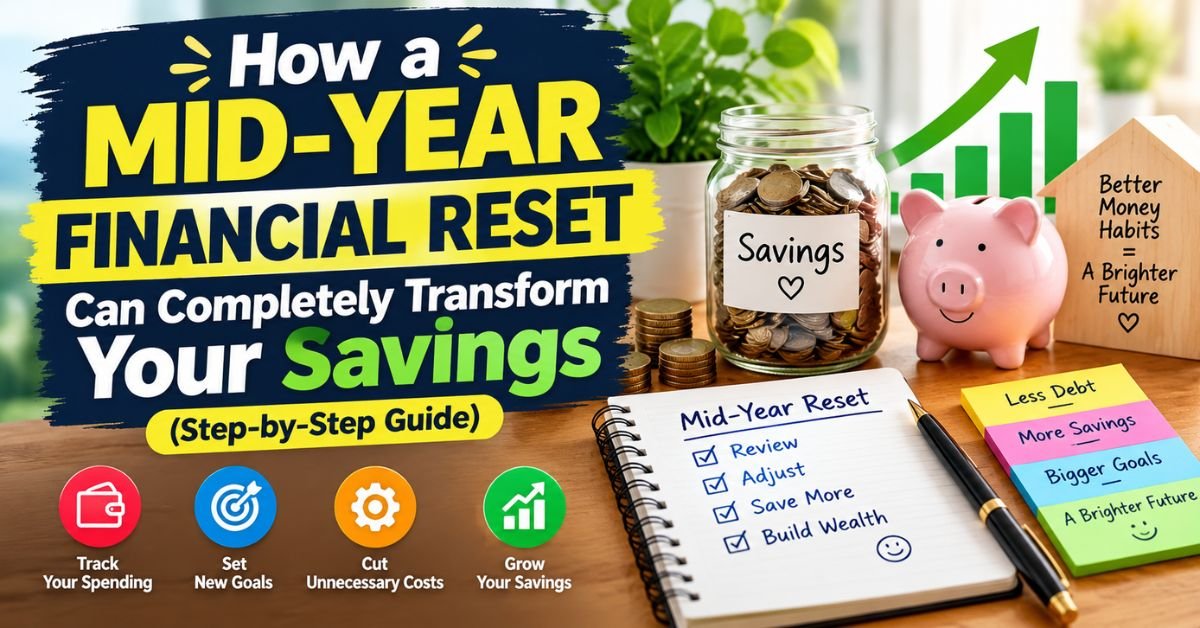
- How a Mid-Year Financial Reset Can Completely Transform Your Savings (Step-by-Step Guide)
When you spot an attractive product online, your brain initiates a dopamine spending loop. Dopamine isn’t the neurochemical of satisfaction; it’s the neurochemical of anticipation. The spike happens while browsing, hunting, and clicking—not when the cardboard box actually lands on your porch. Modern retail interfaces hijack this loop by eliminating the natural pause that once existed when you had to pull out a physical wallet, count paper bills, or walk to a register.


Add a stressful workday, poor sleep, or an argument with your partner, and your prefrontal cortex—the seat of executive function and emotional regulation—effectively clocks out. You reach for retail therapy as an emotional sedative. Against a finely tuned recommendation engine running on deep neural networks, raw willpower isn’t just weak; it’s practically irrelevant.
What Exactly Is the Seven-Day Rule?
The mechanics are deceptively simple: Whenever you feel the sudden urge to buy a non-essential item, you must wait exactly seven full days (168 hours) before completing the transaction.
This isn’t a 24-hour pause. A single day is rarely long enough to clear an acute dopamine surge, especially if you get targeted by dynamic retargeting ads over the next morning’s coffee. Seven days, however, breaks the spell entirely.
Here is what happens during those seven days:
- The Neurochemical Reset: Dopamine levels return to baseline. The artificial urgency created by flash-sale timers or low-stock warnings evaporates.
- The Shift from Want to Utility: You transition from an emotional “hot state” to a rational “cool state.” You begin evaluating the item’s actual place in your everyday routine rather than the fantasy version of yourself using it.
- The Exposure of Opportunity Cost: You gain the mental clarity to compare that purchase against your broader financial realities, like your debt repayment targets, vacation funds, or your emergency cash reserves.
The goal isn’t ascetic deprivation. The goal is intentionality. If you still want the item after 168 hours, and it fits your financial reality, you buy it guilt-free. But in my experience? Nearly 80% of the items I log into my seven-day queue lose their appeal by day four.

Engineering Friction: A Practical 4-Step Implementation System
Knowing the rule is useless if you don’t build a system to enforce it when your guard is down. Here is the operational framework I use across my devices:
Step 1: Create a Digital “Staging Cart”
Never leave items sitting in active retail carts. Retailers use abandoned cart email sequences, SMS alerts, and personalized discounts specifically designed to drag you back into the transaction funnel.
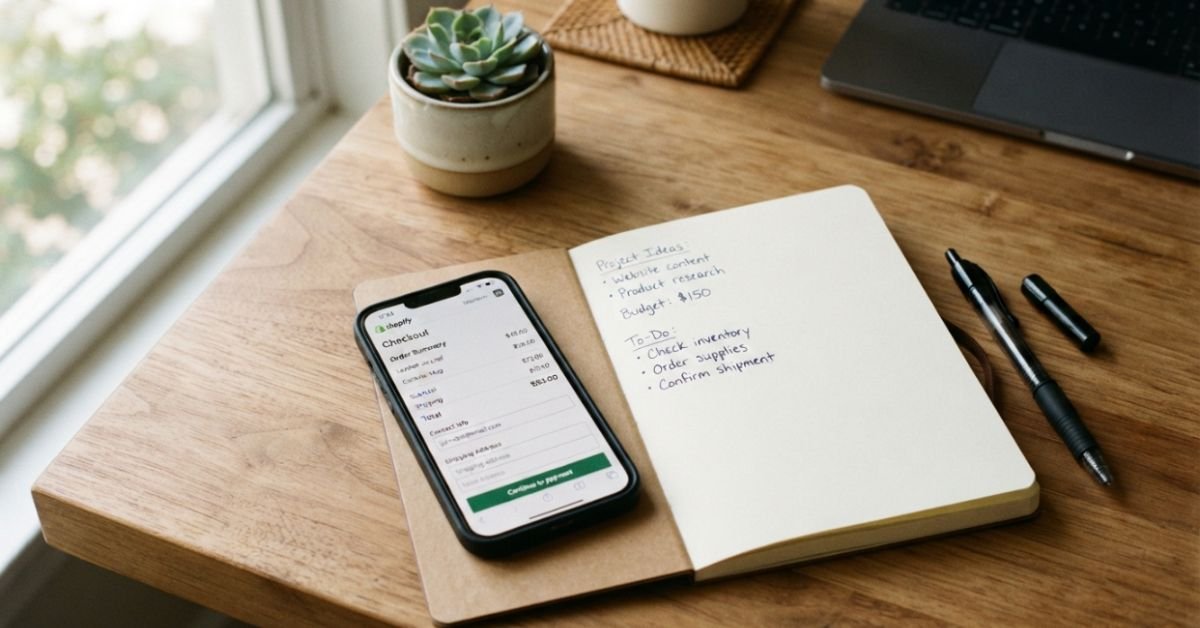
Instead, build an external “Cooling Off” document. I use a simple, dead-basic Notion table (a Notes app note or a Google Sheet works just as well) with four columns:
- Item Name & Direct Link
- Total Cost (including shipping & tax)
- Date Added
- The “Clearance Date” (Date Added + 7 Days)
Once the link goes into your staging sheet, close the store tab completely. Do not bookmark it. Do not leave the app open.
Step 2: Strip the Invisible Payment Rails
Make spending money mildly inconvenient again.
- Delete saved credit card profiles from Chrome, Safari, and Edge.
- Disable express checkout methods like Apple Pay, Google Pay, or Shop Pay on your primary browsing devices.
- Unlink payment details from marketplaces where you binge-buy.
Forcing yourself to stand up, walk to another room, dig your physical card out of your wallet, and manually type sixteen numbers gives your analytical brain time to wake up and ask: “Do I actually need this?”
Step 3: Run the “Working Hours” Calculation
When you review the item, translate its price into hours of your life.
Take your net hourly wage (after taxes and deductions). If you bring home $25 an hour and you are eyeballing an impulse buy that costs $150, ask yourself: Am I willing to trade six full hours at my desk to own this specific object? Framing transactions around life energy strips away the abstract nature of digital money.
Step 4: Divert the Cash Immediately
When you put an item on the seven-day pause, move that exact dollar figure from your checking account into a dedicated high-yield savings account sub-bucket (many modern digital banks like Ally, Marcus, or SoFi let you create digital envelopes).
If you decide not to buy the item on Day 7, leave the money there. You didn’t just save money theoretically; you physically captured the cash before it could bleed into other discretionary spending.
Pro Tip: The “One-In, One-Out” Friction Filter
If an item survives the full seven-day delay, apply one final physical constraint before hitting purchase: identify the exact item in your house it will replace. Buying a new pair of running shoes? Decide which old pair hits the donation bin today. Want a new mechanical keyboard? Choose which desk accessory gets sold or packed away. Physical clutter carries cognitive load; forcing a trade-off kills unnecessary accumulation dead in its tracks.
Cognitive Biases That Trick Your Brain (And How the Rule Neutralizes Them)
Digital commerce platforms use sophisticated cognitive biases to short-circuit our rational thinking. The seven-day rule acts as an analytical countermeasure against these specific psychological traps:
1. The Scarcity Heuristic
“Only 2 left in stock — 14 people have this in their cart right now.” Most of the time, this inventory scarcity is synthetic or dynamically adjusted to trigger panic-buying. A seven-day buffer tests the reality of that scarcity. If the item genuinely sells out, another production run almost always follows. If it doesn’t return? You’ve learned you could live without it anyway.
2. The Anchor Effect in Discounting
Retailers list an arbitrary “Original Price” of $200 slashed to $79. Your brain registers a $121 “win.” In reality, you aren’t saving $121; you are parting with $79 of real capital. The seven-day rule strips away the flashing red clearance tags and forces you to judge the product solely on its real dollar cost.
3. Sunk Cost and Identity Projection
We don’t just buy things; we buy aspirational versions of ourselves. We buy running gear because we want to be runners; we buy expensive productivity tablets because we want to be organized professionals. During a seven-day delay, the shiny fantasy fades, allowing you to ask: Will this tool actually change my daily habits, or am I just buying the identity without putting in the work?

Integrating the Seven-Day Rule into Your Broader Personal Budget Framework
The seven-day rule shouldn’t exist in a vacuum; it functions best as a frontline defense inside an established personal budget framework.
I use a modified version of zero-based budgeting through apps like YNAB (You Need A Budget), but you can apply this to the 50/30/20 rule just as easily. Within your budget, you have fixed costs (rent, utilities, groceries) and your flexible, discretionary spending pot.
Impulse buying is the primary leak in discretionary spending. When you deploy the seven-day rule, you stop treating your discretionary fund as a bottomless digital wallet. Instead, your staging list becomes a prioritized queue.
| Purchase Type | Standard Cooling Period | Action Required | | :— | :— | :— | | Micro-purchases (<$30) | 24 Hours | Move link to notes app; check after sleep cycle. | | Standard Discretionary ($30–$250) | 7 Days | Full staging sheet entry; unlink fast-pay options. | | Major Lifestyle Upgrades ($250+) | 30 Days | Review against quarterly financial targets and savings rates. |
By categorizing purchases based on their potential to derail your long-term plans, you remove the stress of constant financial micro-decisions. You replace chaotic spending with a calm, predictable intake system.
The Exception Protocol: Emergencies vs. Justified Urgency
A rule without practical boundaries falls apart the first time life gets chaotic. How do you distinguish between an urgent, necessary purchase and an impulse buy masquerading as one?
I use a strict “Three-Prong Emergency Test.” An item bypasses the seven-day rule if and only if it meets all three conditions:
- Critical Functionality: Without this item, can I safely work, commute, cook basic food, or care for my family over the next 48 hours? (e.g., your only laptop charger dies before a work deadline, or your water heater leaks).
- Zero Viable Substitutes: Do I lack any existing tool, temporary workaround, or borrowed alternative that can bridge the gap?
- Pre-allocated Funding: Can the purchase be covered immediately by an emergency fund or a dedicated sinking fund without pulling cash from essential living expenses?
If it fails even one of these checks, it goes on the seven-day list. A discounted winter coat in mid-July is not an emergency. A brand-new graphics card on sale is not an emergency. An air fryer because you want to eat healthier is definitely not an emergency.
Frequently Asked Questions
What should I do if an item goes out of stock during the seven days?
Let it go. Remind yourself that consumer goods operate on mass production cycles; true “once-in-a-lifetime” sales rarely exist outside the rare antiques or art markets. If an item sells out during your seven-day wait, view it as the universe making the decision for you. If you still genuinely need it when it restocks, you can purchase it with absolute confidence.
Does the seven-day rule apply to real-world in-store shopping?
Yes, and it’s remarkably easy to apply. If you see something you love at Target or an electronics store, take a clear photo of the product and its price tag, then walk out of the store without it. Add that photo to your digital staging list. If you are still thinking about it seven days later, you can make an intentional trip back to buy it. You will find that the physical effort of driving back kills off almost every casual in-person impulse.
How do I stop myself from obsessively checking the item during the waiting period?
Use technical blockers. Tools like the OneSec app or browser extensions like Freedom can block specific shopping URLs or shopping apps entirely. If you catch yourself obsessively reading reviews, watching unboxing videos, or refreshing the tracking page, recognize that behavior for what it is: the dopamine spending loop attempting to keep the stimulation alive. Divert that energy into a completely unrelated physical activity, like a workout or organizing a drawer.
What if the item is on a massive, limited-time discount?
Discounts are marketing devices designed to manufacture urgency. Ask yourself: Would I buy this item at full retail price? If the answer is no, you aren’t saving 40%—you are spending 60% on something you never valued on its own merits. Stick strictly to the seven-day rule regardless of promotional countdowns. If the discount expires, that price difference is simply the cheap insurance premium you paid to avoid buying junk you didn’t need.
Can I shorten the rule to 48 or 72 hours?
For purchases under $30, a 24- to 48-hour buffer can work. However, for anything substantial, 72 hours is often too short. Marketing algorithms track your intent; over a 72-hour window, you will experience the heaviest barrage of retargeted social ads, personalized email reminders, and influencer placements. Seven days gives your nervous system the necessary space to clear the initial hype cycle and assess real utility.
Breaking the Cycle for Good
Permanent financial freedom isn’t built on extreme, soul-crushing frugality. It is built on building systems that defend you from an economy designed to drain your accounts a few taps at a time.
The next time you find yourself staring at an online checkout page late at night, feel the adrenaline spike for what it is: an algorithm trying to harvest your attention and your money. Step back, drop the link into your staging sheet, close the tab, and walk away.
Seven days from now, your future self will almost certainly look at that item, shake their head, smile, and leave that money right where it belongs: in your pocket.