
Costly Car Ownership Mistakes That Secretly Drain Your Budget Every Month.A couple of years ago, I sat down at my kitchen table with a spreadsheet, a fresh cup of coffee, and my online banking records. I thought I had a decent handle on my transportation budget. My auto loan was an even $440, gas ran roughly $160, and insurance was $115. That’s $715 a month—pricey, but manageable, right?
- 1. The True Total Cost of Ownership: Beyond the Monthly Loan Payment Trap
- 2. Financing and Insurance Pitfalls: The Silent Hundred-Dollar Drainers
- 3. The Long-Term Loan Trap and Negative Equity
- 4. The Insurer Loyalty Penalty
- 5. Deferred Maintenance Mistakes That Turn $50 Checks Into $2,000 Disasters
- 6. Fuel and Driving Inefficiencies: Money Burning in the Combustion Chamber
- 7. The Dealership Service Department Premium: Breaking Free Without Voiding Warranties
- 8. The 30-Day Car Budget Turnaround: Concrete Steps to Recoup $200+ Every Month
- 9. Frequently Asked Questions
- 10. How to lower my monthly car expenses without buying a cheaper car?
- 11. What is the average monthly car maintenance cost for most drivers?
- 12. Can skipping an oil change really ruin fuel economy?
- 13. Does working on my own car void the manufacturer warranty?
Then I pulled out the trailing twelve months of receipts.
Between an unexpected pair of front tires eaten up by bad alignment, a registration renewal fee that felt like a kick in the ribs, two dealership oil changes that somehow spiraled into “recommended service packages,” and rising insurance premiums, my actual spend was hovering closer to $1,050 every single month.
I was burning over $300 a month on subtle mistakes, lazy maintenance decisions, and finance traps I didn’t even know existed.


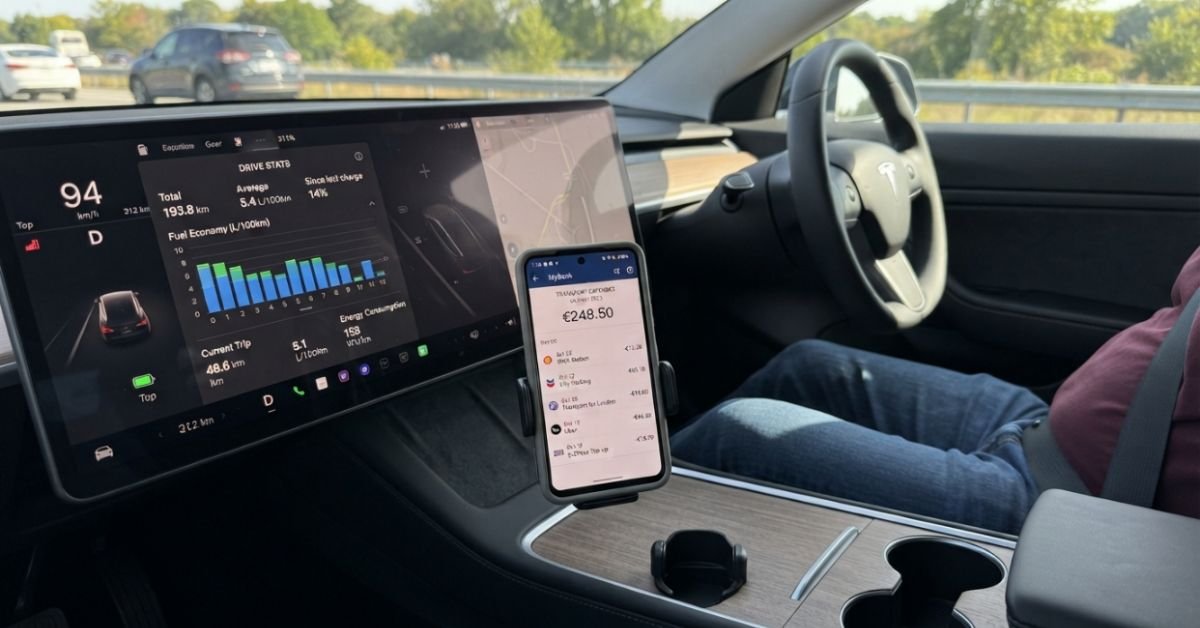
If you commute in the United States, your car is likely your second-biggest financial commitment after housing. With average new car payments now barreling past $730 a month according to Experian, and typical loan terms stretching past 68 months, Americans are bleeding disposable cash into their driveways.
The True Total Cost of Ownership: Beyond the Monthly Loan Payment Trap
Most car buyers negotiate backward. We walk onto the lot, look the salesperson in the eye, and say, “I want to keep my payment around $500 a month.”


That one sentence is an invitation for the finance department to rearrange the deck chairs on the Titanic. They’ll happily stretch your financing out to 72 or 84 months, tack on hidden lender fees, and watch you drive off thinking you scored a bargain.
💰 More Cheap Living Tips You'll Love
- The Real Cost of Daily Convenience Habits That Steal Thousands Every Year
- How a Mid-Year Financial Reset Can Completely Transform Your Savings (Step-by-Step Guide)
- How to Stop Impulse Buying Forever with the Seven-Day Rule
- How to Negotiate Your Internet Bill Down Without Threatening to Cancel
- Dangerous Lifestyle Creep Signs That Are Quietly Keeping You Broke
- The High-Yield Savings Account Strategy That Makes Passive Cash Daily
The baseline reality is simple: your loan payment is only a fraction of your total cost of ownership (TCO). The real wealth killer is vehicle depreciation. The moment you roll off the lot, a new car drops roughly 10% to 15% of its value, shedding up to 40% to 50% over its first three years.


If you want to unmask the hidden costs of owning a car in the US, you need to calculate your vehicle’s true cost-per-mile baseline.
True Cost Per Mile = (Annual Depreciation + Financing Interest + Insurance + Fuel + Maintenance & Repairs) / Total Miles Driven Per Year
Pull up your current Kelley Blue Book valuation today, check what you bought the vehicle for 24 months ago, divide the loss by your total mileage, and add your gas and maintenance receipts. For most drivers, that figure sits somewhere between $0.65 and $0.85 per mile. When you realize that quick 30-mile round-trip coffee run and errand run actually costs $22.50 in real vehicle burn, your driving and purchasing habits shift overnight.
Financing and Insurance Pitfalls: The Silent Hundred-Dollar Drainers
The Long-Term Loan Trap and Negative Equity
Financing a car for 72 to 84 months might keep the dealer’s monthly figure digestible, but it exposes you to an ugly reality: negative equity (being “underwater”). Because the depreciation curve drops faster than your early principal balance decreases, you spend the first four years owing more than the car is worth.
If a distracted driver rear-ends your car on the interstate and the adjuster writes it off, standard auto insurance only covers the actual cash value (ACV). Without GAP insurance, you’re stuck cutting a check for thousands of dollars to pay off a dead car. Conversely, drivers who bought GAP through a dealer often keep paying for it long after their loan balance has dipped below the vehicle’s market value, wasting money every single billing cycle.
The Insurer Loyalty Penalty
If you’ve been asking yourself, “why is my car insurance so expensive this year?”, you’re not alone. Premium costs across the country have spiked due to repair cost inflation and severe weather claims. But staying loyal to the same carrier year after year makes it worse. Insurers rely on a pricing model known as “price optimization,” which basically means they run algorithms to see how much they can hike your rate before you finally snap and switch.
Furthermore, in almost every US state (excluding California, Hawaii, and Massachusetts), insurers look directly at your credit-based insurance score. A slip in your credit rating can quietly bump your annual premium by hundreds of dollars without you causing a single collision.
+--------------------------------------------------------------------------------+
| Pro Tip: The 100-to-1 Coverage Rule                                            |
| Look at your older car's Kelley Blue Book value. If the annual premium for     |
| your comprehensive and collision insurance exceeds 10% of the car's current   |
| total replacement value (or if your deductible is over 25% of its value), drop  |
| down to liability plus uninsured motorist coverage. Bank the difference in an   |
| emergency savings fund instead.                                                |
+--------------------------------------------------------------------------------+
Deferred Maintenance Mistakes That Turn $50 Checks Into $2,000 Disasters
I learned this one the hard way with an older crossover in my driveway. I put off a simple transmission fluid service, thinking, “The shifts feel fine, I’ll deal with it next summer.” Next summer brought harsh downshifts, slipping gears, and a $2,800 transmission rebuild invoice that completely blew up our holiday budget.
Skipping routine, low-cost maintenance creates catastrophic downstream failures. Consider these basic service misses:
- Tire rotation and wheel alignment: If you ignore a mild steering pull, your tires will develop cupping and uneven shoulder wear. Replacing an all-weather set prematurely on an AWD SUV costs $800 to $1,200. A $90 wheel alignment every 12 months prevents this entirely.
- Neglected fluid exchanges: Coolant breaks down and turns acidic, eating heater cores and head gaskets from the inside out. Brake fluid absorbs ambient moisture from the air, corroding expensive ABS modulators.
- The Salt-Belt decay: If you drive in the Northeast, Midwest, or anywhere highways turn white with rock salt in January, avoiding an annual $150 lanolin-based undercoating (like Fluid Film or Woolwax) can wipe thousands off your vehicle’s resale value in pure structural corrosion.
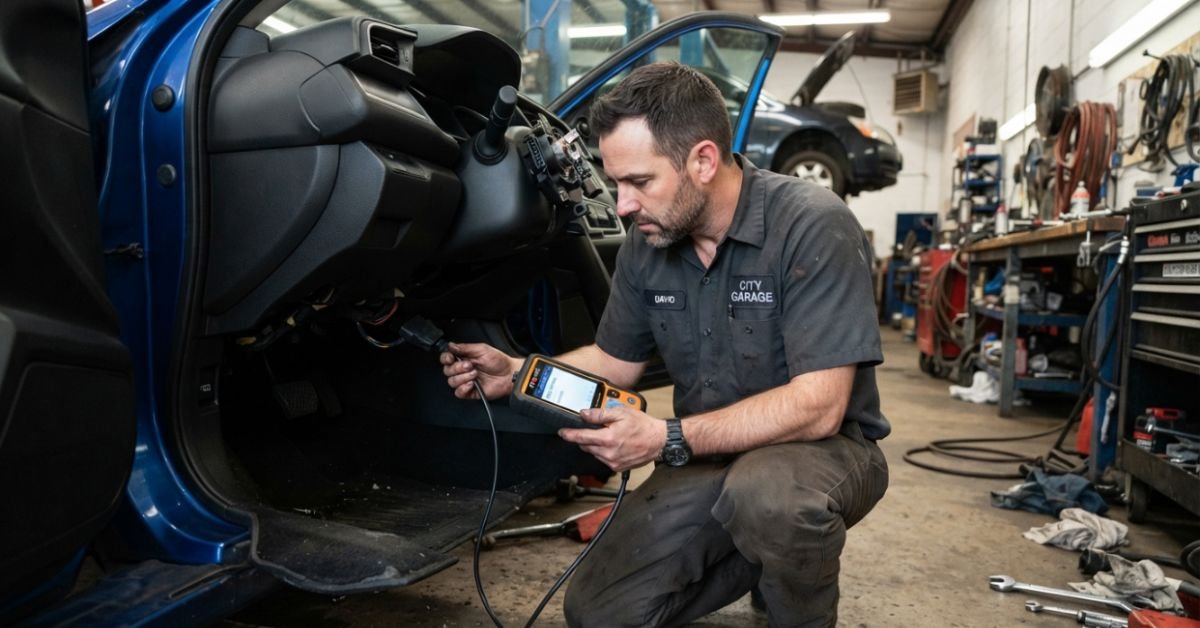
When answering “how often should you really get an oil change?”, ignore the quick-lube sticker claiming you need to return in 3,000 miles. Modern synthetic oils easily go 5,000 to 7,500 miles. Instead, pull your own dipstick every other week. Oil starvation burns up variable valve timing (VVT) solenoids and stretches timing chains—a routine $1,800 repair that usually starts with someone running two quarts low for months.
Fuel and Driving Inefficiencies: Money Burning in the Combustion Chamber
Look at your gas tank door next time you fill up. Unless it explicitly reads “Required: Premium Unleaded,” running 91 or 93 octane fuel is throwing twenty-dollar bills straight into your exhaust pipe.
Many drivers wonder: is premium gas worth the extra money? The answer for 85% of vehicles on American roads is flatly no. If your manual says “Regular Unleaded 87 Recommended,” premium does not give you more cleaning power, extra horsepower, or better mileage. Octane is simply a fuel’s resistance to pre-ignition (engine knock) under high compression. Standard engines cannot use that extra knock resistance, wasting the typical $0.60 to $1.00 per gallon upcharge.
Annual Fuel Waste from Unnecessary Premium Gas:
15,000 miles / 25 MPG = 600 gallons consumed annually
600 gallons x $0.75 premium upcharge = $450 wasted every year
Driving style matters just as much. I once plugged an OBD-II data logger into my port to analyze daily fuel trims and throttle inputs. By eliminating aggressive highway passing and slowing down from 78 MPH to 68 MPH on my daily commute, my vehicle’s fuel economy (MPG) went from 23.4 to 28.1 MPG. That’s a 20% drop in my monthly fuel bill with zero mechanical modifications.
Also, pull those decorative rooftop crossbars and cargo boxes off if you aren’t using them this weekend. Wind drag on the highway penalizes fuel efficiency by as much as 10% to 15% at highway speeds.
The Dealership Service Department Premium: Breaking Free Without Voiding Warranties
Walk into a dealership service drive and you are greeted by service advisors who work on commission. That “30,000-Mile Factory Care Package” for $795? Look at the line items. Half of it is “inspect exhaust,” “inspect floor mats,” and a bottle of fuel system cleaner dumped into your gas tank.
The dealer vs independent mechanic price difference is massive. Dealership hourly labor rates frequently push past $180 to $250 an hour across the US, compared to $110 to $150 at reputable local shops.
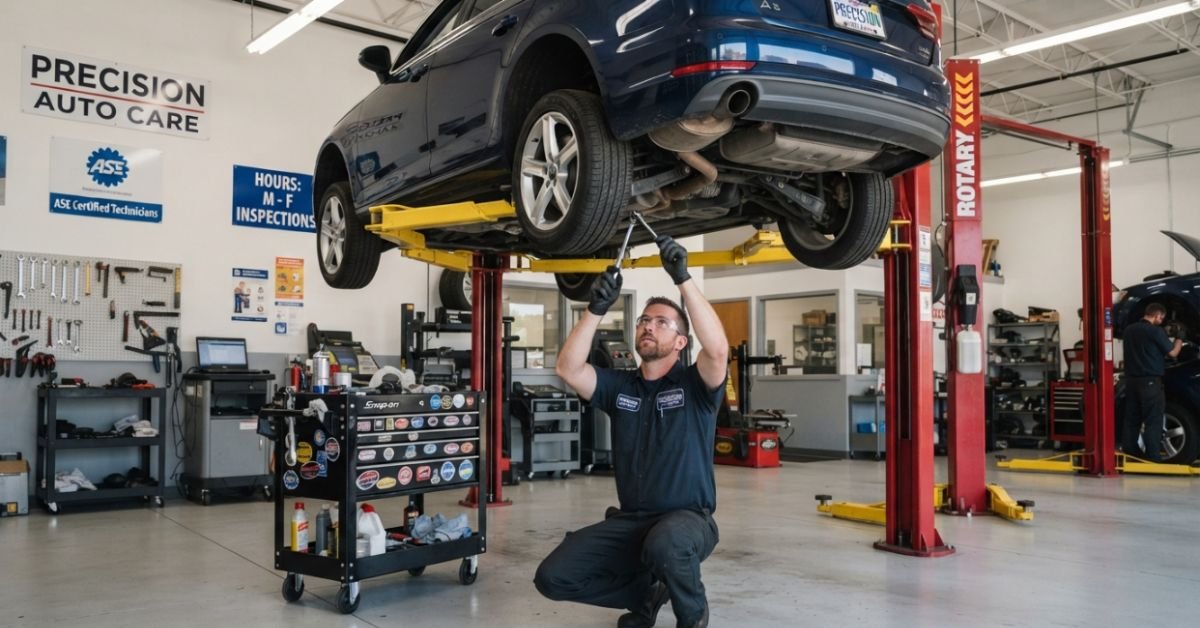
One of the biggest consumer myths is that you must service your vehicle at a franchised dealer to keep your factory warranty intact. That is false. Under the federal Magnuson-Moss Warranty Act, manufacturers cannot void your warranty coverage simply because service was completed by an independent facility or completed by yourself in your driveway—provided the parts meet OEM specifications and you keep legible records.
Find an ASE-certified mechanic (Automotive Service Excellence) specializing in your vehicle’s make. Buy your own OEM-grade filters on RockAuto or similar platforms, stick to the strict preventive maintenance schedule outlined in your manual, and keep a plastic folder in your glovebox with every receipt stapled inside. You get the exact same maintenance protection for half the out-of-pocket cost.
The 30-Day Car Budget Turnaround: Concrete Steps to Recoup $200+ Every Month
If your automotive expenses are out of control, you don’t have to sell your vehicle to find breathing room. Here is an actionable roadmap designed to cut out the fat within 30 days:
- Audit Your Coverage (Day 1 – 7): Log onto your auto insurer’s portal. Raise your comprehensive and collision deductible from $250 to $1,000 if you have adequate emergency savings. Quote your policy across three competing carriers. If you drive fewer than 10,000 miles a year, ask about low-mileage policies. Estimated monthly savings: $40 – $90.
- Refinance Predatory Loans (Day 8 – 14): Check your current auto loan interest rate. If your credit score has improved since purchasing, check auto refinancing rates through a local credit union. Shaving 3% to 5% off an inflated dealer finance rate can lower payments significantly. Estimated monthly savings: $50 – $120.
- DIY Simple Air & Cabin Filters (Day 15 – 21): Stop paying shops $60 to swap an engine air filter. Order an OEM-equivalent filter online for $18. Pop the two metal clips under your hood, drop the clean filter in, and snap it closed. It takes four minutes and restores proper air-to-fuel balance. One-time immediate savings: $40 – $70.
- Calibrate Cold Tire Pressures (Day 22 – 30): Buy a reliable $10 digital tire pressure gauge. Check your pressures on a cold morning against the tire placard on your driver-side door jamb (not the maximum PSI molded onto the tire sidewall). Underinflated tires drag down fuel economy by up to 3% and accelerate tread wear. Estimated monthly fuel savings: $15 – $30.
Car ownership will always carry unavoidable baseline costs. But letting dealerships, insurers, and avoidable deferred maintenance quietly dictate your bottom line is entirely optional. Take control of your maintenance log, run the numbers honestly, and leave that money where it belongs: in your checking account.
Frequently Asked Questions
How to lower my monthly car expenses without buying a cheaper car?
The fastest way to lower monthly car expenses without selling your vehicle is to tackle insurance, fuel, and minor DIY maintenance. Shop your car insurance every 12 months, raise your comprehensive and collision deductibles to $1,000, verify correct tire pressures weekly, and perform simple 10-minute tasks like engine and cabin air filter replacements yourself instead of paying a shop. Additionally, explore refinancing your auto loan through a credit union if interest rates or your credit score have improved since your purchase.
What is the average monthly car maintenance cost for most drivers?
For the typical American vehicle traveling 12,000 to 15,000 miles annually, the average monthly car maintenance cost runs between $75 and $125 per month. While routine oil changes, tire rotations, and wiper blades might only cost $25 to $40 a month when averaged out, setting aside a full $100 monthly builds an essential sinking fund for unavoidable milestone expenses like brake pad replacements, new tires, and fluid flushes every few years.
Can skipping an oil change really ruin fuel economy?
Yes. Over time, motor oil degrades, picks up microscopic contaminants, and oxidizes, losing its lubricating properties and increasing internal engine friction. This mechanical drag forces the engine to work harder to maintain speed. Driving past recommended oil change intervals can hurt fuel economy by 1% to 2%, while chronically running low on oil starves the hydraulic systems that control modern variable valve timing, causing rough idling, sluggish acceleration, and wasted gas.
Does working on my own car void the manufacturer warranty?
No. Under the federal Magnuson-Moss Warranty Act, it is illegal for a vehicle manufacturer or dealer to void your warranty simply because you performed maintenance yourself or used an independent repair facility. To protect your coverage, always use parts and fluids that meet the exact OEM specifications laid out in your owner’s manual, and maintain clear records, including dated receipts, fluid specifications, and an organized mileage log detailing when each service was performed.