The High-Yield Savings Account Strategy That Makes Passive Cash Daily.A few years ago, my friend Sarah left $50,000 sitting inside an old-school brick-and-mortar savings account at a big national bank. She thought she was being responsible. Her emergency fund was safe, tucked away behind bulletproof glass and marble columns.
- 1. 1. Deconstructing the “Daily Passive Cash” Blueprint
- 2. APY vs. APR: The Compounding Frequency Secret
- 3. 2. Step-by-Step System: Engineering Your Account for Daily Accrual
- 4. Step 1: Filter for Daily-Accrual Platforms
- 5. Step 2: Set Up Automated Clearing House (ACH) Pipelines
- 6. Step 3: Eliminate Withdrawal Friction
- 7. Expert Insight: The Micro-Deposit Settlement Lag
- 8. 3. The Math Matrix: Capital Needed for Daily Income
- 9. 4. Advanced Optimization: The Bucket Strategy & Treasury Stacking
- 10. The Digital “Bucket” Allocation
- 11. Stacking 4-Week Treasury Bills for State Tax Arbitrage
- 12. 5. Pitfalls and Risks: What FinTech Marketing Ignores
- 13. 1. Federal Reserve Policy Shifts
- 14. 2. Taxes on HYSA Interest Income: IRS Form 1099-INT
- 15. 3. Safety Check: Are HYSA Safe? (FDIC & NCUA Limits)
- 16. 6. Execution Checklist: Setting Up Your Daily Passive Engine
- 17. Frequently Asked Questions
- 18. Daily vs monthly compounding interest savings account: What is the actual difference?
- 19. Can you realistically learn how to live off HYSA interest income?
- 20. Are promotional teaser rates worth switching banks for?
- 21. When does interest get transferred to my account?
Then she opened her year-end tax statement.
For the entire calendar year, that institution paid her a staggering $5.00. That is not a typo. Five single dollar bills for lending a multi-billion-dollar bank fifty grand of liquidity.
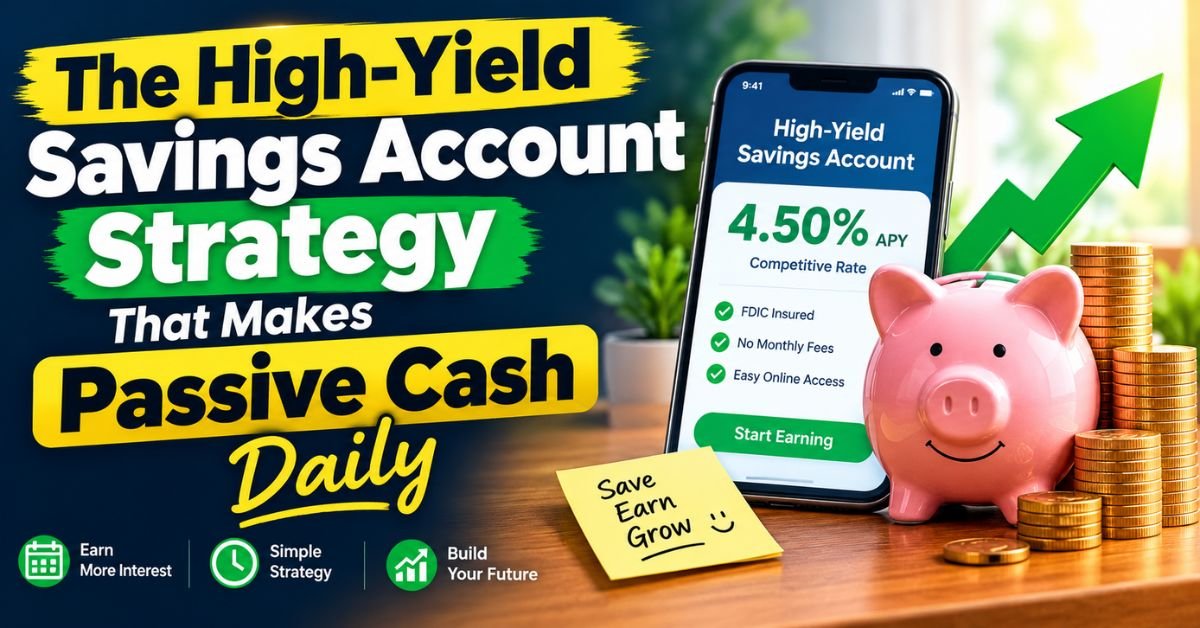
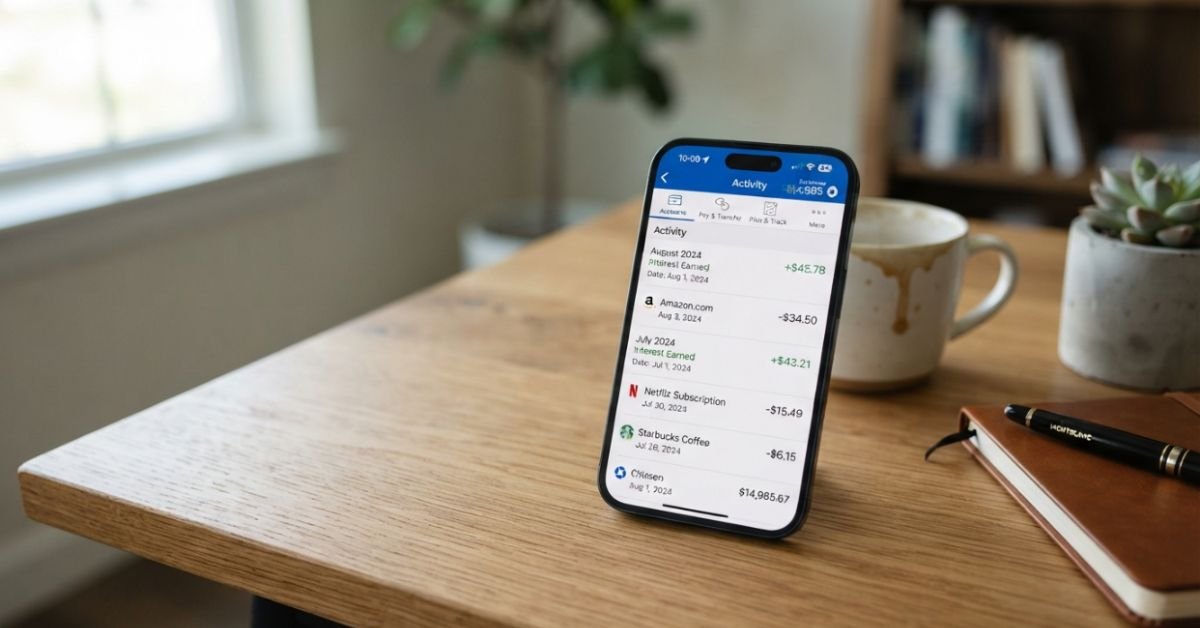
I sat down with her over coffee, opened an online banking portal, and moved her cash into a modern high-yield savings account (HYSA) paying 4.50% Annual Percentage Yield (APY). Within forty-eight hours, her balance began generating roughly $6.16 every single day. By the end of her first month, her statement showed an interest credit of over $185—completely hands-off.


She did not buy volatile crypto tokens. She did not flip real estate. She simply put the mechanics of daily compounding interest to work inside the United States banking framework.
Here is the exact blueprint for turning idle cash into a reliable daily passive income engine, the math behind it, and the pitfalls you need to avoid.


1. Deconstructing the “Daily Passive Cash” Blueprint
Most people treat their bank accounts like stagnant buckets. You put money in, it sits there, and you pull money out when rent or mortgage payments come due. But the banking system does not let your cash sit idle. The second your direct deposit clears, your bank lends those reserves out for commercial loans, mortgages, and auto financing at 7% to 9% interest.
💰 More Cheap Living Tips You'll Love
- Practical Ways to Eat Healthy on a Bare-Bones $50 Weekly Budget
- How to Stop Impulse Buying Forever with the Seven-Day Rule
- The Real Cost of Daily Convenience Habits That Steal Thousands Every Year
- Costly Car Ownership Mistakes That Secretly Drain Your Budget Every Month
- Smart Bank Account Structuring Strategies to Automate Wealth Building
- Hidden Medical Bill Errors You Must Dispute Immediately to Save Big
At a traditional branch, they hand you back a microscopic 0.01% APY. That is pure opportunity cost eating away at your balance, especially when US inflation runs hot.


When you shift your liquid emergency fund into the best high yield savings account daily compounding interest structure, the power dynamic flips back in your favor.
APY vs. APR: The Compounding Frequency Secret
To understand daily passive cash, you must know how banks calculate what they owe you.
- APR (Annual Percentage Rate): The raw, uncompounded annual interest rate.
- APY (Annual Percentage Yield): The actual total return you earn over 365 days, factoring in compounding.
The critical variable here is the daily vs monthly compounding interest savings account mechanism:
Daily Accrual Formula:
Daily Interest = Current Ledger Balance × (Annual Interest Rate / 365)
Nearly all elite online banks—think Marcus by Goldman Sachs, Ally Bank, SoFi, or Discover Bank—calculate your earnings using your balance at the end of each business day. Even though they post the aggregated cash payout into your account once a month (usually on your statement closing date), the cash accrues silently every 24 hours.
If you have $40,000 parked at a 4.50% APY, you earn approximately $4.93 today. Tomorrow, you earn interest on your original balance plus that tiny fractional slice of accrued interest. Over a month, that yields roughly $150. Over a year, it adds up to roughly $1,800.
You do nothing. The server runs the math at midnight, and your balance grows.
2. Step-by-Step System: Engineering Your Account for Daily Accrual
Setting this up requires more than just picking a bank with a flashy ad campaign. You want an account that functions smoothly as an automated cash-management terminal without locking your capital into multi-year certificates of deposit (CDs).
[Checking / Direct Deposit]
          │
          ▼ (Automated ACH Sweep)
[Tier-1 HYSA (Daily Accrual Engine)]
     ├── Bucket A: Core Liquid Emergency Fund (3-6 Months)
     ├── Bucket B: Short-Term Sinking Funds (Taxes, Travel)
     └── Bucket C: Automated Overflow Sweep ──► [Treasury Bills / Brokerage]
Step 1: Filter for Daily-Accrual Platforms
Ensure the financial institution’s deposit agreement explicitly states that interest compounds daily. Most top-tier US digital banks calculate interest on your daily collected balance. Avoid accounts that calculate on the “average monthly balance,” as they can shortchange you if you make mid-month withdrawals.
Step 2: Set Up Automated Clearing House (ACH) Pipelines
Link your primary checking account to your HYSA via standard Automated Clearing House (ACH) transfers. Schedule bi-weekly or monthly recurring transfers immediately after your payroll lands. This ensures new capital starts compounding without delay.
Step 3: Eliminate Withdrawal Friction
Under federal regulations, the Federal Reserve formerly enforced Regulation D, which capped “convenient” savings account withdrawals at six per month. While the Fed suspended the mandatory enforcement of this rule via interim amendments, many institutions (like Ally or Capital One) still retain internal limits or fee schedules.
Keep your daily transaction activity confined to your primary checking account. Let the HYSA operate strictly as an interest-generating vault.
Expert Insight: The Micro-Deposit Settlement Lag
When linking bank accounts via ACH, avoid manual micro-deposits if you need your money compounding immediately. Use third-party instant verification services like Plaid or open an HYSA within an ecosystem where you already hold checking services. Manual micro-deposits can leave your cash sitting in zero-interest limbo for 3 to 5 business days during transit.
3. The Math Matrix: Capital Needed for Daily Income
I frequently get asked variants of two questions: “How much do I need in HYSA to make 100 a month?” and “How to make 10 a day in interest?”
Let’s look at the exact figures. Below is the unvarnished mathematical reality across typical interest-rate environments, based on a 365-day calendar year.
| Target Daily Return | Target Monthly Return | Capital Needed @ 4.00% APY | Capital Needed @ 4.50% APY | Capital Needed @ 5.00% APY | | :— | :— | :— | :— | :— | | $1.00 / day | ~$30.41 / mo | $9,125 | $8,111 | $7,300 | | $3.29 / day | $100.00 / mo | $30,000 | $26,667 | $24,000 | | $5.00 / day | ~$152.08 / mo | $45,625 | $40,555 | $36,500 | | $10.00 / day | ~$304.16 / mo | $91,250 | $81,111 | $73,000 | | $25.00 / day | ~$760.41 / mo | $228,125 | $202,777 | $182,500 | | $50.00 / day | ~$1,520.83 / mo| $456,250 | $405,555 | $365,000 |
To answer those two big user queries directly:
- How much do you need to make $100 a month? At a competitive 4.50% APY, you need precisely $26,667 deposited. If yields tick up to 5.00%, that requirement drops to $24,000.
- How to make $10 a day in interest? You need approximately $81,111 parked at a 4.50% APY, or $73,000 if your account delivers a 5.00% APY.
Seeing those daily numbers transform from pennies into whole dollar bills changes how you view your lifestyle overhead. Earning $10 a day covers a lunch or your morning coffee run perpetually, funded entirely by your bank’s overnight interest ledger.
4. Advanced Optimization: The Bucket Strategy & Treasury Stacking
Once your baseline cash flow is established, you can optimize your yields and protect your money from unnecessary taxation.
The Digital “Bucket” Allocation
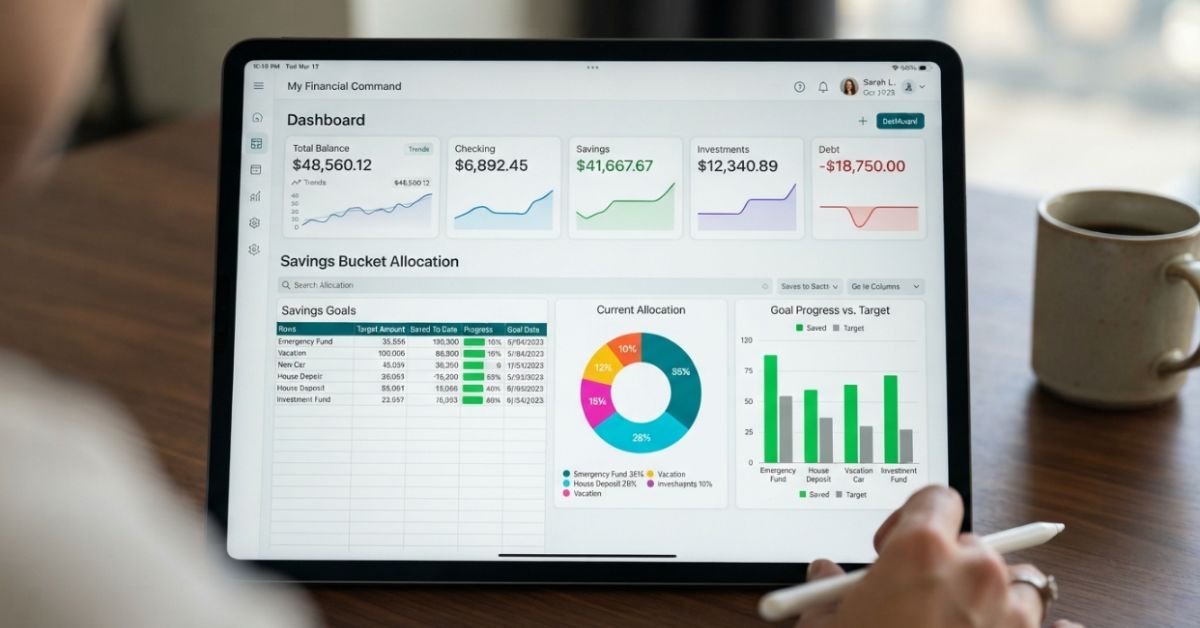
Leading digital banks let you partition your single balance into distinct sub-accounts or “buckets” without opening multiple lines of credit.
I partition my cash reserves into three distinct pools:
- Core Runway (3 Months Living Expenses): Never touched, calculating pure daily interest.
- Sinking Funds: Quarterly estimated taxes, car insurance premiums, and home maintenance.
- Opportunity Reserve: Liquid capital earmarked for stock market pullbacks or opportunistic real estate entries.
Every bucket compounds at the same unified high yield, keeping your accounting organized without fragmenting your balances across six different institutions.
Stacking 4-Week Treasury Bills for State Tax Arbitrage
If you live in a high-tax state like California, New York, or New Jersey, traditional savings interest faces hefty state income tax levies.
State Tax Friction Comparison:
• HYSA Interest: Taxed at Federal Rate + State Rate + Local Rate
• US Treasury Bills: Taxed at Federal Rate ONLY (Exempt from State & Local)
To optimize around this, stack a liquid HYSA alongside rolling 4-week Treasury Bills (T-Bills) through a brokerage account (like Fidelity, Schwab, or Vanguard) or directly via TreasuryDirect.
Because US government debt obligations are completely exempt from state and local income taxes, high-earners often achieve a higher inflation-adjusted return with T-Bills than a standard HYSA, while keeping their liquidity cycles locked into manageable 28-day windows.
5. Pitfalls and Risks: What FinTech Marketing Ignores
High yields sound incredible, but relying on an HYSA for everyday income requires navigating four major structural risks.
Key Risks to Monitor:
1. Federal Reserve FOMC Rate Cuts (Yields drop overnight)
2. IRS Form 1099-INT Tax Burdens (Ordinary income tax rates)
3. Exceeding $250,000 FDIC / NCUA Coverage Limits
4. FinTech "Partner Bank" Brokerage Sweep Vulnerabilities
1. Federal Reserve Policy Shifts
Your HYSA interest rate is a variable rate, not a fixed contract. Online bank yields are pegged directly to the federal funds target rate set by the Federal Reserve’s Federal Open Market Committee (FOMC).
When the Fed cuts rates to stimulate the economy, online banks adjust their APYs downward within days. Never build a fixed monthly budget around current peak interest rates; your daily payout will shrink during sustained easing cycles.
2. Taxes on HYSA Interest Income: IRS Form 1099-INT
Many newcomers are stunned when tax season rolls around. Interest earned in a regular savings account does not receive favorable long-term capital gains tax treatment.
The IRS treats every penny of interest as ordinary income. If you earn more than $10 in interest from any single bank, they will send you (and the IRS) IRS Form 1099-INT. If your marginal federal tax bracket is 24% and your state tax rate is 6%, roughly 30% of your daily passive cash vanishes into tax obligations.
Always calculate your after-tax yield when assessing whether to hold extra cash in an HYSA versus paying down high-interest liabilities.
3. Safety Check: Are HYSA Safe? (FDIC & NCUA Limits)
Standard consumer deposit accounts at genuine banks are backed by the Federal Deposit Insurance Corporation (FDIC) up to $250,000 per depositor, per insured bank, for each account ownership category. Credit unions carry equivalent backing through the National Credit Union Administration (NCUA).
If your liquid balances exceed $250,000 as an individual:
- Open an account at a second, distinct financial institution.
- Convert to a joint account with your partner (which doubles your protection to $500,000 at the same bank).
- Use a platform that utilizes an FDIC sweep network (like Wealthfront or Betterment), dispersing funds across multiple partner institutions to secure coverage upwards of $1 million to $2 million.
Be careful with non-bank FinTechs that lack a native banking charter. Always ensure the entity holds your funds in an established, FDIC-insured partner institution with clear pass-through coverage.

6. Execution Checklist: Setting Up Your Daily Passive Engine
Ready to activate your account? Here is your 30-minute implementation checklist:
- [ ] Verify Account Architecture: Pick a reputable online institution (e.g., Ally, Marcus, Discover, American Express National Bank) with zero monthly maintenance fees and no balance minimums.
- [ ] Confirm Insurance Badging: Look for the explicit “Member FDIC” or “Federally Insured by NCUA” logo on the footer of their homepage.
- [ ] Complete Identity Verification: Have your Social Security Number (SSN) or ITIN, physical US address, and driver’s license ready for automated KYC processing.
- [ ] Fund via Electronic Transfer: Execute your initial funding transfer from your legacy checking account.
- [ ] Schedule Your Automated Cash Sweep: Set up an automatic transfer for 1 to 2 days following your standard payroll deposit.
- [ ] Set Up Tax Reserves: If your account generates more than $600 in interest per year, consider manually allocating 20% to 30% of that yield to a dedicated “Tax Reserve” sub-bucket to avoid surprises when filing IRS Form 1040.
Frequently Asked Questions
Daily vs monthly compounding interest savings account: What is the actual difference?
The compounding frequency determines when the interest you have earned begins earning interest on itself. In a daily compounding account, your daily balance is multiplied by the periodic daily rate (Annual Rate / 365), and that yield is folded into the next day’s base calculation. In a monthly compounding setup, calculations use your average balance over 30 days without rolling daily additions into the formula. Daily compounding delivers a slightly higher effective APY over long periods.
Can you realistically learn how to live off HYSA interest income?
Yes, but doing so requires significant liquid net worth due to the realities of inflation and variable yields. If your household requires $60,000 annually to cover living expenses, you would need roughly $1,333,000 parked at a sustained 4.50% APY. However, because yields drop whenever the Federal Reserve cuts rates, relying entirely on savings account interest to cover basic life necessities leaves you vulnerable to sudden income drops. An HYSA is best used for emergency runway and capital preservation rather than long-term retirement funding.
Are promotional teaser rates worth switching banks for?
Usually, no. Some fringe online banks advertise promotional APYs that sit 0.50% above the national average to pull in new deposits, only to drop their rates below industry leaders after three to six months. Unless you are moving millions of dollars, the administrative hassle of closing accounts, verifying micro-deposits, and tracking multiple 1099-INT forms rarely justifies a brief 30-day bump in interest. Stick with reputable, historically competitive institutions.
When does interest get transferred to my account?
While your interest accrues and compounds behind the scenes every single day, most banks batch the payout and post it to your ledger once per month. This typically happens on the last calendar day of the month or your statement cycle close date. Once posted, that cash becomes part of your available, withdrawable balance.
Editorial Disclosure: The figures and yields presented here reflect typical market rates governed by the Federal Reserve’s current benchmark environment. Interest rates are subject to change without notice. This content has been created for educational and informational purposes and should not be construed as individualized tax or investment advice. Consult a Certified Financial Planner (CFP) or Certified Public Accountant (CPA) regarding your specific tax and financial circumstances.