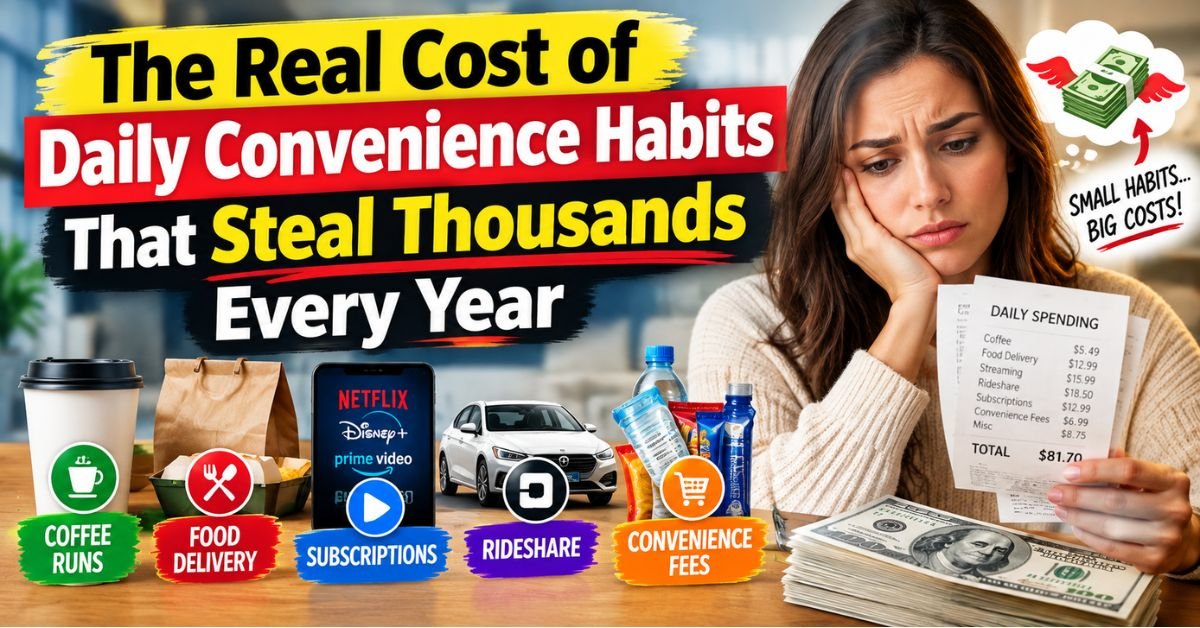
The Real Cost of Daily Convenience Habits That Steal Thousands Every Year.Last October, I sat down at my kitchen table with a hot mug of black coffee and pulled up my Chase bank statement. I had decided to export my entire year’s checking and credit card transactions into a spreadsheet to see why my savings rate felt stalled, despite getting a modest raise earlier in the year.
- 1. The Psychology of Frictionless Spending
- 2. The Food Delivery Trap: Deconstructing the 120% Markup
- 3. Subscription Creep and Phantom Expenses
- 4. The Brutal Math: Opportunity Cost and Compound Interest
- 5. Pro Tip: The “Friction Engineering” Method
- 6. Practical Systems for Budget Optimization Without Misery
- 7. 1. Build an “Emergency Convenience” Kit at Home
- 8. 2. Transition from Rideshares to Transit Anchors
- 9. 3. Conduct a “Ghost Audit” on the First of Every Month
- 10. Frequently Asked Questions
- 11. How do I audit my convenience spending without feeling completely overwhelmed?
- 12. Is completely eliminating convenience purchases realistic for busy professionals?
- 13. Which daily convenience habit is usually the most financially damaging?
- 14. What should I do with the money I save from cutting these habits?
- 15. How can I stop impulse buying on shopping apps like Amazon?
- 16. Final Thoughts: Reclaiming Your Financial Sovereignty
What I found made my stomach drop.
Tucked between my regular utility bills and mortgage payments was a relentless, quiet cascade of small charges: $14.20 for an iced latte and pastry down the block, $38.75 for a single lunch brought to my door via DoorDash, $18.50 for an Uber ride across town because I didn’t feel like catching the bus in the drizzle. None of these transactions triggered a fraud alert. None felt reckless in the moment. Yet, when I tallied up these convenience purchases over ten months, the total exceeded $6,400.
That was money that could have funded an entire Roth IRA contribution, paid for two international flights, or knocked a massive dent into my emergency reserve. I had fallen victim to the stealthiest wealth killer in modern life: the convenience tax.


The Psychology of Frictionless Spending
Modern commerce is engineered with a singular goal: eliminate every shred of friction between your impulse and the transaction. A decade ago, buying something required physical effort. You pulled out a leather wallet, fished out paper bills or a plastic card, waited for the chip reader, and signed a slip. That physical transfer created a brief psychological speed bump known in behavioral economics as the “pain of paying.”
Today, that bump is completely paved over.


With Apple Pay, Google Wallet, and biometric FaceID checkouts, money is invisible. A double-click of a side button on your phone, a quick glance at the sensor, and $45 evaporates from your checking account before your brain can process the trade-off. This frictionless payments ecosystem turns thoughtful financial decisions into reflexive muscle twitches.
💰 More Cheap Living Tips You'll Love
- The High-Yield Savings Account Strategy That Makes Passive Cash Daily
- Smart Bank Account Structuring Strategies to Automate Wealth Building
- Costly Car Ownership Mistakes That Secretly Drain Your Budget Every Month
- How to Stop Impulse Buying Forever with the Seven-Day Rule
- Practical Ways to Eat Healthy on a Bare-Bones $50 Weekly Budget
- Dangerous Lifestyle Creep Signs That Are Quietly Keeping You Broke
When spending becomes frictionless, micro-spending takes over. We tell ourselves that a $6 convenience fee here or an extra $8 delivery surcharge there is meaningless in the grand scheme of things. But human psychology struggles with linear aggregation; our brains are terrible at instinctively realizing that three $7 convenience purchases every single day compound into roughly $7,665 a year.


Retailers, gig apps, and digital platforms understand this vulnerability intimately. They don’t need to convince you to make a single $5,000 purchase. They just need you to approve forty $12 micro-transactions every month without looking up from your screen.
The Food Delivery Trap: Deconstructing the 120% Markup
Food delivery apps are arguably the most aggressive driver of lifestyle inflation across urban and suburban households today. We rationalize them by saying, “I’m exhausted from work,” or “My time is worth more than cooking.” Sometimes that’s genuinely true. Most of the time, it’s an expensive lie we tell ourselves to justify sheer inertia.
Let’s look at the cold, hard mechanics of food delivery surcharges using a real order I placed from a local Thai spot before I cleaned up my habits:
| Expense Item | In-Restaurant Pickup | Delivery App Order | Variance | | :— | :— | :— | :— | | Pad Thai + Spring Rolls | $22.00 | $26.50 | +$4.50 (Menu Markup) | | Local Sales Tax | $1.87 | $2.25 | +$0.38 | | Service Fee | $0.00 | $4.80 | +$4.80 | | Delivery / Courier Fee | $0.00 | $3.99 | +$3.99 | | Regulatory / City Fee | $0.00 | $2.00 | +$2.00 | | Driver Tip | $0.00 | $6.00 | +$6.00 | | Total Cost | $23.87 | $45.54 | +$21.67 (+90.8%) |
Notice that the food inside the cardboard containers was identical. The culinary experience was actually worse—lukewarm noodles and soggy spring rolls that sat on someone’s passenger seat for twenty minutes. Yet, I paid an extra $21.67 for the privilege of not walking three blocks or spending fifteen minutes boiling water at my stove.
If you order delivery twice a week at that surcharge rate, you are handing over roughly $2,250 a year strictly in platform fees, hidden markups, and tips. That is pure convenience tax with zero enduring value.
Subscription Creep and Phantom Expenses
Another insidious financial leak is subscription creep. We have traded ownership for continuous access. Everything from software and cloud storage to razors, toothbrushes, and streaming content has been shoved into recurring monthly billing models.
These recurring charges turn into phantom expenses: recurring withdrawals that exist below your everyday conscious awareness.
Take a minute to audit your current ecosystem:
- Three video streaming services you barely open (Netflix, Max, Disney+): $55/month
- That fitness app you downloaded in January and used three times: $14.99/month
- Upgraded cloud storage tiers across multiple platforms (iCloud, Google One): $12.99/month
- Premium subscription to a music platform you only use for background noise: $11.99/month
- Expedited shipping memberships (Amazon Prime, Walmart+): $14.99/month
Individually, none of these line items seem worth canceling. Together, they quietly strip $110 to $180 from your account every single month. Over five years, an unchecked $150/month subscription roster bleeds $9,000. When platforms quietly adjust their rates by $2 or $3 a month—as nearly every streaming and SaaS company has done over the past twenty-four months—most subscribers don’t even blink. You absorb the price hike because canceling requires effort, and inertia is comfortable.
The Brutal Math: Opportunity Cost and Compound Interest
The biggest financial mistake people make when analyzing their spending habits is evaluating purchases purely in nominal terms. If you spend $15 a day on convenience—say, an afternoon specialty latte and an on-demand grocery delivery—you don’t just lose $15. You forfeit what that $15 could have earned if put to work in a broad-market index fund.
In personal financial planning, this is the foundational principle of opportunity cost.
Let’s run the math:
- Daily Convenience Waste: $15.00
- Monthly Outflow: ~$450.00
- Annual Loss: $5,400.00
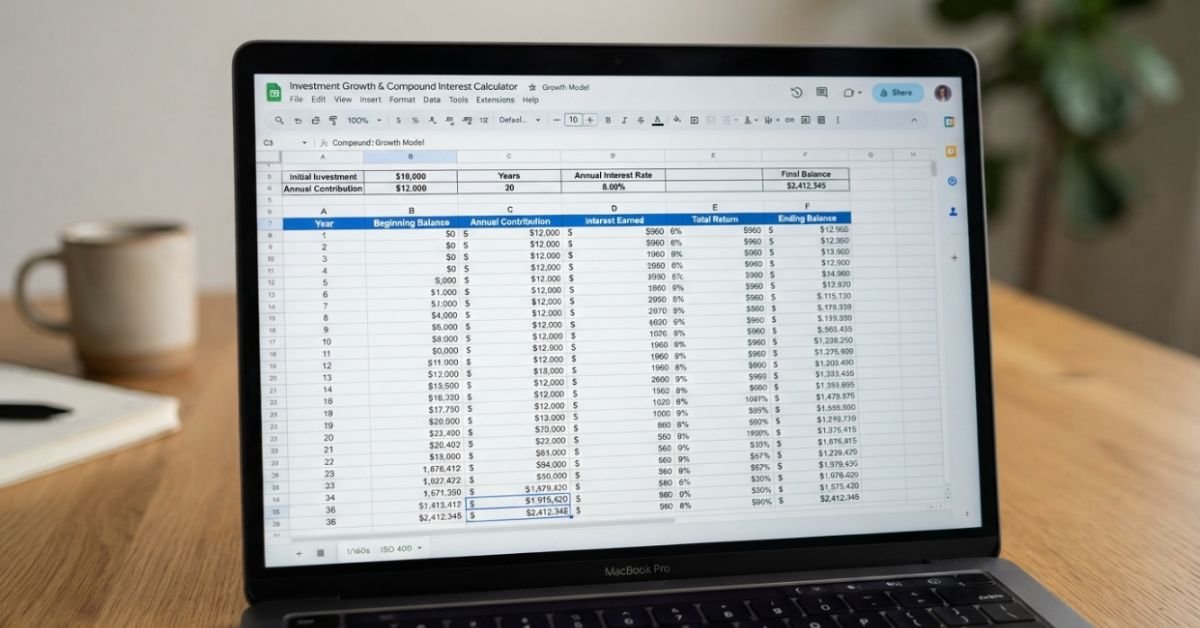
Now, imagine redirecting that exact $450 per month into a standard low-cost S&P 500 index fund inside a tax-advantaged account, assuming a conservative 7% annual return adjusted for inflation:
- After 5 Years: $32,185
- After 10 Years: $77,912
- After 20 Years: $234,178
- After 30 Years: $548,984
Look at that 20-year figure again: $234,178.
That is not Monopoly money. That is a paid-off mortgage balance, a fully funded college tuition for your child, or the freedom to step away from a toxic job five years early. When you tap your phone for a quick ride home instead of waiting ten minutes for the subway, you aren’t spending $20; you are shaving a microscopic slice off your future independence. Every micro-transaction is a trade-off between instant gratification today and personal freedom tomorrow.
Pro Tip: The “Friction Engineering” Method
Don’t rely on willpower to stop impulse buying; rely on friction. Take twenty minutes tonight to execute three structural changes on your devices:
- Purge Saved Cards: Delete your saved credit cards from your mobile browsers, DoorDash, Uber, and Amazon accounts. If you have to physically get up, find your wallet, and manually type in 16 digits, your completion rate on impulse orders will plummet by over 60%.
- Enforce the 72-Hour Rule: For any non-essential purchase over $30, bookmark it in a dedicated browser folder labeled “Cool Down.” If you still crave it 72 hours later and it fits your budget, buy it guilt-free. In my experience, 8 out of 10 items lose their appeal within two days.
- Set Up Virtual Cards with Hard Caps: Use services like Privacy.com or built-in virtual card tools from Capital One to subscribe to trials. Set the spending limit on that card to $1. If a subscription attempts to auto-renew without your explicit review, it simply declines.
Practical Systems for Budget Optimization Without Misery
I don’t believe in financial asceticism. Living on dry beans and never buying an iced coffee again makes for a miserable life, and extreme budgets fail just as reliably as crash diets. The goal of real budget optimization isn’t deprivation; it’s intentionality.
Here are three sustainable systems to kill convenience bleed while protecting your quality of life:
1. Build an “Emergency Convenience” Kit at Home
Most food delivery orders happen between 7:30 PM and 8:30 PM on weeknights when your mental energy is zero. When you’re running on fumes, chopping onions feels like climbing Mount Everest.
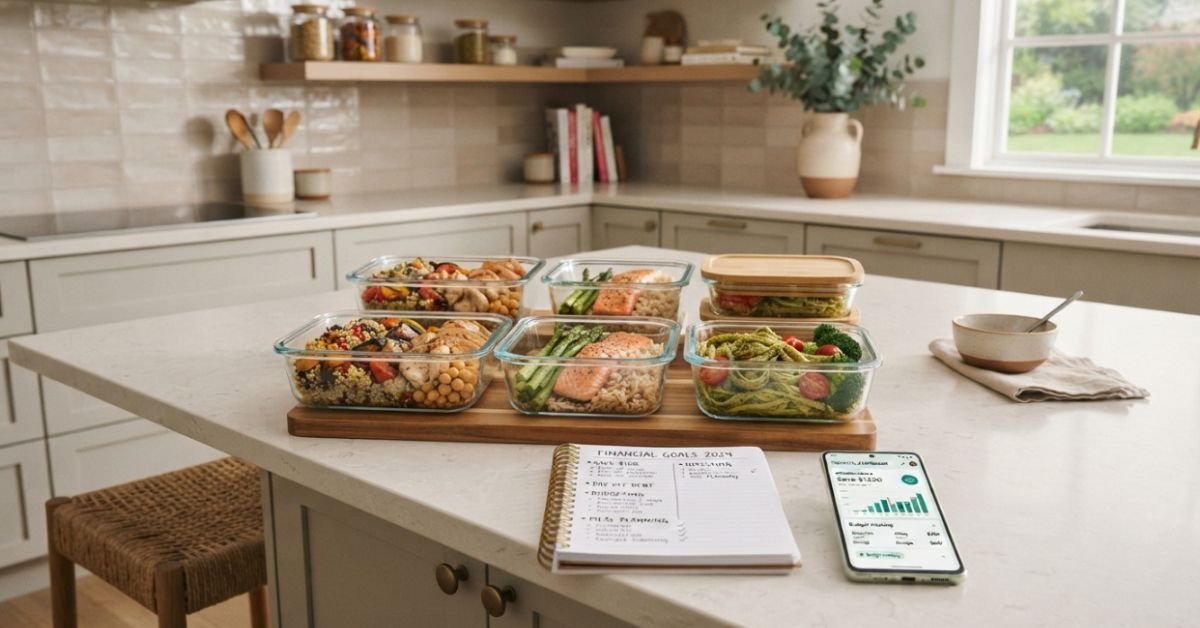
Beat the apps at their own game by keeping high-quality, zero-effort meals in your freezer. I keep high-end frozen dumplings, pre-marinated chicken breasts from Trader Joe’s, and Rao’s marinara sauce with good pasta ready at all times. Yes, a box of gourmet frozen dumplings costs $9—far more than cooking rice from scratch. But compared to a $42 delivery order, it saves you over $30 in fifteen minutes, with zero cleanup and zero waiting for a delivery driver.
2. Transition from Rideshares to Transit Anchors
Rideshares like Uber and Lyft should be reserved for genuine emergencies, late-night safety situations, or trips to the airport with heavy luggage. They should not be your default plan because you ran ten minutes late.
If you live in a metro area with decent transit (like New York, Chicago, Boston, or San Francisco), buy a monthly transit pass. When you’ve already paid for the train or bus pass, the marginal cost of every ride is zero. That changes your baseline decision-making. If you must use rideshares, set an alert on your phone to check public transit routes first; you’ll often find the express bus or subway arrives within five minutes of an Uber driver battling cross-town gridlock anyway.
3. Conduct a “Ghost Audit” on the First of Every Month
Set a recurring calendar invite for 15 minutes on the first Sunday of every month. Open your mobile banking app or an aggregator like Monarch Money, YNAB, or Copilot. Scan specifically for transactions under $20.
Tag them. Group them. Look at the total number without judging yourself. Merely shining a bright spotlight on these phantom expenses breaks the unconscious trance that consumer tech platforms rely on to extract your cash.
Frequently Asked Questions
How do I audit my convenience spending without feeling completely overwhelmed?
Start small by downloading your bank transactions from the last 30 days into a simple spreadsheet, or use an expense tracker that supports automated categorization. Don’t worry about categorizing every single utility or grocery item right away. Instead, isolate just three specific categories: rideshare apps, restaurant delivery, and recurring digital subscriptions. Total those three lines. Seeing that single aggregate number provides instant clarity and pinpoints exactly where your financial leaks are without the burnout of traditional line-by-line budgeting.
Is completely eliminating convenience purchases realistic for busy professionals?
No, and it shouldn’t be your goal. Time is a finite, non-renewable resource, and spending money to buy back meaningful time can be a smart trade-off. The key is distinguishing between high-value convenience and low-value laziness. Paying $25 for a wash-and-fold laundry service so you can spend your Saturday coaching your daughter’s soccer game is a high-value trade. Paying an extra $18 to have cold fast food delivered to your couch while scrolling social media is low-value waste. Set a fixed, guilt-free “Convenience Allowance” each month (for instance, $100), and once it’s gone, commit to manual alternatives until the next month begins.
Which daily convenience habit is usually the most financially damaging?
On-demand food delivery is the runaway winner. Between marked-up menu prices, mandatory platform service fees, delivery charges, city regulatory fees, and driver tips, food delivery apps regularly inflate the base cost of a meal by 70% to 110%. An office worker ordering lunch delivery three times a week easily burns $2,500 to $3,500 in pure surcharges annually—dwarfing the cost of daily coffee shop visits or streaming subscriptions.
What should I do with the money I save from cutting these habits?
Automate its transfer immediately. If you simply stop ordering delivery, that extra money will quietly bleed into other checking account purchases. If you identify that you were spending $300 a month on convenience fees, set up an automatic recurring transfer on payday for $75 every single week directly into a high-yield savings account or a brokerage account. Move the cash out of sight before your lifestyle has a chance to expand and absorb it.
How can I stop impulse buying on shopping apps like Amazon?
The most effective barrier is removing 1-Click checkout and deleting the retail apps from your mobile device entirely. Force yourself to complete all purchases on a desktop browser. Furthermore, never buy an impulse item immediately; add it to a “Saved for Later” wish list and mandate a mandatory 72-hour waiting period. You will find that the emotional urgency that felt overwhelming on Tuesday evening has entirely evaporated by Friday morning.
Final Thoughts: Reclaiming Your Financial Sovereignty
Living in an on-demand economy makes it easy to confuse comfort with progress. Every tech platform on your smartphone is engaged in an aggressive war for your attention and your liquid capital, steadily monetizing your fatigue and selling your own time back to you at a staggering premium.
Reclaiming thousands of dollars this year does not require radical sacrifices, miserable frugality, or abandoning the digital tools that genuinely enhance your life. It requires recognizing the hidden cost of frictionless transactions, intentionally introducing structural barriers against impulse micro-spending, and choosing where your hard-earned money flows rather than letting tech algorithms decide for you.
Check your statements tonight. Run the numbers. Reclaim your margin.